Obsolescence of Microsoft's Container Data Center, Nakagin Capsule Tower

Kisho Kurokawa was a leading Japanese Architect, Famous for the Nakagin Capsule Tower. There are many concepts Kurokawa used in the Capsule Tower that parallel Microsoft's Container Data Center.

The Nakagin Capsule Tower' (中銀カプセルタワー, Nakagin Kapuseru Tawā?) is a mixed-use residential and office tower designed by architect Kisho Kurokawa and located in Shimbashi, Tokyo, Japan. Completed in 1972, it has thirteen floors which house prefabricated modules (or "capsules") which are each self-contained units.

Construction took place in two separate places: on-site and off-site. On-site construction included the two towers and their energy-supply systems and equipment, while the capsule parts were fabricated and the capsules assembled at a factory.

The capsules were prefabricated and fitted out with utilities and interior fittings before being shipped to the building site, where they were attached to the concrete towers. Each capsule is attached independently and cantilevered from the shaft so that any capsule may be easily removed without affecting the others.

Here is a video of Kurokawa where he talks about a recyclable, sustainable design, creating the first building of its kind in the world. The capsule's life cycle was designed to be 25 years. Kurokawa emphasizes everything is designed to be maintained.

Another perspective is from a Dwell Article by Tom Vanderbilt.

In his own writings, Kurokawa, a Buddhist, offered a fitting and, especially now, quite haunting encomium to the capsule tower: "We used to consider things that could live forever to be beautiful. But this way of thinking has been exposed as a lie. True beauty lies in things that die, things that change."

35 years after the Nakagin Tower, Microsoft's First Container Data Center are the latest efforts to apply Kurokawa's concepts of a recyclable, sustainable design using containers.

The Nakagin tower didn't change the way the designer intended. Which is why it reached its obsolescence, and will be demolished.

Can Microsoft's first container data center avoid the same fate?

Is the container a new unit of maintenance for Microsoft's data center?

Read more

Microsoft's Data Center Purchases Influencing Hardware Efficiencies, Dell joins Container Vendor List

Data Center Knowledge and The Register report on Dell joining the Container list of suppliers, Rackable, Sun, and Verari.

Dell Inc. (DELL) is building a data center in a shipping container for a customer, and will follow with a container product line. "We have (a container system) in the works for a customer," a Dell insider told The Register. "We are looking at that space very, very closely." The Register's Ashlee Vance said it appears Dell has "geared up a container for Microsoft's late April RFP."

The "data center in a box" concept has been embraced by Microsoft, which plans to pack between 150 and 220 40-foot containers into the first floor of its new Chicago data center. Microsoft executives say the new facility will house up to 300,000 servers.

Dell joins a growing herd of hardware vendors offering container solutions, including Sun Microsystems (JAVA), Rackable (RACK) and Verari Systems all report strong interest in their container products. Last month IBM said its new iDataPlex series of cloud computing servers is being offered in a 40-foot trailer, marking IBM's first foray into container-based systems.

Dell squeezes cloud into a shipping container

By Ashlee Vance in Santa Clara More by this author

9 May 2008 19:22

® [Printer] [Mobile]

Exclusive Sun Microsystems endured a lot of ribbing when it first popped out a data center in a shipping container. Now, however, it looks like all the majors are heading in that direction, including Dell, which The Register has learned has a containerized data center in development.

"We have (a container system) in the works for a customer," said a Dell insider. "We are looking at that space very, very closely."

All of the focus on containers is highlighting an interesting change Microsoft has made on the Data Center hardware industry. In the past, Microsoft has written hardware specification documents like this one.

This publication is the first in the Hardware Support and Directions for Windows Server series, which shares the Microsoft intention and investment direction for support of specific hardware technologies in current and future releases of the Windows Server operating system. This series focuses on Windows Server features that are relevant to the hardware capabilities of a server.

This is soft pitch to server OEMs and other hardware vendors to build good Windows Server boxes. This document will not drive big changes.

Given the purchasing by Microsoft's data center properties (search, hotmail, maps,etc.) are now driving Server OEMs with custom RFPs like the CBlox RFP, OEMs are building exactly what Microsoft wants to run a more efficient data center. And, versus Google's model of requiring exclusive designs no one else in the industry can purchase, the Microsoft skus spill into the rest of the market.

To confirm the idea, here is speculation on ask.com's sku being marketed by Dell.

One system, however, really caught our attention and is worth some ink now. It's the XS23, which regular folk cannot buy.

Dell refuses to comment on the server publicly, although we managed to work some information about the hardware out of source.

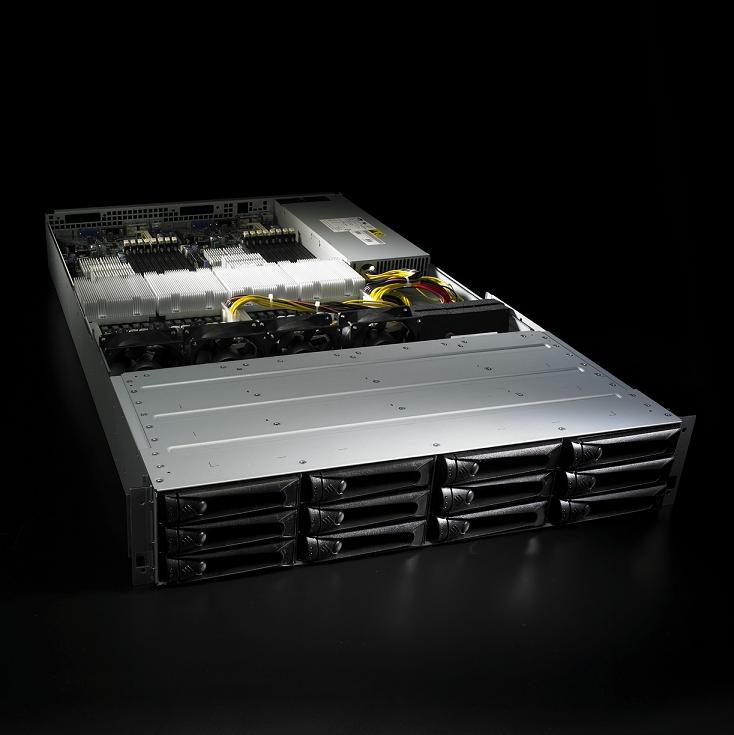
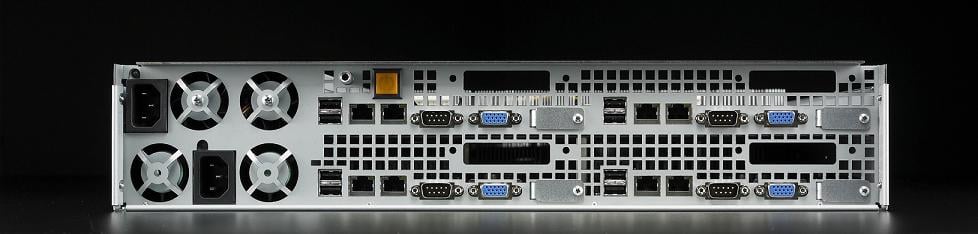
The XS23 squeezes 4 two-socket servers (in a 2X2 stack) in a 2U chassis along with twelve 3.5 inch SAS/SATA drives across the front of the system. It was designed for a search company, which we believe was Ask.com.

As we understand it, the disk to DIMM count was very important for this search customer, who wanted three drives for every server. This design was enough for the unnamed customer to buy tens of thousands of systems, according to our source.

The Dell system consumes 25 per cent less space than your general purpose blades, which do about 16 two-socket servers in 10U. Dell, of course, stripped out the redundant power supplies and fans to get that density, but these cloud folks have software that can deal with failures just fine.

We even managed to obtain a couple photos of the XS23. The big daddy shots are here and here.

One of the most valuable lists would be Microsoft's data center equipment RFPs and the equipment they chose, but don't hold your breath waiting for Microsoft to make this publicly available. It would be a PR disaster with almost every Server OEM screaming. 

Read more

Which Container is better Sun or Rackable?

I had an interesting call with an investment firm who wanted to discuss Data Center Containers.  He asked a question which one has a better container Sun or Rackable?

I told them it's too early in the container game to declare who the winner is.

Jokingly then I said Rackable, because it's bigger, and hey part of this is marketing and you see a 40 foot ice cube next to a Sun 20 foot project blackbox which one is more impressive.  He chuckled at the comment.

After a bit more thought. I do think Rackable picked a better initial build out with 40 foot vs. the 20 foot Sun Box.

If you are going to go with containers are you going to take small steps? Or go for it with a 40 footer.  Note Microsoft's references to CBlox being 40 feet.  There is no mention of 20 foot containers.

This flies in the face of the idea of over provisioning, and getting more than you need, but marketing means giving what people they want to buy, not what is logical for them.

Read more

ComputerWorld writes: 6 reasons why Microsoft's container-based approach to data centers won't work

I've been waiting for the ComputerWorld article on Containers part 2, and here it is.  After attending Uptime Institute and talking to vendors and customers, I do think containers will work, but there are lots of people who are going to disagree as it changes the game.

May 9, 2008 (Computerworld) Microsoft Corp.'s plan to fill its mammoth Chicago data center with servers housed in 40-foot shipping containers has experts wondering whether the strategy will succeed. In Microsoft's plan, each container in the data center, still being built, will be filled with several thousand servers.

Computerworld queried several outside experts — including the president of a data center construction firm, a data center engineer-turned-CIO, an operations executive for a data center operator and a "green" data center consultant — to get their assessments of the strategy. While they were individually impressed with some parts of Microsoft's plan, they also expressed skepticism that the idea will work in the long term.

Here are some of their objections, along with the responses of Mike Manos, Microsoft's senior director of data center services. Manos talked with Computerworld in an interview after the Data Center World show at which Microsoft's plan was announced

I am in there a few times. And unfortunately, was misquoted, but hey that is the tradeoff of talking to the press.

That's why some observers, such as Ohara, say the market is actually in smaller units. A former supply chain engineer for both Hewlett-Packard and Apple, Ohara has been developing his own prototypes for a "server cube" that would weigh about 1,000 pounds and measure 1 meter in each dimension — hence the name of his blog, GreenM3.

"It's taking what's in a server rack but putting it into a cube to make it more efficient to roll out," he said. "That potentially could apply to many more people."

I am not actually developing a server cube. I was trying to explain the method of how you look at compute in cubic meter, explaining my GreenM3 story.

I am also in the article for

"Say 25% of the servers have failed inside a container after a year. You may say you don't need that compute capacity — fine," said Dave Ohara, a data center consultant and blogger. "But what's potentially expensive is that 25% of the power committed to that container is doing nothing. Ideally, you want to use that power for something else.

"Electrical power is my scarce resource, not processing power," Ohara concluded.

But, I think anyone who is smart will figure this out, and design around it.

Read more

Microsoft's Debra Chrapaty Keynote Data Center Operations Video, presents Green concepts & CBlox Container

I mentioned Debra's Keynote in a previous post, and the good thing is her video is available for online viewing.

Microsoft's Debra Chrapaty presented at Microsoft Management Summit as a keynote speaker, The Reality of the Cloud.  The subject of her presentation is how Microsoft runs its data centers, the Global Foundation Services group.

Future trends she presents the Microsoft Container, CBlox as well.

image

The video is here.

She discusses a lot of concepts for Green Data Centers

  • Power how to measure and manage.
  • Building and running at scale
  • Smart Growth
  • Innovate for Efficiency and Sustainability
  • Operational excellence
  • Every kilowatt counts
  • Environment Sustainability
Read more