Facebook Graph Search triggers withdrawal for some

ReadWrite has a post by Matt Assay on his withdrawal from Facebook which ironical has 104 Facebook Likes.

In rolling out its new Graph Search, Facebook CEO Mark Zuckerberg was quick to caution that "it's going to take years to index the whole map of the graph."  That's great.  It gives me time to completely remove myself from Facebook.

When I dropped off Facebook a few weeks ago, it wasn't in pursuit of some grand, moral crusade.  I was simply trying to show solidarity with my 13-year old son, who had become obsessed (addicted?) to a massively multiplayer game played on Facebook. When I took away his Facebook privileges in an attempt to help him kick the habit, I decided that a hiatus from Facebook would do me some good, too, and would show him that I wasn't asking him to give up something that I, too, wasn't willing to abandon.  

Little did I suspect the incredible relief that would come from cutting out Facebook and Instagram from my life. (I kept Twitter, however, as it has become a useful business tool for me.)

What is Matt's option.  Hang out.  Hang out not in Google+, but with real friends.

In sum, I'm enjoying my life sans Facebook, and I imagine I'll enjoy it even more now that Facebook wants to make it even easier to invade my personal space without real value in return. Maybe it will be useful for dating, but I have zero interest in this.

I just want a place to hang out with real friends. It turns out that there's an even better place to do this than Facebook. It's called "the real world."

Economist Article on the fight between Google, Apple, Facebook, and Amazon

The Economist has a great article on the competition between Google, Apple, Facebook, and Amazon.

The article closes with an excellent point that the regulators could change the game rules.

The Others

Watchdogs in Europe and America have been looking into accusations that Apple has colluded with some publishers to break Amazon’s grip on e-books. And they have been scrutinising Google too. Some companies, including ones with links to Microsoft, have accused the search firm of unfairly promoting its own services, such as Google+, in search results. They also claim that it uses content from competitors without permission, and that it has struck anti-competitive deals in search advertising. The firm is under fire for allegedly using smartphone patents to stifle competition. Google’s legions of lawyers have been battling these charges.

Their lordships Page, Cook, Zuckerberg and Bezos thus need to map a course for their respective firms through dangerous legal and regulatory territory. At the same time they have to avoid being distracted from fighting their rivals; the mad emperors of Microsoft lost a lot of ground by taking on the inhuman might of the Department of Justice. And the shareholders, hungry for returns in a moribund global economy, need to be kept happy.

A king who pulled all this off might claim the throne by right; but his chances of being more than first among equals, or of a lengthy reign, would be slim. As in Westeros, these battles and plots promise many more sequels and series.


Google Image Search - Google, Facebook, Apple, Microsoft, Amazon DC

With Google's release of an Insider's look of its data centers, I was curious what Google Image Search shows for Google, Facebook, Apple, Microsoft, Amazon.

The below are top 20 images from searching for "<company name> data center"

Some have made the point that Google's image publication was a PR move.  One thing that did work well from a PR move is most of the top 20 images are from what was published yesterday. You can make your own conclusions from looking at the images.  Note: the amazon pictures are many times not amazon facilities, but images that are embedded on a page where Amazon is mentioned. 

I included the links to image searches if you want to get to the original source of the images

Google

NewImage

Facebook

NewImage

Microsoft

NewImage

Apple

NewImage

Amazon

NewImage


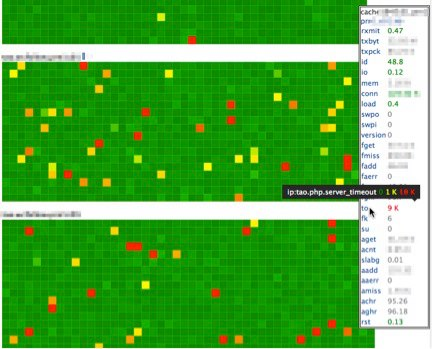
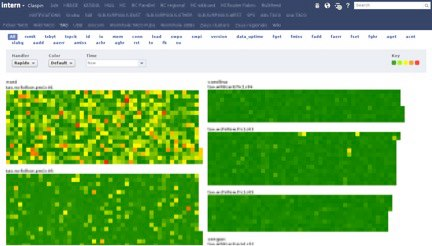
Facebook uses heat maps to find problems in the IT Infrastructure

We are all used to the use of thermal scanners to find hot spots.  The term heat map is also used to figure out problem areas.

This ComputerWorld article has information on Facebook's use of the heat map technique to find problems in its IT infrastructure.

Facebook heat maps pinpoint data center trouble spots

A Facebook engineer developed heat-map technology to quickly identify server, rack or cluster failures

By Joab Jackson
September 19, 2012 03:37 PM ET

IDG News Service - Faced with the challenge of overseeing the health of large caching systems, a Facebook engineer developed heat-map software to quickly pinpoint problems in the social network's data centers.

The Facebook blog post has more details and some images.

When I first deployed Claspin, the view above had a lot more red in it. By making it easier for more people to spot server issues quickly, Claspin has allowed us to catch more "yellows" and prevent more "reds." I suppose there's no better validation of one's choice of statistics and thresholds than to have things start out red and then turn green as the service improves.

NewImage

NewImage

4th Facebook Open Compute Summit, Jan 16-17, 2013 in Santa Clara

I've had a few people ask what conferences I plan on going to next.  I'll be at 7x24 Exchange Phoenix in November.  This week I'll be at GigaOm Mobile in SF.  Thinking about a few others too, but nothing solid.

One that I was reminded of today is the 4th Facebook Open Compute Summit which is Jan 16- 17 2013 in Santa Clara, CA.

Attend a summit! The next OCP Summit will be held in Santa Clara, California on January 16th and 17th. Stay tuned for more information.

There aren't a whole lot of details, but I have gone to all three and have learned a lot and met great people.  What more do you want from a conference?

If you are interested in presenting or sponsoring the event you can go to the link for contacts.