Google's Data Center Photos continue to make the news, Slate publishes Photo Blog post

Google's data center photos continue to show life. Slate has a post just of the photos.

Meeting the Wizard: Inside Google's Data Centers


A glimpse inside Google's data centers.

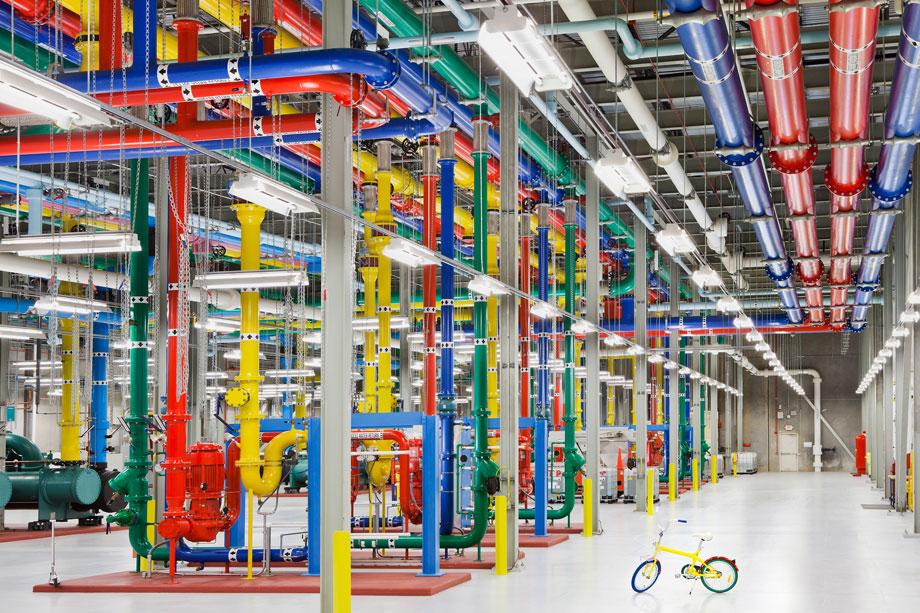
So it turns out the Internet really is a series of tubes. Last October, for the first time ever, Google posted dozens of rare photographs inside and around its data centers revealing the absurd level of organization, energy, and design that goes into powering some of the largest, most powerful systems plugged into the Internet. My absolute favorite aspect is the color-coordinated design of their infrastructure as it correlates to the Google logo. What wonderful attention to detail. See many more photos of their eight data centers and Street View imagery of their Lenoir, N.C., data center at Where the Internet Lives. All photos by Connie Zhou.

Google influencing Amazon.com's server purchasing, and many others

It is accepted that the big Web2.0 companies don't buy what the enterprise guys buy.

Wired has an article on how Amazon changed its server purchasing to follow Google.

Pinkham was struck by how different the machines looked — and how hot they were. Even then, Google was running its website on dirt-cheap, stripped-down servers slotted into extremely tight spaces. They didn’t even have plastic cases.

“They were clearly not your average Dell, HP, IBM servers. They were white box machines, very densely packed. They weren’t in containers. They were just blades jammed into these custom racks,” remembers Pinkham, who went on to lead the team that built the Elastic Compute Cloud and now runs a cloud software startup called Nimbula. “And I remember a lot of heat coming off them — an indication of a lot of concentrated power.”

This isn't really new to most of you, but it is nice to have a Wired article tell a story to the rest.

Would you rather read about Wind/Solar powered data Center or a Poop powered data center? Google vs. Microsoft

I was reading Compass Data Centers's Chris Crosby post 

Holy Air Biscuits Batman!

Holy Air Biscuits Batman!Just when you think things just can’t get any weirder, I read that Microsoft is working to develop a data center that runs on sewage. You read that correctly, sewage, a.k.a. human waste, a.k.a fill in your own potty level descriptor here. It’s said that necessity is “the mother of invention” but isn’t this taking things just a little too far? Microsoft says that this is yet another of their green initiatives. I say that if you’re running a data center using the byproduct of an entire state’s worth of indoor plumbing capacity you’ve probably stretched the boundaries of euphemism to the breaking point. I guess in their quest to achieve their objective of becoming carbon neutral the boys in Redmond will leave no stone unturned…or toilet seat up for that matter.

I’m always fascinated by how ideas like this come about. Many of us have been in those corporate “brain storming” sessions where half the company is squeezed into a conference room, the walls are papered with those sticky notes on steroids, and everyone is half-stoned on magic marker fumes, and heard some pretty outlandish proposals. But imagine sitting in a room when someone suggests that we should try powering the new data center with the truest form of “biogas”, and, rather than being met with murmured snickers and knowing rib jabs, someone pipes up and says, “You know, I think Phil is really on to something here”. Talk about your broad mindedness. If this is the concept that they all coalesced around, it kind of makes you wonder what they thought were the bad ideas.

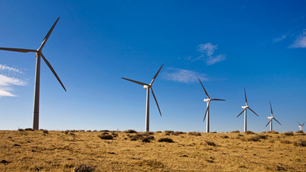
And it got me thinking would users rather read about a wind powered data center or a poop powered one?

Google uses Wind and Solar as its primary message.

NewImage

NewImage

Microsoft has posts on the use of biogas.

111912-1

You can argue which is better for the environment, but what do you think people want to read about?


Economist Article on the fight between Google, Apple, Facebook, and Amazon

The Economist has a great article on the competition between Google, Apple, Facebook, and Amazon.

The article closes with an excellent point that the regulators could change the game rules.

The Others

Watchdogs in Europe and America have been looking into accusations that Apple has colluded with some publishers to break Amazon’s grip on e-books. And they have been scrutinising Google too. Some companies, including ones with links to Microsoft, have accused the search firm of unfairly promoting its own services, such as Google+, in search results. They also claim that it uses content from competitors without permission, and that it has struck anti-competitive deals in search advertising. The firm is under fire for allegedly using smartphone patents to stifle competition. Google’s legions of lawyers have been battling these charges.

Their lordships Page, Cook, Zuckerberg and Bezos thus need to map a course for their respective firms through dangerous legal and regulatory territory. At the same time they have to avoid being distracted from fighting their rivals; the mad emperors of Microsoft lost a lot of ground by taking on the inhuman might of the Department of Justice. And the shareholders, hungry for returns in a moribund global economy, need to be kept happy.

A king who pulled all this off might claim the throne by right; but his chances of being more than first among equals, or of a lengthy reign, would be slim. As in Westeros, these battles and plots promise many more sequels and series.


Google receives Modular Data Center Cooling Patent

The USPTO has awarded Google patent #8,320,125


United States Patent 8,320,125
Hamburgen ,   et al. November 27, 2012

Modular data center cooling 

Abstract

A datacenter cooling apparatus includes a portable housing having lifting and transporting structures for moving the apparatus, opposed sides in the housing, at least one of the opposed sides defining one or more air passage openings arranged to capture warmed air from rack-mounted electronics, opposed ends in the housing, at least one of the opposed ends defining one or more air passage openings positioned to allow lateral passage of captured air into and out of the housing, and one or more cooling coils associated with the housing to receive and cool the captured warm air, and provide the cooled air for circulation into a datacenter workspace.


Inventors: Hamburgen; William (Palo Alto, CA), Clidaras; Jimmy (Los Altos, CA), Leung; Winnie (Palo Alto, CA), Stiver; David W. (Santa Clara, CA), Beck; Jonathan D. (Mountain View, CA), Carlson; Andrew B. (Atherton, CA), Chow; Steven T. Y. (Foster City, CA), Imwalle; Gregory P. (Sunnyvale, CA), Michael; Amir M. (San Mateo, CA)
Assignee: Exaflop LLC (Mountain View, CA) 
Appl. No.: 12/631,644
Filed: December 4, 2009

Unfortunately, the patent approval is so new, the images are not available yet.

There are 60 claims in the patent.  Here are some of the highlights.

1. A datacenter cooling apparatus, comprising: a portable housing having lifting and transporting structures for moving the apparatus, opposed sides in the housing, at least one of the opposed sides defining one or more air passage openings arranged to capture warmed air from rack-mounted electronics; opposed ends in the housing, at least one of the opposed ends defining one or more air passage openings positioned to allow lateral passage of captured air into and out of the housing; and one or more cooling coils associated with the housing to receive and cool the captured warm air, and provide the cooled air for circulation into a datacenter workspace, wherein the opposed sides each define one or more openings to engage with back-to-back computer racks.

20. A data center cooling system, comprising: a plurality of cooling modules aligned end-to-end in one or more rows; sides on the cooling modules defining openings for capturing warm air from electronics racks mounted to the cooling modules; and ends on the cooling modules defining openings for passing air into and out of the cooling modules along a row of cooling modules, wherein the cooling modules in a row are positioned to have open spaces between adjacent cooling modules and wherein the spaces are sufficiently sealed from a data center workspace to form a warm air capture zone.

43. A data center cooling system, comprising: a frame comprising four side openings, a top opening, and a bottom opening defining an interior volume; at least one cooling coil mounted within the interior volume and securable to the frame, the cooling coil thermally separating the interior volume into a cold air plenum adjacent a first face of the cooling coil and a warm air plenum adjacent a second face of the cooling coil opposite the first face; at least one sealing member mounted on the frame to substantially prevent airflow between the bottom opening and the top opening; and one or more fans mounted to the frame and arranged to generate airflow through one or more computer racks supporting electronics adjacent at least two of the side openings and through the at least two side openings to the top opening.

60. The system of claim 43, wherein the frame is sized for transport by truck from a manufacturing facility to a data center.

Here are the reference to Drawings that I can't see yet.

DESCRIPTION OF DRAWINGS 

FIG. 1A shows a perspective view of a modular data center cooling apparatus. 

FIG. 1B shows a perspective view of a cable rack for use in a data center. 

FIG. 1C shows the cable rack of FIG. 1B mounted to the top of the data center cooling apparatus of FIG. 1A. 

FIG. 2 shows a perspective view of a data center cooling apparatus providing cooling to a number of computer racks. 

FIG. 3A shows a front view of a data center cooling apparatus with a single computer rack. 

FIG. 3B shows a data center cooling apparatus with a pair of back-to-back computer racks. 

FIG. 4, shows a plan view of two rows in a computer data center. 

FIG. 5A shows a plan of an empty computer data center facility. 

FIG. 5B shows the facility of FIG. 5A with computers and cooling systems installed. 

FIG. 6 shows a schematic side view of an example data center facility. 

FIG. 7 shows an alternative base for a cooling module. 

FIG. 8 is a flow chart of a process for locating rows in a data center so as to hide structural columns in the data center.