What's in Dell's move to Quincy, WA? Competing with IBM and HP?

Wenatchee World has the story on Dell coming to Quincy, WA for a data center.

Secret's out? Dell headed here

Blog: Everyday Business

    By Mike Irwin

    November 2, 2010

    Dell, the world's third-largest computer company, has purchased property in Quincy that could become the site of the Columbia Basin town's newest data center, the Seattle Daily Journal of Commerce reported this morning.
    Underway for months, the top-secret purchase — known as Project Roosevelt — would add the computer manufacturer to Quincy's list of tech industry standouts, such as Microsoft and Yahoo.

    DataCenterKnowledge has more details.

    Officials with the Port of Quincy have confirmed that the deal is related to Project Roosevelt, the code name for a data center that could include grow to 250,000 square feet over time. The initial specifications call for 7 megawatts of power, ramping up to 30 megawatts over time. The search also considered sites in Douglas County.

    Why is Dell building 7 MW with growth for 25 MW?  Perot systems is the competitor of HP/EDS and IBM services. Perot systems doesn't have the data center inventory that HP and IBM has.

    Converged infrastructure is a hot topic, and it is much easier to sell a converged infrastructure solution when you have the data center contract.  The Dell data center is most likely a cost effective solution for hosting, gives a low carbon data center alternative, and becomes a showcase for Dell/Perot.

    Dell announced today the acquisition of Cloud Solution SaaS company Boomi.

    Dell to Acquire Boomi; Adds Industry’s No. 1 Integration Cloud™ Solution to SaaS Capabilities

    Date : 11/2/2010

    Round Rock, Texas

    Dell today announced it has agreed to acquire Software-as-a-Service (SaaS) integration leader Boomi to help businesses reap the full value of cloud computing. Powered by its revolutionary AtomSphere technology, Boomi offers the industry’s only pure SaaS application integration platform that takes the cost and complexity out of integrating applications by allowing easy transfer of data between cloud-based and on-premise applications with no appliances, no software and no coding required.


    image

    Read more

    4 MW vs. 12 MW - CPU vs. hybrid CPU/GPU solution, which is greener?

    Nvidia has a press announcement regarding World's Fastest Super Computer.


    NVIDIA Tesla GPUs Power World's Fastest Supercomputer


    Half the Size, Lower Power and 50% Faster Than World's Top Supercomputer

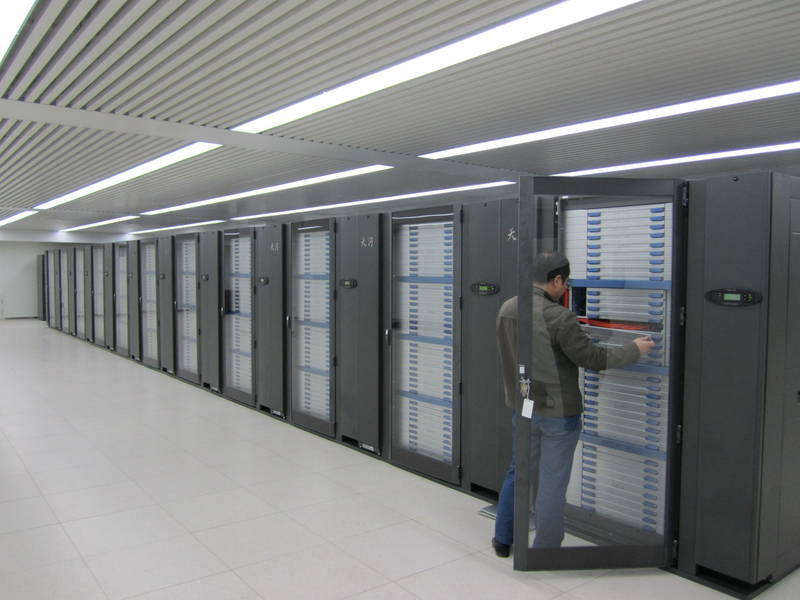
    The Tianhe-1A Supercomputer, located at National Supercomputer Center, Tianjin
    The Tianhe-1A Supercomputer, located at National Supercomputer Center, Tianjin

    SANTA CLARA, CA -- (Marketwire) -- 10/28/2010 -- Tianhe-1A, a new supercomputer revealed today at HPC 2010 China, has set a new performance record of 2.507 petaflops, as measured by the LINPACK benchmark, making it the fastest system in China and in the world today(1).

    Tianhe-1A epitomizes modern heterogeneous computing by coupling massively parallel GPUs with multi-core CPUs, enabling significant achievements in performance, size and power. The system uses 7,168 NVIDIA® Tesla™ M2050 GPUs and 14,336 CPUs; it would require more than 50,000 CPUs and twice as much floor space to deliver the same performance using CPUs alone.

    One of the points in the press release is the power comparison of a an all CPU vs. the Hybrid CPU/GPU solution.

    More importantly, a 2.507 petaflop system built entirely with CPUs would consume more than 12 megawatts. Thanks to the use of GPUs in a heterogeneous computing environment, Tianhe-1A consumes only 4.04 megawatts, making it 3 times more power efficient -- the difference in power consumption is enough to provide electricity to over 5000 homes for a year.

    Read more

    Gartner says Green increasing as selection criteria for Asia PC buyers

    Gartner has a press release on its new findings regarding PC buyers in Asia.

    Gartner Says Environmental Sustainability is Becoming a More Important Criterion in PC Brand Selection in Asia Pacific

    PC Providers Need to Prove Capabilities to Remain Viable as PC Replacement Cycle Takes Off

    Singapore, October 12, 2010 —  Personal computer (PC) upgrades in Asia Pacific are in full swing in the second half of 2010 and businesses are placing a greater emphasis on environmental sustainability in their choice of PC brand, according to new research from Gartner, Inc. However, analysts say PC providers are not offering the right mix of capabilities and messaging on sustainability and risk being excluded from lucrative opportunities.

    The Asia Pacific PC market is forecast to grow 20.4 percent in 2010 and continue to grow at a compound average growth rate (CAGR) of 20.8 percent between 2009 and 2014.  In the PC markets of Taiwan, South Korea, Australia, Hong Kong, Singapore and Malaysia, stronger growth for 2010 and 2011 is expected as replacements gain momentum.

    In some ways I think this press release is for the PC manufacturers.

    Gartner advises PC providers to build sustainability capabilities and messaging on top of a robust offering of products with proven reliability, service and support, and also stress the long-term cost savings.

    “When PC buyers are prepared to invest in this, they will want credible information and a choice of products and providers.  The pressure to act responsibly and contribute to the sustainability of the environment cannot be ignored.  These actions only will improve and increase with time as more products become available and the cost for going green becomes negligible.”

    Read more

    Greening the Data Center moves to Network Gear

    ZDNet covers a new silicon standard for network gear to use less energy and be greener in the data center.

    Green moves to the datacenter network silicon level

    By David Chernicoff | October 5, 2010, 9:27am PDT

    Summary

    Low-level energy savings across your corporate networks becomes a hardware possibility with the newly ratified IEEE standard.

    With the ratification of the IEEE Std. 802.3az-2010 Energy Efficient Ethernet (EEE) standard the energy savings mantra of the green movement dives deep into the underlying infrastructure of your datacenter networks. The new standard is intended to allow energy savings at the network silicon level by reducing power demand when there are periods of reduced link utilization.

    Broadcom announced the Silicon to support the 802.3az standard.

    Broadcom Corporation today announced that it has the industry's broadest portfolio of available silicon solutions supporting the newly ratified IEEE Std. 802.3az-2010 Energy Efficient Ethernet (EEE) standard.
    This extensive portfolio includes switch silicon that spans entry level unmanaged to enterprise and metro class switches; single, quad and octal Gigabit Ethernet (GbE) physical layer devices (PHYs); dual and quad 10GbE PHYs; 10/100 and 1GbE controllers, and 10GbE converged network interface controllers (C-NICs).

    Broadcom EEE-compliant products offer energy savings of up to 70 percent or greater and provide customers with end-to-end silicon and software solutions that enable faster deployment of energy efficient networks.

    Read more

    Schneider Electric's Media Event, a great time to learn, network, and test new image gear

    I just spent a day at Schneider Electric's media event in Chicago. Reflecting on what I got out of the event I'll just dump a stream of what comes to mind.

    I was looking forward to connecting with Kevin Heslin with Mission Critical Magazine and Rich Miller with DataCenteKnowledge as any significant data center event has both of them there.  Between the three of us creating content on  data centers, Kevin made the point how much content would be loss if for some reason something happened to all three of us at the event.  I don't put myself in the same category as Kevin and Rich who are professional media people, but I do get media status with my blogging so I enjoy the benefits of seeing how things are presented to the media.

    As part of getting ready for Schneider's event, Data Center Dynamics, and AFCOM Data Center World (where by the way I'll see Rich and Kevin again), I decided to upgrade my media capabilities.  I am a Canon user which can be just as religious an issue vs. Nikon.  After much thought I decided to get a Canon 7D.

    EOS 7D

    EOS Digital SLR Cameras

    EOS 7D

    Maximum resolution for any application.

    The EOS 7D features a Canon-designed 18.0 Megapixel APS-C size CMOS sensor that captures such a high level of resolution it's easy to crop images for enlargement without concern of losing detail. A major factor in reducing noise, the CMOS sensor assures that images shot at highest sensitivity will be remarkably smooth. Dual DIGIC 4 Image Processors ensure that images are captured, processed and saved with remarkable speed. The EOS 7D's ability to capture and process data of images shot at 18.0 Megapixels at 8 fps, as well as Face Detection Live Mode, Full HD video recording, Auto Lighting Optimizer and Lens Peripheral optimization are all possible thanks to the Dual DIGIC 4 Image Processors.

    One of the features I was playing with is to tether the Canon 7D to my laptop to allow quick transfer of images to my PC which I actually got a bunch of comments from other media people asking about my setup at the event.  My Lenovo X200 Tablet worked well capturing images and video while tethering transferring images in seconds. 

    I couldn't find an exact video of what I was doing on YouTube, but here is a Canon 5D Mark II connected to a Mac.  This worked extremely well and I am looking forward to try the setup at other events to enable live blogging with better quality images and video.

    What did I get out of the event for content?  I met Kevin Brown and his presentation on Infrastruxure. 

    APC by Schneider Electric unveiled the next generation InfraStruxure architecture, a high performance, scalable and adaptable data center architecture. InfraStruxure integrates power, cooling, racks, security and management in a modular form factor and is a building block of Schneider Electric’s comprehensive energy management architecture portfolio, EcoStruxure.  This new generation of InfraStruxure delivers a 25%  increase in power and cooling capacity and a 15% smaller footprint, all while reducing cost by 15%.   Holland Computing Center at the  University of Nebraska-Lincoln, uses InfraStruxure to run high performance computing for cutting-edge research, including a 21 TFlop supercomputer, shared memory processing, grid computing and development of hadoop-on-demand and other custom implementations.

    image

    And spent a bunch of time with software his software subject matter expert Jon Gould diving into details of their modeling and simulation.

    APC also introduced new features to the overall InfraStruxure management software portfolio, to better enable IT managers to change the way they monitor, operate, manage and maintain their data centers through the integration of new virtualization capabilities and upgraded energy efficiency and operations software. Enhanced capabilities include:

    • The new Data Center Lab application within InfraStruxure Capacity - a data center project management tool that enables the design of new data center build-outs or data center upgrades.
    • InfraStruxure Capacity’s updated Impact Analysis application - provides an instant overview of data center physical infrastructure operations including UPS, power distribution and cooling independent of the types and brands of equipment present in the data center.
    • InfraStuxure Efficiency 1.1 -  IT managers can quickly and easily report on monthly energy consumption of their data center subsystems including CO2 emissions, PUE (Power Usage Effectiveness) and DCIE (Data Center Infrastructure Efficiency). 
    • InfraStruxure Capacity Network Management Tool - provides insight into equipment dependencies including mapping and documenting fiber and copper networks from servers, via patch panels, to switches or routers allowing IT managers to document connectivity, manage their network structure and plan and control network usage.

    image

    Saw Rick McKay's BMS solution for data center facility operations.

    I'll write a blog entry about Aaron Davis's presentation.

    Overall I have a much better understanding of the Schneider Electric's portfolio, and met a lot of Schneider/APC people I am sure I will connect with again.
    Read more