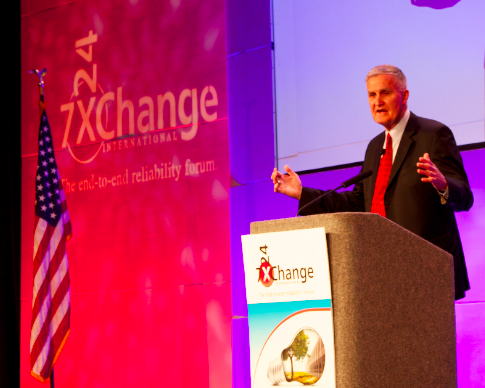
The folks at 7x24 Exchange gave us the opportunity to discuss a topic that does not focus on the technology. So, if we don't discuss data center technology, what should we discuss? Our idea was to discuss the #1 issue that defines the operations and design of a data center, the people on the data center team.
We had an awesome panel with a good perspective on what talent is needed in the data center.
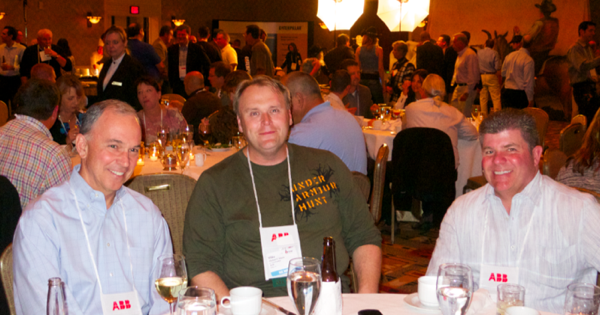
Above is when we sat down for dinner to chat together. We had spent an hour on a conference call to discuss the topic and one of the things that was clear was we were going to have lots of good ideas, so we said "hey why don't we have someone take notes for the attendees?" Thanks to AOL's Patrick Dugan, the following are notes of the presentation taken in real-time. I have left it as is so you can see the real flow.
Hopefully, this will start more discussions on what data center talent is required in the data center.
Thanks again for Jack, Mike, Joe and the folks at 7x24 Exchange to allow an important topic to be discussed.
Panel: The Hunt for Talent - Dave Ohara (DO), Mike Manos (MM), Jack Glass (JG) and Joe Kava (JK)
Notes: Patrick Dugan
Please forgive the typos from the shaky fingers and I hope you enjoy the notes
MM – AOL has shown how focused the people are through changes to re-moprh to tech and media company. Talent is key on the moving forward for AOL
DO - what are some of the top attributes you are looking for in people
mm-keeping to DC industry, in the past focus was on specific skill sets for specific roles…change now is looking for more blended individuals who are more broad and can work across organizations –
do – good collaboration skills
mm- collaboration and people skills with the ability to think of problems from a different space
jg- shouldn’t skip over the technical, lot of focus has gone to the mechanical engineering and understanding in the DC. Success with people from maritime academies
jk-get people who have curiosity and looks into the areas outside of their specific domain. Broadening themselves.
Jk-looking for people that are okay getting outside their comfort zones (even when it comes to their wardrobe ;-). Being uncomfortable but being able to make that step
Jg- curiosity side is number one trait. Wanting to know how it works and comes together, not just staying in the silo of their expertise. That’s is what shows the making of a good employee. Valuable Incredible employees
mm-technology driving changes within organizations, the blending of organizations is something we need to be aware of.
Do-challenges of opertating the DCs spread out around the world (almost like a command in control format)
Jk-distributed leadership across the globe with the differences in each but needing to operate as one. Don’t want to have each operating like being on an island, it still needs to run as a single unit. Share information, advances, innovations across all.
Jk-a single guy can come up with a good solution, take 5 guys collaborating, they’ll come up with a GREAT solution
mm-significant challenges at AOL with the blending of the taking on the new and doing new exciting things, however at the same time carrying the heavy anchors of the past
Notes just getting up there in front of you. So you’ll have to wait to see the previous….:-)
Jg-Looking for skills that can help look at the legacy systems and help pull it apart and get it to the next level and move forward – look to you network organization
Jk-you want the people who are okay out of comfort zone that are able to work and build on the fly, without having established procedures, and policies – make those up as you go.
Hello Everyone
Do-breaking down silos…even in younger companies (like google) there are silos. How do you find people who won’t work in silos or can help break them down
Jk-define the attributes of your organization and keep reinforcing them throughout the organization. Educate and share information and technical information continuously. You will get inclusion from those silos and you are informing them and helping to “bridge the gaps”
Jg-gotta look for teachers that can go out to those other individuals to share information and create a constant learning environment
mm-the poking holes in silos, breaking them down, will have resistance from some…what are the blockers to evolving the technology advances we keep discussing, can be more human – non movement due to discomfort
do-Explain the perception issue of what it is that you really need (good grief, purple hair…really).
Jk-the thought process of how you are going to approach problem solving? The different skill sets and approach like the data gathering for supporting new approaches
Jg-You have to get people who can adapt, from the consultants being sensitive to end users and vice versa
mm-not just maintaining the tech solutions, but the portfolio of the tech on the ground to the IT solutions (like cloud) – move out of the wrench turning role and be more broad.
Jk-When interviewing new engineers for DC, have them interviewed with your IT group. Want folks who are interesting and likable and someone you would want to talk to…that in itself helps bridge the gaps among organizations
mm-most memorable hire, worked other company, doing knowledge sharing with them. During this Mike really wanted to steal this individual away. Shows extent you will go when you find the right person, overcome the boundaries.
Jg-finding that hidden gem (network guy) who he discovered that could break up the many DC environments and was able to look at the broad picture. Important trait in this field is the overwhelmed by metrics, track everything, but analyze very little, then action on even less. Find someone appreciates the metrics, can analyze and step back to make something of the metrics to move the needle forward. Don’t let the metrics overwhelm.
Jk-Again, the importance is stress of stepping out of one’s comfort zone
David S (Q)-Where does commercial mindset come in. How do you validate the dollar to dollar value from those in different fields and solutions.
Jk-doesn’t believe in a DC that cannot fail, there are great designs, but they are not infallible. So if you have a dollar to spend is it in the DC redundancy …no, better to spend in Software redundancy.
mm-the leader has to make sure there is a full view of the entire ecosystem so people can map to that and march together. It is across the entire ecosystem, not the silos
jk-have to look at a full picture, future plans and links between all the decisions for current and future needs.
Jg-Standards are key, putting the effort in to ensure logical standards to support the businesses.
Question: HR looked at as ally and/or Enemy. How do you view HR if you have found the diamond in the rough and want to reward or get that diamond. How can us who deal with HR do it a little better.
mm-courage and leadership to take on the institutional resistance to get it done, get that diamond. Have to have that strength. Map out the role in the organization and the need to fill that to the individual you are looking for to validate the value he/she will be to the organization
jk-have to be a good partner with HR. JK put’s his HR partner as a key player in the organization and believes that all are family…including the HR folks
jg-HR has to be your ally. This talk is almost 2 part (how do you find talent and then how do you attract them to your company and motivate them to stay).
mm-there are artificial barriers that seem to be built. Mike has HR and Recruiting in regular staff meetings – makes them part of the team – to review the talent aquistion and strategies
Question: trying to get young students in power systems engineering…there doesn’t appear to be interest from the students…mostly because they don’t really know much about them. Suggestion was given to post internships/scholarships to students to entice and grow talent
Jg-the growing your own talent is a good concept. There is a need to work with universities on growing interest with students and internships
Jk-again – stressing the importance of the internships…have actually had people who have had NO idea of DC technology, take to the internship and have come back.
Like the Biltmore
Jk-works closely with the local Universities and Community colleges. Do some co-development of curriculm to help shape the students to what Google is needing/looking for.
mm-doing outreach to wounded to work and other wounded warrior programs. Finding that folks coming from the military are good for the doing the standard, the process following procedures. Great source to tap in to.
Question: getting the talent, is it salary, is it technology, etc….
Jk-DC individuals are in high demand and are well compensated. Why do people stay though, feel like they are making a difference, learning and being challenged. It’s not just the salary. Invest in the person for them so they are happy and feel fulfilled. Not just the job.
Thanks for your patience with the man behind the curtain taking the notes.


Quisque iaculis facilisis lacinia. Mauris euismod pellentesque tellus sit amet mollis.