In Pacific NW, 1 nuclear plant is more expensive to maintain than 31 hydro-electric plants

Washington State has one nuclear power plant that is up for renewal.

Seattle Times science reporter

PREV 6 of 6 NEXT

RICHLAND — When Washington's only commercial nuclear-power plant applied for license renewal last year, the timing seemed charmed. Hailed as a clean alternative to carbon-belching coal and gas, atomic power was poised for a renaissance.

Operators at the Columbia Generating Station near Richland were so bullish on the technology they talked about expanding with small, modular reactors.

In another Seattletimes article discussing the cost and benefits of nuclear power, the maintenance cost is mentioned.

Looking only at operating and maintenance costs, Bonneville Power Administration (BPA) puts the price at 3.6 cents per kwh. Hydropower costs about 2.8 cents per kwh.

BPA has had to boost rates — including a proposed 8 percent increase for 2012-13 — to pay for upgrades at the nuclear-power plant. According to a 2009 BPA analysis, it costs more to maintain and operate the Columbia Generating Station than all 31 of the hydropower plants in the Columbia Basin combined.

But the plant provides about 10 percent of BPA's electricity, which would have to be replaced if it were shut down.

Biomass for power generation, show me the good shit for a Grass-Fed Data Center

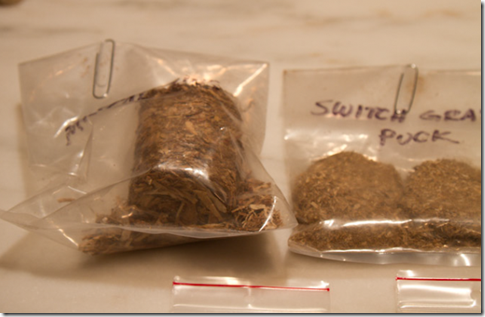
My Missouri Data Center friends were in town and they showed me their latest biomass samples.  Here is some of the early biomass, low btu density.

image

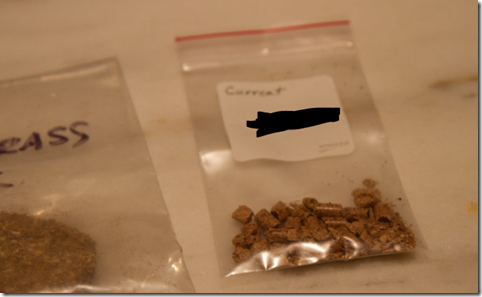
Here is some higher density grass with a higher btu content that is compressed.

image

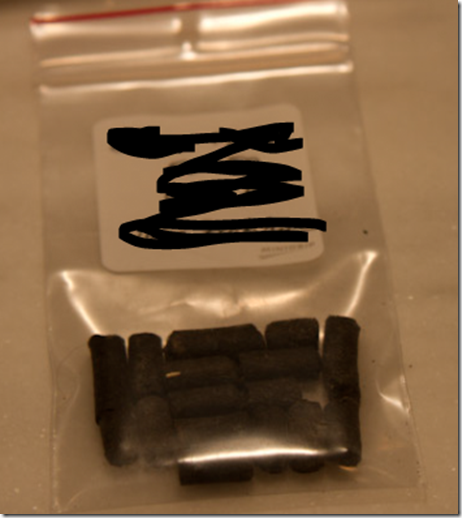
Here is a better btu sample.

image

And, then they showed me the really good shit.  Which has a composition of waste products added that contributes to a btu density as good as coal.

image

I've had a great time chatting with the Missouri folks and they are doing some innovative low carbon footprint energy generation projects.  We've identified the next stage of the project and who they will be contacting.

Some of the next contacts are the readers of this blog, and you are going to recognize when you see the really good shit (biomass) for a Grass-fed data center.

Pacific Northwest unplugs Windpower when Hydroelectric capacity peaks

Ethanol subsidies are no longer seen as good, and there are efforts to unplug the subsidy system.  But, here is one I was surprised,  and made sense when I read more.  In the Pacific Northwest Windpower is being unplugged when Hydroelectric capacity peaks, leaving renewable energy projects with no revenue during some periods.  That is a painful outage.  Everything is working, but no money is flowing.

Here is the article in The Economist.

Tilting at windmills

Teething troubles in the clean-energy sector

Jun 16th 2011 | SEATTLE | from the print edition

 An embarrassment of riches

THE melting snows of spring and early summer are justly celebrated by Aaron Copland and Walt Whitman. But they are causing a lot of trouble in the Pacific north-west, as a federal power agency pushes private wind turbines off the grid in what critics call a case of favouritism towards electricity generated by federal dams.

The region’s windpower companies are enraged and are petitioning the regulators. Encouraged by politicians and their subsidies, they have invested hundreds of millions of dollars over the past six years on a 14-fold increase in generating capacity. But this year, as an unusually large snowmelt surges into the rivers of Oregon and Washington, the wind lobby is howling about government perfidy. “You can’t trust the guy who is running the grid,” says Robert Kahn, executive director of the Northwest & Intermountain Power Producers Coalition.

The evil doer is the Bonneville Power Administration (BPA).

BPA managers say near-flood conditions in the Columbia river—and strict laws protecting the river’s endangered salmon—give the agency no choice but to disconnect the windmills as it grapples with a large power surplus. Not making electricity is not an option on the river, the BPA argues, because only a limited amount of water can be kept out of turbines and spilled over federal dams. Too much spill dissolves too much nitrogen in the river, which can kill migrating salmon. There is a particular irony in the agency’s concern about fish, since the development of the hydroelectric system is largely responsible for destroying the Columbia as one of the world’s great salmon highways.

Makes you wonder as more renewable energy projects can this happen someplace else.

The clean-energy glut was predictable, given the tendency of snow to melt in the spring and given whopping increases in the region’s wind-generating capacity. Since 2005 wind capacity has surged from 250 megawatts to 3,500 megawatts, and is expected to double again by 2014. More effort by BPA to link this new capacity to grids in California and British Columbia could have avoided the need to idle those wind turbines, or so a number of power experts reckon.

Inspiration for the Low Carbon Data Center, 7x24 Exchange keynote by Robert F Kennedy jr

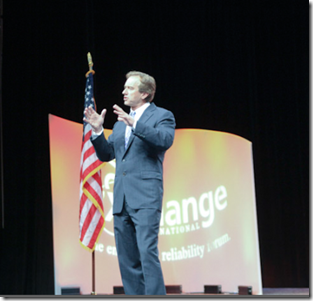
I am sitting at 7x24 Exchange, the first keynote is delivered by Robert F. Kennedy jr, and I was lucky to meet him at Breakfast.  Sometimes I wonder whether people get the idea of a Green (low carbon) data center.  What a great way to start a data center conference with a keynote educating the data center audience of the issues faced by a carbon based economy.

image

image

CONFERENCE KEYNOTE:
"Green Gold Rush - A Vision for Energy Independence, Jobs, and National Wealth"

The creation of a green economy is an increasingly promising solution to multiple challenges. Sustainable business and energy independence are keys to our economic revitalization, according to Kennedy. America can boost its own infrastructure by powering industry with plentiful and domestic renewable resources. A sophisticated, well-crafted energy policy will help sharpen American competitiveness while reducing energy costs and our national debt. Intelligent energy policy is also the national fulcrum for US foreign policy and national security. From green jobs and technologies to weaning our reliance on carbon energy, Kennedy offers a bold vision to restore US economic might, safeguard our environment, and reestablish America's role as an exemplary nation.

Robert F. Kennedy, Jr., Visionary, Environmental Business Leader and Advocate

Here is an article that captures part of what Robert F. Kennedy Jr. presented.

If ever an issue deserved President Obama's promise of change, this is it. Mining syndicates are detonating 2,500 tons of explosives each day -- the equivalent of a Hiroshima bomb weekly -- to blow up Appalachia's mountains and extract sub-surface coal seams. They have demolished 500 mountains -- encompassing about a million acres -- buried hundreds of valley streams under tons of rubble, poisoned and uprooted countless communities, and caused widespread contamination to the region's air and water. On this continent, only Appalachia's rich woodlands survived the Pleistocene ice ages that turned the rest of North America into a treeless tundra. King Coal is now accomplishing what the glaciers could not -- obliterating the hemisphere's oldest, most biologically dense and diverse forests. Highly mechanized processes allow giant machines to flatten in months mountains older than the Himalayas -- while employing fewer workers for far less time than other types of mining. The coal industry's promise to restore the desolate wastelands is a cruel joke, and the industry's fallback position, that the flattened landscapes will provide space for economic development, is the weak punchline. America adores its Adirondacks and reveres the Rockies, while the Appalachian Mountains -- with their impoverished and alienated population -- are dismantled by coal moguls who dominate state politics and have little to prevent them from blasting the physical landscape to smithereens.

Obama promised science-based policies that would save what remains of Appalachia, but last month senior administration officials finally weighed in with a mixture of strong words and weak action that broke hearts across the region. The modest measures federal bureaucrats promised amount to little more than a tepid pledge of better enforcement of existing laws.

And government claims of doing everything possible to halt the holocaust are simply not true. George Bush gutted Clean Water Act protections. Obama must restore them.

Wind Farms have environmental impact, like bat population

Wind and Solar are championed by many as better for the environment, but almost any change in power generation has an environmental impact somewhere.  Bird migration is many times mentioned when discussing wind turbines, but other animals are affected like bats.  Most people don’t like bats, but they are an important part of the ecosystem.  Times writes on the economic costs of losing bats.

The Economic Cost of Losing Bats

Posted by BRYAN WALSH Thursday, March 31, 2011 at 2:09 pm

6 Comments • Related Topics: wildlife , agriculture, bats, crops, disease, extinction, insects, pests, science, white-nose syndrome, wildlife

U.S. Fish & Wildlife Service / Bloomberg / Getty

It can be hard to feel much sympathy for bats. Like snakes or spiders or sharks or bunnies (OK, maybe the last one is just me), there's something primordially alarming about bats, something that activates the lizard part of the brain and shutters empathy. Bats aren't actually "flying rodents," but you likely won't see them on the next endangered species poster.

Read more: http://ecocentric.blogs.time.com/2011/03/31/the-economic-cost-of-losing-bats/#ixzz1IHp03F2Z

One point mentioned in the article is the effect on Wind Turbines on the bat population.

It's not just WNS that is striking down bats. Wind turbines are apparently killing migratory bats as well—by 2020, an estimated 33,000 to 111,000 bats are predicted to be killed by turbines in the mid-Atlantic Highlands alone. The authors in the Science paper worry that as wind power ramps up in the U.S., more bats will end up pureed by the blades.