Green Features, Windows Server 2008, Enabling Energy-Efficient Performance

Microsoft's Environment site has a post about Windows Server 2008 Enabling Energy-Efficient Performance.

Server Technology Evolves

Microsoft Windows Server 2008 is designed with energy efficiency in mind and provides a number of new power-saving features: 

  • Group Policy, which manages Windows Server 2008 power-management features across multiple clients and servers. 
  • Updated support for Advanced Configuration and Power Interface (ACPI) Processor Power Management (PPM) features. 
  • New support for processor performance states (P-states) and processor idle sleep states on multiprocessor systems. 
  • New Hyper-V technology, which makes it possible to consolidate servers onto a smaller number of computers. This hypervisor-based virtualization feature saves power without sacrificing performance.
Read more

Containers are a New Category Green Data Center Blog

From all the traffic and interest in Containers. I created a new category on my blog for Containers.  In the month of April since Microsoft presented its Container Strategy in more detail at AFCOM, I've written 14 posts.  There have been snippets of information by Microsoft on containers in the past, but it looks like AFCOM was Microsoft's strategic move in Containers.

I expect there to be more news from vendors and customers.

/container/index.html is the link to the category.

I have on my list of things to do is to create RSS Feeds per category, but with Earth Day tomorrow, I won't get to this until later.

Read more

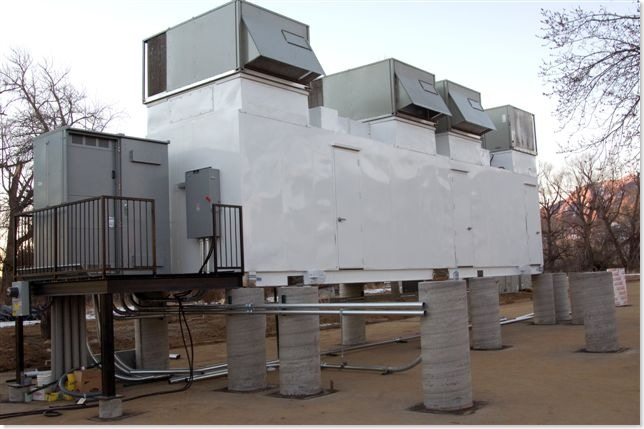
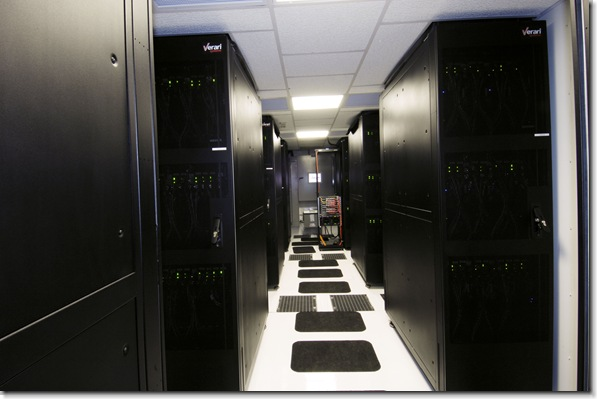
Microsoft Virtual Earth Team Posts Picture of Verari Servers in Wind Powered Data Center

The following picture should not have been posted, and if Microsoft tries to pull it watch out for the Streisand Effect.

Or maybe this part of Microsoft's PR plan on data centers. The Microsoft container placement is interesting to watch.

Thanks to Data Center Knowledge for posting on the link to the Virtual Earth site.

Microsoft Unveils Wind Powered Virtual Earth 3D Data Lab

With Earth Day just a week away, Microsoft unveiled its new wind-powered container-based data lab yesterday at its site in Boulder, Colorado. The containers house data processing servers used in the creation of the 3D city models featured in Virtual Earth online mapping platform. 

Given the computationally intense nature of creating the 3D models, the storage requirements for the operation are staggering. The new lab servers each have 8 “cores”—CPUs essentially—totaling more than 5000 cores and supporting more than 10 petabytes of data. When factored in with lab servers located in the facility’s building--now also wind-powered--the total storage capacity supporting the Virtual Earth operation in Boulder is 15 petabytes. To put this into perspective, a typical consumer camera is around 5 megabytes. It would take three billion of these images to fill the 15 petabytes of storage: the equivalent of 10 photos for every person in the US.

image

image

Read more

Is Google Too Timid to Adopt Containers?

Data Center Knowledge posts asking What about Google's Containers?

So far 2008 is living up to its billing as a breakthrough year for containers. The "data center in a box" concept has been embraced by Microsoft, and Sun Microsystems (JAVA), Rackable (RACK) and Verari Systems all report strong interest in their container products.

But what about Google (GOOG)? Last October it was revealed that Google had been awarded a patent on a portable data center in a shipping container, confirming a 2005 report from PBS columnist Robert Cringley that the company was building prototypes of container-based data centers in a garage in Mountain View. But is the project still alive? 

One of the inventors listed on the Google patent, William Whitted, has said publicly that the portable data center project has been discontinued. Whitted, who retired from Google in 2005, spoke about the project in a San Francisco Chronicle story last year. Whitted told the paper that "managers were too timid to pack in enough servers, so the experiment was not cost-effective and was ultimately canceled."

The most interesting possible insight is the last statement Google was too timid.

Is Google conservative when it comes to data center infrastructure, even though they are the largest spender?  Being #' 1 in search puts Google in a defensive position. When you are #1, you don't take as many risks. This is why old timers at Google, more than 5 years are leaving. Actually, I am surprised even Google short timers are consider leaving as the company isn't as entrepreneurial as they anticipated.

A few data center construction experts have pointed out that Google's data center construction is standardized and not customized to site specifics.  Sound conservative?

Maybe Google is secretive, because they haven't change things that much?

It seems like Google's role in the data center industry is like a millionaire, no billionaire, eccentric recluse who comes out every once in a while but doesn't say much. They like their privacy and shoo away prying eyes.

It will be interesting to see how social the Google attendee is at the Uptime Institute's Symposium 2008.

Microsoft's data center group told me the story at OSIsoft's user conference when Microsoft's Jeff O'Reilly presented on the use of the PI System, the Google data center attendees were ironically sitting right behind the Microsoft data center group. The Microsoft guys tried to be friendly say hi, but the Google guys just put their heads down in their laptops.

Read more

ComputerWorld Writes on Containers Reshaping IT

ComputerWorld's Eric Lai and Patrick Thibodeau write an article on Container-based systems reshaping IT. ComputerWorld did a thorough job researching this article talking to Microsoft, Gartner, customers, consultants, and suppliers. Personally, I am pleased with what ComputerWorld put together as I spent a couple of hours on the phone with one of the writers adding my opinion to the mix. Given the tone and research of the article, I would expect ComputerWorld to write more on this topic.

I will add this article as a 3 week follow up to the Press and Blog Coverage of Mike Manos's AFCOM keynote and create another PDF showing the mindmap.

Building-block data centers may reshape IT

Container-based systems and other modular data center technologies might help drive a shift to online 'compute clouds.' But that could leave the futures of some IT workers in a fog.

April 21, 2008 (Computerworld) A major transformation in the way that large data centers are built is under way, and the expected changes may have as much impact on IT productivity as the adoption of shipping containers did on operations in the freight industry starting in the late 1950s.

At that time, the shift from putting cargo on individual pallets to packing goods into much larger containers enabled shippers to load and unload vessels exponentially faster, with less labor. Now a similar transition is taking place in some data centers, via the use of container-based systems and other modular technologies.

Advocates say that replacing conventional racks of servers with systems built into shipping containers that can be rolled right into buildings will make it easier to set up data centers and add more processing power as needed. It also could pave the way for expanding the use of "compute clouds" to deliver online IT services -- a development that might result in big changes within corporate IT departments.

Microsoft Corp. is one of the trailblazers of the containerized IT movement. In a suburb of Chicago, the software vendor is building a $500 million, 500,000-square-foot data center that will hold up to 220 shipping containers. Each will arrive preconfigured with racks containing as many as 2,000 servers, along with networking and power-distribution equipment to facilitate the setup process.

Michael Manos, Microsoft's senior director of data center services, said the Lego-like approach being used at the new facility in Northlake, Ill., will help shake up a part of IT that's in need of some change. "Data centers are typically very conservative," Manos said. "If you look at a data center built a year ago and one built 10 years ago, they look very similar."

Consulting firm Gartner Inc. says that building-block designs such as the one Microsoft is implementing will lead to the "industrialization" of IT within megasize data centers. According to Gartner, such facilities will be able to provide the technical infrastructure needed to support compute clouds that can scale on demand as the use of Internet-based application services grows. In fact, Microsoft plans to use the Northlake facility to help meet the processing demands that its Windows Live and Office Live online services are expected to generate.

Read more