Intel 5500 Super Chip – As Fast as an F-16 with Fuel Efficiency of a Glider

Intel in touting how great the Xeon 5500 chip is I found an entertaining SJ Mercury news post.

Intel unveils groundbreaking new server chip

By Matt Nauman

Mercury News

Posted: 03/30/2009 05:54:03 PM PDT


Patrick Gelsinger, Intel senior vice president and general manager of the... (Business Wire)

The arrival of the speedy Intel Pentium Pro server chip in 1995 set the stage for the explosion in Internet usage. Intel said Monday that its new Xeon 5500 server chip will help build data centers ready for the next generation of the Internet.

Intel's Patrick Gelsinger described the Xeon 5500 as "the greatest leap in performance in the history of data processing."

How big is the leap?

Gelsinger, senior vice president and general manager of Intel's digital enterprise group, said the Xeon 5500 is faster, more energy efficient and more flexible than its predecessor. He predicted it will propel advances in cloud computing and virtualization that will be the key to data-center growth and efficiency.

Gelsinger described the new chips as "an engineering marvel," comparing them to an aircraft that's as fast as an F-16 with the cargo capacity of a jumbo jet and the fuel efficiency of a glider. The new chips are about twice as fast as the previous Xeon 5400 chips.

As fast as an F-16, and the fuel efficiency of a glider.  I think Gelsinger may have been a little too excited.  Going as fast as an F-16 riding the wind?  I assume Gelsinger’s world of Physics is a different place.

Another interesting announcement is Intel’s Data Center Efficiency challenge on Facebook.

Intel Announces its Data Center Efficiency Challenge!
If you work in IT and have fresh perspectives to make your organization more efficient, you’ve come to the right spot!
Submit a short video “proposal” describing plans to use Intel server technology (Intel Xeon 5500 series or other current Intel-based server platforms) to save both energy and money in your data center.
One winner in each of two categories – enterprise and small business – will receive a new Intel Xeon processor 5500 series server, an energy efficient netbook or mobile PC, will be flown to San Francisco for the Intel Developer Forum (IDF) and will meet with senior data center experts for consultation on their proposal.

I would love to see the video submittals where an Intel Xeon 5500 is as fast an F-16 and rides the wind.

Read more

Monitoring Water Use at a Power Station

I just blogged about water use at a electric power plant.  I mentioned the article to OSIsoft’s Martin Otterson, and he pointed me to a solution for measuring water use at power plant.

Pin-pointing water usage

April 2009

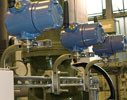
Emerson’s Smart Wireless technology is helping E.ON UK to accurately monitor and measure treated water usage, thus allowing trending and analysis to formulate target values at its Kingsnorth dual-fired power station. Using Emerson’s Rosemount wireless transmitters, E.ON is now able to collect flow measurement data from new flowmeters installed throughout the turbine hall. The self-organising wireless network delivers the data for trending in an OSIsoft PI historian which helps personnel monitor water usage within the system.

Solution evaluation
E.ON Kingsnorth, a 1940 MW generating facility located on the Medway Estuary in Kent needed a solution to monitor and measure water usage within its main plant. They decided to install new non-intrusive ultrasonic flowmeters to carry out this task. The high cost of wiring associated with a conventional cabled solution and a desire to embrace the very latest networking technology led E.ON to evaluate wireless technologies that could meet their needs.
“E.ON is keen to adopt the very latest technology to help improve productivity, efficiency and availability, and wireless technology provides the ideal networking solution to access the flow measurement data from the turbine building without having to install new cabling," said Chet Mistry, team leader, E.ON UK.

Emerson’s wireless transmitters provide access to flow readings from non-intrusive ultrasonic flowmeters

Emerson’s wireless transmitters provide access to flow readings from non-intrusive ultrasonic flowmeters

Having initially undertaken extensive trials of Emerson’s Smart Wireless technology, E.ON selected the Emerson solution because it offered high levels of reliability and long transmitting distance, as well as the ability to add additional devices to the network without the need for additional infrastructure.

The water data is integrated into OSIsoft’s PI system.

System architecture and operation
Fourteen Rosemount wireless transmitters have been installed to provide access to flow percentage readings from the new non-intrusive ultrasonic flowmeters monitoring different sections of the turbine hall. The Rosemount wireless transmitters are transmitting flow measurement data every 15 seconds to an Emerson Smart Wireless gateway, situated in the main administration building on the other side of the road from the turbine hall.

Using Ethernet, the data is sent from the gateway to Emerson’s AMS Suite predictive maintenance software, which manages the wireless transmitters and uses its OPC server to import the flow data into the PI data historian. From here operators view trends and pinpoint where any loss of flow takes place.

Think about a system like this for your data center.  If you think it is difficult to get a wireless monitoring system running in a data center, imagine the issues in a power plant.

Difficult RF environment
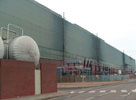
The turbine hall at Kingsnorth is around 500 m long and presents a difficult working environment for wireless as it houses large turbines, vast amounts of metal piping and a number of metal walkways that could interfere with the wireless signal. Such an environment would not be suitable for a line-of-sight wireless solution, but Emerson’s Smart Wireless self-organising technology encountered no problems in terms of routing data back to the gateway or reliability of connection.

Read more

Half of Water Withdrawals in the US for Electric-Power Industry, 35% for Agriculture

WSJ.com has an article on how water sourcing issues are affecting electric power plants.

The one fact that was wow.  is half of water withdrawals in the US are for electric-power industry.

The electric-power industry accounts for nearly half of all water withdrawals in the U.S., with agricultural irrigation coming in a distant second at about 35%. Even though most of the water used by the power sector eventually is returned to waterways or the ground, 2% to 3% is lost through evaporation, amounting to 1.6 trillion to 1.7 trillion gallons a year that might otherwise enhance fisheries or recharge aquifers, according to a Department of Energy study.

The study concluded that a megawatt hour of electricity produced by a wind turbine can save 200 to 600 gallons of water compared with the amount required by a modern gas-fired power plant to make that same amount.

The article continues on to discuss how energy and water are connected.

Earlier this month, Jeff Bingaman (D., N.M.), chairman of the Senate Energy and Natural Resources Committee, noted during a hearing that the "nexus" of water and energy is becoming an issue "in [power plant] permitting decisions across the country."

Landowners in the far northeast corner of California were riled recently by Sempra Energy's proposal to build a coal-fired power plant just across the state line in Nevada.

One reason residents objected was that the plant would have required vast amounts of water for cooling. "Use of groundwater is always a sensitive issue up here because we don't have much," said Jack Hanson, a member of the Lassen County Board of Supervisors.

Sempra pulled the plug on the project in late 2006, citing, among other things, water use. Since then, another big energy proposal has surfaced, but it hasn't kicked up much opposition: A dozen companies are considering building hundreds of wind turbines along Lassen County ridgelines. So far, 17 meteorological towers have been erected to verify wind speeds.

Power plants can reduce their water use.

In turn, conventional power plants are turning to technology that aggressively cuts water use as they weigh the costs of installing more complicated cooling systems versus leaning on scarce resources.

A power plant recently put into service by Pacific Gas & Electric Co., a unit of PG&E Corp., in the Northern California town of Antioch has a cooling system to cut its water intake from 40,000 gallons a minute to 1.6 gallons. In the past, power plants commonly were built with "once-through cooling," in which water was drawn from waterways, used once, and then put back. But the Antioch plant uses a "dry" cooling technique that recirculates water in a closed system, reducing evaporation.

Coal and nuclear plants are being questioned for their water use.

Environmental groups that oppose coal and nuclear power plants are discovering that water can be a powerful tool to challenge power companies.

In 2004, Riverkeeper Inc., an environmental organization in Tarrytown, N.Y., along with six states, sued the Environmental Protection Agency over the use of once-through cooling by as many as 500 older power plants in the U.S. The suit charges that the practice violates the Clean Water Act because it harms aquatic life and fails to utilize the best technology available, a requirement of the federal act.

The case, now before the U.S. Supreme Court, stands to test how water-use issues will determine which power plants continue to operate as well as what kind of plants are built.

Nuclear plants face particular scrutiny, since they require more water than any other form of steam generation. Virginia Power, a unit of Dominion Resources, is facing a legal challenge over its right to draw one million gallons of water a minute per reactor from a man-made lake it uses to cool its North Anna nuclear power plant and into which it discharges heated water. The utility built the lake in 1978 exclusively for the plant's cooling purposes.

A group called the Blue Ridge Environmental Defense League Inc. argued that heat is a form of pollution and said the state water board shouldn't have renewed the plant's water permit. Last month, a state court upheld much of the environmental group's case; the utility plans an appeal. Dominion says the man-made lake is a private body of water and therefore shouldn't fall under the federal Clean Water Act.

As you think of a green data center, don’t forget about water.

Water is also emerging as an important point for analysts in the investment community. "We definitely have noticed more companies having water issues," said Swaminathan Venkataraman, an analyst at Standard & Poor's credit-rating agency. "If it continues, it will give renewables another important advantage."

Read more

Greener and Cheaper

WSJ.com has a good article on how greener and cheaper go together.

Greener and Cheaper

The conventional wisdom is that a company's costs rise as its environmental impact falls. Think again.

By ALAN G. ROBINSON and DEAN M. SCHROEDER

For years, it was the conventional wisdom: If you improved quality, costs would also rise. But then companies discovered the opposite was true. By redesigning processes -- reducing mistakes, doing things right the first time -- companies could provide better products and services and cut their costs.

Now it's time to learn this lesson all over again, as it applies to going green.

Despite what many companies think -- that reducing their environmental impact is a nice idea, but impractical because of the cost -- businesses can go green and lower costs at the same time. No one disputes that it's expensive to cap smokestacks and process hazardous waste. But as the earlier lesson suggests, the focus shouldn't be on cleaning up and its costs -- the focus should be on creating less mess to begin with.

As an example, WSJ goes into detail on greening of Subaru’s auto plant.

The experience of an auto plant in Indiana helps illustrate how re-engineering processes with green principles and greater efficiency in mind can not only improve a company's standing with nature, but increase its profits and give it competitive advantages as well.

video

The Stumbling Blocks to Going Green
2:48

WSJ's Jennifer Merritt speaks to University of Massachusetts professor Alan Robinson about how companies can integrate green efforts into their infrastructure.

Subaru of Indiana Automotive Inc., a factory of more than 3,000 workers who make roughly 800 automobiles a day, has pursued green initiatives since its launch 20 years ago in Lafayette, Ind., by Japan's Fuji Heavy Industries Ltd. With employees at every level of the plant looking for ways to save energy, reduce waste and generally make processes more efficient, one measure of its success is a 14% reduction in electricity consumption on a per-car basis since 2000. An even bigger achievement: It has not shipped any waste to a landfill since May 2004.

The authors, skeptical themselves at first, have confirmed the company's claims with their own detailed research. How did Subaru do it? By redesigning numerous plant processes, thus producing less waste and requiring less material as inputs. Since 2000, the company says, it has reduced the amount of waste it generates per vehicle by about 47%. Of the solid waste that the factory still generates, 99.9% is recycled or used by other companies as manufacturing inputs or as raw materials that they process to resell. The remaining 0.1% is hazardous waste that must by law be incinerated by a licensed facility.

Committing the plant to reducing its overall environmental impact has required a mix of solutions over the years, some simpler than others. Subaru's engineers continuously look for ways to improve the plant's green performance, increase efficiency and lower costs.

The article was written by Dr. Robinson.

Pity the competitor who is forced to do in 18 months what Subaru of Indiana took two decades to get right.

—Dr. Robinson is a professor at the Isenberg School of Management, University of Massachusetts, Amherst. Dr. Schroeder is the Herbert and Agnes Schulz professor of management at the College of Business Administration, Valparaiso University, Valparaiso, Ind.

Read more

Rackable Heats up Servers, Intel Atom Sneaks In to Cool and Save Energy

GigaOm has a post on Rackable CloudRack C2 Server.

Rackable’s New Servers Like It Hot

Stacey Higginbotham | Thursday, March 19, 2009 | 7:09 AM PT | 1 comment

cloudrackc2_tray_doubleRackable announced today an update to its CloudRack servers. The CloudRack C2 servers can run at 104 degrees inside the data center, and they offload power supply to the rack to reduce energy wasted in converting AC electricity from the wall to DC electricity used by the box to 1 percent. Since these beasts can pack 1,280 cores, or 320 processors, into a rack, they’re not exactly in the power-saving category, but the design ensures that the electricity is going to power the processors rather than lost as heat or waste.

Note Rackable is saying their power supplies are 99% efficient in addition to servers can run at 104 degrees.

What caught my eye though was Intel Atoms would be a future option.

Rackable also announced that customers will eventually be able to build out servers in the CloudRack trays using Intel’s lower power Atom chips, which they can use for jobs that don’t need the full horsepower of the upcoming Nehalem-based Xeon chips. Customizing processors is one more way that data center operators are trying to boost efficiency.

Rackable is trying to be different by using less power.

The rising competition around designing power-efficient, heat-tolerant servers is being driven by a need to lower electricity and cooling costs in a data center contrasted with the need to pack as much computing into a box as possible to run web-scale application increases. Essentially, we need more computing but have less electricity to squander. Rackable can sell into corporate data centers, but its target market is the web world giants running thousands of servers.

Rackable’s web site has more details.

The Power XE™ Difference
CloudRack C2 is the first of many Rackable products to utilize Power XE — a next generation cabinet-level power distribution technology:

  • Virtually eliminates the data center "stranded power" problem (a data center's power capacity which is paid for, but ultimately unused) and provides nearly perfect phase balancing
  • Significantly improves power delivery efficiency by converting incoming AC power to 99 percent efficient 12V DC power via hot-pluggable, N+1 redundant rectifiers
  • Eliminates server-level power supplies and cooling fans for improved reliability
Dramatic Thermal Efficiency
CloudRack C2 is thermally optimized to allow data centers to operate at much higher temperatures, up to 40° C (104° F).
  • Higher system temperature tolerance means significantly reduced power consumption by Computer Room Air Conditioning (CRAC) units which in turn means radically reduced operating cost.
  • Thermally managed airflow via redundant, hot swappable, easily serviceable, cabinet-level autonomic fan arrays for better enclosure reliability
  • Over 80% reduction of fan power compared to conventional AC enclosures
Read more