Checklist expert, Boeing's Dan Boorman who from Data Center industry will contact him?

Reading the Checklist Manifesto which I posted about last month, there is a discussion how the author Atul Gawande contacted Boeing to find a checklist expert.

Here is the Boeing pdf about Boeing's checklist expertise.

image

Along with his primary responsibilities, Boorman is the contact for organizations outside of aviation that want to benefit from
checklists. He has worked with the FBI, the American Society
of Radiation Oncologists, Northwestern Memorial Hospital in
Chicago and the Washington State Hospital Association.
One of the most important beneficiaries of Boeing’s checklist
knowledge is the World Health Organization. Using ideas learned in
part from Boorman and the Flight Technical & Safety team, a study
of eight hospitals around the world showed that major complications for surgical patients decreased 36 percent after the introduction of checklists. Deaths fell by 47 percent. The World Health
Organization now is creating and distributing checklists worldwide

I think I am going to reach out to some people who would be interested in meeting with Boeing's checklist expert, and organize a meeting.

Living in the Seattle area, I am surrounded by Boeing people and my kids are fans as well.  Here is an old picture from their photo shoot for a Boeing Store poster.

image

image

Is ITIL being used as an excuse to slow change?

In many enterprise discussions ITIL is assumed.  But when have you ever heard Google, AWS, Facebook, Twitter, or Zynga say their success is built on an ITIL framework.

Here may be a reason why the most agile companies don't use ITIL.

ITIL and other IT management frameworks can take our genetic tendency to say "no" and codify it. "You want a new application installed? Well, you're going to have to go through the Change Management Process." Dilbert's pointy-haired boss couldn't have come up with anything better. Users who ask for the simplest things can be told "no," simply because the Rules support that position. Worse, in many companies, admins who step out of the change management framework to help a user with something small are chastised, written up, and put at the bottom of the list for promotions and interesting projects.

The author doesn't hate ITIL.

No, I'm not trying to beat up on ITIL. It's actually a pretty solid, comprehensive framework for managing IT. Given that most of us weren't doing much better of a job, ITIL offers some universal structure. My problem is that ITIL pretty muchabhors change. No, not on paper -- on paper, ITIL manages and controlschange. In practice, IT organizations use ITIL as a blunt instrument to haltchange.

How many of you have run into people who are all into process, and don't really focus on the business impact?

In Pacific NW, 1 nuclear plant is more expensive to maintain than 31 hydro-electric plants

Washington State has one nuclear power plant that is up for renewal.

Seattle Times science reporter

PREV 6 of 6 NEXT

RICHLAND — When Washington's only commercial nuclear-power plant applied for license renewal last year, the timing seemed charmed. Hailed as a clean alternative to carbon-belching coal and gas, atomic power was poised for a renaissance.

Operators at the Columbia Generating Station near Richland were so bullish on the technology they talked about expanding with small, modular reactors.

In another Seattletimes article discussing the cost and benefits of nuclear power, the maintenance cost is mentioned.

Looking only at operating and maintenance costs, Bonneville Power Administration (BPA) puts the price at 3.6 cents per kwh. Hydropower costs about 2.8 cents per kwh.

BPA has had to boost rates — including a proposed 8 percent increase for 2012-13 — to pay for upgrades at the nuclear-power plant. According to a 2009 BPA analysis, it costs more to maintain and operate the Columbia Generating Station than all 31 of the hydropower plants in the Columbia Basin combined.

But the plant provides about 10 percent of BPA's electricity, which would have to be replaced if it were shut down.

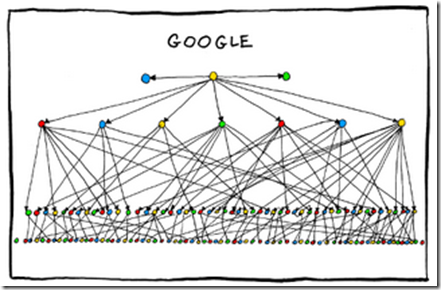
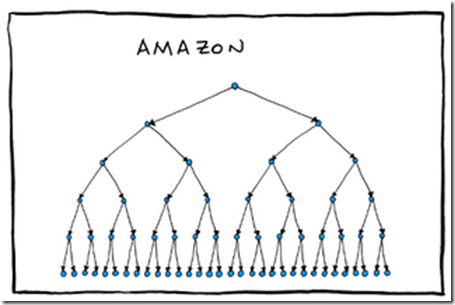
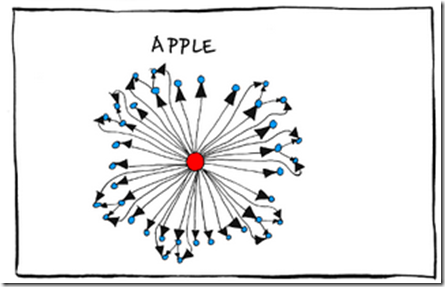
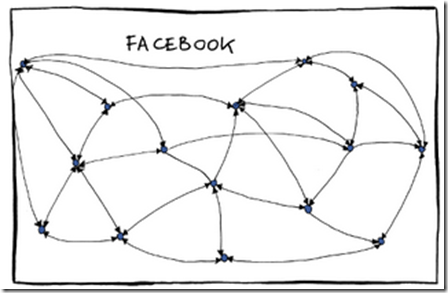
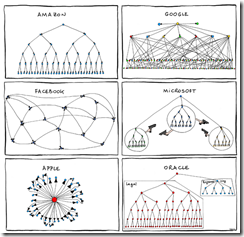
Organizational Charts- Google, Amazon, Apple, Facebook, Oracle, and Microsoft

Here is a post a a friend shared on some tech companies organizational Charts.

I don't know about you, but I couldn't have done any better to add humor to how companies can look.

Google's shows a complexity in the hierarchy.

image

Amazon has simplicity that comes from a Retailer with separate business units.

image

Apple shows how the world revolves around the red dot - Steve Jobs.

image

Facebook is different version of a flat organization.

image

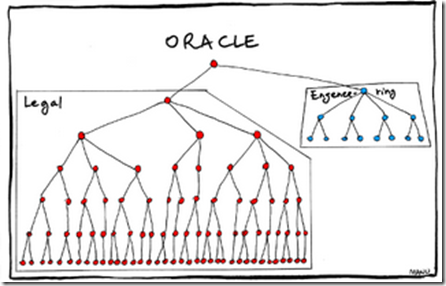
Oracle shows the power.  the power of Oracle Legal.

image

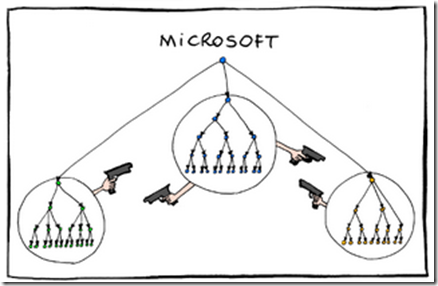
And, Microsoft.  This is one way to explain business units (Windows, Office, and XBOX) survival tactics.

image

The complete original post is here.  But, it was more fun to break up the sections.

image