Shared Office Space suppliers - Loosecubes and Liquidspace #workconf

Many of you travel and meet at the local Starbucks, but when you go to a city and need to spend days working and meeting the hotel and starbucks just doesn't work for many scenarios.

You have probably heard of AirBnB where you can rent a room.

NewImage

The same idea can be applied to office space that can be rented.  Two options that I learned about at GigaOm Net:Work are Loosecubes and Liquidspace.

NewImage

NewImage

As you look at your data center projects and need an office in a city, these are two options.

It looks like Loosecubes has a bigger market (below are 4 of 10 properties) than Liquidspace (1).

There may be other options, but these are a good place to start thinking about renting a short term office space as you travel around in the US for data center projects.

NewImage

LiquidSpaces Nearby Seattle, WA, USA

OfficeXpats
403 Madison Ave N Suite 240, Bainbridge island, WA 98110, US
View Calendar

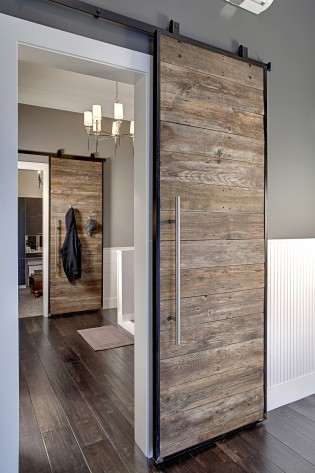
House tour of finished home

I can mix work with my home life which has its plusses and some inconveniences as work meetings can spill into my home.  I was recently chatting with some data center friends and they wanted to see the latest pictures of our house now that is done and has more furnishings.  They had both seen the house during construction.

Here are a bunch which saves me the time of arranging more work meetings at home. :-)

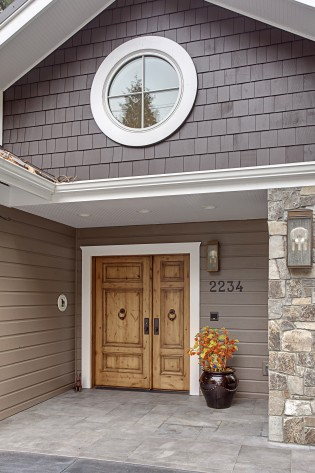
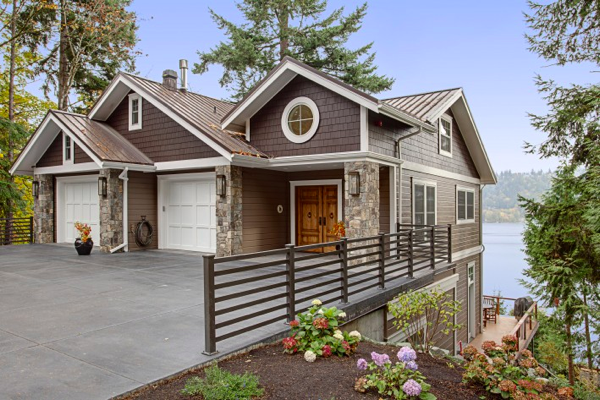
Here is the front of the house.
NewImage

NewImage

NewImage

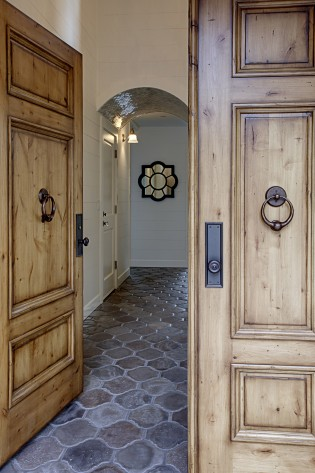
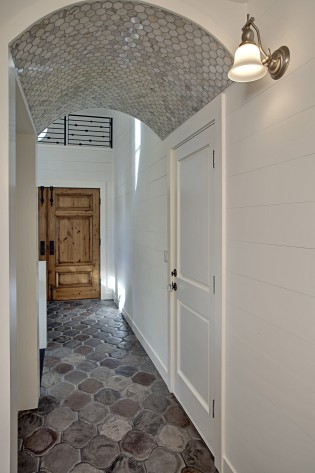
A view of the front door from inside the house.
NewImage

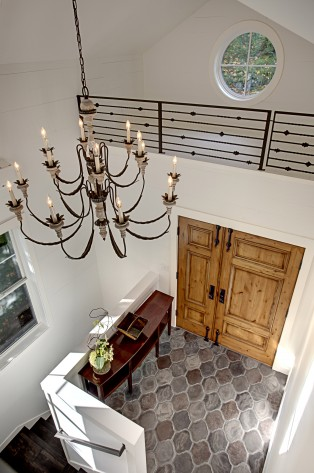
Going up the attic you can see the front door.

NewImage

NewImage

NewImage

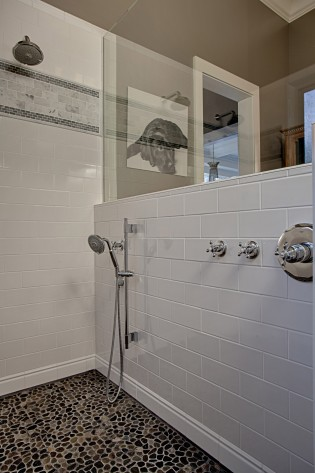
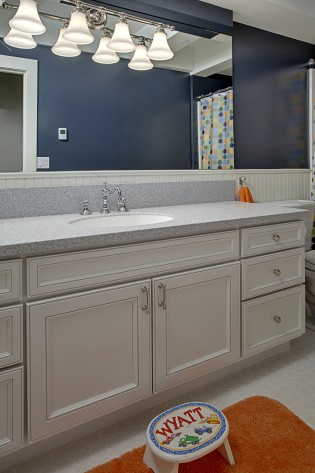
To give you a range of the house here are the bathrooms.

My son's.
NewImage

Daughter.

NewImage

Master Bathroom

NewImage

NewImage

NewImage

guest bathroom.

NewImage

Coming down the stairs to the kitchen.

NewImage

And of course my pizza oven. 2,500 lbs, 110,000 btu woodstone pizza oven. Which is part of the entertaining of work and friends, cooking a great meal.

NewImage

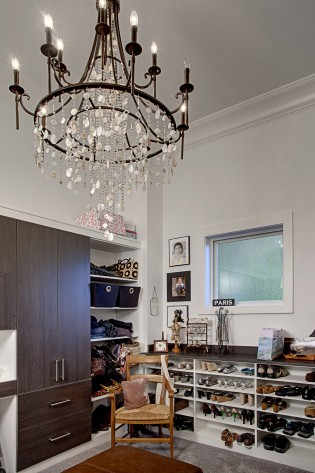
My wife got her killer closet. below is a 1/4 view of the 12x12x12 closet.
NewImage

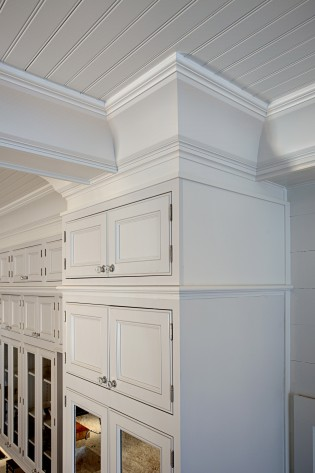
Here is a picture that shows the height of the 12 1/2 ft ceilings.
NewImage

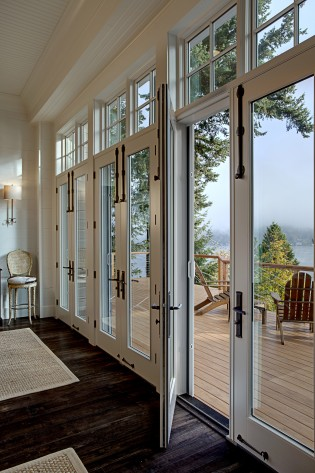
The kitchen is wide open to the lake view.

NewImage

NewImage

NewImage

NewImage

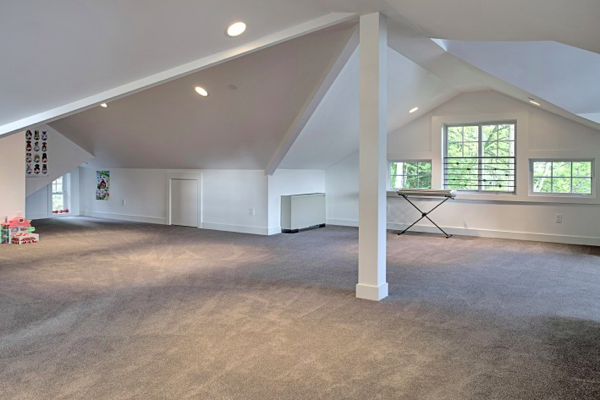
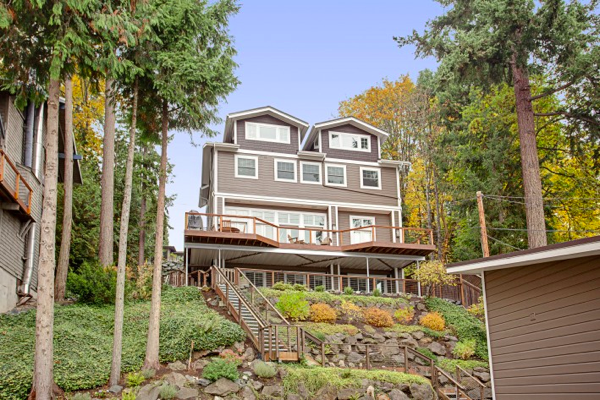
Here is the backside of the house.  We have had numerous friends warn us that the kids will sneak out their windows as they get older. I have that problem taken care of as I have a security camera night vision system with a PVR 2 week recording capacity on an APC battery back-up, covering the front and back of the house.  Video recording is a cool way to document things, and easy to set up streams.  We've also put one of the cameras in the attic to document who hit who when the kids are playing. "do you really want dad to go through the video to see what happened upstairs?"
NewImage

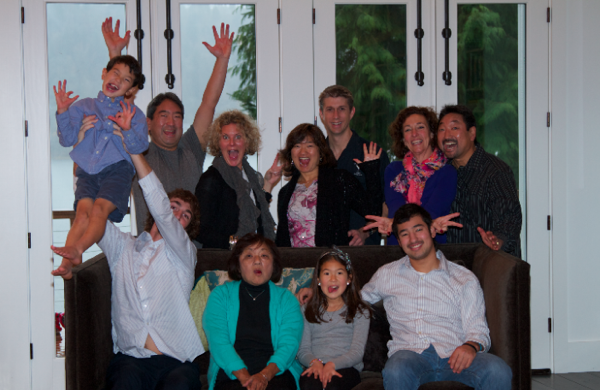
And, here is our first thanksgiving family dinner.  Christmas is coming up and we'll have 25 - 30 people for a Christmas eve party.
NewImage

All these pictures except the family one are from building contractor, Lavallee Construction.

WE’RE COMMITTED TO QUALITY CUSTOM CONSTRUCTION

Lavallee Construction is an independently owned, full-service home builder providing general contracting and design/build services for residential clients throughout Greater Seattle. After more than 21 years in business, we have developed a reputation for intelligent design, creative problem solving and an uncompromising commitment to professionalism and integrity that has made us one of the area's most respected contractors. Whether we are constructing your new home, adding an addition or renovating parts of your existing structure, our mission is to work in partnership with you to bring your residential dreams to life.

29 days, 11K servers of Google Cluster Server data shared with Researchers

Google had a crazy idea a year ago, let's share some of our cluster data to the research community.  In Jan 2010, Google shared 7 hrs of data.

Google Cluster Data


Google faces a large number of technical challenges in the evolution of its applications and infrastructure. In particular, as we increase the size of our compute clusters and scale the work that they process, many issues arise in how to schedule the diversity of work that runs on Google systems.

We have distilled these challenges into the following research topics that we feel are interesting to the academic community and important to Google:
  • Workload characterizations: How can we characterize Google workloads in a way that readily generates synthetic work that is representative of production workloads so that we can run stand alone benchmarks?
  • Predictive models of workload characteristics: What is normal and what is abnormal workload? Are there "signals" that can indicate problems in a time-frame that is possible for automated and/or manual responses?
  • New algorithms for machine assignment: How can we assign tasks to machines so that we make best use of machine resources, avoid excess resource contention on machines, and manage power efficiently?
  • Scalable management of cell work: How should we design the future cell management system to efficiently visualize work in cells, to aid in problem determination, and to provide automation of management tasks?

Now Google has shared 29 days from 11,000 Servers in a Google Cluster.

More Google Cluster Data


Google has a strong interest in promoting high quality systems research, and we believe that providing information about real-life workloads to the academic community can help.

In support of this we published a small (7-hour) sample of resource-usage information from a Google production cluster in 2010 (research blog on Google Cluster Data). Approximately a dozen researchers at UC Berkeley, CMU, Brown, NCSU, and elsewhere have made use of it.

Recently, we released a larger dataset. It covers a longer period of time (29 days) for a larger cell (about 11k machines) and includes significantly more information, including:

  • the original resource requests, to permit scheduling experiments
  • request constraints and machine attriibutes
  • machine availability and failure events
  • some of the reasons for task exits
  • (obfuscated) job and job-submitter names, to help identify repeated or related jobs
  • more types of usage information
  • CPI (cycles per instruction) and memory traffic for some of the machines

Besides the feedback from the the research community, this is a great way for Google to find future hires.