It's old news, but nice to see how the data center press event went for Facebook in Lulea, Sweden.
HBR's #1 tip for the cloud, get the right people
Google sponsored the sharing of a Harvard Business Review article making cloud recommendations to the CEO.

The best line to keep in mind is "Delegating the move to the cloud to traditional IT people is like Putting the crew running the boiler and steam turbine in charge of electrifying the factory."

If you wonder why some cloud projects fall, keep in mind who the people were and their background.
Mortenson surveys 7x24 Exchange Fall attendees, shares report
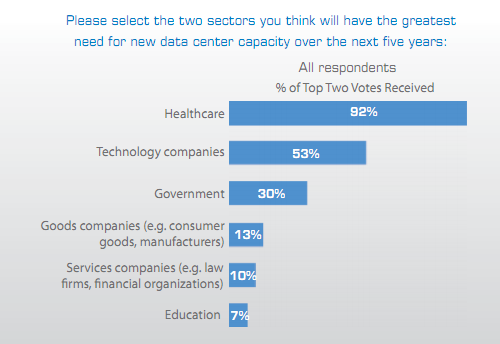
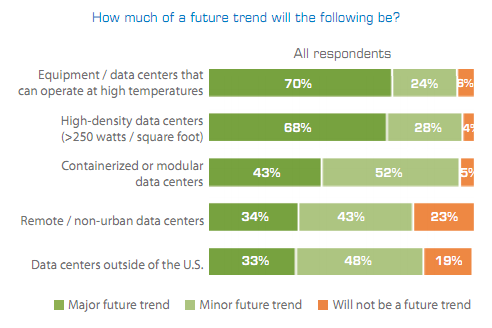
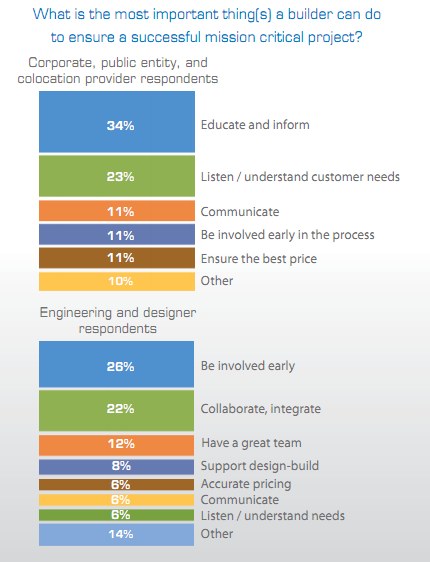
Mortenson has a report on a surrey it conducted at 7x24 Exchange.
The current dynamics in the U.S. mission critical industry rival that of industries like tablet computers and smart phones. Excitement for the industry could be seen at the Fall 2011 7x24 Exchange Conference where a record-breaking number of data center and facilities professionals gathered at the Arizona Biltmore Hotel.We gathered feedback from 90 professionals at the conference to conduct this study. Respondents described a market that is strong despite the struggling economy, where transformational changes are taking place across a broad array of operational areas.
Here are a few things that I found interesting in the report.
Developer Mobile Experience iOS vs. Android, Bankruptcy reality
One of my cloud and mobile friends passed on this post on LinkedIn by one of his friends who writes about his 18 month experience creating a mobile app for iOS and Android.
Here is outline of the author's points
Development Costs are Rising
Customer Acquisition Costs are rising
Monetization is Falling…like a rock
Apple is getting harder to work with
and the author closes with.
The net of this is that the apps economy is bankrupt; if you’re thinking of building and launching an “app”, you missed the window.
If an “app” is a way to engage users as part of your broader strategy, then maybe – but do you really need an “app” to do this or can you do it through a mobile website, webapp or something cheaper and easier to develop?
Don Barnetson was the co-founder and head of sales & marketing at DDT Software, Inc; he is currently enjoying some downtime with his wife and new daughter.
Keep the following in mind if you are thinking of developing a million dollar iPhone app.
Apple is getting harder to work with
- Apple Approval Hell: 7 Day approval cycle? Try 13 weeks…3 appeals, 4 new binaries.
- Apple Changes their Mind Arbitrarily: 6 weeks after our 13 week approval we tried to add a new in-app purchase; we were told that our existing in-app purchase was now “non-compliant” as Apple had changed their interpretation of their own rules and only “actual content” was allowed to use auto-renewing subscriptions; not catalogs. Ohh, and they’ll be applying this new interpretation retroactively in a few months so no option to just leave what we have in store.
- Apple bled us out: We planned on a two week approval cycle and a launch before thanksgiving; instead it took 3 months and we had to launch in December (don’t do that, by the way). We thus consumed our marketing budget on engineering and had no coverage left for paid acqusition post-launch.
The Two Battles in the Cloud, Brands and Profits
The NYTimes has a post on the idea of the Cloud Cartel.
Here Come the Cloud Cartels
By QUENTIN HARDY |What kind of cartels will deliver business computing, and how should businesses respond?
Forrester, the technology research company, just released its business and technology outlook for 2020. The short version is that cloud computing will come on quicker than you think, it will be controlled by a very few companies that will fight for the right to own your data, and businesses need to think about what software they can write that will differentiate them from all the other customers of these giants.
Like a lot of these reports, Forrester has a couple of clichés (we have entered the era of individual empowerment; change is the only constant) and interesting facts that you don’t really know what to do with (there will be 22 billion connected devices in 2020; Moore’s Law dictates that the computing power of I.B.M.’s Watson will fit into a human hand by then).
One of the points well made is the move to the cloud and mobile, and how there will be a shift in the IT powerhouses.
The substance of the report, however, is plain: cloud and mobile computing combined will rapidly improve, dislodging many incumbents in enterprise computing, and vastly empowering a few others, becoming what Forrester calls “computing cartels” that control millions of servers in data centers around the globe. These cartels, the report says, will include Amazon, Cisco Systems, Google, I.B.M., Microsoft, Oracle and a few competitors. Like most of these reports, it does not name losers, though Hewlett-Packard and Dell were among those noticeably absent.
The Cloud is very confusing, and one way to filter the communication is to understand whether something is written for a battle of the brands to create awareness for their solution vs. the battle for profits where companies are grabbing market share from others. You may think they are the same. But a Brand Battle will be more creative in defining perceptions. A Profit Battle will be how do I get the money from the IT department. The Cloud has been succeeding when business units decide to bypass their internal IT department and buy cloud services direct at a lower cost.
The Brand Battles are going to be fought by the established enterprise companies that have the budgets to fund analyst reports - IBM, EMC, Cisco, HP, VMware, Dell, and Microsoft. The Profit Battle are those who want to disrupt the status quo - Amazon, Rackspace (OpenStack), and many others that don't have a big marketing budget.
The fight for the Cloud is like a big Go Board.

There are multiple battles for territory going on, and it easy for a big brand to claim it is winning in its area. But, there is not a scorekeeper for the complete Cloud game.
You can argue over who is winning the cloud game. But, it can more interesting to know who has adapted to the cloud to win other games.
The cloud is disruptive and those who understand who is winning these other cloud enabled games has the knowledge to play the cloud game differently than a simple brand or profit game.