Time in a Data Center, a service for tracking time related events

GigaOm's Stacey Higginbotham has a post on a new service for time related events.

Meet TempoDB, a database startup with an eye for time

TempoDB, a startup out of Chicago, has built a database-as-a-service offering specifically for time-series data. CEO and co-founder Andrew Cronk presented at the TechStars Cloud demo day earlier this week, and laid out the need for a specialty database for data that comes from thermostats, sensor networks, networking gear and other machines that spit out both values and times. But does the world (or the Internet of Things) need a specialty time-series database?


Time is a way to track events and supports a post analysis process, and it is interesting that a company has chosen to make time their main value proposition.

When I read this I thought of the song "Time in a Bottle".  If you could wind back time that would be worth using a cloud service.

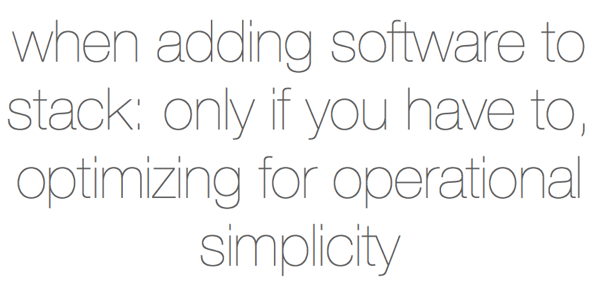
Instagram's Mike Krieger Presentation on scaling its infrastructure with 5 employees

TechCrunch has a post on Instagram's founder Mike Krieger discussing its infrastructure.

How To Scale A $1 Billion Startup: A Guide From Instagram Co-Founder Mike Krieger

posted 5 hours ago
Mike Krieger

Instagram’s co-founders Kevin Systrom and Mike Krieger have been noticeably silent since their photo-sharing app Instagram was bought by Facebook earlier this week for $1 billion.

In the meantime there has been a lot written about that deal, from praise to backlash, parsing what it meansand why.

But if you’d like to hear a little (actually, a lot) about how Instagram got to where it did, read on.

Last night, Krieger gave a presentation at an Airbnb event for employees and members of the network, part of a regular series called the Tech Talk. The subject was “Scaling Instagram.”


The presentation is here with 185 slides.

The most interesting slides I found at the end.

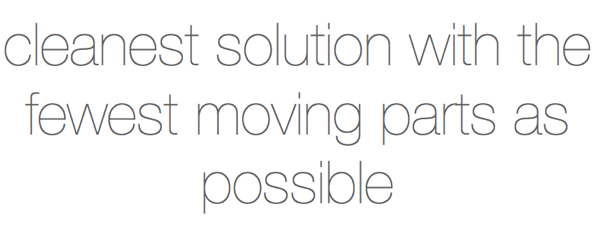
NewImage
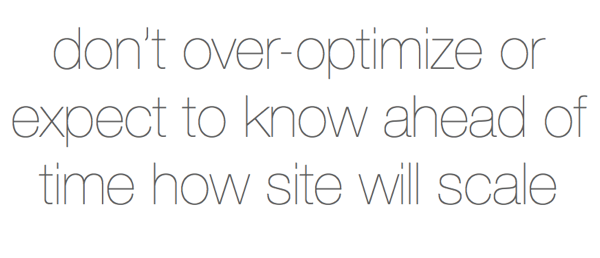
NewImage
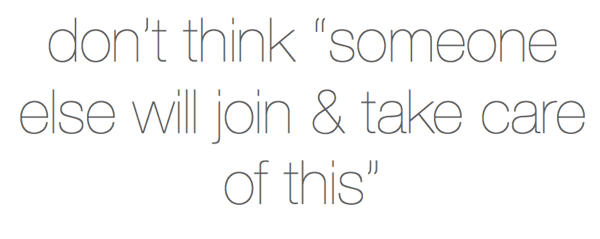
NewImage
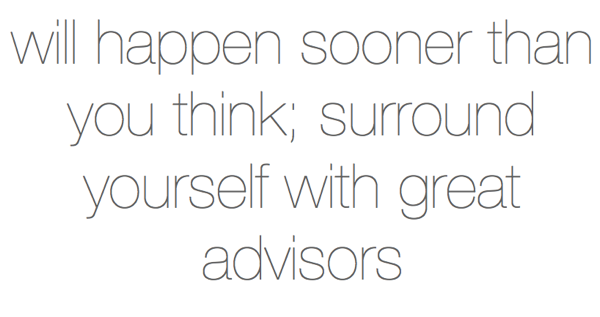
NewImage
NewImage
NewImage
NewImage


Capacity Planning and Asset Management Panel Discussion at 7x24 Exchange, data center executives from Goldman Sachs, Microsoft, and Facebook

I am pleased to moderate a thought leadership panel at 7x24 Exchange Orlando on June 12. 2012.

10:30 A.M.
PANEL: Capacity Planning and Asset Management

Data Centers exist to provide the environment for IT assets to support the current and future needs of the business. This panel featuring capacity planning & asset management executives from Facebook, Goldman Sachs and Microsoft will discuss a range of topics from asset life cycle management, how the groups work with their data center teams for internal and external requirements to run their IT services, and best practices to consider adopting. Collaboration and knowledge sharing is required in companies to manage capacity, and this is a unique opportunity to hear from three innovators on a topic you’re all familiar with and is  essential for future data center services.

Moderator:

Dave Ohara
Data Center Meme
Green M3

Panelists:

Tamara Budec
Goldman Sachs

Amaya Souarez
Microsoft

Heather Marquez
Facebook

If you'll notice one of the things we were able to do is get executives from Goldman Sachs, Microsoft, and Facebook to discuss an important topic.  It just so happens all the panel members are women.  Women who own the issue of asset management in their data center operations.  I've had the pleasure of having conversations with each of these people and knew when we nominated the talk, who were the people working on innovative ideas.

I am looking forward to moderate a thought provoking session that will discuss an important topic that rarely gets discussed.

If you have specific questions you think the panel should address you can drop me a line at dave(at)greenm3(dot)com

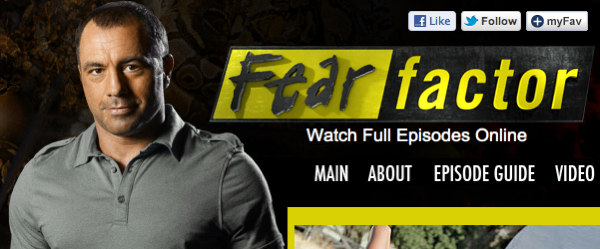
Did a Fear Factor motivate Facebook's acquisition of Instagram?

It is interesting what people do when faced with their fears.  NBC's Fear Factor has made a reality show out of this fact.

NewImage

Was Mark Zuckerberg's fear factor moment is what happens if Instagram continues its growth, cutting back on Facebook's traffic?

My assumption is Facebook has data that shows how many images showing up on Facebook are linked to Instagram images.  At the rate of growth of Instagram, Facebook can see what happens to its image traffic. With $50 million of new VC money Instagram with 13 employees can add more resources and expand.  Worse case before Facebook IPO, traffic shows a change in traffic due to Instagram's growth.  $1 billion is cheap to absorb your top competition before someone else does or Instagram figures out a business model that allows them to collect revenue.

Washington Post discusses parts of this idea in their article.

Was Facebook’s purchase of Instagram motivated by fear?

It’s true — $1 billion really is cool. Just ask the guys at Instagram, who sold their mobile photo sharing app — along with their entire team (all 13 of them) — to Facebook for that astronomical figure this week.

One of the interesting speculations is the Instagram will move out of AWS to Facebook.  Can you imagine what it takes to move 33 million user accounts and data?

Another interesting data point is the Instagram user base is much younger than Facebook.

Instagram users are young and Facebook users are old

A new study shows that the two social-networking sites serve different age groups. Could this be one of the reasons why more people aren't celebrating the buyout?

Secret of the Innovative Thinkers, a beginner's mind

One of the best parts I like about the data center industry is the friends who are innovative thinkers.  It can difficult to identify the exact characteristics of who these people are.  One thing that I have found is pretty consistent is a beginner's mind.

The classic story of the concept of a beginner's mind is the empty cup.

Empty Your Cup


A university professor went to visit a famous Zen master. While the master quietly served tea, the professor talked about Zen. The master poured the visitor's cup to the brim, and then kept pouring. The professor watched the overflowing cup until he could no longer restrain himself. "It's overfull! No more will go in!" the professor blurted. "You are like this cup," the master replied, "How can I show you Zen unless you first empty your cup."


Another explanation of the beginner's mind is in this video.

I can think a lot of my data center friends who fit the description of a beginner's mind.

Shoshin (初心) is a concept in Zen Buddhism meaning "beginner's mind". It refers to having an attitude of openness, eagerness, and lack of preconceptions when studying a subject, even when studying at an advanced level, just as a beginner in that subject would. The term is especially used in the study of Zen Buddhism and Japanese martial arts.

The phrase is also used in the title of the book Zen Mind, Beginner's Mind by the Zen teacher Shunryu Suzuki, who says the following about the correct approach to Zen practice: In the beginner's mind there are many possibilities, in the expert's mind there are few.

Saadat A. Khan suggests that "Beginner's mind embodies the highest emotional qualities such as enthusiasm, creativity, zeal, and optimism. If the reader reflects briefly on the opposites of these qualities, it is clear to see that quality of life requires living with beginner's mind. With beginner's mind, there is boundlessness, limitlessness, an infinite wealth."

A related term, shōshin (正真), means correct truth and is used to denote a genuine signature on art works or to refer to any thing or person that is genuine.