I am reading an interesting book "Touchpoints: Creating Powerful Leadership Connections in the Smallest Moments."
And one of the points made is
research has found that the brains of domesticated animals are 15 to 30 percent smaller than those of their wild counterparts.
A comment I recently received is I am "loose cannon." Which can be bad if you are in large corporate environment where you want everyone to behave appropriately. Luckily, I no longer work in a corporate environment, and being a loose cannon is not a bad thing.
Even data center events can be highly domesticated like a zoo where there is a program and routine you are expected to stick to. Stay on message according to the event's marketing program. At some events the presentation titles are written by the event staff for the speakers to stay in their cage, containing what they say.
The Touchpoint book continues
So if you want to thrive in a fiercely competitive global environment, you need to stay a little wild. You need to be alert and continuously update your skills. Today's organizations draw on the best talent from all over the world. This means that the standards keep going up, and you need to get better just to stay in place.
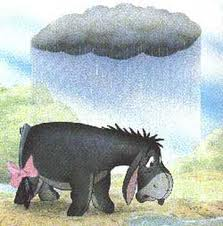
An example of being wild is Mike Manos. At last year's Uptiime Symposium Mike had a programmed talk. And, thanks to some prodding from some data center thought leaders, Mike went a little wild and said what is wrong with so much of the industry is "we act like Donkeys." Highly domesticated animals with days of gloom like Eeyore. I don't think anyone who would call Eeyore talented, except to bring down the energy down in the room.
Mike's call to action is to be a Chaos Monkey. Break things and see what happens.

Afterwards Mike's talk, Mike said he had dozens of people come up to him and admit they were donkeys. The guy I was sitting next to said he is "chaos monkey." I am too, and it is more fun.
Do you favor being a domesticated donkey? Most do, because you don't you lose your job in a risk averse culture which is most data center organizations.
Or are you a little wild with a brain that is 15-30% bigger than the domesticated crowd?
The nice thing about a smaller brain is you don't think about being a little wild. You get comfortable in your skin, like Eeyore.