Google's Green Email Story: The Story of Send

Google has just released its environmentally sensitive post on the story of gmail.

Follow an email’s journey with Story of Send

5/15/12 | 8:08:00 AM

Labels: 

(cross-posted on the Official Google Blog)

If you’re anything like me, you send and receive a lot of emails every day. But have you ever wondered where your message goes after you hit “send?” How does an email travel from your computer to your friend’s smartphone across the country or around the world?

We’re answering those questions with Story of Send, a new site that gives you a behind-the-scenes look into how all that virtual information makes its journey through the real world—from your Internet service provider to our data centers and beyond. Along the way, you’ll discover everything from where we filter for spam and scan for viruses to how we’re minimizing our impact on the environment through energy efficiency and renewable power.

A video is here.

With the home page for the story here http://www.google.com/green/storyofsend/desktop/.  One of the things I am curious is how viral this video will be.  It currently has 301 views.

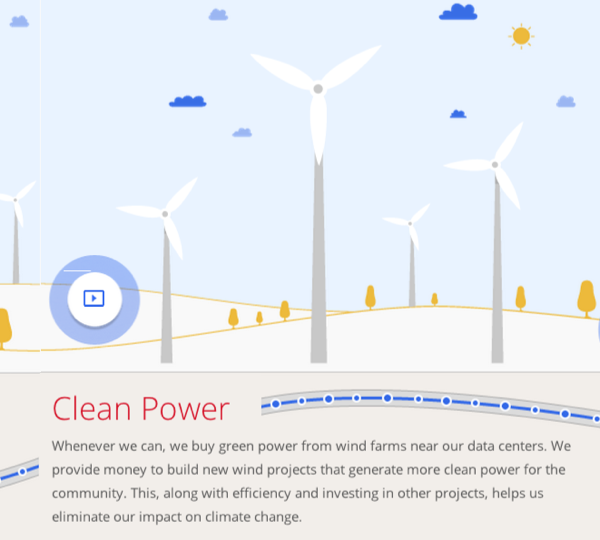
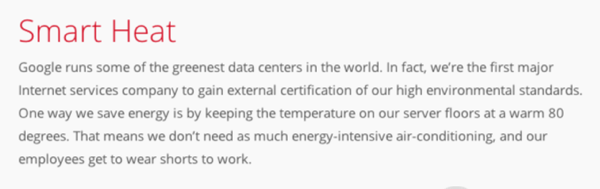
Here are some of the environmental messages in the story.
NewImage

NewImage

NewImage

NewImage

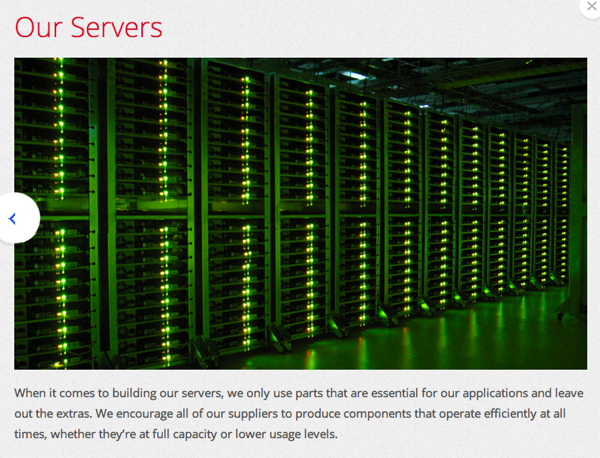
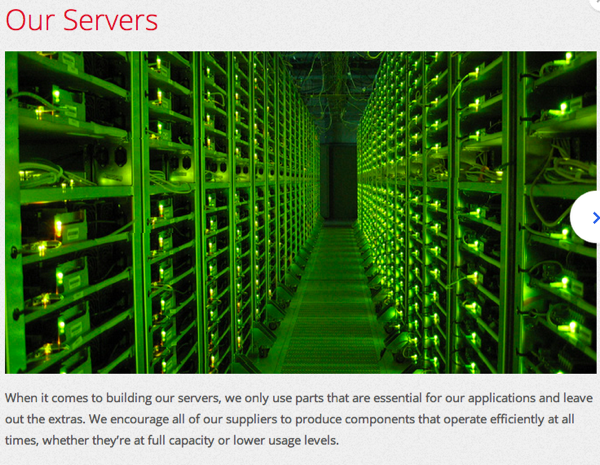
Here are some pictures of the green servers.
NewImage

NewImage


Downtime Data Center Social for planned maintenance, connecting the Thought Leaders

I like working in the Data Center Industry because of the people.  Throughout my career I have worked in specialized knowledge areas like packaging engineering & logistics, OEM product development, fonts, publishing and many others.  

Apple and Microsoft unified efforts to fight Adobe with TrueType in a font wars.  Which then led to the font groups in Microsoft, Apple, and Adobe fighting a war, but the industry was suffering.  Font wars are stupid as the end user simply wants something to work. So I spent time ending the font wars between Microsoft and Adobe creating OpenType.

Thank god I left fonts behind me in 1994 and have moved on to a bunch of other technologies.  But, it does remind that wars are many times destructive to both sides and users can be the casualties of the battles.

Luckily in the data center world companies are not fighting a war of their standards like TrueType vs. Type 1.  Well maybe the vendors are fighting battles, but the data center industry is no longer dominated by the vendors.  It is dominated by the companies who are designing, building, and running the biggest data center capacities around the world.  People who want to do the right thing and get the industry being more efficient, greener in its use of resources and energy.

One year ago we had the idea for a data center social and Mike Manos said Dave take a picture when else are you going to get this group of people together.  I didn't take a picture then.  Last night we got an even better group of people together.  Double the crowd.  And, I did take a picture.

NewImage

Of the venue without the people. :-)

With some of the top data center thought leaders connecting on a regular basis it is much easier for the industry to work together.  And not be at war.

The Downtime Data Center Social is in its second year, and a third one is going to be easy to do. Last night we discussed a Fall event possibly in the Pacific Northwest.  In the fall of 2011 a group of us went to NYC financials, and these companies are asking when we'll get together again.  We'll see if the Fall 2012 social works.  At a minimum we'll have a spring 2013 Downtime Data Social.


AOL's Uptime Symposium presentation without Mike Manos

Mike Manos posts on his AOL team attending Uptime.

Uptime, Cowgirls, and Success in California

This week my teams have descended upon the Uptime Institute Symposium in Santa Clara.  The moment is extremely bittersweet for me as this is the first Symposium in quite sometime I have been unable to attend.  With my responsibilities expanding at AOL beginning this week there was simply too much going on for me to make the trip out.  It’s a down right shame too.  Why?

My first Uptime Symposium I got to tag along with Mike and learned the ropes.  This was back when Uptime was in Orlando, and there were definitely some memories that we all laugh about as the night went late into karaoke.

Mike is bringing key members of his AOL team to Uptime and reaches out to get to know his staff.

If you happen to be attending Symposium this year feel free to stop by and say hello to these amazing individuals.   I am incredibly proud of the work that they have driven within the company.

As many of my loyal readers have pointed out my controversial post on why I am not attending Uptime Symposium stirred things up  a bit.  Now, you could say look at the AOL people I miss meeting with learning the work they have done.  The easiest way to address this is to reach out to Mike and meet all of his team at a pub.  I'll see what kind of post comes out from drinking a few beers vs. sitting in a presentation. :-) 

Data Center Innovators the guys who are willing to break the rules

I just had a great day at DataCenter Dynamics Seattle, and some of the best conversations were with the guys (sorry no offense to women, but there aren’t a whole of women in the data center design, construction, and operations) who break the rules.  Guys who don’t live in the safe zone of a risk adverse culture.

Why is this important?  Well if you have plenty of money for CapEx and OpEx for your data center it is not a problem.  But, in these times this is a dying mindset.  The survivors are those who are willing to break the rules of convention.  The so called expertise in the industry coming the long established practices has less value.

For an example, of one guy who is winning and breaking the rules check out this WSJ blog post on Ross Brawn.

Ross Brawn: The Most Dangerous Man in Formula One?

Getty Images
Ross Brawn

When Nico Rosberg won the Chinese Grand Prix for Mercedes last month, it marked a historic milestone in Formula One racing. The victory was the first by the Mercedes team in F1 since 1955, and it was Rosberg’s first on the world’s foremost auto-racing circuit after 111 races.

The WSJ post calls Ross a genius.

But it also provided confirmation of something that is become increasingly clear in recent years: In the world of F1 racing, and perhaps even the sports world period, Ross Brawn, the Mercedes team principal, may be the closest thing there is to a certifiable genius.

What does Ross do?  He knows where he can innovate.

Brawn thus has what may be an unparalleled knowledge of the arcane regulations and specifications that make up F1′s rule book. By navigating its gray areas, he has produced some of the most creative—and contentious—innovations in F1 history.

Ross’s magic is done within budget constraints.

In today’s F1, Brawn’s knack for operating at the limit of the rules is more valuable than ever. In an era when cost-cutting measures have restricted how much testing teams can do and how many technical staffers they can employ, one innovation can provide an insurmountable edge.

It is easy to break the rules when you have lots of money, but those days are gone.  The really smart data center guys are being like a Ross Brawn.

Looks Like AWS Billing has surprises like your cell phone bill, billing alerts added

Ken Oestrich has a tweet on AWS's new billing alerts.

Heh. Got AWS Billing Alerts notice today. IMO acknowledging "Umm... you may be using more AWS than you or your org realizes" + / - ?

 AWS posts on the new feature.

Monitor Estimated Charges Using Billing Alerts

Introduction
Because the AWS Cloud operates on a pay-as-you-go model, your monthly bill will reflect your actual usage. In situations where your overall consumption can vary from hour to hour, it is always a good idea to log in to the AWS portal and check your account activity on a regular basis. We want to make this process easier and simpler because we know that you have more important things to do.

To this end, you can now monitor your estimated AWS using our new billing alerts, which Amazon CloudWatch metrics and alarms.

AWS is a driven by customer requests.  Like Ken says there is a good chance that users are getting hit by higher AWS bills than they anticipated.
 
The beauty of the Cloud is it scales, but with that scale comes a higher bill.