Apple's Reno Data Center Project = $103 mil bldg + $1 bil of equipment over 10 yrs

A few of us are having some laughs as the media says the Apple Reno data center is a billion dollar data center.

Here is one example from GigaOm.

Apple looking to build $1B Nevada data center by year’s end

Apple’s North Carolina data center

Apple’s taking a billion dollars and heading to Reno, but it’s going to avoid the slots: it plans to invest the money in a data center and a separate shipping and receiving office.

I've been waiting for the public disclosure to get the numbers closer to what would not get us laughing.  Las Vegas Sun has what makes sense.

Construction of the data center just east of Sparks is expected to generate a one-time $103 million economic impact, and Apple has said it will invest $1 billion in equipment for the storage center.

The Las Vegas Sun provides details on the tax incentives passed.

Here’s how it will work: The state can waive all but 2 percent of the sales tax rate for the server equipment Apple purchases for the data center. But by opening a second location in a special tourism improvement district in downtown Reno — an office meant simply to receive shipment of those servers — Apple is eligible to be reimbursed 75 percent of the 2 percent sales tax it still owes.

That piece of the deal is up for City Council approval today.

After all of its abatements and reimbursements, Apple would pay only 0.5 percent sales tax — instead of 7.5 percent — on the $1 billion in server equipment it’s expected to buy over the next 10 years.

Personal income from the local construction is estimated to be $15 million.

An economic impact analysis — named “Project Jonathan” after the medium-sized sweet apple to hide the company’s identity — estimates it will generate 329 direct and indirect jobs for the community with a total personal income of $15 million.

When you see all these facts, you can see why a $1B data center is a hype to get people to think it is a big deal.

This is a $100 million data center with 0.5% tax rate on $1B of IT equipment purchased over 10 years.  Would you be excited by the $5 mil in sales tax collected over 10 years from Apple's presence?  Apple got a great deal.

Google's Future Cloud Service: Project Glasses Demo Video

Google is adding more and more data center capacity.  What are they doing besides search, Youtube, and GMail.

Check out this video for a future Google Cloud Service: Project Glasses.

Here are more details if you would like to read instead of watch.

Google wants developers to take a leap with Project Glass

Sergey Brin’s extreme sports demonstration of Project Glass at Google I/O will likely go down in history as one of the most daring tech conference stunts of all time: The Google co-founder stormed on stage Wednesday, interrupting the regular keynote to show off Google’s wearable computing project by joining a live Hangout session with a bunch of skydivers, who proceeded to jump out of a plane.

Netflix's approach to innovation, get out of the way

Isn't it funny how many company's answer to innovation is to make it an objective and goal of the company.  IBM has even created an event called Innovate.

NewImage

An entertaining post on innovation is by Netflix's Adrian Cockcroft where he uses Netflix streaming media shows as slides.

How Netflix gets out of the way of innovation

 
#defrag 2011 presentation script.

I'm the cloud architect for Netflix, but rather than tell you about why we moved Netflix to a cloud architecture or how we built our cloud architecture, I'm going to tell you what we do differently at Netflix to create a culture that supports innovation.

What is it that lets us get things done very quickly. Sometimes a bit too qwikly…. but how did we keep making big strategic moves, from DVD to streaming, from Datacenter to Public Cloud, from USA only to International, all in very short timescales with a fairly small team of engineers.

My presentation slides are just box-shots of movies and TV shows that are available on Netflix streaming. This script is based on the notes I made to figure out what I was going to say for each box shot. If some of you see a show you didn't know we had and want to watch that would make me happy, you can click on the box shot to visit that movie at Netflix, they were all available for streaming in the USA at the time of writing.

The post is long, so let me help you to the part I found useful.


What I found out over the next few years is that the culture is what enables innovation, so that Netflix can get things done quickly that other companies are too scared or too slow to try. The rest of this talk is about the key things that we do differently at Netflix.

And Andrian's warns this guidance is most likely not useful for a large established company.


Before I get into them I want to warn you that even with a roadmap and a guide, you probably won't be able to follow this path if you are in a large established company. Your existing culture won't let you. However if you are creating a new company from scratch, I hope you can join me in what I hope is the future of cool places to work.


Here's the key insight. It's the things you don't do that make the difference. You don't add innovation to a company culture, you get out of its way.


GigaOm Structure, A Data Center event for thought leaders

This year was my second time attending GigaOm Structure.  There were some very famiiar faces I see at GigaOm Structure - Rich Miller from DCK, Kevin Timmons from Cyrus One, and Frank Frankovsky from Facebook are a few I had a chance to talk to.  

One of the things that struck me in the presentations is how much data centers are discussed.  Then, it hit me that the folks data center folks who attend are part of the thought leaders.  Amazon Web Services Werner Vogel has spoke for the full 5 years of Structure.  

Here are some of the companies that have booths.  There are many more that I didn't take pictures of.

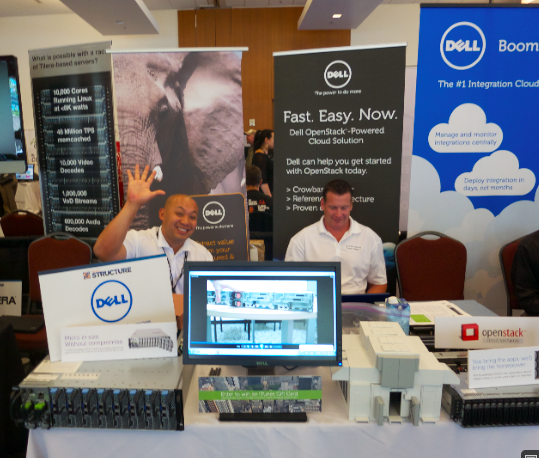
Dell with DCS servers, modular data centers, and cloud Boomi.

NewImage

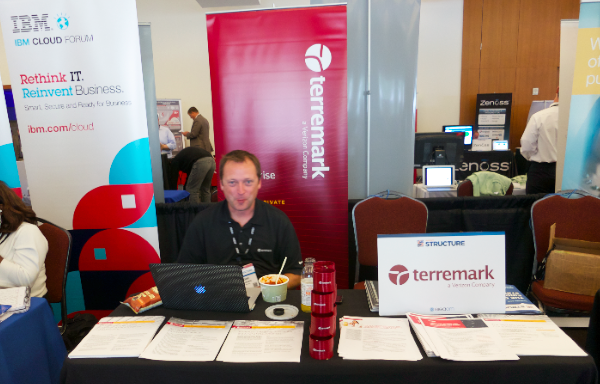
Verizon/Terramark with a bit of IBM in the background.

NewImage

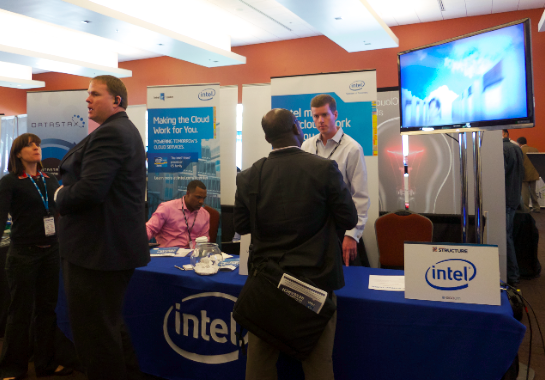
Intel is in force with cloud solutions.

NewImage

Equinix and Seamicro is the background.

NewImage

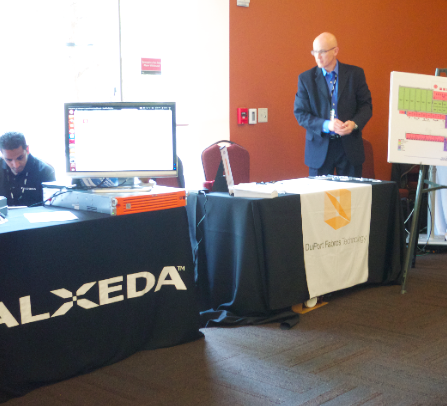
Calxeda and Duport Fabros

NewImage

Cloud Oxymoron: 91% IT decision makers like the cloud, yet 43% business users skip central IT

Rackspace has a press release on its survey that finds nine in ten IT decision makers support the cloud.

Rackspace Hosting Reports Nine in Ten IT Decision Makers in National Survey Have Positive View of Cloud Computing

0

Overwhelming Majority of Decision Makers Believe Customer Service and Technical Support

Are Important Considerations When Choosing Cloud Provider

San Antonio, TX, June 25, 2012 – Nine in ten (91%) of IT decision makers have a positive opinion of cloud computing according to a national survey commissioned by Rackspace Hosting.  IT decision makers view customer service and technical support as important considerations when choosing a cloud computing provider.

But, when I read the press release an Oxymoron comes out.

An oxymoron (plural oxymorons or oxymora) (from Greek ὀξύμωρον, "sharp dull") is a figure of speech that combines contradictory terms. Oxymorons appear in a variety of contexts, including inadvertent errors such as ground pilot and literary oxymorons crafted to reveal a paradox.

The contradictory idea is the same people who filled out the survey have a wide number of users that bypass the corporate IT group for cloud services.

Rogue IT is Prevalent

Nearly half (43%) of decision makers surveyed are aware of people taking it upon themselves to use cloud computing services or resources not provided by their organization’s IT department in order to help with work projects.   Among respondents reporting someone in their organization using cloud services independently of the IT department, 38% said the main reason is to save time.  One in three respondents believe it was because the solutions were not available internally or because it was a way to not deal with the organization’s IT department.

Now you can explain this many different ways.  Let me give you simple way to look at this.  Corporate IT is a huge group with lots of lots of employees.  The Cloud is a threat to their jobs.  So, whenever a cloud project is brought into corporate IT, a lot of what goes on are attempts to educate the users that they should be using corporate IT staff to run their cloud projects.  This delays the project and increase the costs.  

Wouldn't it be amazing if corporate IT said we can execute cloud projects faster and cheaper than you can on your own.  Shouldn't this be true if corporate IT really had Cloud skills?

What the cloud is doing is giving business users a freedom of choice.  The past corporate IT was a monopoly.

“Cloud computing is spurring innovation by enabling business users and developers to deploy, configure and adapt faster,” said John Engates, chief technology officer at Rackspace.  “The survey confirms the rapid migration to the cloud as IT leaders reap the benefit of spending more time creating and less time configuring.”

The harsh reality of the cloud is it eliminates jobs in corporate IT.  If it doesn't eliminate jobs how do you expect to save money?  Rackspace, Softlayer, and Amazon Web Services would go broke if they had the manpower overhead of corporate IT.

The evil part of The Cloud is it is threat to the large mass of people in IT.  Amazon, Facebook, Google, and others are proud they have one sys admin taking care of up to 10,000 servers.