Marines learning lessons of operating power systems to reduce power consumption

Forbes has an article that goes into some details of the challenges of the US armed forces in places like Afghanistan.

Marines Pursuing Climate Control Solutions To Reduce Battlefield Fuel Consumption

In the pre-dawn hours on July 18, an explosion ignited a fire that destroyed 22 NATO fuel tanker trucks parked overnight in Samangan province, Afghanistan. The Taliban claimed credit for planting the bomb that struck the convoy, which was carrying fuel to coalition forces in the south. The attack, the first-of-its-kind in northern Afghanistan, according to the BBC, was the latest in a years-long effort by the Taliban to cripple the fighting capability of NATO forces by targeting fuel convoys.


One of the lessons learned is that running systems in energy efficiently can lead to lower maintenance costs and better uptime.

Though relatively reliable, such a system is woefully inefficient. Newell explained that Marines who handle utility services are taught to match the peak load to an 80% load on the generator – if the maximum load is 8 kilowatts, it calls for a 10 kilowatt generator. “I’m in the middle of nowhere; I can’t go without power,” he said.

The problem with a system designed to meet the peak load is straightforward – outside of winter, when demand peaks because of the heating load, the generators are not operating optimally. The median demand in the field, Newell said, is about 32% of the capacity of the generator. This leads to “wet stacking,” where unburned fuel ends up in the exhaust system. Run the generator this way for long and maintenance goes up, the life of the system goes down, and fuel is wasted.

So, to solve this problem, the Marines tried using batteries.

Partner energy storage with a generator, Newell said, and “I can ensure that anytime that generator is on, it’s running at 80% to 100% load. My fuel efficiency went up, my hours went down. I have more quiet hours.

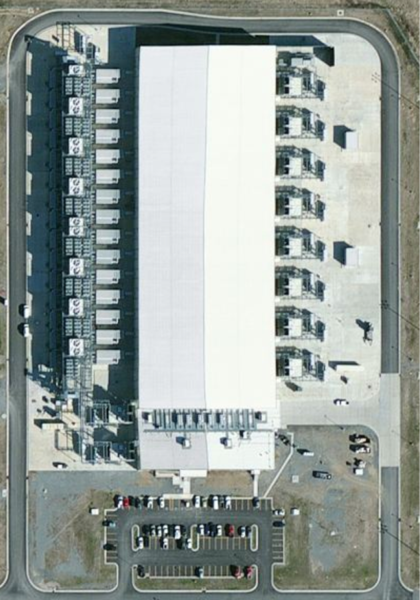
What's Google Fiber, 1 gigabit connectivity good for? A load test for planning the future

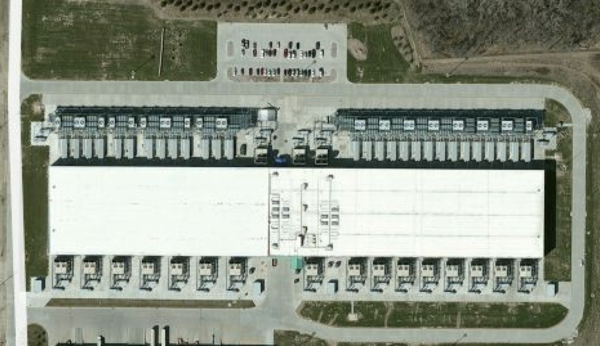
A friend asked me what is next for Google data center group?  They build and design their own servers.  Design, build, and run their own data centers.  Google has tackled the network issues with a software defined network (SDN).  You can gather a bit from looking at job postings, but nothing really interesting popped up when I looked at the job postings.  What I did notice is a data center expansion that few know about, but I'll wait and see when others discover it rather than write a post on it.  Sometimes it is  better to share insights with friends rather than put a blog post up.

So, what is Google's next big thing?  I was reading GigaOm's Stacey Higginbotham's posts on Google fiber.  Stacey posted on the July 26th announcement.

Google Fiber to launch next week

Google just sent out invitations to a “special event” in Kansas City on July 26 which is undoubtedly the launch of its much-anticipated fiber-to-the-home network. The search giant sent an invite Tuesday that reads, “We would like to invite you to a special announcement about Google Fiber and the next chapter of the Internet.”


I'll be traveling on July 26th so I'll be slow in covering the news, so let's take a stab at what Google Fiber gives Google.

I think it is relatively simple.  Google fiber connects users with a 1 gigabit bandwidth connection vs. a more typical 10 megabit to the home.   Remember the days when the corporate LAN was 10 megabit, and it was a privilege to have 100 megabit?  1 gigabit is the common connection in corporate LANs now, and data centers are networked with 10 gigabit.

Google Fiber will have 600k population in Kansas City, MO and KS and thousands, ten thousand, maybe eventually a hundred thousand 1 megabit connections to two of its data centers in Iowa and Oklahoma.  

NewImage                  NewImage

Google is going to be able run load tests on these data centers with 1 gigabit connections to thousands of users.

Load testing is the process of putting demand on a system or device and measuring its response. Load testing is performed to determine a system’s behavior under both normal and anticipated peak load conditions. It helps to identify the maximum operating capacity of an application as well as any bottlenecks and determine which element is causing degradation. When the load placed on the system is raised beyond normal usage patterns, in order to test the system's response at unusually high or peak loads, it is known as stress testing. The load is usually so great that error conditions are the expected result, although no clear boundary exists when an activity ceases to be a load test and becomes a stress test.

With this data Google will be able to more accurately plan for when 1 gigabit will be pervasive what kind of changes are needed in the data centers, servers, networking storage, software, operations to run 1 gigabit connections.

Google will get great coverage on July 26th and there will be all kind of discussions on what gets delivered over the gigabit connection.  But, ultimately all these different scenarios are just a bits over the wire that will put a load on the above data centers.

All that use is going to give Google data on well their infrastructure holds up and what is required in the future.

Google fiber is a load testing of Google's data center, servers, networking, storage, software and operations.

NewImage

NewImage

Michael Dell talks about Servers and China which gives you an idea of data centers

Michael Dell had an interview with Fortune magazine that includes a transcript.

Transcript: Michael Dell addresses Dell's future

July 17, 2012: 3:55 PM ET


Michael Dell, Chairman and CEO, Dell, was interviewed by Fortune's Andy Serwer at Brainstorm Tech in Aspen. They talked about the PC market, the enterprise, China, and Apple. 

In the interview here was the part that gets my attention.

ANDY SERWER:  Michael, what about your business in China?  What is that like and are you feeling the effects of any slowdown there?

MICHAEL DELL:  It's on the order of a $5-billion business, so it's a sizeable business for us.  It's the largest business outside the United States.  I can tell you that there are some challenges in China right now.

ANDY SERWER:  Be more specific, it's a really important topic I think.

MICHAEL DELL:  I'm going to be there in early September with our board of directors.  I'll give you a better update after that.  But I think, generally speaking, the demand for technology in China is tremendous.  You know, we think about 60 percent of the Chinese Internet runs on Dell servers, and so we have a huge success in selling our infrastructure solutions to those Chinese companies.  Anybody who's doing anything mission critical like stock exchange, a bank, a power grid, you know, those are our customers.  You know, we're designing the IT architecture for, you know, a lot of the key state-owned enterprises with our services group.  And we've acquired Bearingpoint to be able to kind of fuel that.

So, our business is fully integrated in China across all aspects, and it's 100 percent Dell owned.  So, we love the business, it's an important business.  And emerging markets are a big deal for us because the next billion users are coming from these countries and the next ten.

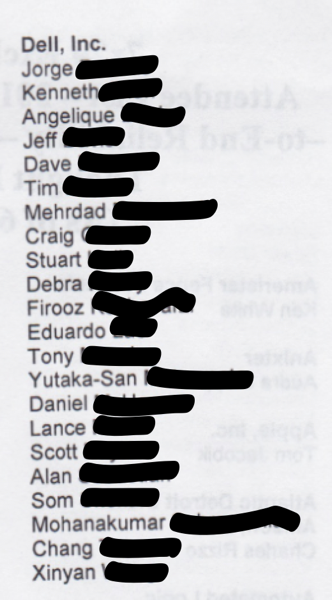
Data Centers are not specifically mentioned.  But, here is another piece of data.  Here are 15 Dell data center engineers who were at 7x24 Exchange who later had a group offsite.  There are some top people recruited from other companies.  Most of these guys were brand new to Dell working on a new data center service.
NewImage
 
HP and IBM have also been focusing on China data center projects.  It is tough to know who is winning in China, but Michael Dell is confident he has 60% of the server business. 
 
 
One of Dell's customers in China is Tencent.

ANDY SERWER:  I'm digressing, Michael.  Maybe it's a flashback.  In any event.  I want to know what your relationship with the consumer is.  What do you make for the consumer and how important is it?  And how much does it tie into the enterprise from your perspective?

MICHAEL DELL:  It absolutely ties in, and you're right, the consumerization of IT is a big deal.  And the growth in mobility and in smart phones and tablets is absolutely an enormous part of what's going on in IT.  And it has all sorts of implications across the whole, you know, sort of ecosystem.

So, you know, I'll give you an example.  One of our customers is a company in China called Tencent.  And Tencent has like 650 million customers and they're all people who use phones.

Here is a Dell Power and Cooling web page.

Dell shrinks the Container Data Center to 45kW, targeting the Military Market

Ever since the 40' container wave started I have made the point that most have not gone through the exercise on what is the right size for a container.  Dell has announced the MDC - Mobile data center - 45 kW of IT capacity.

NewImage

The Dell press release is here.

Deployable to any location, Dell’s Tactical Mobile Data Center can expand customers’ current data center, used as a back-up or recovery site to provide disaster recovery services or create new data centers in remote locations. The system can operate under a wide range of temperatures and conditions allowing for powerful operations in many environments. 

“Many of our military and government customers are forced to quickly deploy to remote environments, like combat outposts in Afghanistan, or even in more developed communities following a natural disaster,” said Joe Ayers, vice president and general manager, Dell Federal. “In today’s operational environment in order to have access to the tools and information most organizations need to accomplish their mission, they must also have a robust IT infrastructure, and we’ve designed this solution specifically to meet the needs of these very special customers.”

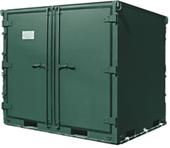
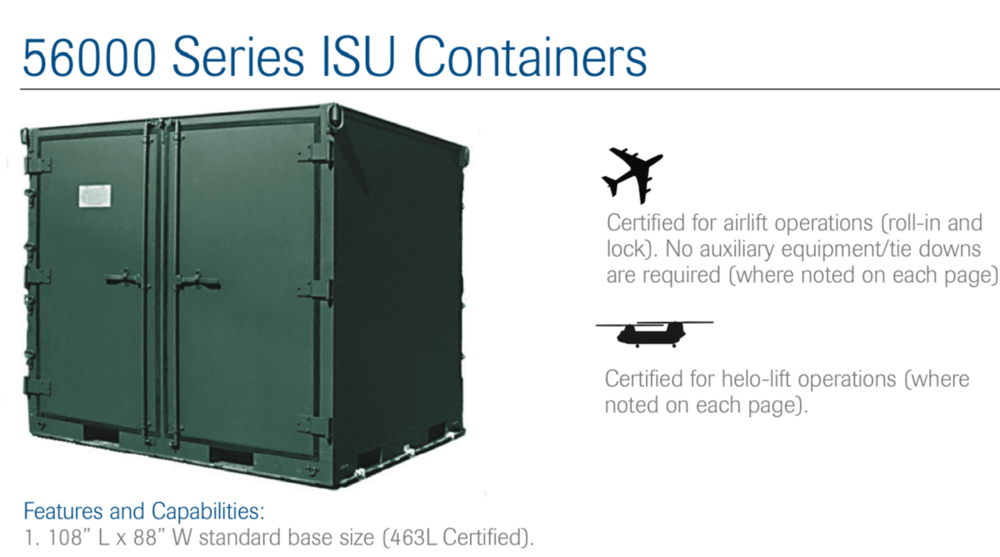
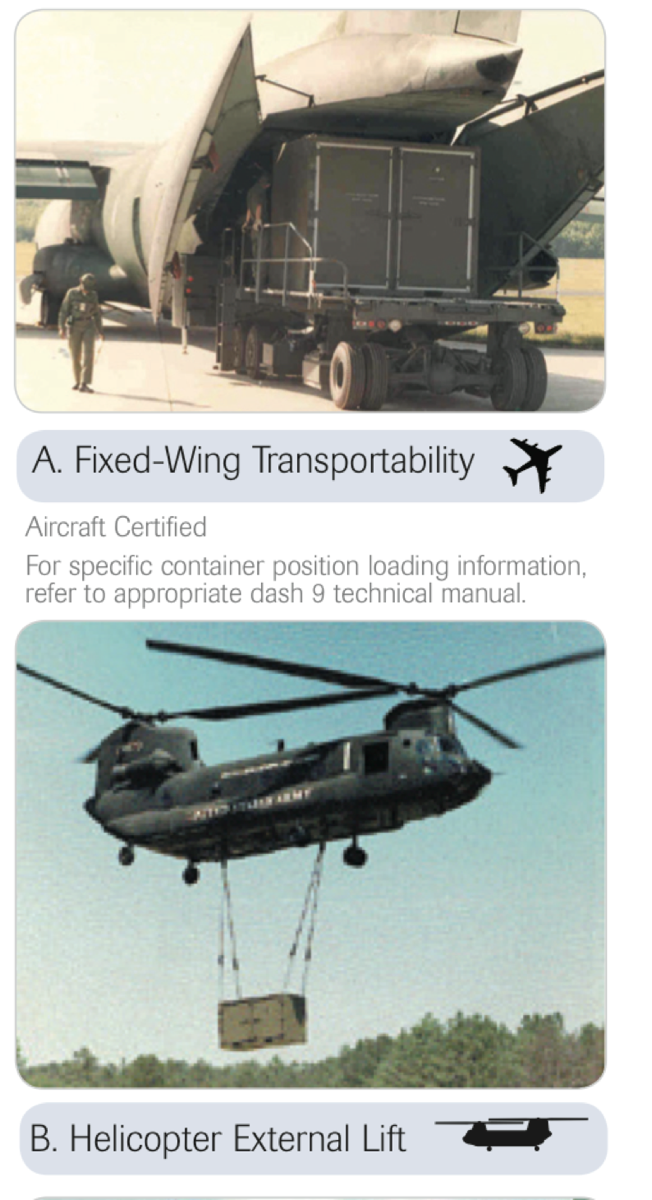
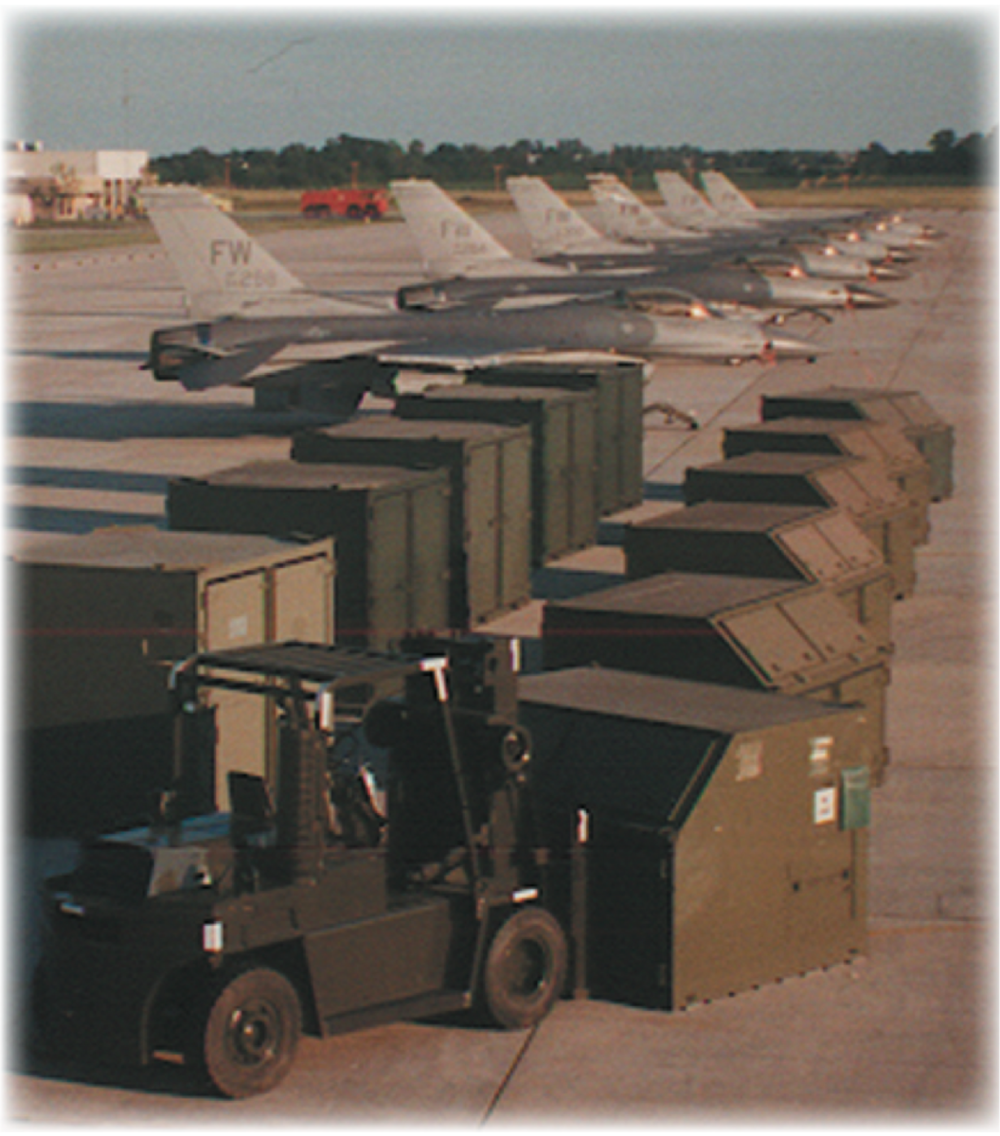
It fits in military airframes and can be forklifted into place. Dimensions look to be 108"L x 88"W x 96"H an ISU-96 size used by the military.

NewImage

NewImage

NewImage

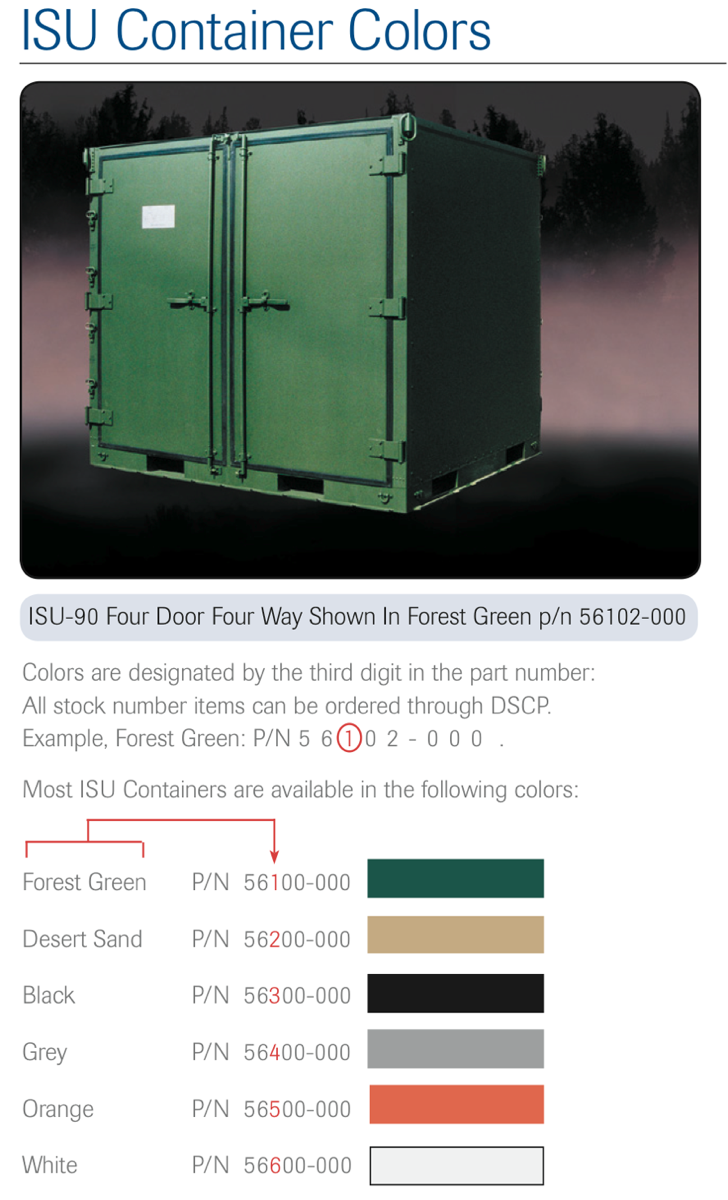
I wonder if Dell will offer the color options that AAR mobile systems does.

NewImage