VMware's Paul Maritz hands off the Software-Defined Data Center

Today is the last day of Paul Maritz's job as CEO of VMware.  Some have speculated that Paul's move to EMC corporate was a demotion.  When I hear this, I immediately tell people no way was Paul demoted.  I was lucky to work at Microsoft at the time when Paul was considered the #3 man, behind Bill Gates and Steve Ballmer.  Yes, the CEO of VMware was the #3 man at Microsoft, and if still there would be the #2 man or #1 if Steve Ballmer left.  But, that would assume Paul survived the political changes at Microsoft.

Paul will be back home in Pacific Northwest.  Paul would fly on the Alaska Air flight regularly from Seattle to SJC, and then fly home.  I've seen him on the flight and many other VMware employees.  Now, Paul can go back to having Seattle as his base, taking the Seattle to Boston flight to EMC, but at least not every week to EMC HQ.
NewImage

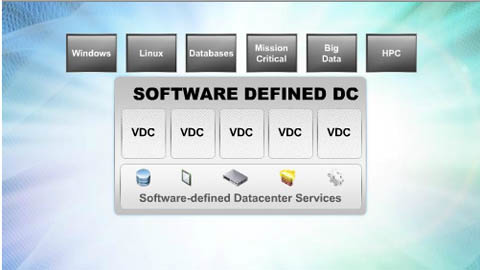
Paul's finishing deliverable is the Software-defined data center.
NewImage

CIO.com writes a bit more background on Paul's background.

Filling Maritz's shoes will be no easy task. Maritz has long been a luminary of the industry. He was president and general manager of EMC's Cloud Computing Division before his appointment as CEO of VMware in 2008. Prior to that, he spent 14 years at Microsoft and was widely regarded as the third-ranking executive at the software behemoth, behind Bill Gates and Steve Ballmer. He was in charge of Microsoft's desktop and server software, overseeing the development of Windows 95, Windows NT and Internet Explorer.

During his four years as CEO of VMware, Maritz helped dramatically increase the company's fortunes. When he took charge in 2008, about 25 percent of the world's Intel-based applications were running on a virtualized base. Four years later, that figure is 60 percent. In that same period, the number of VMware certified professionals has risen from 25,000 to 125,000.

"Back in 2008, we were asking ourselves what the hell is it," Maritz said of cloud computing. "Now we're asking ourselves: What do we do about it? How do we actually implement it? How do you transform your operations to take full advantage of it? What's going to happen in four years' time? Where are we going with this technology?"


NASA uses Android phones for satellites, maybe machine control systems are next

NASA has figured out that using an Android Phone is a cheaper way to build satellites.


Aug 27, 2012 - 10:30AM PT


Google in Space: NASA powers mini-satellites with Android phones

BY 

NASA is experimenting with new satellites that use off-the-shelf electronics to cut down on costs. At the heart of its new nanosatellite is a Google Nexus smartphone, which has both the processing power to run the orbiter and the sensors it needs to perform its mission.

NASA PhoneSat 1 testing

Today’s smartphone has many times the processing power of all the used computers during the Apollo moon landings. So why not use the smartphone to control a spacecraft? That’s the approach NASA is taking in latest project, which uses off-the-shelf to electronics, including a Nexus One Android phone, in the construction of a new nanosatellite.

As Android's growth continues, it seems that some time soon Android devices will go into the machine control systems.  Wouldn't it be nice if the same developers who work on mobile phones could develop for machine control systems.  Maybe your data center in the future will run on Android.

Worse Power Outages in the World

National Geographic has a nice article with the largest power outages is the world.

Pictures: World’s Worst Power Outages

NewImage

Northeastern U.S. and Canada, 1965

Photograph by Bob Gomel, Time Life Pictures/Getty Images

A full moon created an eerie skyline silhouette after New York City went dark during the blackout of November 1965. In a world that's increasingly dependent on constant power, massive electrical outages are a common concern and may strike systems across the globe.

Gets you thinking about how the local data centers weathered the outages.


VMware joins Openstack, who is next?

GigaOm's Barb Darrow reports on VMware joining Openstack.

Surprise! VMware will join OpenStack

Never say never. VMware is about to join the OpenStack Foundation, a group initially backed by other industry giants as a counterweight to VMware’s server virtualization dominance. Intel and NEC are also on deck to join as Gold OSF members.

OpenStackLogo

Just in time for VMworld, VMware is about to join the OpenStack Foundation as a Gold member, along with Intel and NEC, according to a post on the OpenStack Foundation Wiki.  The applications for membership are on the agenda of the August 28 OpenStack Foundation meeting.

The guys at VMware figured its worth the money to play in a group that was started as an anti-VMware solution.

OpenStack Gold members, which include Cloudscaling, Dell, MorphLabs, Cisco Systems, and NetApp, pay a fee pegged at 0.25 percent of their revenue — at least $50,000 but capped at $200,000 according to the foundation wiki.  (VMware’s fee will be $66,666, according to the application, submitted by VMware CTO Steve Herrod, which is linked on the wiki post.) Platinum members —  AT&T, Canonical, HP, Rackspace, IBM, Nebula, Red Hat, and SUSE – pay $500,000 per year with a 3-year minimum commitment.

Who else is next to join Openstack?  

When Rackspace and NASA launched the OpenStack Project more than two years ago, it was seen as a competitive response to VMware’s server virtualization dominance inside company data centers and to Amazon’s heft in public cloud computing.