The man (men) behind Blackberry's Developer Effort

News.com has an article about Blackberry reaching out to the developer audience.

Saunders has embraced a concept that RIM had long ignored: that developers and a healthy app "ecosystem" can make or break an operating system. He's tried to make the company more accommodating and responsive to developers. It's the touchy-feely stuff RIM execs never thought was important.

Alec Saunders, vice president of developer relations.

(Credit: RIM)

Two years ago I was standing in line for drink at GigaOm Structure and Alec and I were standing next to each other. We were trying to remember where we worked together.  Win95, yeh.  We caught up a bit and Alec said I really need to find a HW Evangelist Director.  Hey how about Bob T from Win95 days.  Alec said Bob would be perfect.  Great, let me call him now.  Bob this is Dave, you looking for a job. yeh. Here talk to Alec he has a job for you.  BoB T works for Alec within a month.

One of the reasons why Alec is doing well is Bob T is building an evangelism team using the Win95 game plan.  

Some things don't change and having people who know how to execute with developers is a skill that doesn't get old, even though we do.

It is ironic that two ex-Microsoft guys are key executives in the Blackberry developer ecosystem.

Data Center conferences for the experienced ME new to data centers

Going to data center events are difficult to figure out for a newbie.  There is so much specialized knowledge and there are many sub groups that exist within the ecosystem.  I met a company with lots of mechanical engineering expertise in cooling systems, but they are newbies to the data center industry.  The following are events that I suggest they look at attending.  

7x24 Exchange Conferences are a nice mix of data center mechanical types, interesting presentations, and plenty of time to socialize.  http://www.7x24exchange.org/conferences.html

Spring 2013
June 2-5, 2013
Boca Raton Resort & Club
Boca Raton, FL
2013 Spring Conference


Conference Quick Links:


For information about sponsoring a 7x24 Exchange event please
contact Brandon Dolci, CMP at (646)486-3818 x108 or click here.

Data Center Dynamics are good for one day events that reach out to the locals from an area.  Here are the USA events.  http://www.datacenterdynamics.com/conference

North America

Data Center World can be useful to understand the vendor ecosystem. http://www.datacenterworld.com/spring2013/

Uptime Institute Institute is another event, but if you go to 7x24 Exchange and DCD regional events, there is not really a pressing need to go to Uptime Symposium.  I plan on skipping Uptime again. http://symposium.uptimeinstitute.com

Gartner Data Center Conference is oriented towards the users who subscribe to Gartner reports which in general is not a Mechanical systems crowd and is more oriented to the IT decision maker who runs data centers. http://www.gartner.com/technology/summits/apac/data-center/  I went to Gartner for a couple of years, but no longer go as few of my friends are subscribers of Gartner reports.  Well, actually I can't think of any of the thought leaders I know who aren't vendors who go to Gartner.

Another conference which I have never attended is the Green Data Center Conference. http://www.greendatacenterconference.com  I haven't heard from any friends with glowing reviews to get me to go, so I skip this one as well.

For thought leadership and more entrepreneurial companies i go to GigaOm Events. http://event.gigaom.com which are convenient given I do some work for GigaOm Pro.  There are some data center vendors who are sponsors Dell, Terremark, Rackspace, Softlayer, Amazon Web Services, Dupont Fabros, Equinix

SW = HW Google's Jeff Dean, employee #20

Google has some really smart people and there is an inner circle of smart rich people who keep Google infrastructure going.  Silicon Valley has an article on Google's Jeff Dean.

How Google's Jeff Dean became the Chuck Norris of the Internet

By Will Oremus, Slate


"The speed of light in a vacuum used to be about 35 mph. Then Jeff Dean spent a weekend optimizing physics." — Jeff Dean Facts

Jeff Dean facts aren't, well, true. But the fact that someone went to the trouble to make up Chuck Norris-esque exploits about Dean is remarkable. That's because Jeff Dean is a software engineer, and software engineers are not like Chuck Norris. For one thing, they're not lone rangers - software development is an inherently collaborative enterprise. For another, they rarely shoot cowboys with an Uzi.

Jeff is a low level guy who gets to the bits running on the HW.  What really smart people like this get is it is all about processing bits.  Processing bits is done in SW and HW, and sometimes SW changes the HW. 

Nevertheless, on April Fool's Day 2007, some admiring young Google engineers saw fit to bestow upon Jeff Dean the honor of a website extolling his programming achievements. For instance:

Jeff Dean (Courtesy: Google)

Compilers don't warn Jeff Dean. Jeff Dean warns compilers.

Jeff Dean writes directly in binary. He then writes the source code as documentation for other developers.

When Jeff Dean has an ergonomic evaluation, it is for the protection of his keyboard. Jeff Dean was forced to invent asynchronous APIs one day when he optimized a function so that it returned before it was invoked.


Here is a bit of a peak into the inner circle fueled by cappuccinos

Almost every morning, he comes into work at the GooglePlex in Mountain View, Calif., and sits down for coffee with the same core group of people. "We've made 20,000 cappuccinos together" over the years, he estimates. These people don't all work together. In fact, as Google has grown, some have moved to different buildings on opposite sides of the campus. But when they get together to dish about what they're doing, their problems spark ideas in one another, Dean says. These coffee talks are what has enabled Dean to put his expertise in optimization, parallelization and software infrastructure to work on such a wide array of projects. That and healthy doses of ambition and confidence. "He's always very enthusiastic and optimistic about how much we can get done," says Ghemawat, his longtime collaborator. "It's hard to discourage him."

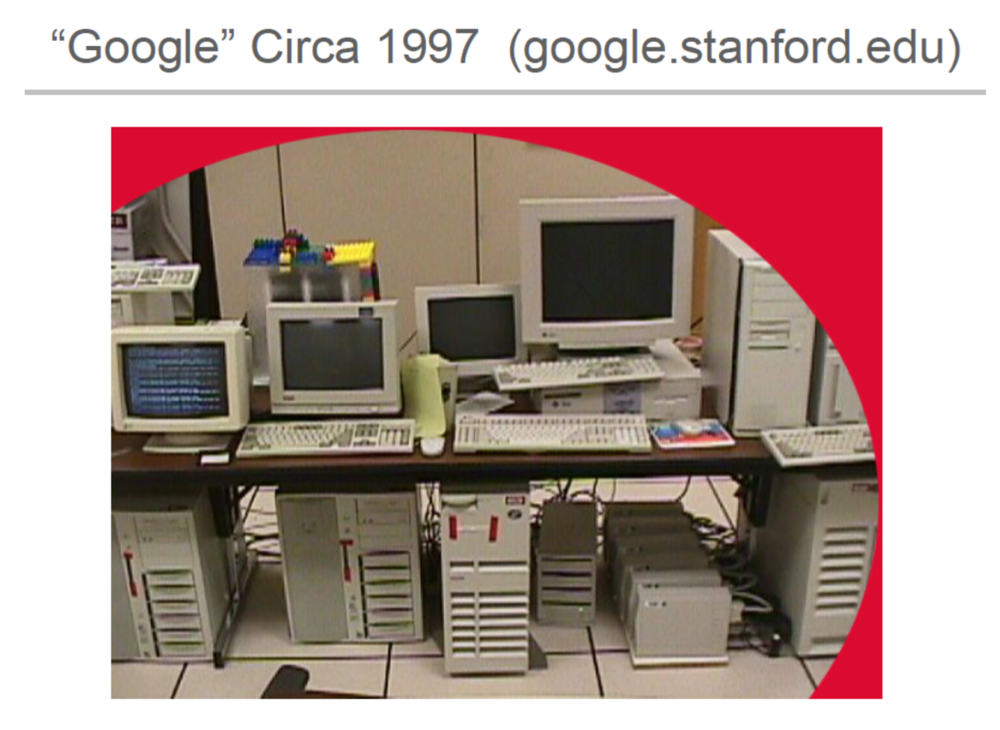
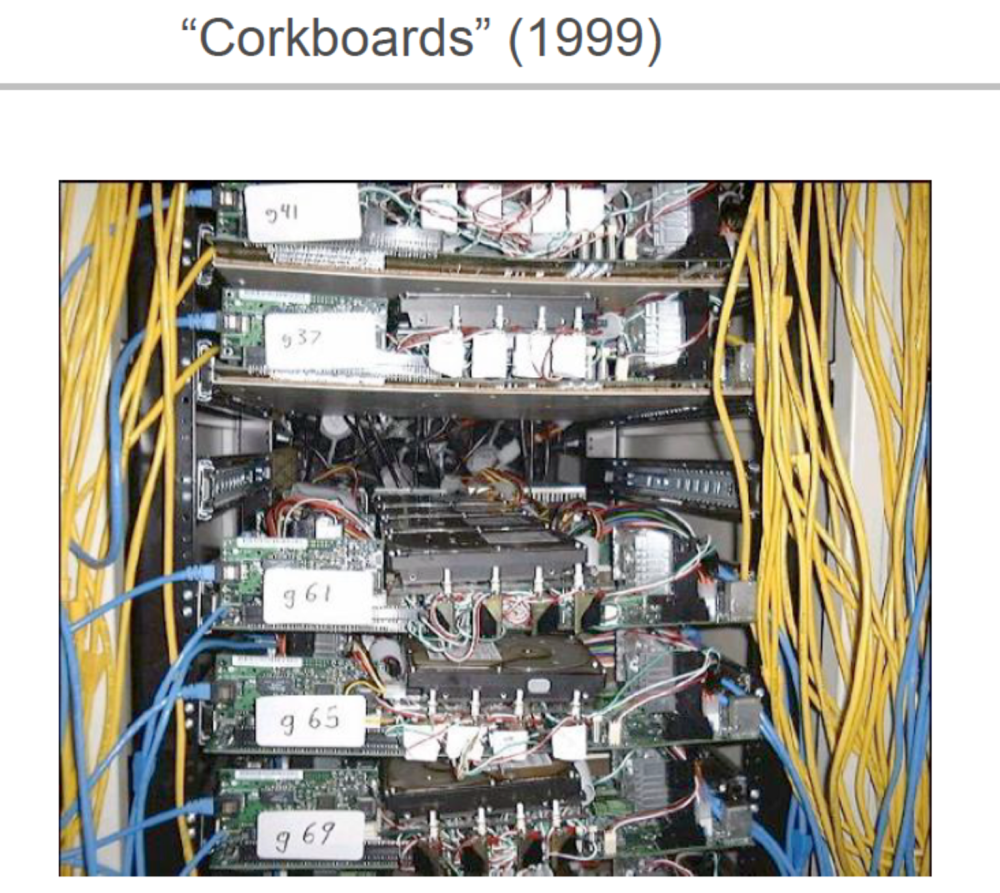
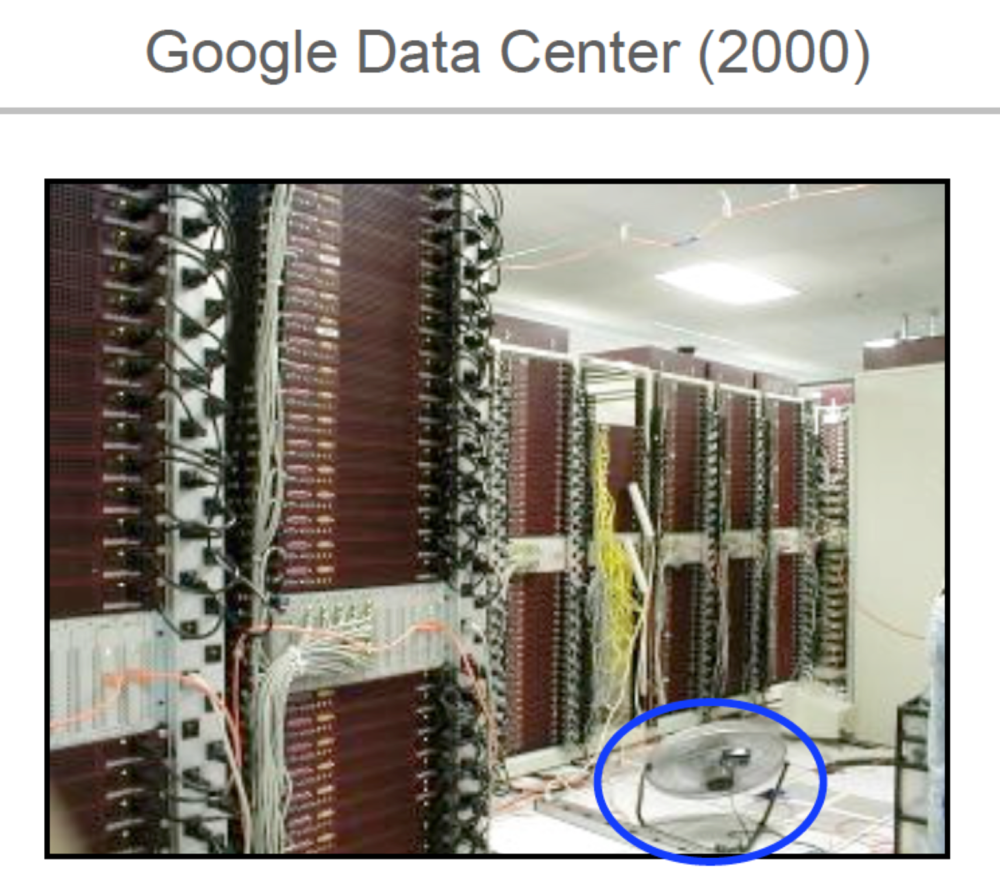
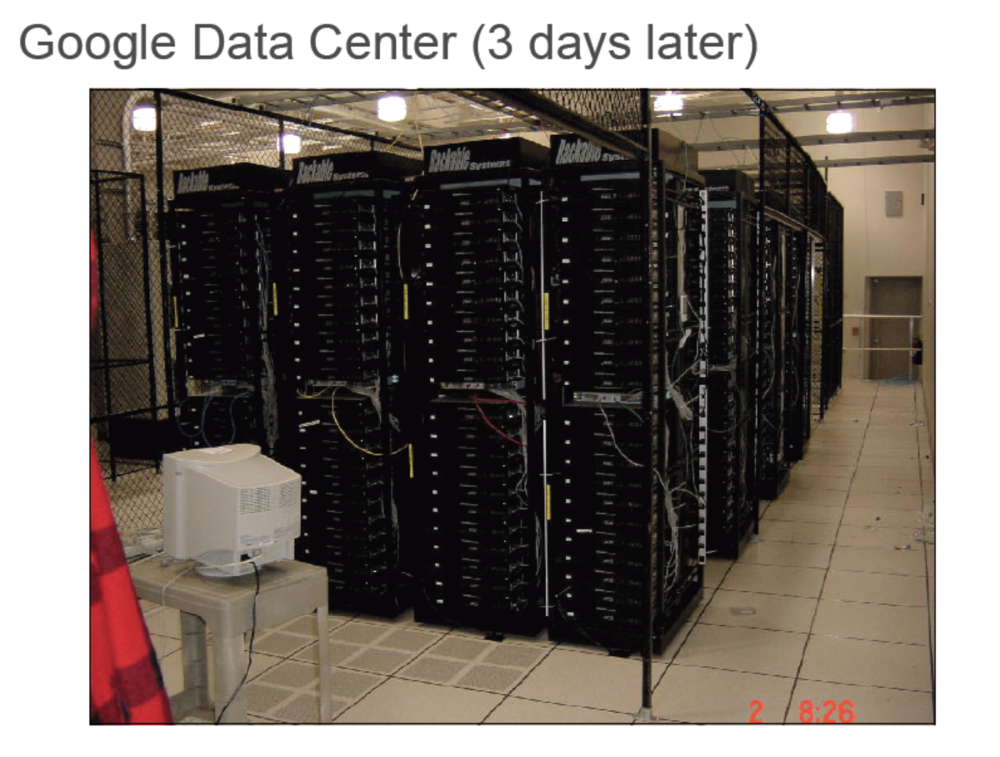
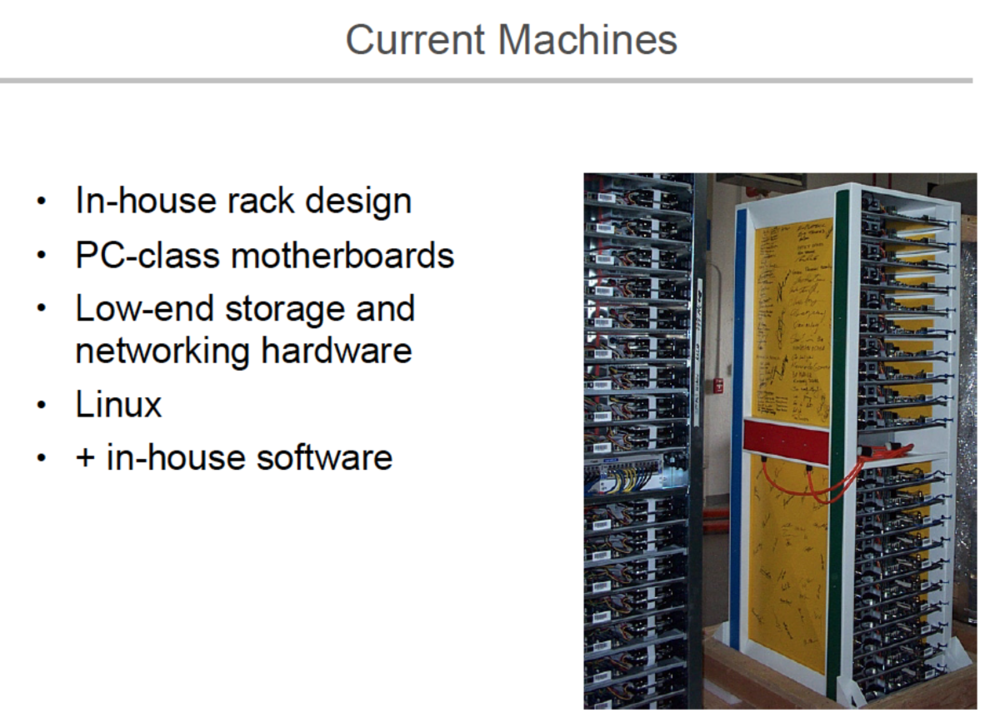
Here is a presentation that Jeff did on Google in 2009, it gives you some history and pictures of what Google Data Centers used to look like.


NewImage
NewImage
NewImage
NewImage
NewImage

Boeing's mistakes are lessons to learn from, maybe SOX conflicts with Quality

Chris Crosby writes a post on Boeing's three bid process which meets SOX compliance contributed to the 787 problems.

The Folly of the Three-Bid Model: A Thesis on How SOX Grounded a Dream

I just read about about another emergency landing for a 787 Dreamliner in Japan. Apparently, they have grounded them all. I don’t know about you, but I will find it pretty hard to set foot on one of these flying Rube Goldberg contraptions. The Dreamliner name seems to be somewhat on track from a naming perspective; however, I think Nightmare-liner would have been a little more accurate. The product from Boeing has been horribly late to market, had an incredible amount of publicly reported issues through design to production (just imagine how many issues weren’t leaked to the public), encountered union issues during the build, was way over budget, etc.

In Chris's post he makes the point that a three bid process will show you meet SOX compliance, but this flies in the face of what Quality expert Deming recommends.

In the 1982 book Out of the Crisis, Dr. W. Edwards Deming highlighted point number 4 of his 14-principles of management is as follows: “End the practice of awarding business on the basis of a price tag. Instead, minimize total cost. Move towards a single supplier for any one item, on a long-term relationship of loyalty and trust.” Total Quality Management (as well as the supremacy of the Japanese car manufacturers in the late 70s, 80s and 90s) came from Dr. Deming. His principles are the foundation for programs like Total Quality Management and Six Sigma. He theories turned into reality helped to solve the paradox of Low Cost and High Quality. Here’s an example of the impact of Deming, courtesy of Wikipedia:

In the 1980s, Ford Motor Company was simultaneously manufacturing a car model with transmissions made in Japan and the United States. Soon after the car model was on the market, Ford customers were requesting the model with Japanese transmission over the US-made transmission, and they were willing to wait for the Japanese model. As both transmissions were made to the same specifications, Ford engineers could not understand the customer preference for the model with Japanese transmission. Finally, Ford engineers decided to take apart the two different transmissions. The American-made car parts were all within specified tolerance levels. On the other hand, the Japanese car parts were virtually identical to each other, and much closer to the nominal values for the parts – e.g., if a part was supposed to be one foot long, plus or minus 1/8 of an inch – then the Japanese parts were all within 1/16 of an inch. This made the Japanese cars run more smoothly and customers experienced fewer problems. Engineers at Ford could not understand how this was done until they met Deming.

Some things done the old way worked.  Here is post by an ex-Boeing Director of Quality Assurance.

Bob  Bogash,  retired after more than 30 years with the Boeing Commercial Airplane Group, spent the last 9 years of his career as  the  Director  of  Quality Assurance for the Materiel Division.  In this position, Bob was responsible for the on-time production and quality  of all the non-Boeing produced hardware and software used on Boeing commercial jetliners.  More than 3000 outside suppliers in more than 20 countries delivered more than one billion parts a year to Boeing  production lines.  Bob organized this function from a zero baseline, ultimately staffing more than 35 worldwide offices with over 330 highly skilled professionals.

The First Data Center where all knowledge was a goal, where anyone could access the information - Ancient Alexandria

What is a Data Center?  A place to house IT equipment.  What is IT equipment for?  To support the receiving, organizing, processing, analysis, and distribution of information.  Before the Internet the most common way to get information was to go to the library.  Libraries were also places to meet others to discuss topics which support the development of knowledge to be shared.  The library seems so ancient.  But, long long ago there was a library that attempted to have all knowledge accessible to all people just like a data center service like Google Search.

One of the more interesting conversations I've enjoyed discussing with a friend, Fred Gainer who is a retired teacher is the role of museums and libraries in society.  This gets into the subject of Epistemology.

Epistemology (Listeni/ɨˌpɪstɨˈmɒləi/ from Greek ἐπιστήμη - epistēmē, meaning "knowledge, understanding", and λόγος logos, meaning "study of") is the branch ofphilosophy concerned with the nature and scope of knowledge.[1][2] It questions what knowledge is, how it is acquired, and the possible extent a given subject or entity can be known.

I wrote previously posted on epistemology.

I saw a talk by John Leslie King Titled - Knowledge Infrastructure: Mechanism and Transformation in the Information.  One of the slides that got my attention was this one.

NewImage

The role of the Academy in a systematic collecting of information for a crowd-sourced knowledge.

A great point was the knowledge in a perspective of reason for existence, and how what's obvious leads to thinking what's hidden.

NewImage

One of the books that Fred suggested to read is 

The Rise and Fall of Alexandria: Birthplace of the Modern World

NewImage

Warning this book is not a fast read and many of you may not be interested in the idea of how knowledge/information was developed to rival Athens and Rome as centers in the Ancient World.

I just finished the book this morning and the thing that hit me, thinking like a data center person is. The choices made by Ptolemy to make Alexandria a center of knowledge and a repository for books across a wide range of cultures is exactly what has made Google a source of information.

Many of the concepts to build Alexandria, its libraries and its open culture is what is being repeated now in the huge data centers whether they are Google, Facebook, Twitter, or Microsoft.

Reading the history of Alexandria gave me a bunch of ideas on how to approach a knowledge system.  The politics and people issues were huge in Alexandria's history.  

Alexandria became a center of learning and knowledge development.  Companies like Google are focused on developing better knowledge systems that allow them to learn things faster.

It was in Alexandria, during the six hundred years beginning around 300 B.C., that human beings, in an important sense, began the intellectual adventure that has led us to the shores of the cosmic ocean. The city was founded by Alexander the Great who encouraged respect for alien cultures and the open-minded pursuit of knowledge. He encouraged his generals and soldiers to marry Persian and Indian women. He respected the gods of other nations. He collected exotic lifeforms, including an elephant for Aristotle, his teacher. His city was constructed on a lavish scale, to be the world center of commerce, culture, and learning. It was graced with broad avenues thirty meters wide, elegant architecture and statuary, Alexander's monumental tomb, and an enormous lighthouse, the Pharos, one of the seven wonders of the ancient world.

But the greatest marvel of Alexandria was the Library and the associated Museum (literally, an institution devoted to the specialties of the Nine Muses). It was the citadel of a brilliant scientific tradition. The Library was constructed and supported by the Ptolemys, the Greek kings who inherited the Egyptian portion of the empire of Alexander the Great. From the time of its creation until its destruction seven centuries later, it was the brain and heart of the ancient world.