Taking Blogging break, Spring vacation with the kids, a time to reflect

Tomorrow I'll start a vacation with the kids and take a blogging break.

Today was a good day. Some complex projects are coming together. And a bunch of other little things fell in place.  And new opportunities just show up.  Feels right to take a break.

Looking forward to vacation as a time to spend time with family reflecting on the past, appreciating the present, and thinking about the future.

Thanks for continuing to visit this blog.  Back in 1 1/2 weeks.

Get Insight on Devops, Download 2013 survey of 4,000 IT professionals

I was chatting with Luke Kanies, CEO of Puppetlabs a few months ago and he said his company had a DevOps survey it was working on and it is now available for download here.

DevOps Adoption is Accelerating, Don't Get Left Behind

We surveyed over 4000 IT Operations and Development professionals and found that DevOps adoption is accelerating across organizations of all sizes. Organizations that have implemented DevOps practices are up to five times more likely to be high-performing than those that have not, and the more mature the DevOps implementation, the better their performance.

Download the 2013 State of DevOps Report to learn more about:

  • How DevOps enables high performance
  • How to achieve high performance
  • How to remove barriers to DevOps adoption
  • How to stay ahead of the curve as demand for DevOps skills grows

Spread the Word

Know anyone who needs a dose of DevOps? Please share!

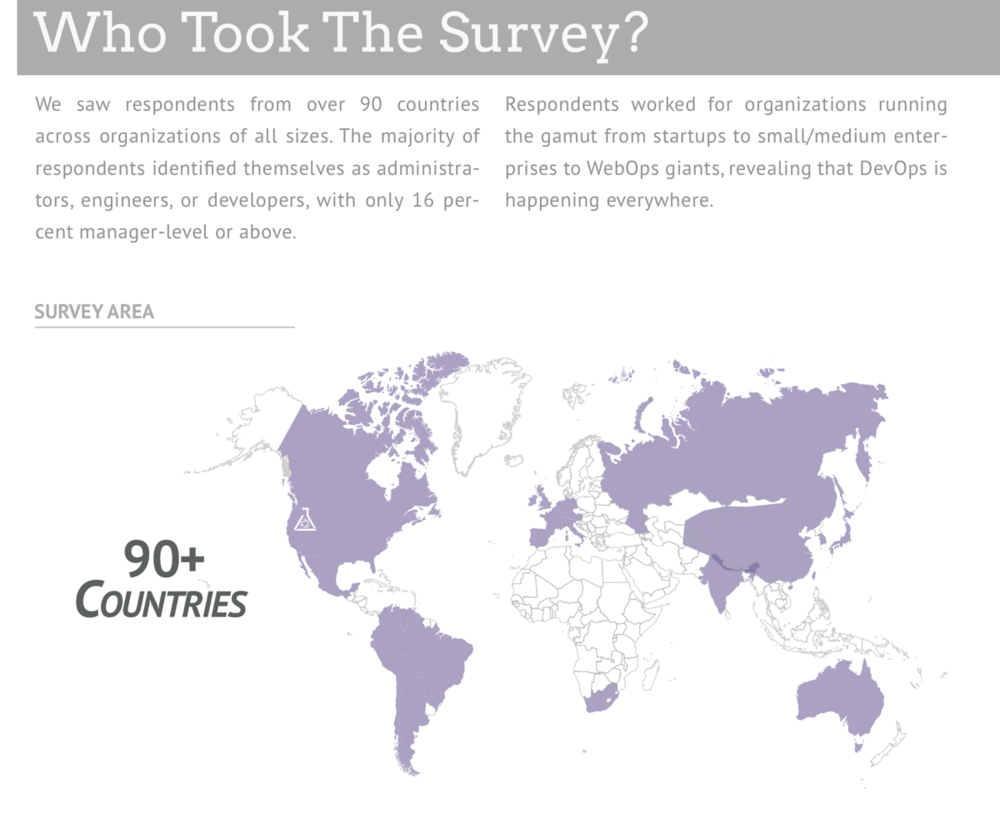
The survey was quite broad in 90 countries

NewImage

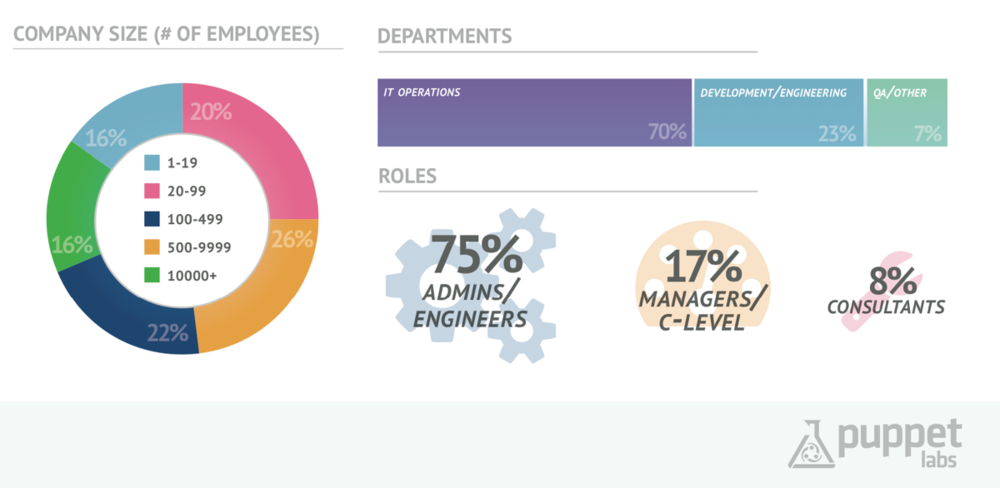
Mostly with IT operations.

NewImage

Cloud Competition - AWS vs. Google, with a mention of Microsoft

Where to get cloud computing is a problem many have.  There are so many choices, from IBM, Dell, HP, to Rackspace and Softlayer.  One view on what cloud to buy is to buy from someone who uses their own SW and develops the cloud.  Would you buy a Ford car from a company where most of the people drive other cars?  Kind of hard to swallow.  Which is why many think of Amazon, Google, and Microsoft's Cloud offerings.

GigaOm's Barb Darrow has a post on the AWS vs. Google battle with a bit on Microsoft.  Barb starts by acknowledging AWS is #1 and asks who will be #2.

Amazon is the cloud to beat, but Google has the cloud to watch. Here’s why.


1 HOUR AGO

1 Comment

Google Compute Engine logo
SUMMARY:

So who will be number two in public cloud after Amazon Web Services? Smart money is now on Google Compute Engine. With caveats, of course.

One strategy I totally agree with is when your service gets big enough to look at backing up to another cloud.

Multi-cloud strategies demand a back-up cloud

As big and great as AWS is, most existing and potential business customers will not lock into a single cloud provider. They are still bruised from the current generation of vendor lock in. On the other hand, they can’t afford to support too many. “You can only make so many bets, and it’s clear that Google is in this public cloud game to stay,” said one vendor exec who would not be named because his company does business with Amazon.

Barb mentions Microsoft and brings up the challenge of legacy apps.  Which could be considered a negative, but for some may be a positive.

Lack of legacy baggage helps GCE

Microsoft Windows Azure is paying the price now for Microsoft’s huge installed base of Windows and .NET legacy applications. While it’s done a good job incorporating support for open-source technologies under the Azure umbrella, that support is not on par with Windows, at least when you ask developers outside the .NET world. “They are still waited down by their Windows and Office mentality,” said one vendor who weighed supporting Azure but decided against it. “There are aspects of Azure that are technically superior but then their APIs are attrocious,” he said.

This type of stuff is what will be discussed in more detail at GigaOm Structure.

We will be talking about public and private cloud adoption, gating factors to that adoption, and other hot-button topics at GigaOM Structure in San Francisco in June.

Disclosure: I work freelance for GigaOm Pro, will be a speaker at GigaOm Structure, know Barb Darrow, and enjoy chats with Barb on what is going on in the industry.
The hard long battle IT department, maybe a way to win

GigaOm has a guest post on the problem of IT being in the back seat at so many companies.

Technology is king, so why are so many IT departments playing backseat roles?

by Bart Copeland, Guest Contributor


23 HOURS AGO

7 Comments

roadblock
photo: aceshot1/Shutterstock
SUMMARY:

As employees feel increasingly entitled to take tech into their own hands via BYOD, the cloud and SaaS, IT is finding itself sidelined. The answer is for IT to redefine itself. Welcome to IT as a Service.

Today’s IT departments face an identity crisis. Technology is an integral part of every single business process, and has come to dominate the lives of consumers who are routinely shopping online, downloading information, and browsing the Internet.

Yet ironically, in an era when technology rules, IT departments are losing ground fast:  The forces of cloud computing, social media, and information management are evolving rapidly, and business managers are discovering and adopting new technology before IT departments even have a chance to master it. Gartner Research predicts that by 2015, 35 percent of most companies’ technology-related expenditures will be managed outside the IT department’s budget.

In order to thrive and have an impact in today’s businesses, IT departments must stay relevant. They must become service-oriented organizations. That means deploying user-centric and agile solutions that meet the business needs of the organization and individual departments. That means delivering IT as a Service (ITaaS), and becoming a team of service-oriented experts.

You can go on and on with defensive strategies which is what most would do.  How about take the offensive?  IT sells it's services to the businesses now that it has competition from the cloud.  Selling is in offensive activity. The challenger sale book goes into the five ways.

The research revealed that sales reps fall into one of five profiles:

  1. The Hard Worker
  2. The Problem Solver
  3. The Challenger
  4. The Relationship Builder
  5. The Lone Wolf

Each profile can turn in average performance, but only one consistently outperforms – the Challenger.

What does the Challenger do?

Challengers: What They Do Differently

While most reps focus on building customer relationships, the best focus on pushing customers' thinking, introducing new solutions to their problems and illuminating problems customers overlook.
Specifically, they:

  • Teach
  • Tailor
  • Take Control

Given IT is the technology group it seems natural that users would expect them to teach and tailor.  This is probably why Big Data is so popular as it addresses these needs.

The rest of the cloud services are using the Challenger approach.  Competing against a Challenger is tough if you don't show you can teach and tailor better than they do.

Selling security, centralized management doesn't go as far as it used to.

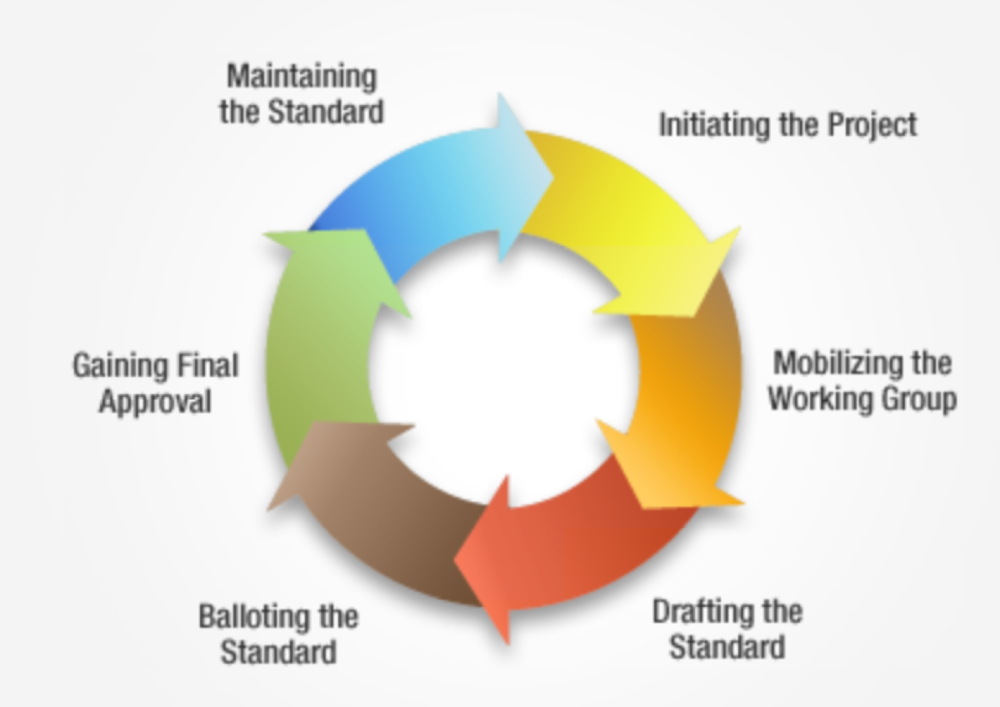
Do you see who and what is behind the standards? If you did would you adopt them?

Standards are typically thought of as a good thing.  DCK just posted an AFCOM one on education, and it got me thinking do you really know the story behind a standard and if you did would it change the adoption of a standerd.  I've sat on many standard initiatives and gradually learned what is many times behind the scenes of something like an IEEE standard.

NewImage

WHAT ARE STANDARDS?

Standards are published documents that establish specifications and procedures designed to maximize the reliability of the materials, products, methods, and/or services people use every day. Standards address a range of issues, including but not limited to various protocols to help maximize product functionality and compatibility, facilitate interoperability and support consumer safety and public health.

The top players in the standards are those who have most to gain by a new standard or who have most to lose. 

Working on standards can be time consuming, especially when part of the game is to slow down the development of a standard to allow more time for companies to adapt.

Ultimately there is a scorecard each company keeps how does this standard affect my products and my company.  Does it help us or hurt us.  Does this standard help our competitors more than us.

Chris Crosby gets into this subject as well with his post.  Chris puts in some great points.

Unfortunately, when evaluating data center providers, customers often have to navigate between what is real and a vendor’s standard- inspired puffery.

...

This pattern of devolution from industry standards places a greater burden on today’s data center customers. Failure to ask for, and receive, objective evidence of a provider’s adherence to the standards that underlie their performance claims places the customer in the position of having to make their decision based more on the sizzle rather than the steak. Caveat Emptor (let the buyer beware) was the advice of the ancient Greek’s to wary prospective customers, in the world of data center standards compliance, it’s probably still good advice.