Spending time thinking and enjoying a vacation

Last week at GigaOm Structure and this week is a family vacation.

Kids are in ski camp.

NewImage

NewImage

NewImage

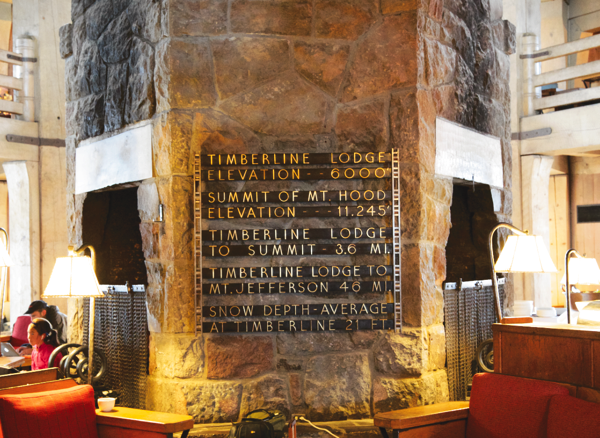
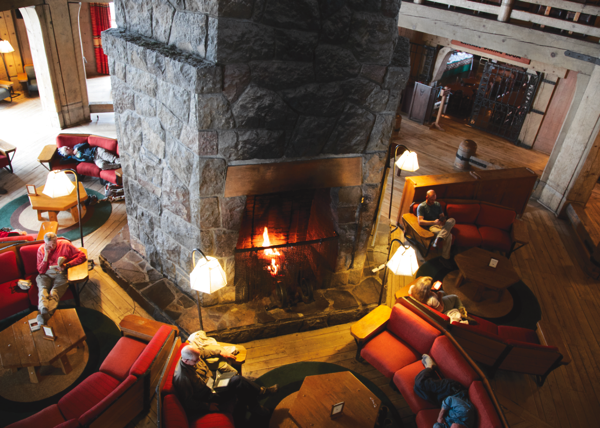
We are at Mt Hood one of the few places you can ski year round.

NewImage

I have my bloody mary.  Reading and not writing so much.  But still have some e-mails need to get out.

NewImage

7a getting the kids on the mountain, then hanging in the lodge.

NewImage

Love my Canon 6D.  All these shots are without flash.


Who is crawling GreenM3 and some other metrics

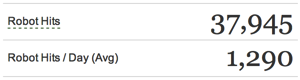
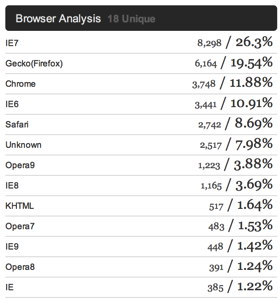
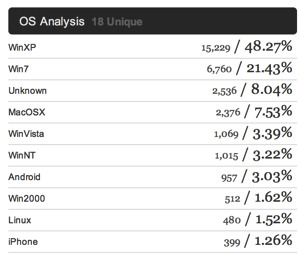
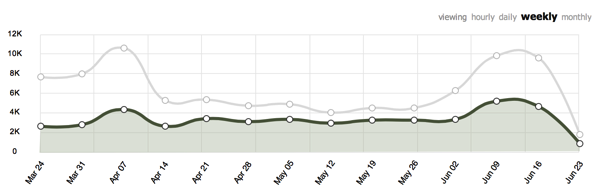
I don't spend as much time as I used to on site analytics.  This morning though I was looking at what crawls www.greenm3.com and decided to post.

Over the last month there were 37,945 hits from robots

NewImage

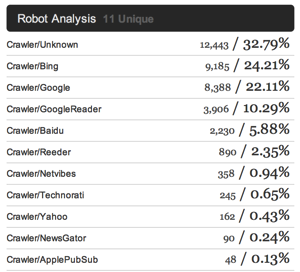
Of the robots here is the breakdown of who and how many.

NewImage

Browsers

NewImage

OSs

NewImage

If I was making a significant amount of money on ad revenue related to impressions I would probably worry about traffic, but I don't.  I took a bit of a break from blogging so much, and have some new ideas to focus on.

NewImage

My Technique/style for Moderating a Panel, example GigaOm Structure with CIOs of Revlon and NetApp

Moderating a panel can be done in many different ways.  Harvard Business Review has a post with a  dozen guidelines and gets your attention in the beginning.

The panel discussion was invented by someone who liked to sit three feet above his audience, talk with five of his closest friends for an hour, and barely acknowledge that there are 100 other people in the room, usually sitting in uncomfortable chairs.

But until the panel discussion disappears from the agendas of conferences and networking events, you may be asked to moderate one. Lucky for you, the bar is very, very low. If you can find a way to deliver a few fleeting moments of entertainment or interaction, you will be regarded as a rock star. If you can toss in some insight and controversy, they may erect a statue of you at the convention center.

I take a different approach in moderating a panel than many as I have a different objective.  The way others moderate a panel is not wrong, it is a different style.

First question to ask is why are you moderating the panel.  Did you bring the speakers together to present on a topic you care about?  Do you want to be in a position of questioning a thought leader in the industry?  Is this part of your job working/volunteering for a conference?

When I am moderating a panel most of the time I focus on how can the panelists present a story that the audience wants to hear and sees value in listening to?

First task is to research and get background on the speakers.  I then spent some time with the PR folks who interact with the executives to brainstorm what the executives are passionate about.

Next the executives typically wanted a 1/2 hr prep call to go over format, venue, schedule, and overall flow.  We then scheduled time to connect at the GigaOm Structure conference.  One of the challenges we had is Dave Giambruno had a great story on how Revlon IT has created its own private cloud environment and having him try to explain in a narration would be difficult.  So, breaking with typical panel format, Dave had 10 slides that told the Revlon story.

NewImage

Dave Giambrunos is proud of his empty data center space that has LED lighting as a prominent feature.

NewImage

After the Dave finished the slides, we wanted to transition to what is next.  The future of innovation in IT which is a nice hand off to give Cynthia Stoddard CIO of NetApp.  The conversation was moving well between Dave and Cynthia discussing the future of IT from a  CIO perspective. 

Then, I saw an opening to introduce the concept of the cultures that Dave and Cynthia support for taking risks, being agile, and supporting the business growth.

As a port mortem we were all chatting, Cynthia and Dave were pleased people were taking pictures of the slides and taking notes.  We ended on time so we escaped the wrath of Joe Weinman the overall MC of the event.

It was an experiment to try and present slides, and in 20 minutes Dave and Cynthia covered a lot of material.  The slides I inserted in this post are only 3 of the 10.

In the end I learned more about Revlon's IT efforts and got better appreciation of NetApp's IT as well.  The message for CIO's to support innovation using the cloud and converged infrastructure was a subtle message, not prominent in your face.  The focus was on the business.  Not the IT business, but the business of the company that IT needs to support to be successful.

NewImage

Now at the end you could say why didn't I spend time saying who I am and what I do.  Because I don't think the audience really cares that much about the moderator so why waste their time telling them something they don't want to hear.  Even though you have the audiences attention it doesn't mean they want to hear about you.  For example, how many times do you know who the narrator is in a movie?  Their job is to support telling the story.  Can you imagine if you were listening to a movie and the first thing the narrator did was tell you about themselves and how they got to know the people who are in the movie. :-)

Also, they one thing I like about my technique/style is how the story is told can change.  You can experiment.  Try new ways to moderate a panel.  

70 year anniversary of Skunkworks, secret of innovation is its people

June 2013 is the 70 year anniversary of Skunkworks.


In an interview the Chief Skunk

Chief Skunk, Dr. Alton D. Romig, Jr., PhD, is the vice president and general manager of Advanced Development Programs AKA the Skunk Works® for Lockheed Martin Aeronautics. In this interview, he reflects on the rich history of the Skunk Works and discusses the unique culture that will continue its tradition of mission driven innovation and value added solutions for years to come.

...

NewImage

Another important characteristic of the Skunk Works is a unique management structure that empowers engineers. Even today we make it a point to follow Kelly’s rules for program management. Our workforce has a breadth of experience and system lifecycle engagement. We also have a willingness to take prudent risks.  In a technical sense, our culture encourages doing things that have never been done before.  For example, the SR-71’s predecessor, the A-12, went through 11 iterations before it met the design specs.

When you read the 14 rules & practices created by Kelly Johnson you can see the areas where people are a priority.

14. Because only a few people will be used in engineering and most other areas, ways must be provided to reward good performance by pay not based on the number of personnel supervised.

...

12. There must be mutual trust between the military project organization and the contractor, the very close cooperation and liaison on a day-to-day basis. This cuts down misunderstanding and correspondence to an absolute minimum.

...

5. There must be a minimum number of reports required, but important work must be recorded thoroughly.

...

3. The number of people having any connection with the project must be restricted in an almost vicious manner. Use a small number of good people (10% to 25% compared to the so-called normal systems).

...

1. The Skunk Works manager must be delegated practically complete control of his program in all aspects. He should report to a division president or higher.

One thing that drives Jeff Dean's Google innovations, Necessity

Google's Jeff Dean spoke at GigaOm Structure.  Many of you probably don't know who Jeff Dean is, so let's start with who Jeff is referring to a slate article.

The programs that Dean was instrumental in building—MapReduce, BigTable, Spanner—are not the ones most Google users associate with the company. But they’re the kind that made Google—and, consequently, much of the modern Web as we know it—possible. And the projects he’s working on now have the potential to revolutionize information technology once again.

Jeff Dean is among the most valued contributors.

But a great software developer can do in a week what might take months for a team of 10 lesser developers—the difference is exponential rather than marginal.

Dean is amongst those who think about performance.

And as a Ph.D. student in computer science, he worked on compilers, programs that translate source code into a language that a computer can readily execute. “I’ve always liked code that runs fast,” he explains matter-of-factly.

The GigaOm post on Jeff Dean is here.  I got a chance to chat with Dean a bit and one of the points he shared in our conversation and repeated on stage is the necessity of systems he built.

I think one of the things that have caused us to build infrastructure as we were often doing things out of necessity, so we would be running into problems where we needed some infrastructure that would solve that problem in a way that could make it so that it can scale to deal with larger amounts of data or larger amounts of requests volumes and all of these kinds of things. There’s nothing like necessity of needing to do something to cause you to come up with abstractions that help you break through the forms. So map reduce was born out of needing to scale our indexing system.

"Necessity is the mother of invention" is a well known term.  How many times are there features that people really don't think are important.  Optional, take it or leave.  They are not a necessity.  To develop a feature of necessity, something everyone will eventually use is a challenge and comes with looking at the big picture and spending a lot of time thinking before coding.  The Slate article closes with...

If Dean has a superhuman power, then, it’s not the ability to do things perfectly in an instant. It’s the power to prioritize and optimize and deal in orders of magnitude. Put another way, it’s the power to recognize an opportunity to do something pretty well in far less time than it would take to do it perfectly. In Silicon Valley, that’s much cooler than shooting cowboys with an Uzi.

You can watch Jeff Dean in this video.  For those of you who don't have the time or patience to watch the whole video, the one thing I got out talking to Jeff and watching his talk is his focus on the necessity of things that Google needs to do in its infrastructure.  And, as others I know who have talked to Jeff, he is a nice guy who just happens to be Google employee #20.