Taking pictures in low light with Canon 6D

I am going to DCD SF and I think I am going to bring my Canon 6D and take lots of pictures.

The 6D is a lot of fun and amazing what it can do.

Here is a picture of my daughter in the dark with ISO 12800.  Yes 12,800.  f/4 the lens is wide open to get as much light as it can.  Shutter speed is 1/8 of a second.

NewImage

NewImage

Same picture crank exposure to +1.34 and look what the camera captures.

NewImage

My son, roughly same conditions.

NewImage

NewImage

Bump exposure +1.33

NewImage

What would happen if IDEO addressed the DCIM market?

The Economist has an article on how voluntary and public sector companies are reaching out to IDEO to design their services.

A growing proportion of IDEO’s work in re-engineering services is for NGOs and governments. Oxfam employed the firm to redesign its core product, gift-giving. Singapore asked it to revamp its system for handling applications for work permits. Often, it is not exactly rocket science: make forms easier to fill in, make each step in the process clearer and less prone to errors, and so on. But, as anyone who has ever applied for a United States visa (let alone an Indian one) will know, governments can be startlingly poor at designing their processes and serving their customers.

Wouldn't it be refreshing if DCIM companies used IDEO's approach?

A growing proportion of IDEO’s work in re-engineering services is for NGOs and governments. Oxfam employed the firm to redesign its core product, gift-giving. Singapore asked it to revamp its system for handling applications for work permits. Often, it is not exactly rocket science: make forms easier to fill in, make each step in the process clearer and less prone to errors, and so on. But, as anyone who has ever applied for a United States visa (let alone an Indian one) will know, governments can be startlingly poor at designing their processes and serving their customers.

But, part of the mind flip is the mind flip that users know better than the creators.

Rich countries’ welfare states were designed for a more homogeneous and deferential society in which most people accepted that the men in the ministry knew best. Now, the public rightly expect better, but governments constantly fail to live up to their demands. Since public agencies have generated so few good ideas of their own, a bit of outside help would appear to be worth trying.

How many DCIM vendors focus on you being right and they need to design the software to live up to your demands?

If you hear the words customization.  Run.  Run quickly.  As customization almost always leads you to more costs, more time, and more frustration.

Looking forward to DCD SF, July 12, 2013

I am heading to DCD SF on July 12, 2013.

NewImage

Looking forward to see many friends and catching up on the latest from the DCD crew.

WHO SHOULD ATTEND

Datacenter Dynamics Converged San Francisco is the most important gathering of data center industry leaders in the bay area, bringing together:

  • End users and operators of the world’s largest data centers
  • C-level executives driving strategic direction of data center policy and investment
  • Key influencers on tactical decisions: operations, networks, IT applications, facilities, engineering, finance, and real estate


Converged San Francisco is an event you won’t want to miss!  You’ll hear from thought leaders on industry-changing strategy, explore the extensive exhibition floor to discover the latest disruptive innovations, and exchange ideas and experiences as you network with your peers from industries such as:

  • Information and communications technologies
  • Telecoms
  • The public sector
  • Education and research
  • Healthcare
  • Professional services
  • Media
  • Construction
  • Transport and logistics
  • Manufacturing
  • Energy and utilities
  • Retail
  • Travel and hospitality

Twitter and Youtube enabling more accurate reporting bypassing the media to distribute news

The reporting of Asiana Airlines accident at SFO has been interesting to watch.  I have this theory that the media are kind of like random efforts to get more traffic than others looking for the angle to tell that gets the most traffic.  Many times what gets the most traffic is not the truth, but what is most viral and gets shared through social media.  So what happens if social media itself is the best source of what is going on.

Example, PetaPixel reports on some of the most powerful photographs are coming from the NTSB.

The Asiana Airlines Flight 214 Crash Site, As Photographed by the NTSB

The Asiana Airlines Flight 214 Crash Site, As Photographed by the NTSB 9116ZRx

The media has been dominated by coverage of Asiana Airlines Flight 214′s crash landing in San Francisco this past weekend. What’s interesting is that some of the most powerful photographs showing the aftermath were not captured by professional photojournalists, but rather those with the most access to the site: US government employees.

The National Transportation Safety Board (NTSB) of the United States maintains a very active Twitter account, and has been Tweeting live updates to this story since news of the crash first emerged Saturday morning.

The officials have access to the real good stuff, and the media is looking for ways to get access.

NewImage

Here is B Roll of the wreckage that is again powerful, informative and without the colored commentary of a media reporter.

If you want the facts of what has been disclosed you can watch the NTSB media briefing on YouTube.  It is a bit dry, but that is what happens when you discuss the facts.


What I find interesting is this 2nd media briefing is missing the mass of media logo microphones on the podium.

With the use of Twitter and Youtube by those who have public information to share there is a change in how media operates.  

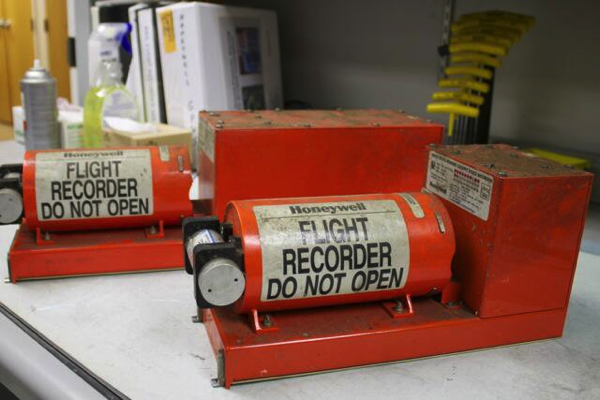
There are many who are curious what the conditions of the flight recorders are.  and the NTSB provides one photo.  This clearly answers there are two.  They are recovered.  Look undamaged.  There are thousands of more pictures and videos the NTSB has taken and they pick those that they think are most useful.  
NewImage


Three books on data visualization

The Economist has a review of three books on data visualization.

Data Points: Visualisation That Means Something. By Nathan Yau. Wiley; 300 pages; $32 and £26.99. Buy from Amazon.comAmazon.co.uk

Facts are Sacred. By Simon Rogers. Faber and Faber; 311 pages; £20. Buy fromAmazon.co.uk

The Infographic History of the World. By James Ball and Valentina D’Efilippo. Collins; 224 pages; £20. Buy fromAmazon.co.uk

Here is a video that shows you how the books look.

The author of this article hit upon exactly a point that came to my mind as well.  Should these books have even been in print.

But should these books have been published on paper at all? Today’s most impressive works, like “Wind Map”, were created to be online. Future infographics will be digital, data will stream in real-time and viewers’ interactions will determine what is presented. When this happens, what constitutes a good infographic will change. The revolution has just begun.

It's been a dream of companies like Adobe and others to allow the creation of online books.  But it is a challenge of the distribution channel not just creation

The one company that could take the above books online and allow them to make money would be Amazon.com.  Wouldn't it be cool if there was an AWS service that allowed you to create book-like content, make it interactive. posting video, etc.  Or Google could do this or maybe even Apple.