Thinking about how Intel is ready to change the Data Center

It is early morning and I am in Portland for 4 days.  OSCON is going on this week.

NewImage

On July 22. Intel announced its re-architecting of the datacenter.

Intel Aims to "Re-Architect" Datacenters to Meet Demand for New Services

 
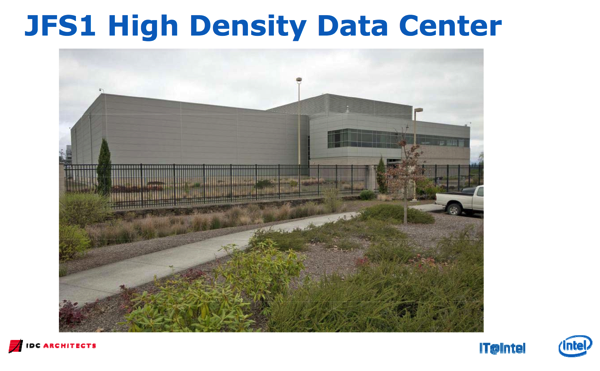
But, what took me to Portland was not OSCON, but catching up with friends and getting a chance to tour Intel's HPC datacenter.
 
NewImage

If you want to see the data center look at this video.

There are many things that can be discussed with Intel's press announcement and i'll write a bunch of posts.


If I was going to give a University lecture on Data Centers I would …

I have a friend who is Dean of Business and Economics school and he asked if I would participate in a graduate class by giving a lecture on data centers.  I said sure I'll do it.  What would I present?  

Here are some ideas I have that are good to write and see how they sit in my mind.

1)  I would explain how data centers align with the business models of companies and go through specifics of how data centers look at Google, Amazon, Facebook, Microsoft, Apple.

2)  How many servers people have is the wrong way to look at data centers.  What is more useful is knowing the # of processor cores are in the data center.

3)  Operations of data center is a good topic touch upon that relates to the business models.  Maybe this could be discussing the economics of data centers.

If I stuck to Business Models, Technology, and Operation Economics that would seem like three categories to cover that would be good.

I'll see what the Dean thinks of presenting data centers in this way.

Dave's Roasted Chicken using a Dashboard Approach

I cook Roasted chicken at least once a week.  Sometimes twice a week.  Sometimes I roast an extra chicken for a sick friend when I am cooking one for us.

Here is what the finished Roast Chicken looks like.  Skin is crispy, crackling, and ready to eat off the carcass.  The meat is moist and buttery.  I've played around roasting chicken for the past 2 years.  And good advice to a cook is Patience, Practice, and Persistence are words to live by.  My guests, family, and I are so spoiled having chicken like this 

NewImage

Some of guests ask what I put on the chicken.  Salt, Pepper, olive oil/vegetable oil, and a bit of butter under the skin.  I use brined chicken from Trader Joe's most of the time.

So how does the chicken come out so good?  I've cooked lots of chickens.  And having my woodstone oven allows me to cook differently than most.  The oven is  set to 550 and I start with salt and peppering the chicken on both sides and cook in 12" cast iron skillet.  But above I am showing the carcass on a Staub stand up rack.  I have tried to cook the chicken on Staub stand, but I couldn't get the chicken to cook evenly.  The high heat 550 and standing up the chicken for an hour would tend to burn the top. 

So, I start cooking the chicken in a cast iron skillet.

NewImage

The oven can get pretty hot and here it is cranked up high during heat up.  The inside of the oven is 36" in diameter.

NewImage

The below photo is shot at 1/2000 sec, f/4, 4000 ISO, 55mm

NewImage

I turn the heat down when cooking.  Put the chicken in for 10 minutes.  Then flip it.

NewImage

And 10 minutes later flip it again.

NewImage

After 40 minutes of browning the skin in the cast iron is when I move the chicken to the chicken stand.  For 30 of the 40 minutes I have had the legs face the flame.  For the last 20 minutes standing up the neck is in the hottest part of the oven.  Depending on how the chicken is cooking I can adjust the flame to increase the browning of the skin.

Cook for another ten minutes, then rotate the bird 180 for another 10.  After 60 minutes I check for temperature.

NewImage

And the chicken is done looking like the first picture I showed.

NewImage

I use the juices from the chicken to roast vegetables.  our current favorite are brussel sprouts.  carrots are good slowly roasted.

NewImage

My recipe is simple.  What I have learned is cooking with my woodstone oven allows to practice cooking in a way that supports presence.  I flip the chicken every 10 minutes.  Many times I am checking the chicken by looking and listening to the chicken cook.  The oven is at 4' so I can see and hear by just walking in front. of the oven.

I enjoy cooking because it is the time when I can totally focus like a meditation time on preparing food.  Heat, time, technique are the knobs I can turn to adjust the food.  My Dashboard is the physical sight, sound, and smell of the oven.  Most wouldn't think of their oven as a dashboard.  Oh the other knob I do turn is adjusting the heat which gives the right flame with the right heat.


NewImage

GigaOm's Networking Reception Weds 7/24, 6-9p Portland

Next week is OSCON and I'll be in Portland to visit a data center in Hillsboro.  There are lots of activities going on and one is GigaOm is hosting a networking reception that they have opened up to broader audience.

If you are in Portland next week, register for event here. http://bit.ly/14jMvzy

Please join GigaOM for a networking reception at Irving St. Kitchen from 6pm to 9pm on Wednesday, July 24th.

We are hosting an evening for technologists, customers and thought leaders in the Portland area to connect and discuss the opportunities and emerging trends in technology and business today.  

GigaOM executives, writers, anaylsts and senior staff will be there along with great local Portland influencers for a night of great conversation and food and wine.

Writers and analysts in attendance will include:

  • Jordan Novet, Staff Writer, GigaOM
  • John Gauntt, Founder, Media Dojo, GigaOM Research analyst
  • Mark Madsen, CEO, Third Nature Inc., GigaOM Research analyst
  • Dave Ohara, Founder, GreenM3 LLC, GigaOM Research analyst
  • Logan Kleier, Information Security & Privacy Officer, City of Portland, GigaOM Research analyst
  • Marc Staimer, President, Dragon Slayer Consulting, GigaOM Research analyst

We hope to see you there!


Thank you to our event sponsor:

 Puppet Labs

Three features of DCIM I would focus on - Ease of use, Ability to Scale, and Availability

I've worked on lots of complex software projects at Apple and Microsoft.  6 years ago I started working on data centers and before DCIM was a buzz word I worked on some projects that were the early forerunners of DCIM.  When I was doing this I had no desire to start a company or join a company that was building DCIM.  Why?  I just thought it would be too hard to get users to buy the right thing vs. buying what they thought they needed.

Here is CA says DCIM is.

Data center infrastructure management(DCIM) from CA Technologies provides a web-based centralized solution for monitoring power, cooling and environmentals across facilities and IT systems in the data center as well as managing the use of space and lifecycle of assets which make up the data center infrastructure. CA DCIM is capable of taking data from highly diverse devices and systems using SNMP or other protocols such as BACnet or Modbus. CA DCIM will also allow your organization to track assets within the data center and understand them in data center space using powerful 3D visualization. In addition, CA DCIM enables integration of data center infrastructure management with broader IT Management and business service provision.

This works for the executive sell and is fairly representative of what others say DCIM does.

Given I could build a DCIM solution, I look at it differently.

First and most important is the DCIM easy to use.  Do the operators welcome the system or do they see it as another system they need to input data to, login, and add to their frustration.  Show me a DCIM system that makes the task of operations easier, then it would get my interest.  The above is like a description of an ERP system.  How many of you want to go through the same pains of an ERP deployment in your data center?

Second, is the system built on a state of the art high performance platform that will scale and respond quickly.  If the system can handle 1,000-10,000s of transactions a second, then it can scale and under every day use should perform quickly.  It is amazing when you look under the covers and you see system design. Look to see whether it will scale.

Third is the system highly available.  Are there three nodes working to keep the service up and running?  Two nodes might work.  Three nodes or more means the failure of the DCIM service is lower what you are measuring.  Trying to operate a data center when the DCIM tool is down can be done, but many times means lots of data entry is needed later.  Who wants that.  If you see only one node in the system, then run.

There are many features of a DCIM system.  If it is not easy to use, scales, and highly available, then I would walk away and continue your search.