I was catching up with a data center executive over dinner in Atlanta and part of the discussion was around various executives and what I thought of the people vs what he thought. Who were the true influencers vs. who does the media think are the influencers? The advantage those who are covered in media have is they talk the loudest get the widest coverage, but that doesn’t mean the true influencers listen to them.
This particular executive attended one of our data center social event and got to experience what the set of people there were like. One of the interesting observations is how some of those who the media think are the influencers don’t fit in our social events. Why? When you get used to presenting a lot, many times your ego grows, and people will make claims that don’t hold up with the experts. If these people show up where there are 30 smart people who design and build a lot of data centers it can be an “emperor wears no clothes moment.” I have an opinion of who these people are and much of what I am doing is organizing a group that gets along and they can hold up to their peers. Why do this? My wife asks me all the time what I am doing. Well it’s fun and hanging out with smart people helps me be smarter and learn more. What’s the business value? What is the business value of learning from the best?
Mike and I would regularly have chats when he was in Redmond. Now that he is in Atlanta we are lucky to see each other a couple of times a year, and with his travel even when I am in Atlanta he is not in town.
In
Industry Impact : Brothers from Different Mothers and Beyond…
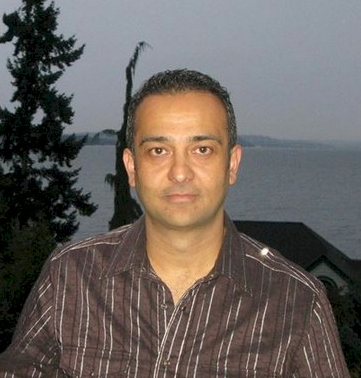
My reading material and video watching habits these past two weeks have brought me some incredible joy and happiness. Why? Because Najam Ahmad of Facebook is finally getting some credit for the amazing work that he has done and been doing in the world of Software Defined Networking. In my opinion Najam is a Force Majeure in the networking world. He is passionate. He is focused. He just gets things done. Najam and I worked very closely at Microsoft as we built out and managed the company’s global infrastructure. So closely in fact that we were frequently referred to as brothers from different mothers. Wherever Najam was-I was not far behind, and vice versa. We laughed. We cried. We fought. We had alot of fun while delivered some pretty serious stuff. To find out that he is behind the incredible Open Compute Project advances in Networking is not surprising at all. Always a forward thinking guy he has never been satisfied with the status quo.
If you have missed any of that coverage you I strongly encourage you to have a read at the links below.
This got me to thinking about the legacy of the Microsoft program on the Cloud and Infrastructure Industry at large. Data Center Knowledge had an article covering the impact of some of the Yahoo Alumni a few years ago. Many of those folks are friends of mine and deserve great credit. In fact, Tom Furlong now works side by side with Najam at Facebook. The purpose of my thoughts are not to take away from their achievements and impacts on the industry but rather to really highlight the impact of some of the amazing people and alumni from the Microsoft program. Its a long overdue acknowledgement of the legacy of that program and how it has been a real driving force in large scale infrastructure. The list of folks below is by no means comprehensive and doesnt talk about the talented people Microsoft maintains in their deep stable that continue to drive the innovative boundaries of our industry.
Christian Belady of Microsoft – Here we go, first person mentioned and I already blow my own rule. I know Christian is still there at Microsoft but its hard not to mention him as he is the public face of the program today. He was an innovative thinker before he joined the program at Microsoft and was a driving thought leader and thought provoker while I was there. While his industry level engagements have been greatly sidelined as he steers the program into the future – he continues to be someone willing to throw everything we know and accept today into the wind to explore new directions.
Najam Ahmad of Facbook - You thought I was done talking about this incredible guy? Not in the least, few people have solved network infrastructure problems at scale like Najam has. With his recent work on the OCP front finally coming to the fore, he continues to drive the capabilities of what is possible forward. I remember long meetings with Network vendors where Najam tried to influence capabilities and features with the box manufacturers within the paradigm of the time, and his work at Facebook is likely to end him up in a position where he is both loved and revilved by the Industry at large. If that doesn’t say your an industry heavy weight…nothing does.
James Hamilton of Amazon - There is no question that James continues to drive deep thinking in our industry. I remain an avid reader of
his blog and follower of his talks. Back in my Microsoft days we would sit and argue philosophical issues around the approach to our growth, towards compute, towards just about everything. Those conversations either changed or strengthed my positions as the program evolved. His work in the industry while at Microsoft and beyond has continued to shape thinking around data centers, power, compute, networking and more.
Dan Costello of Google - Dan Costello now works at Google, but his impacts on the Generation 3 and Generation 4 data center approaches and the modular DC industry direction overall will be felt for a very long time to come whether Google goes that route or not. Incredibly well balanced in his approach between technology and business his ideas and talks continue to shape infrastructre at scale. I will spare people the story of how I hired him away from his previous employer but if you ever catch me at a conference, its a pretty funny story. Not to mention the fact that he is the second best break dancer in the Data Center Industry.
Nic Bustamonte of Google – Nic is another guy who has had some serious impact on the industry as it relates to innovating the running and operating of large scale facilities. His focus on the various aspects of the operating environments of large scale data centers, monioring, and internal technology has shifted the industry and really set the infancy for DCIM in motion. Yes, BMS systems have been around forever, and DCIM is the next interation and blending of that data, but his early work here has continued to influence thinking around the industry.
Arne Josefsberg of ServiceNow - Today Arne is the CTO of Service Now, and focusing on infrastructure and management for enterprises to the big players alike and if their overall success is any measure, he continues to impact the industry through results. He is *THE* guy who had the foresight of building an organiation to adapt to this growing change of building and operating at scale. He the is the architect of building an amazing team that would eventually change the industry.
Joel Stone of Savvis/CenturyLink – Previously the guy who ran global operations for Microsoft, he has continued to drive excellence in Operations at Global Switch and now at Savvis. An early adopter and implmenter of blending facilities and IT organizations he mastered issues a decade ago that most companies are still struggling with today.
Sean Farney of Ubiquity – Truly the first Data center professional who ever had to productize and operationalize data center containers at scale. Sean has recently taken on the challenge of diversifying data center site selection and placement at Ubquity repurposing old neighorbood retail spaces (Sears, etc) in the industry. Given the general challenges of finding places with a confluence of large scale power and network, this approach may prove to be quite interesting as markets continue to drive demand.
Chris Brown of Opscode – One of the chief automation architects at my time at Microsoft, he has moved on to become the CTO of Opscode. Everyone on the planet who is adopting and embracing a DevOps has heard of, and is probably using, Chef. In fact if you are doing any kind of automation at large scale you are likely using his code.
None of these people would be comfortable with the attention but I do feel credit should be given to these amazing individuals who are changing our industry every day. I am so very proud to have worked the trenches with these people. Life is always better when you are surrounded by those who challenge and support you and in my opinion these folks have taken it to the next level.
\Mm


