West Des Moines Public Disclosure, Project Alluvion is Microsoft Data Center

KCCI News 8 broke the news on who in behind Project Alluvion.

WEST DES MOINES, Iowa —The company behind Project Alluvion in West Des Moines is -- Microsoft.

West Des Moines city officials and Gov. Terry Branstad made the official announcement during a news conference Friday morning.

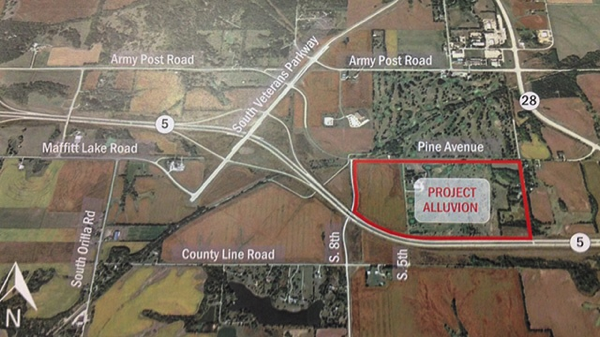
Microsoft said it will build a new $1.126 billion data center along Highway 5 near Willow Creek Golf Course and just east of the South Veterans Parkway, which used to be known as the Southwest Connector.

NewImage

FYI here is a tip as part researching the news on Project Alluvion.  Look at went the news was posted.  I choose to reference KCCI new given they broke the news first.

Updated: State approves incentives for $1.1 billion Microsoft data center in West ...

DesMoinesRegister.com - ‎1 minute ago‎
Iowa's economic development board approved incentives for the data center today and officially unveiled Microsoft as the company behind "Project Alluvion" -- the project's codename. Combined with Microsoft's current data center in the city, the Alluvion ...
 

Officials announce plan for Microsoft data center

Businessweek - ‎4 hours ago‎
Terry Branstad joined with local officials to announce Microsoft's so-called "Project Alluvion," which is expected to total more than $1.1 billion and create more than 80 full-time jobs. West Des Moines Mayor Steve Gaer said construction will happen over the ...
 

A lot of soft money will come to Iowa: Microsoft will build $1.1 billion data center

Muscatine Journal - ‎3 hours ago‎
... Wash.,-based corporation that develops, manufactures, licenses and supports a range of services, devices and software products for a wide variety of devices, will receive local and state incentives totaling $87 million to locate its “Project Alluvion” in West ...
 

Microsoft to Build New $1.1 Billion Data Center in Iowa

Data Center Knowledge - ‎4 hours ago‎
The announcement ends the suspense about the identity of the mustery company behind Project Alluvion, the latest in a series of stealthy “codename” projects that have made Iowa a major data center destination. Combined with the existing Microsoft data ...
 

Officials announces plan for Microsoft data center in Iowa

Dubuque Telegraph Herald - ‎5 minutes ago‎
Terry Branstad joined with local officials today to announce Microsoft's investment in so-called “Project Alluvion,” which is expected to total more than $1.1 billion. A data center completed in 2010 resulted in about a $900 million investment from the company.
 

Mystery company behind West Des Moines project revealed

KCCI Des Moines - ‎7 hours ago‎
In March, the West Des Moines City Council approved support for a project code named Project Alluvion that had a $255 million value. The developer was asking for financial incentives and infrastructure improvements to help with the project. Tax increment ...
 

Microsoft Announces $1.1 Billion Data Center in West Des Moines

Iowa Public Radio - ‎6 hours ago‎
Formerly known as Project Alluvion, the 154-acre site will house servers and computer equipment to operate web portal services like the Cloud and XBox Live. Completion is expected in early 2021. West Des Moines mayor Steve Gaer says the 154-acre site ...

What is wrong with so many systems, data entry is done from the perspective from not jeopardizing their job

Data in systems like DCIM is an abstraction of the events.  The data is a description of the event.  It’s one thing if the data is a temperature reading from a sensor in the cold aisle.  But, so much other data is entered by people who are asked to fill in fields that correspond to the event.

When you are staring at the numbers and letters you miss the perspective of the people who entered the data.  What is on their mind?  So many things.  One thing that is over riding that almost no one thinks about is these people are going to fill out the data so as not jeopardize their job.  They’ll do enough to satisfy management and others without rocking the boat by entering in complaints or problems that can make things difficult for them or others.

What?  Here is an example that got me to focus on this problem.  When Pixar created Toy Story the CEO realized there was a problem in that the production staff felt like second class citizens on the project and they didn’t speak up.

First, since we didn’t know what we were doing as we’d geared up to do Toy Story, we’d brought in experienced production managers from Los Angeles to help us get organized. They felt that their jobs were temporary and thus that their complaints would not be welcome. In their world— conventional Hollywood productions— freelancers came together to make a film, worked side by side for several months, and then scattered to the winds. Complaining tended to cost you future work opportunities, so they kept their mouths shut. It was only when asked to stay on at Pixar that they voiced their objections.

Catmull, Ed; Wallace, Amy (2014-04-08). Creativity, Inc.: Overcoming the Unseen Forces That Stand in the Way of True Inspiration (Kindle Locations 1037-1041). Random House Publishing Group. Kindle Edition.

Many companies have a strategy of treating people as commodities. “You can be replaced.”  So, people focus on doing things to keep their job.  Speaking up is too risky.

This same type of problem goes to all kinds of parts of operations with people entering data into systems so as not to jeopardize future work opportunities.

Took me 24 hrs SEA->SJC, and was a Great Trip

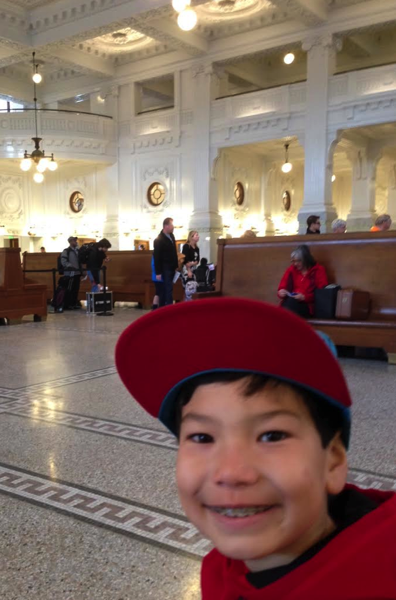
I take the trip from SEA -> SJC -> SEA often sometimes twice a month.  Last week I took the trip from SEA to SJC and it took me 24 hours to get there.  Why?  Because I took the Amtrak Train with son for spring break to see his Grandma, Aunts, and Uncles.  My little boy had so much fun he wants to take the ride every year.

The Seattle Amtrak terminal is newly remodeled.

NewImage

The Coast Starlight is a ride I have wanted to take for a while and I convinced my son, well didn’t convince him, gave him no choice that we were going to ride the train the SJC.

The scenery along the Coast Starlight route is unsurpassed. The dramatic snow-covered peaks of the Cascade Range and Mount Shasta, lush forests, fertile valleys and long stretches of Pacific Ocean shoreline provide a stunning backdrop for your journey.

Travel in Comfort

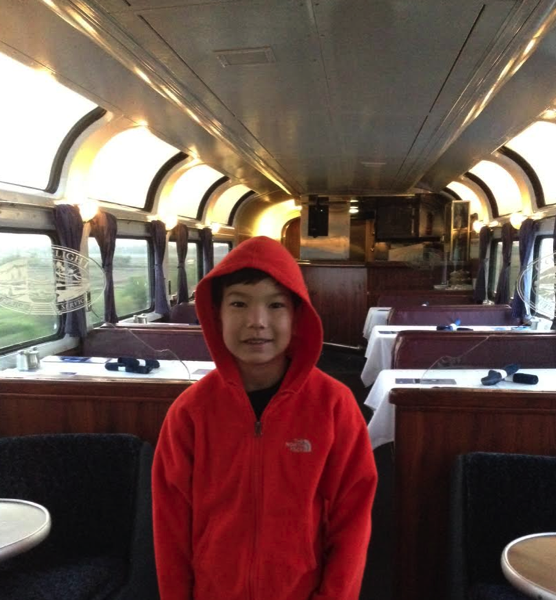
This legendary train features bi-level Superliner coaches and sleeping cars, along with exclusive amenities. The Dining Car offers fresh cuisine served on real china and table linens. Coach passengers enjoy big, comfortable seats, plenty of legroom and new, larger pillows, plus available at-seat meal service.

Sleeping car passengers can experience a full range of exclusive services and amenities on the Coast Starlight, including complimentary onboard internet access via AmtrakConnect and an exciting alternative meal service, both available in the Parlour Car. Each sleeping car passenger will receive complimentary meals (with the exception of alcohol) in the Dining Car or the Pacific Parlour Car and a special welcome gift. This "living room on rails" is the perfect place for sleeping car passengers to relax, celebrate or socialize. With an onboard theater and alternative dining venue, the Pacific Parlour Car will make your Coast Starlight experience unforgettable.

I thought my son would like to hang out in the parlor car.

NewImage

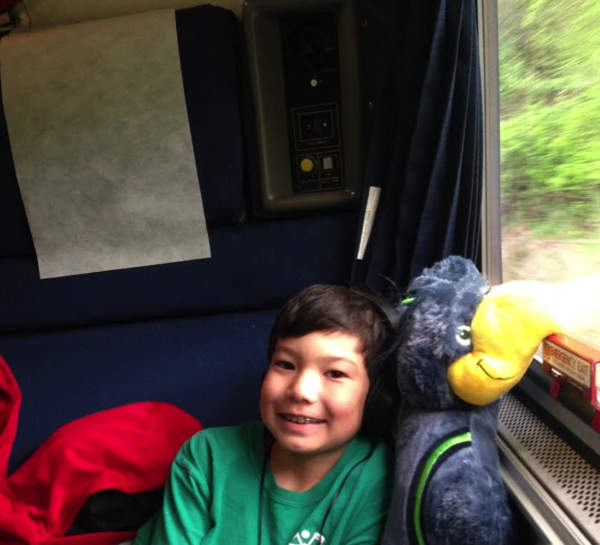
But that’s where i had it wrong.  He was happiest in the roomette sleeper room we had, watching videos on his iPad and looking out the window.

NewImage

NewImage

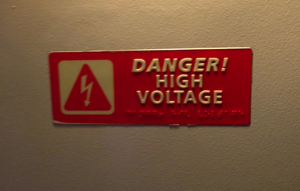
Couldn’t resist wandering around and seeing where the 480V power systems were in the car.

NewImage

TSA messes with Pre TSA, frustrated Business Travelers and Newbies

Leave it to the TSA to frustrate all users of Pre TSA, those who are registered pre TSA like myself and people they try to introduce Pre TSA to.  It used to be I could get through pre TSA in less than 5 minutes.  Now it can be 10-15 minutes because the TSA let’s people they think should try pre TSA give it try.  WSJ article writes on this problem so let’s just point to the same things the do.

First WSJ says there is a problem.  Yep.

Trouble Selling Fliers on the Fast Airport Security Line

TSA Precheck program is stirring traveler confusion, aggravation

TSA is trying to get more people to sign up.

Trying to hook new enrollees, TSA has been funneling regular travelers into Precheck lanes for a sample of swifter security. Some of the newbies get confused, however, and end up clogging the expedited lanes, angering Precheck veterans. And some regular travelers are getting the free perk so often they conclude they are already in the program and don't need to enroll.

The WSJ asked an Operations Management professor for comments.

"It used to be great, but recently the Precheck lines have been the slowest of all the lines," said Fred Van Bennekom, who teaches operations management at Northeastern University and has timed TSA lines out of curiosity. "Sometimes there's almost no one in regular lines and we're all backed up at Precheck."

The mess up starts because the TSA let’s passengers who don’t know what pre TSA is in line, and they are almost always totally confused.

The influx of people to Precheck annoys some program veterans. Ann Fries says she sometimes finds 20 people in the Precheck line at Tampa, Fla., her home airport. Many get befuddled when told they don't have to take off their shoes and can leave liquids and laptops in bags. They ask why, slowing the line. Then they ask how they ended up in that lane.

"We went from people who knew what they were doing to people in line who don't know what they are doing," said Ms. Fries, who signed up for Global Entry to get Precheck when it first started.

Thank god, the TSA figured out people 75 or older are not good to add to the pre TSA line.

Mr. Pistole said he has heard the complaints about Precheck lanes getting clogged, and TSA has already decided to stop moving travelers 75 years of age and older into Precheck service, unless they are enrolled, because they sometimes can take 10 minutes to move through. As Precheck enrollment grows, the "managed inclusion" effort will be phased out, he said.

And here is the kicker how TSA has shot themselves in the foot.

The Precheck free trial has confused some travelers—including Dr. Van Bennekom, the Northeastern University professor—who routinely get boarding passes printed with "TSA Precheck" and assume they are now enrolled in the program. After several trips with free Precheck privileges, Dr. Van Bennekom went to a Precheck lane only to be turned away. He learned he had to pay to be enrolled.

If the trial access was an enticement to buy, "then they are lousy marketers," he said. "I've never received any communication that says, 'Now that you've experienced fast check in, for only $85 …' " For now, he says he gets free Precheck so frequently he won't bother to sign up.
A Techie's View of Mobile in 3D graphics market

The market for 3D software continues to grow and their users can have different views on what they need.  I found this post on Tech Soft 3D by their founder on Trends for Mobile App Development.

His first comment is on Tablets which I agree with.

Tablets are currently about consumption. Almost all developers building apps for mobile devices are focused on “consumption” rather than “creation.” In other words, 3D models are usually created or stored in one place, and then later viewed and interacted with by people working away from their desks. This mirrors how tablets are used in general – to consume media such as video, books, web pages, etc.

Tablets will soon move past consumption. This is happening already, to some extent. We edit photos and videos, post to Facebook, compose emails, and with keyboard extensions, we might even write documents and create presentations. Devices are becoming more powerful and developers are figuring out the UX models that make creation more feasible. An example is Autodesk’s SketchBook app, which is already wildly popular for professional-grade painting and drawing. Skepticism about engineering on tablet devices reminds me of how we once wondered whether a PC or even a Mac would ever be used for “serious” engineering work. There is no inherent limitation that makes me think that this will not happen in due time. It’ll probably even come faster than we think.

Then he tackles the iPad vs. Android.

iPad is the favorite for consumers and execs. Apps designed for consumers generally are available on the iPad first. It also seems that apps built for the iPad are often targeted at showing simple views of projects or “dashboards” to execs, rather than doing much work. Think of these as fancy “reporting” apps.  You know how we execs are –suckers for pretty graphics!

Android users are hungry for more. I’ll go out on a limb and say that compared to the typical iPad user, Android users are either a) more technical, b) more focused on what they would consider “real work” or c) both. As a result, they seem to be pushing for more and more advanced applications on their devices.

Given so much of the 3D engineering software market is on Windows he makes the observation on Microsoft tablets.

Windows-based tablets shouldn't be counted out. Much has been made in the media about how much Microsoft is lagging behind in terms of tablet market share. Those numbers aside, I would hardly count them out. Why? Because many large enterprises rely heavily on a backbone of Microsoft technology. As they consider their “mobile strategies,” Microsoft remains a strong incumbent for enterprises that use Microsoft and greatly favor predictability and integration with existing processes over speed. They will wait patiently, and Microsoft will no doubt continue to heavily focus development on this enterprise market. Unlike iPad, (but like Android), the hardware will come from many sources, so expect to see plenty of purpose-built tablets for use out in the field and on shop floors by people with dirty hands in rugged locations. Look for some interesting things here.

The one part I disagree with is his point on phones.  I would say almost all of his users of Desktop PCs would agree, but i don’t.

 ….But not on phones. Now that I just said “never say never,” I will go ahead and say that the form factor of today’s phones means they will only be used for lightweight consumption. I can’t imagine a usage model that would make creation feasible. No one is building anything more complex than a simple viewer for phones and I don’t anticipate that happening due to the limitation of screen size. Now that I said it, someone will surely prove me wrong, but there you have it…

The power of a Samsung Galaxy Note with Stylus and having it with you all the time is just beginning to change things.