Proof those airport body scanners suck, flaws exposed by University Researchers

One of the benefits of being Pre TSA is you skipped the full body scanners.  Now, all those body scanners have been removed due to privacy concerns.  And, thanks to independent research done by UC San Diego, University of Michigan, and John Hopkins we find out that these device basically suck as there are ways to sneak by explosives and guns.  What?

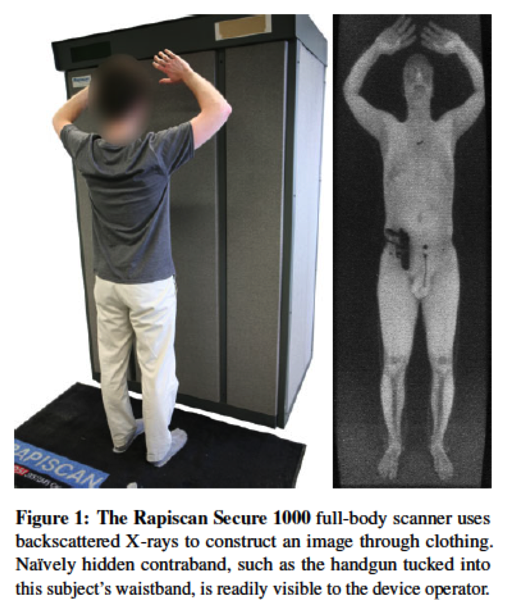
Here is what the manufacturer and government would like all  of to believe. 
NewImage

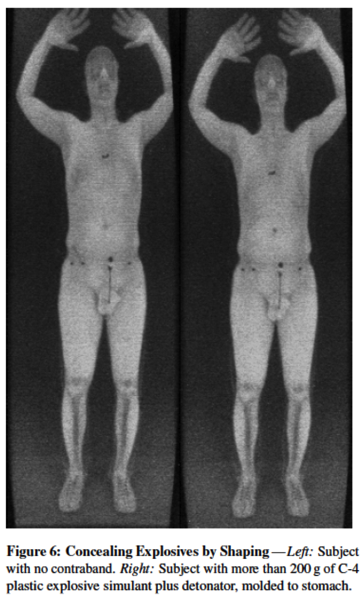
The researchers found they can hide a .380 ACP Pistol.

NewImage

and C4 explosives.

NewImage

How can the researchers do this?  They bought a surplus scanner on eBay and spent time figuring out the flaws of the scanner.

The researchers attribute these shortcomings to the process by which the machines were designed and evaluated before their introduction at airports. “The system’s designers seem to have assumed that attackers would not have access to a Secure 1000 to test and refine their attacks,” said Hovav Shacham, a professor of computer science at UC San Diego. However, the researchers were able to purchase a government-surplus machine found on eBay and subject it to laboratory testing.

Many physical security systems that protect critical infrastructure are evaluated in secret, without input from the public or independent experts, the researchers said. In the case of the Secure 1000, that secrecy did not produce a system that can resist attackers who study and adapt to new security measures. “Secret testing should be replaced or augmented by rigorous, public, independent testing of the sort common in computer security,” said Prof. Shacham.

Outages of Microsoft Azure

I saw this post on GigaOm on Microsoft outages on Monday.

“Whoops,” says Microsoft Azure: cloud service goes down for many users


AUG. 18, 2014 - 3:19 PM PDT

6 Comments

Scott Guthrie at Windows Azure 2012 intro
photo: Microsoft
SUMMARY:

Several Microsoft Azure services — virtual machines, cloud services, StorSimple, backup and site recovery — were off line for hours Monday afternoon.

It’s Monday, and it’s already been a pretty bad week for Microsoft Azure. Starting early afternoon Eastern time, the company witnessed partial and full service interruptions to several of its services across multiple regions. The sites were back up again at around 8 p.m. eastern time, according to Microsoft.

Out of curiosity going to Azure History you can see the range of issues that have occurred over the past month.  At Microsoft’s scale there it looks like there is a constant stream of issues.

August 2014

A Data Center in Monterey, CA, who will go?

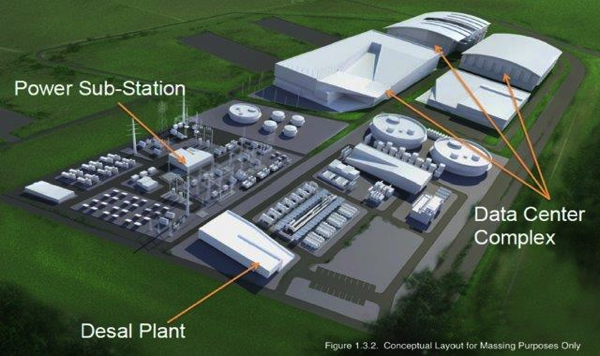
James Hamilton wrote a blog post on a water desalination plant that wants to add a data center in Monterey, CA


DeepWater Desal plans to build a desalination plant  at Monterey Bay. Desalination produces drinking water from sea water. Given the abundance of sea water in the world and the shortage of drinking water in many parts of the world, these plants are becoming more common. They are fairly power intensive techniques but still used extensively throughout the world especially in the Middle East.

 NewImage 

Deep Water Desal proposes to mitigate the power consumption of desalination in a very creative way. Rather than reduce the power required to desalinate water, they proposed to co-locate up to 150MW of data center facilities on site and reduce the power required to cool the data center. Essentially the desalination plant and data centers would be symbiotic and the overall power consumption of the combination of the two plants together would be lower.

Being more efficient in cooling is appealing, but probably not a major tipping point.

Steve Ballmer completes the Clean Breakup with Microsoft as he leaves the Board of Directors

Ending a long term relationship can be hard.  And, one of the worst things you can do is have a messy long breakup.  Steve Ballmer posts on his choice to leave the Microsoft Board.

Given my confidence and the multitude of new commitments I am taking on now, I think it would be impractical for me to continue to serve on the board, and it is best for me to move off. The fall will be hectic between teaching a new class and the start of the NBA season so my departure from the board is effective immediately.

As some words of advice come it is best to make a clean break.

NewImage


Unless you’re planning on being friends afterwards (check out our opinion on that topichere), instead of laying in bed with Netflix, a bottle of wine, and your ex’s comfiest sweater, you should probably hand that sweater back. If you’re in possession of certain items that once belonged to them which now haunt you, how about giving those babies back? While you’re at it, get that second key to your apartment back in your hands (cross your fingers hoping that they didn’t make a copy to eerily show up uninvited.) For both your sakes, any loose ties should be cut and forgotten.

What USA data center will be geothermal powered?

I’ve been to Iceland and seen geothermal in action powering a data center.  It is a dream to have geothermal in the USA for a data center given the lack of availability, but tracking is arriving to improve geothermal performance.

The economist posts on the state of geothermal in the USA.

The zigzag route to success

DEPENDING on your point of view, hydraulic fracturing—or “fracking”—is either the future of clean, natural gas or an environmental apocalypse. Fracking liberates gas trapped underground by drilling sideways from vertical well-shafts into horizontal layers of shale rock. Millions of gallons of a cocktail of water, sand and chemicals are injected into the horizontal wells at high pressure, fracturing the shale, releasing the gas—and causing violent protests in Europe and parts of America.

It looks like the industry will have chances within a year or two.

The sticking-point, says Susan Petty, AltaRock’s founder, is commercialisation. Geothermal is a steady source of energy (unlike windpower), has very high capacity-utilisation rates, zero fuel costs and near-zero greenhouse-gas emissions. The trouble is that successful existing geothermal plants do not need EGS, and for many failed wells it is uneconomic to introduce it. So with the help of an as-yet unnamed partner, AltaRock plans to buy up existing fields that it thinks it could make profitable using its version of EGS. That way it will avoid the costs of new infrastructure while demonstrating its technology’s viability.

The energy department reckons that EGS techniques could be commercially viable as soon as next year, at which point more private investors and perhaps utilities might pile in. It is not alone in its optimism: Germany, France and Britain have state research programmes for EGS.