A difficult challenge for data center automation, availability of the control system

Part of the cloud is automation.  An example is PuppetLabs, and here is a blog post on the topic.

Automation extends to the software layer, where complex systems can be configured once and then rolled out on the fly as needed, using cloud automation tools. Intelligent systems architecture can balance the load among compute, network or storage resources, bringing systems online or offline as demand dictates.

This infrastructure-as-code approach to the modern, increasingly complex data center requires advanced cloud management tools, and cloud automation answers that need. The same software-defined approach to managing private cloud architecture works equally well for managing public clouds. Bonus: By abstracting away the differences between clouds, sophisticated cloud automation software makes it easy to provision the resources the business needs at any given moment, without getting bogged down with where the servers actually sit.
— http://puppetlabs.com/blog/what-cloud-automation-driving-force-data-center-automation

There are tons and tons of companies that have cloud automation tools.  But, how many people spend time addressing the availability of the automation control system.  ???  This may seem obvious, but a control system needs to have a higher availability than the services it is managing.  Otherwise the service will go down when the automation control system goes down.

And, this may mean you need a backup to the automation system when it goes down during an outage.

As Cloud environments get bigger and bigger, automation is a part of the solution, but have you thought about what happens when the automation system goes down.

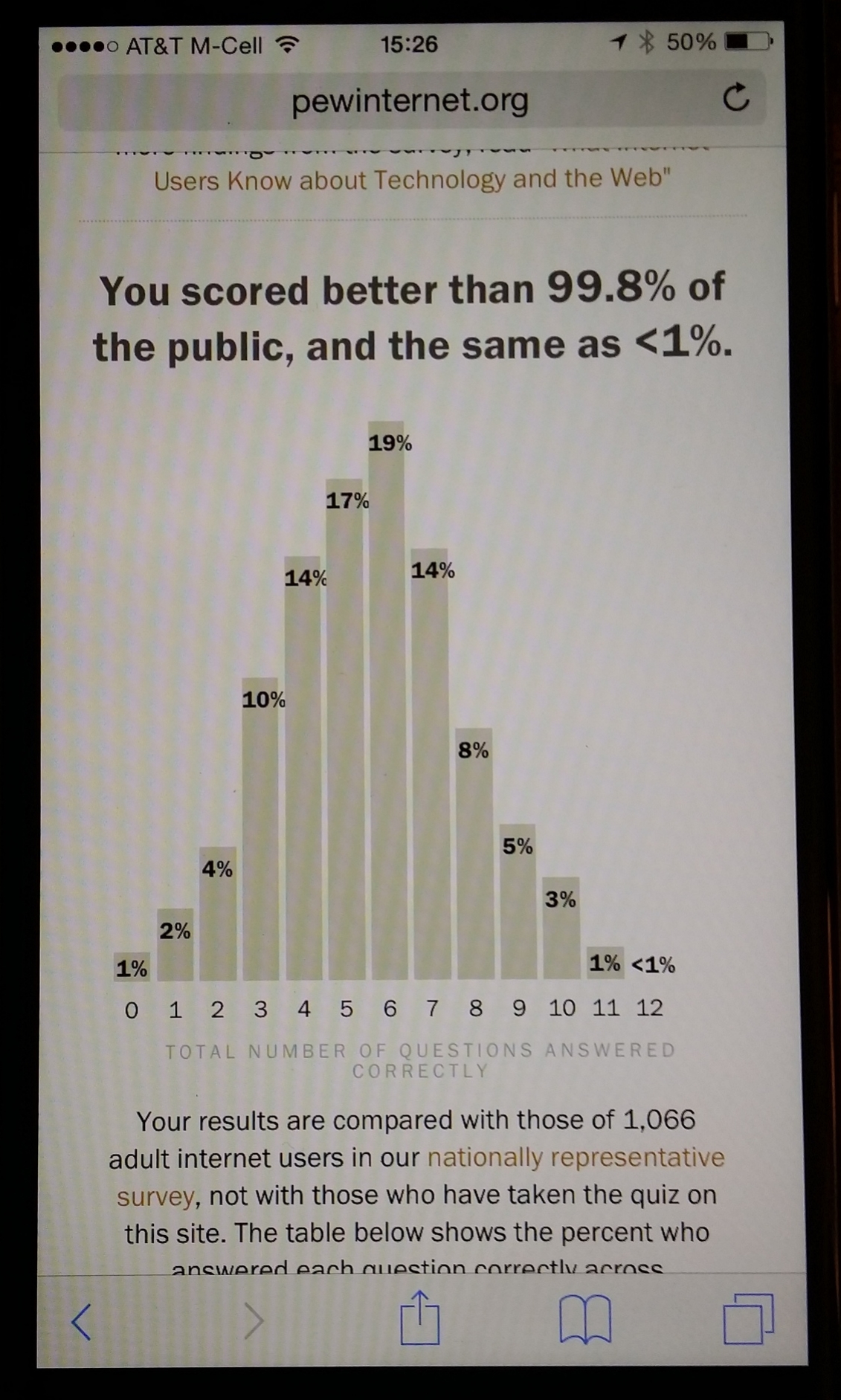
Take the Web IQ test, what is your score?

Pew Research has a Web IQ test that the conducted and you can take it too.  Before you read and get hints try taking the test here.

What Internet Users Know about Technology and the Web
BY AARON SMITH

TAKE THE QUIZ
Before you read the report, test your own Web IQ by taking the interactive knowledge quiz. The short quiz tests your knowledge of questions recently asked in a national poll. After completing the quiz, you can compare your score with the general public and with people like yourself.
— http://www.pewinternet.org/2014/11/25/web-iq/

I took the test and got my score. 12 out of 12. Outscored 99.8% of population, but bet you lots of my friends can get 12 out of 12 too.


Qualcomm's Future Data Center Efforts built on Mobile

Barron's had reported on Qualcomm's announcing its data center effort in its latest analyst call.

Perhaps the most interesting and surprising part of Mollenkopf’s presentation was his discussion of how the company is finally entering the server market, riding the wave of implementations of new kinds of data centers, where entities such as Google (GOOGL) build their own servers. That should bring Qualcomm into direct competition with server-chip Titan Intel (INTC).

Said Mollenkopf, the kinds of requirements that have nurtured the architecture of mobile device semiconductors is becoming more and more relevant to the way server chips must be designed. “The high end of the smartphone and the tablet really are starting to merge with what would be feasible in the data center.”

In addition to the architecture of mobile coming to servers, Mollenkopf sees an advantage in servers in the fact that the company can get its chips made in the most advanced semiconductor processes. “Our ability to go to the leading node puts us in a unique position.”

“It will take us awhile to build this business, but we think it’s an interesting business.”
— http://blogs.barrons.com/techtraderdaily/2014/11/19/qualcomm-analyst-day-ceo-mollenkopf-reflects-on-strong-2014-despite-china/

And the rest of the tech media referenced this post and one image.  Turns out there are 4 slides from the investor meeting. Let's start with one way far at the end slide #76 that shows where data centers are in other initiatives at Qualcomm for future growth.

As Dileep Bhandarkar presented in August 2014 on his life from Mainframe to Mobile, there is a movement from below to disrupt the data center industry.

Recorded: August 21, 2014] Disruptive technologies have caused dramatic changes in computing technology for decades, often in unacknowledged ways. In this talk, Dr. Dileep Bhandarkar will paint a picture that puts these changes into perspective, and which shows how this series of disruptions have set a course that has evolved from the mainframe to the current smartphone, mobile and cloud computing world.

Here is another slide from the investor review that shows Qualcomm's plan to come from its strength of high volume smartphones and move into mobile computing and data centers.

In this slide Qualcomm identifies the markets it sees for ARM - The cloud era and software defined data center.

And the last slide.  Well this isn't actually the last slide.  It is the 2nd slide in the deck that mentions "data center", but so many times I find the order in what gets presented misses the opportunity to tell the story.

This slide explains the vision of an integrated cloud.  It does make sense that an ARM mobile environment could support the development of an ARM server cloud environment.

There are some of you who are going to blow this off as just another anti-Intel (x86) initiative.

Here is something to think about.  What Qualcomm is explaining as the integrated cloud is being built by Google, Apple, Microsoft, Amazon, and Samsung.

iCloud
iCloud connects you and your Apple devices in amazing ways. It makes sure you always have the latest versions of your most important things — like documents, apps, notes, and contacts — on whatever device you are using. It lets you easily share photos, calendars, locations, and more with friends and family. It even helps you find your device if you lose it. And iCloud does it all automatically. Just like that.
— https://www.apple.com/icloud/


Remembering a Great Thought Leader in DC Industry, Olivier Sanche - a water well was built

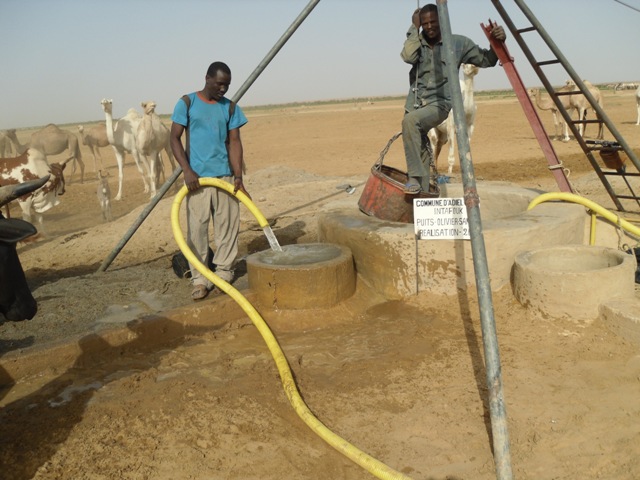
4 years ago at this time of year we lost one of great thought leaders way before his time was to depart us.  Olivier Sanche was a dear friend and passionate about data centers and the environment.  One of things Olivier's family did in memory of Olivier is sponsor a water well in Mali.

It is in this desert area that the well bearing Olivierʼs name has been built because ” Water is the Source of Life”.

Here is some background on the well that Karine Sanche, Olivier's wife shared.

-  The well was Bernard Sancheʼs idea ( Olivierʻs dad) because he wanted to honor Olivier with something useful and that would last.
-  He shared this idea with Olivierʼs mom, his brother and myself and we all agreed that instead of having people bring flowers to Olivierʼs funeral, we would have a fundraiser for the well instead and we ended up raising 4500 euros ( almost 6000 dollars).
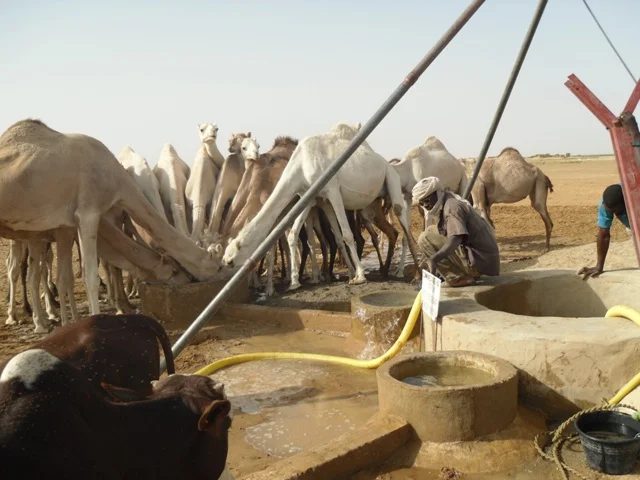
-  The idea of building a well came to my father-in-law because he had been doing humanitarian work in the Northern Mali since 1984. His associationʼs main goal was to help the Touaregs ( nomad populations) and he knew that one of their biggest problems is having access to drinking water. In an area ( the size of Belgium) called Adeil.hoc, some people must travel over 18 miles to get water to drink, to cook and to give to their herds. It is in this desert area that the well bearing Olivierʼs name has been built because ” Water is the Source of Life”.
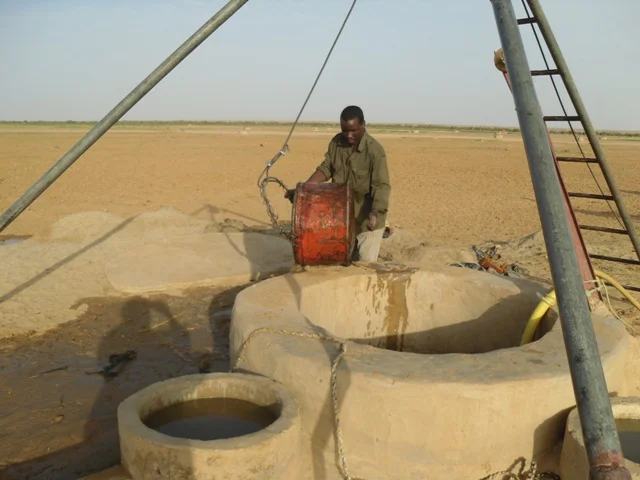
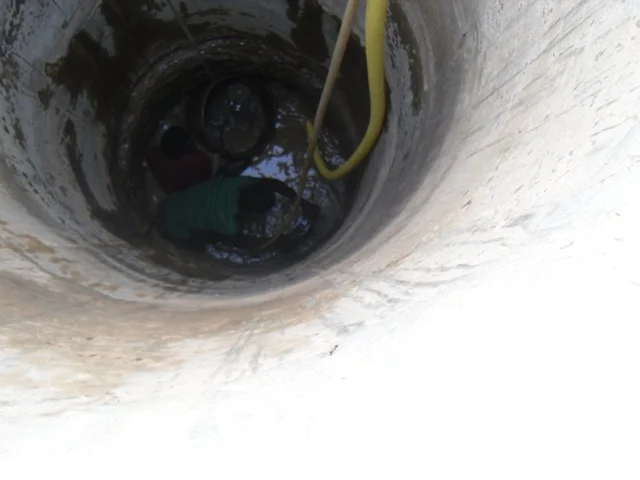
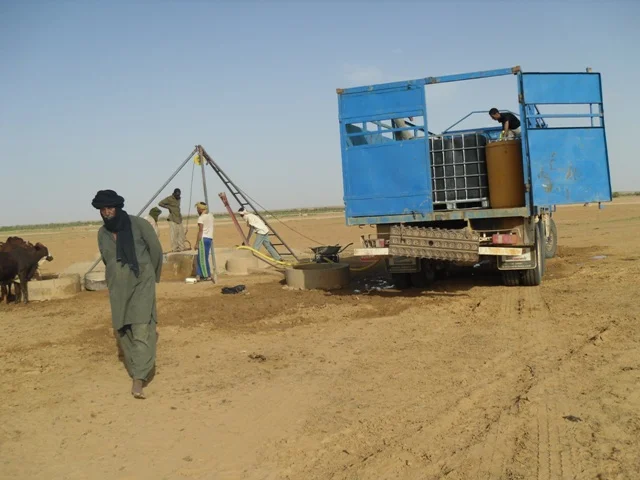
-  The exact location of the well has been decided by a local mayor ( the mayor of Abindnage) because he is a liaison with the association; this location was found to best serve the local populations. It was a difficult project because of the wellʼs location which is at 2 days of the nearest town meaning that all the building supplies ( gravel, ciment, steel, the molds ( form work) for reinforced concrete etc...) had to be transported through the desert.The well is 72 feet deep and has several “bowls” so several herds can drink at the same time.
-  Olivier was closely following his dadʼs efforts to help the Touaregs in Mali. These efforts include the construction and/or repair of 180 wells, the construction of schools and infirmaries in the bush, as well as the training of several bush nurses. The association also bought a truck to transport feed from Gao ( over 310 miles away).

Here are a few more pictures showing the construction of the well.

SAM_0103.JPG