Abstraction is the hidden technique of great solutions, not code
My degree is Industrial Engineering. https://en.m.wikipedia.org/wiki/Industrial_engineering I found the discipline when I was a freshman in high school sitting in the school library reading about different engineering degrees. My dad was a civil engineer for CalTrans and I was good at Math, Science, and Business. My computer skills were OK, but not as good as my other skills. It is easy to drill into the concrete specifics of Industrial Engineering discipline and I did this in the beginning working on logistics and distribution engineering. Luckily when I left HP to go to Apple is when I got my taste of working on working on software systems and creating new solutions which then let me address my weakness in computer science. This background also supported my moving to Micosoft for years and yeras on Windows.
With the popularity of learning coding skills, many think the key to build Internet Services is code. But when you dig into looking at where the great insights come from it is people who have top abstraction skills.
A presentation that I found that illustrates the power of abstraction is Scott Shenker’s presentation on the Future of Networking (SDN). https://www.slideshare.net/mobile/martin_casado/sdn-abstractions
It has taken my probability a dozen times looking at the slide deck to absorb the subtle details that Scott shares.
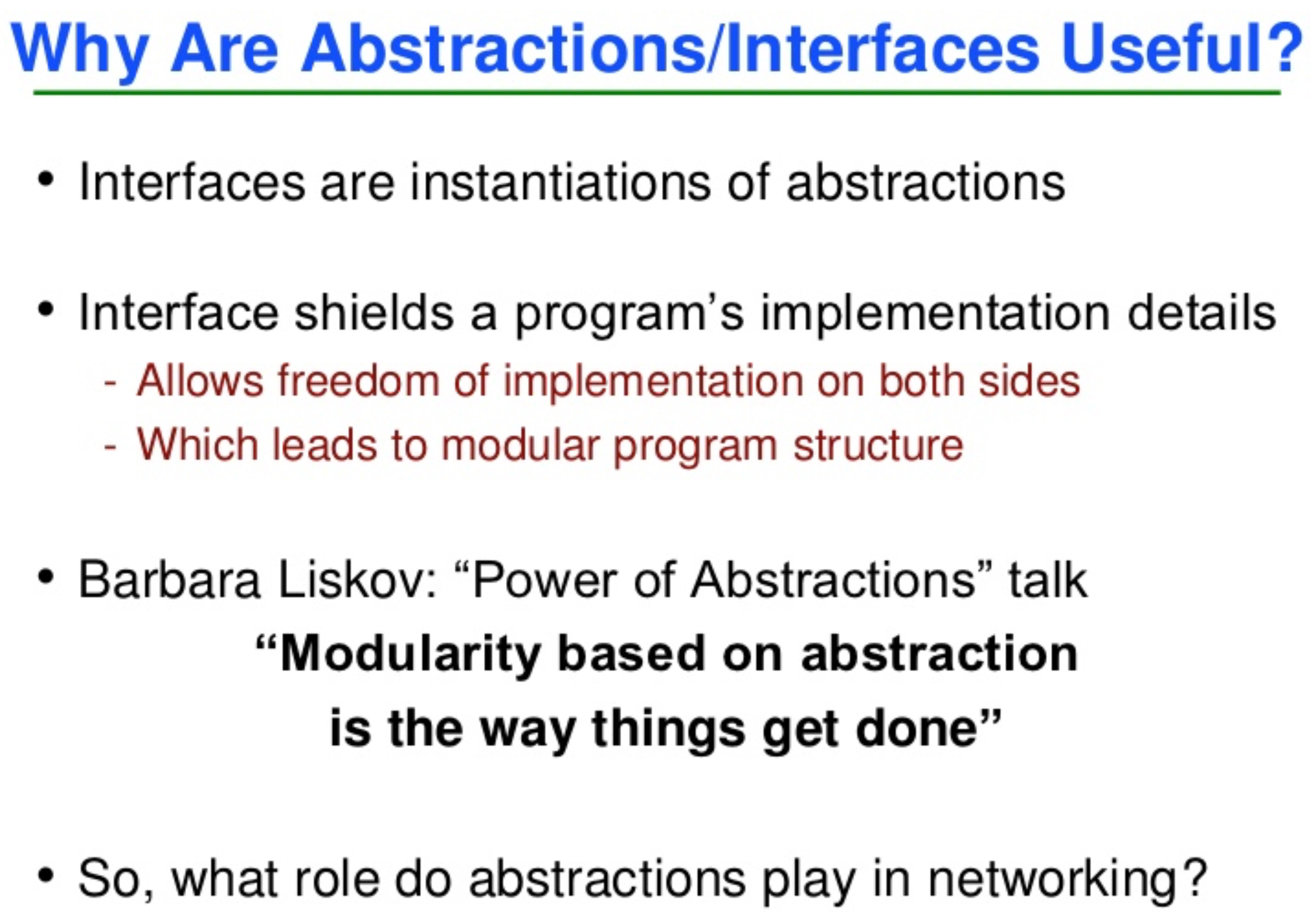
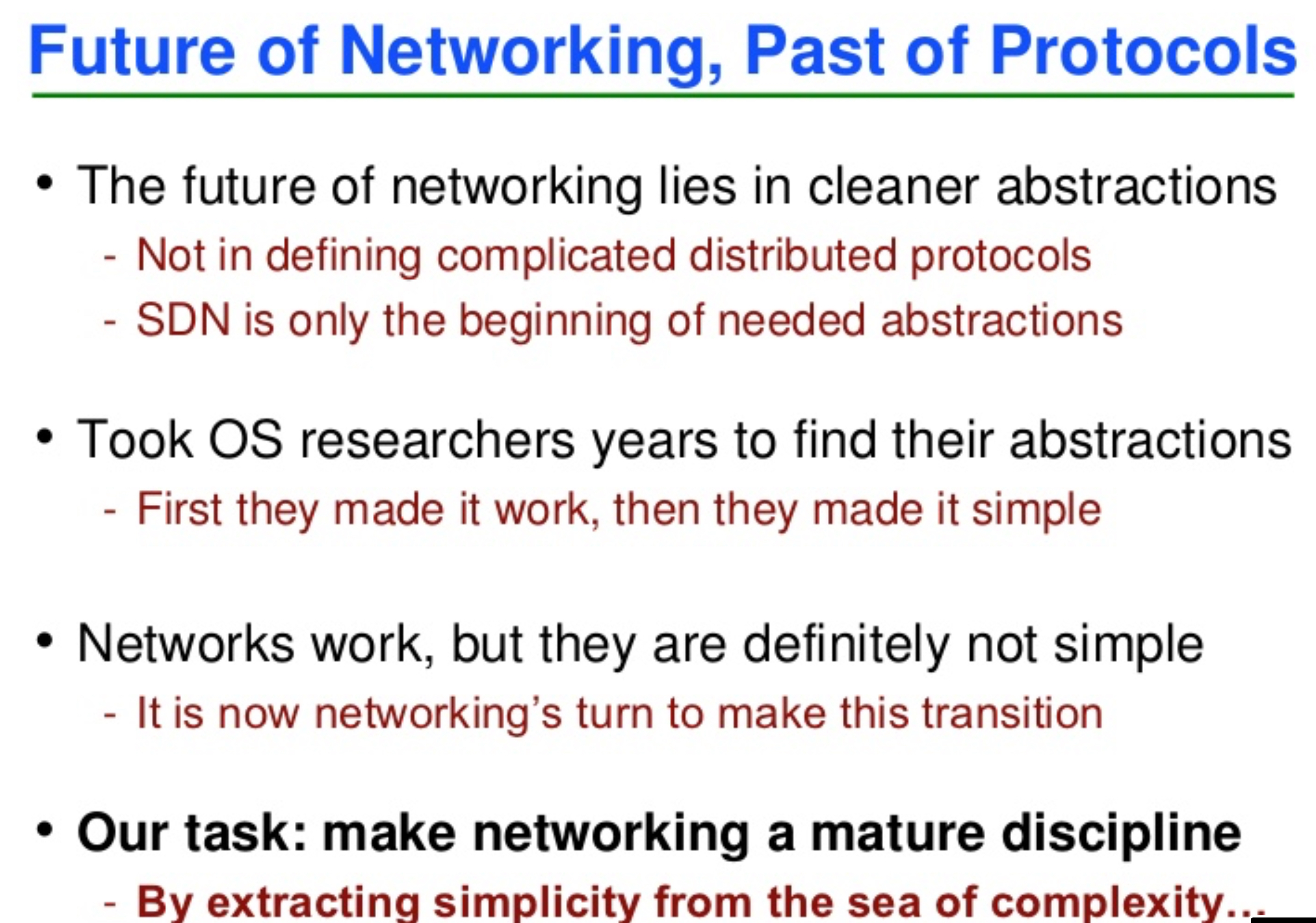
The conclusion is
Google shares its observations on Best Practices for AR
AR is a hot topic and Google has a post where they share their observations on best practices.
“From our own explorations, we’ve learned a few things about design patterns that may be useful for creators as they consider mobile AR platforms. For this post, we revisited our learnings from designing for head-mounted displays, mobile virtual reality experiences, and depth-sensing augmented reality applications. First-party apps such as Google Earth VR and Tilt Brush allow users to explore and create with two positionally-tracked controllers. Daydream helped us understand the opportunities and constraints for designing immersive experiences for mobile. Mobile AR introduces a new set of interaction challenges. Our explorations show how we’ve attempted to adapt emerging patterns to address different physical environments and the need to hold the phone throughout an entire application session.”
It’s a good summary of issues that are kind of obvious when you start down the path of building solutions.
Alibaba’s Video of Starbucks Shanghai showcase store with AR
There is news on Starbucks Shanghai store like geekwire’s interview with CEO Kevin Johnson. https://www.geekwire.com/2017/starbucks-ceo-talks-future-china-coffee-giant-just-opened-biggest-store-yet/
I was looking for more details on the use of AR in the store and found this Alibaba video to give the best tour of the store.
Machine Learning (ML) in Google’s Data Center, Jeff Dean shares details
Jeff Dean is one of Google’s amazing staff who works on data centers. He posted a presentation on ML that is here. Who is Jeff Dean? Here is a business insider article on Jeff. If you want a good laugh check out the jokes on Jeff Dean’s capabilities. I’ve been lucky to have a few conversations with Jeff and watched him up close which helps to read the ML presentation.
Below is a small fraction of what is in Jeff’s presentation. It is going to take me a while to digest it, and luckily I shared the presentation with one of my friends who has been getting into ML architecture and we are both looking at ML systems.
Part of Jeff’s presentation is the application of ML in the data center.
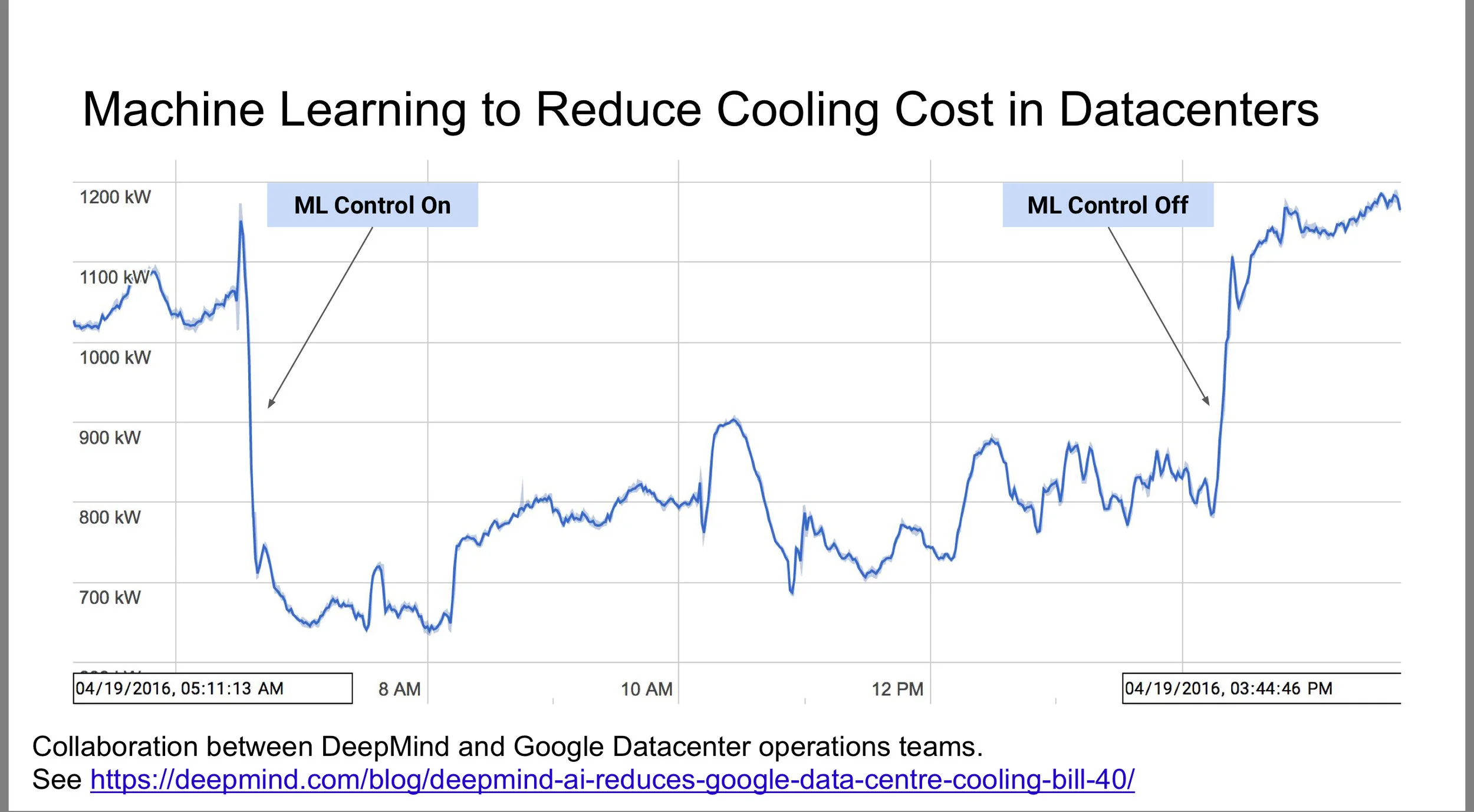
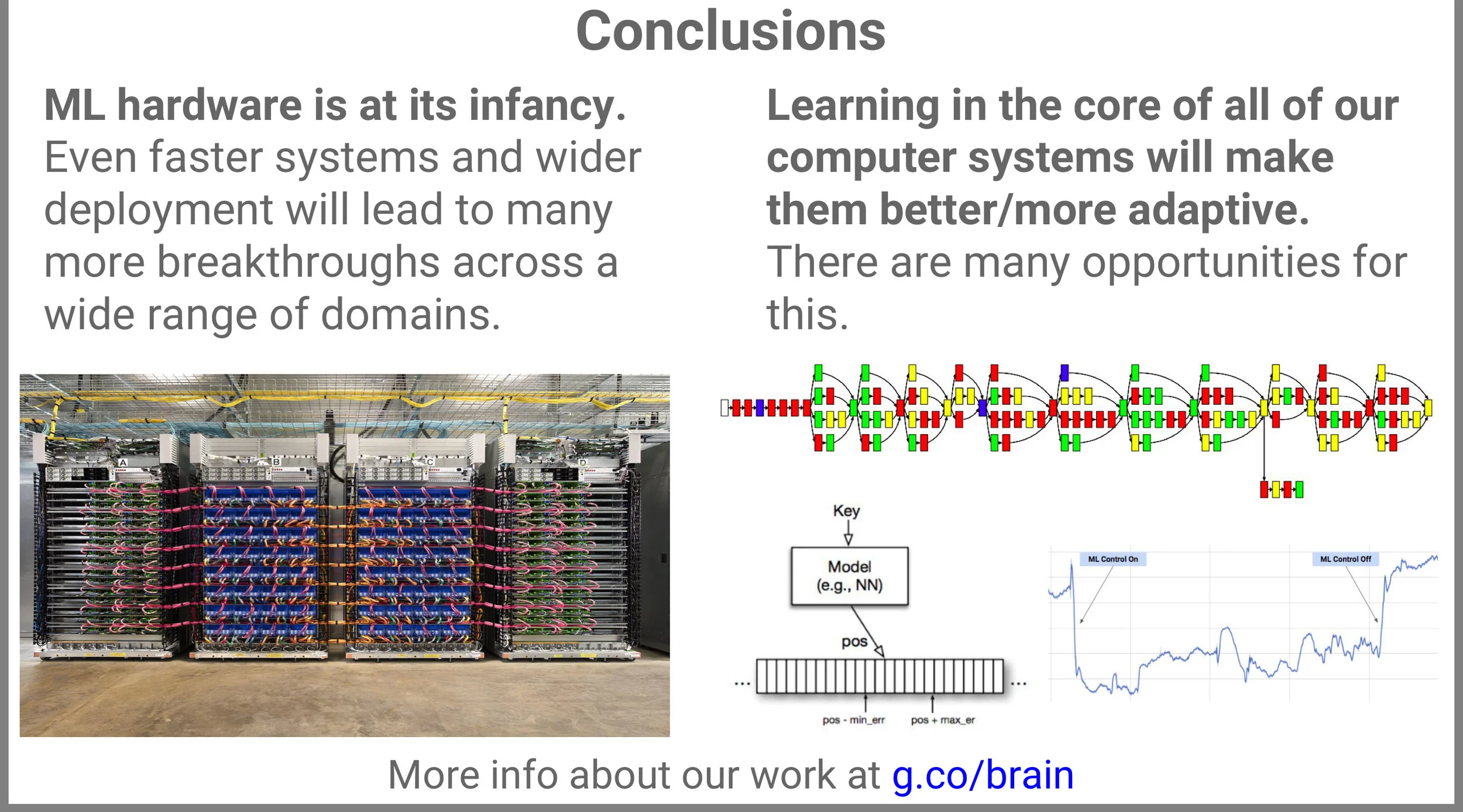
This slide doesn’t show up until 3/4 through the presentation, and to show you how important this slide is it shows up again in Jeff’s conclusion slide.
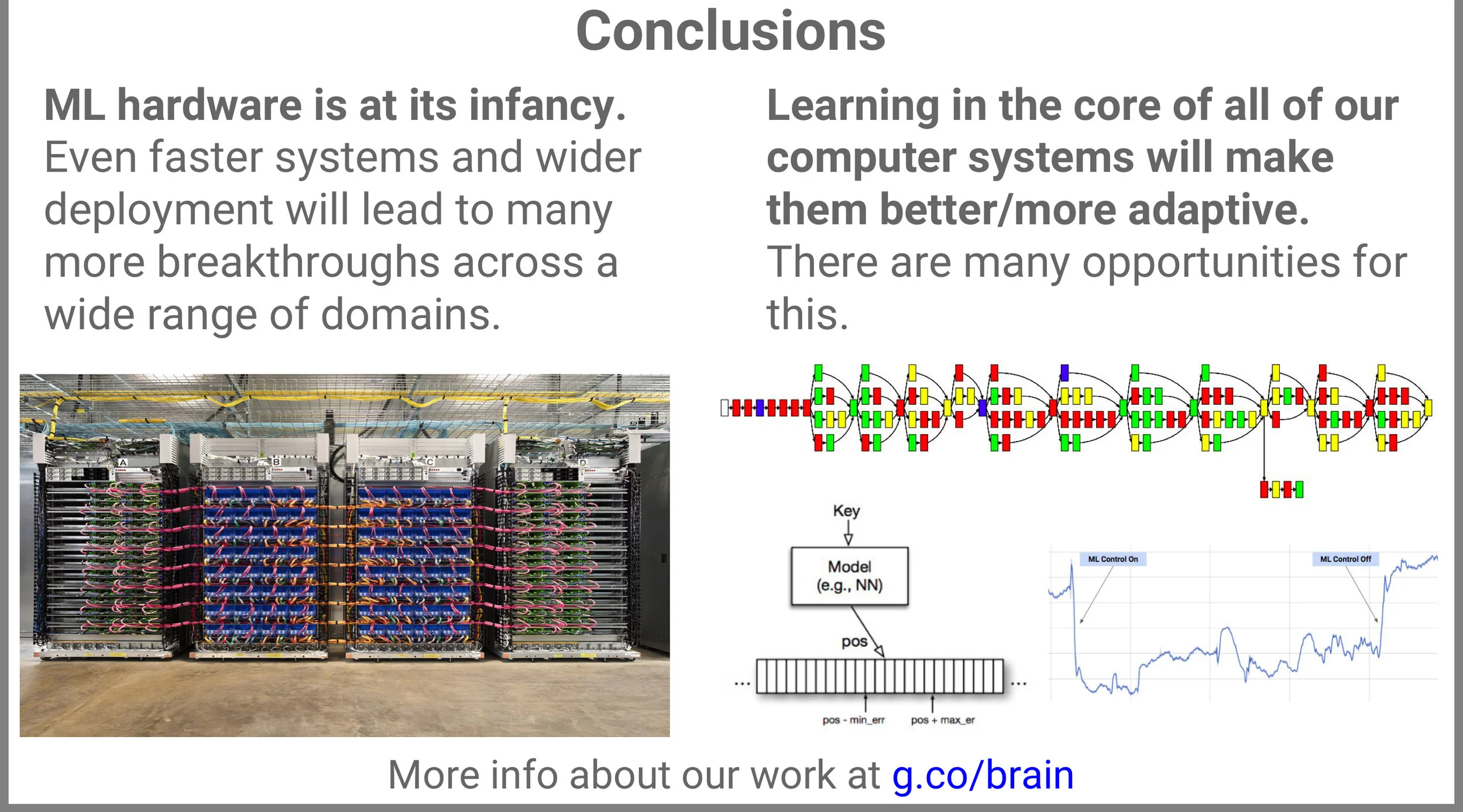
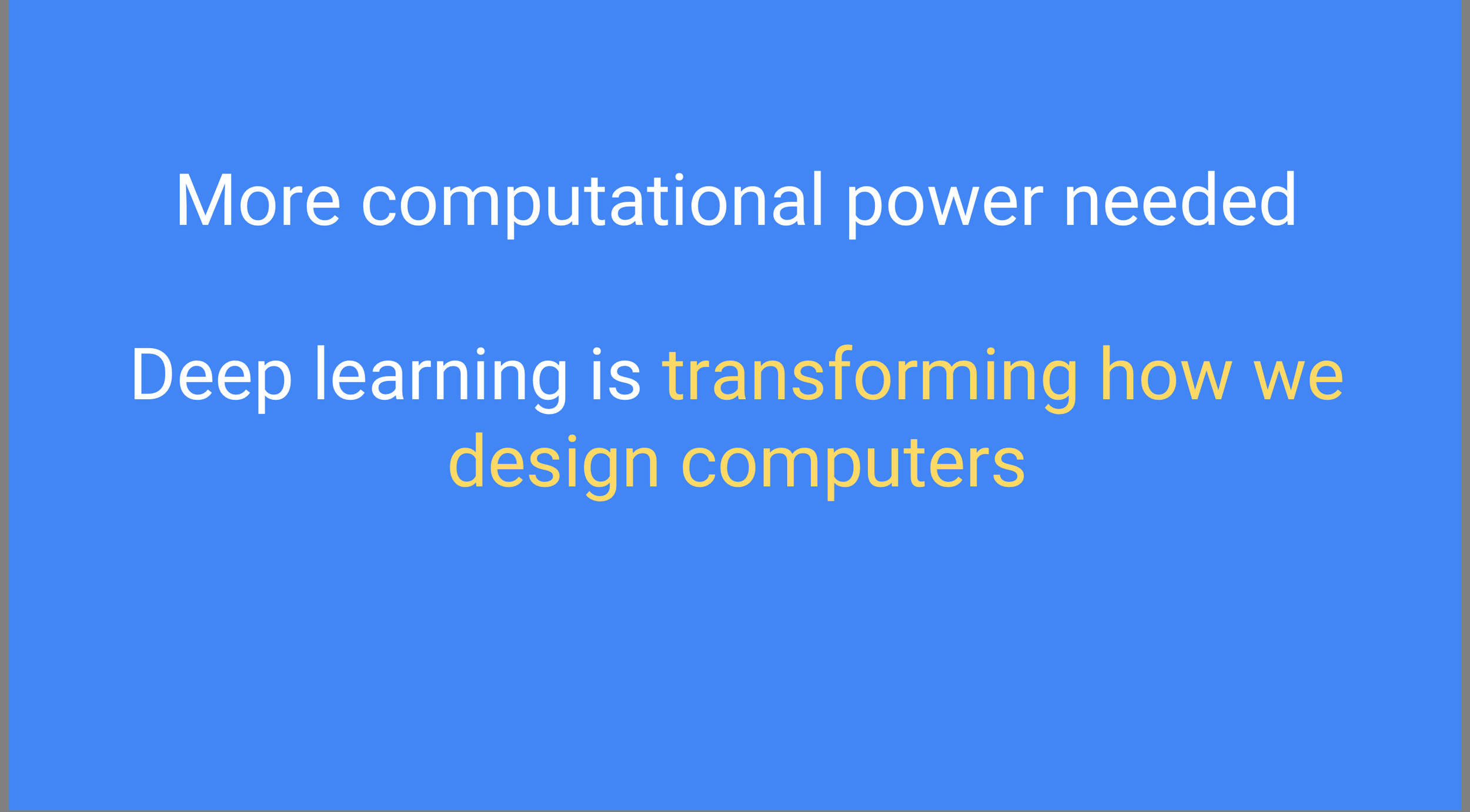
So now that you have seen the end slide what is Jeff trying to do? Kind of simple he wants a computational power beyond the limits of Intel Processors. Urs Hoelzle wrote a paper on the need for brawny cores to replace the direction for wimpy cores. https://static.googleusercontent.com/media/research.google.com/en//pubs/archive/36448.pdf
So what’s this look like?
Look at the aisle shot.

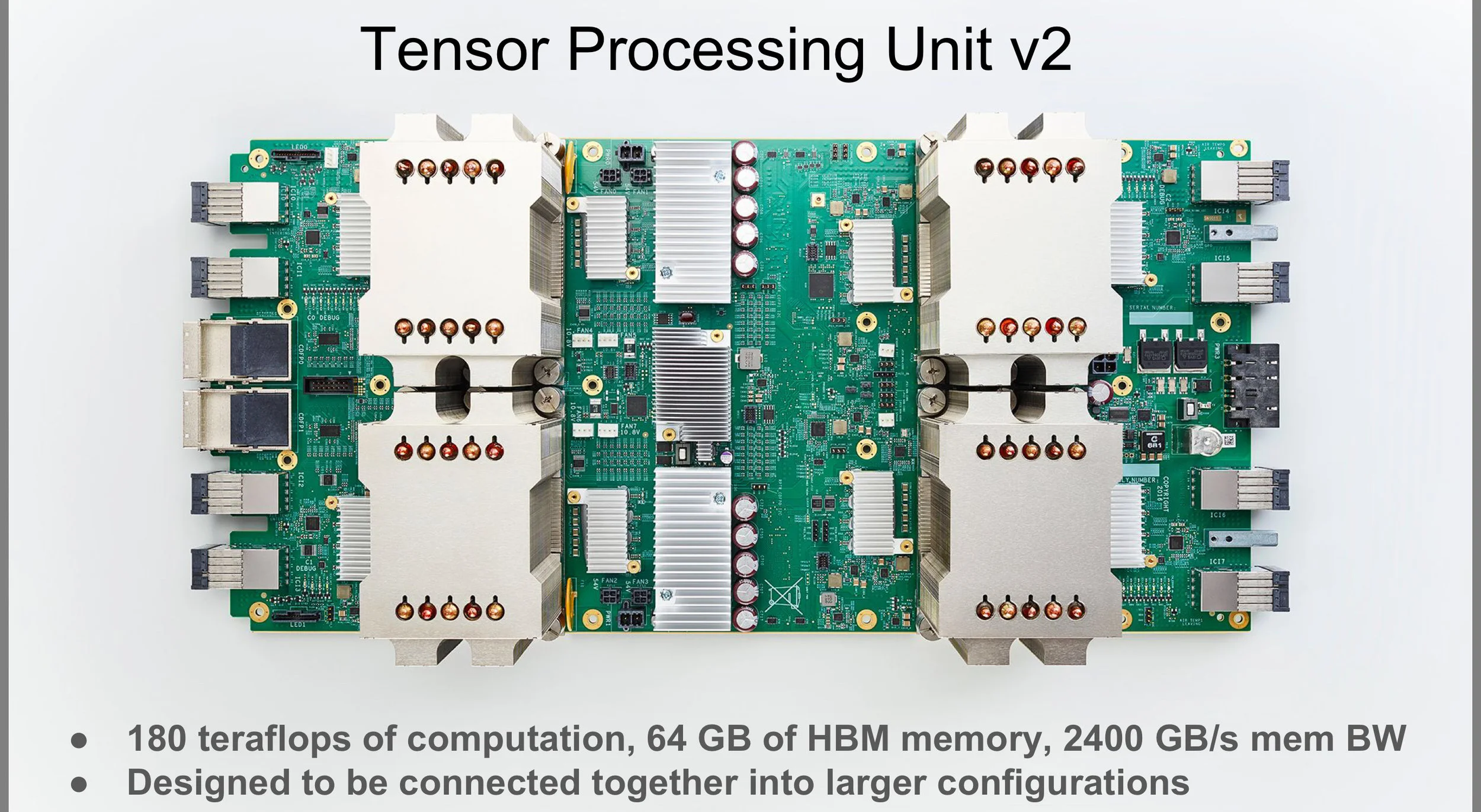
And here is shot of the TPU logic board with 4 TPUs.