5G lower latency times more improvements come from back-end than antenna transmission

Everyone says 5G will improve latency, but 4G and 5G are both electromagnetic spectrums that travel at the speed of light. So where is the latency improvement coming from. Nokia has a paper on low latency that goes into lots of details.

Below is a table and graphic that shows you were the times are in a latency calculation.

When you look at transmission and frame alignment you get about 3ms of time savings. Looking at UE and BTS which are user equipment and base station times you get 5 ms of time savings.

So there is actually more time saved in latency in the backend equipment than in transmission.
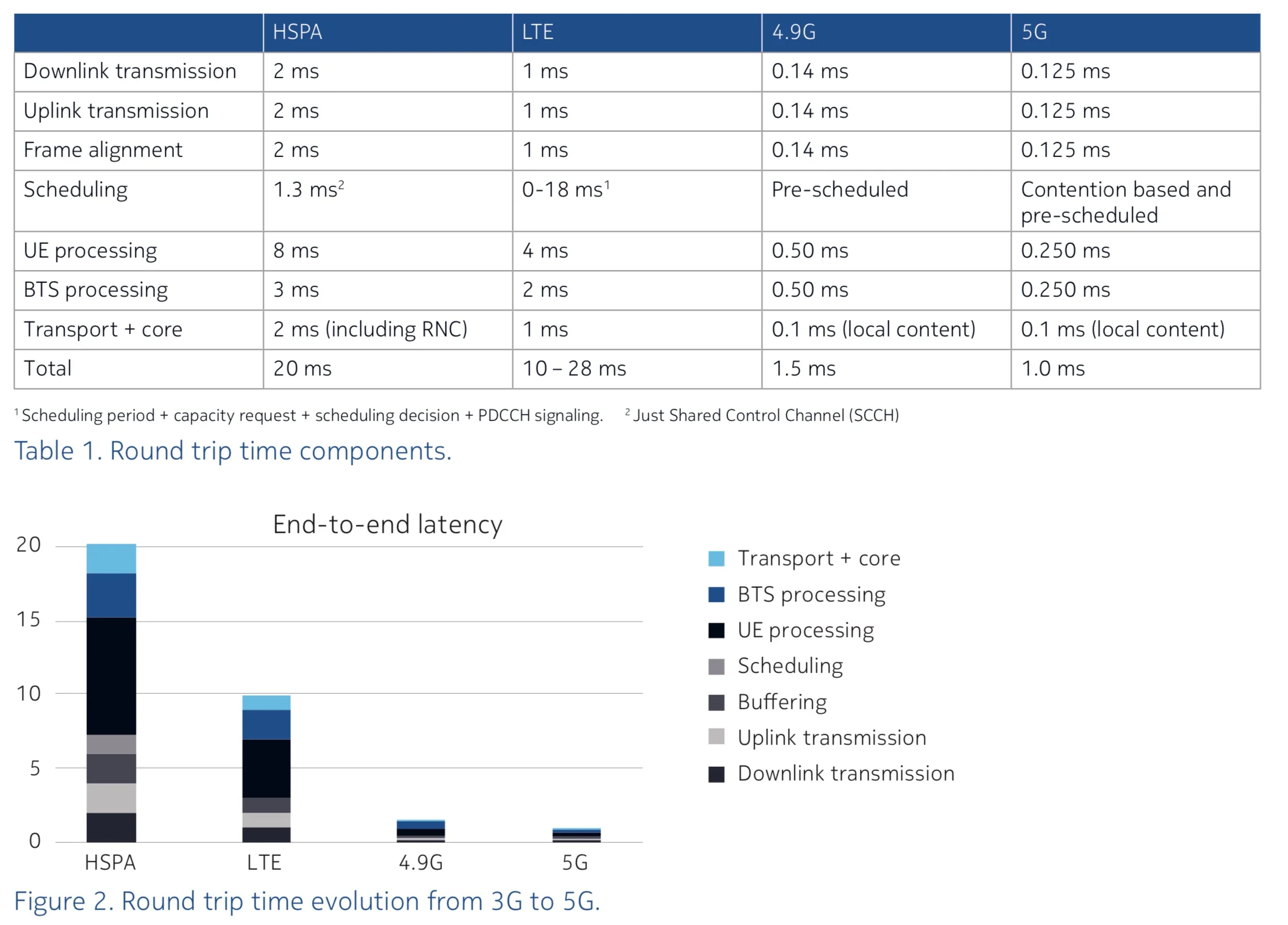
nokia.jpg

Ok since I brought up the transmission latency I might as well keep going. If you want to look at where the latency savings in transmission the current standards require a connection to be established to send data, switching between idle and connected modes. In 5G a connection is established and you can suspend and resume which is much quicker.

This applies to the same spectrum with only changing 4G and 5G infrastructure. So the new spectrum is not an issue. It is the transmission, connections, and backend that improve the speeds.
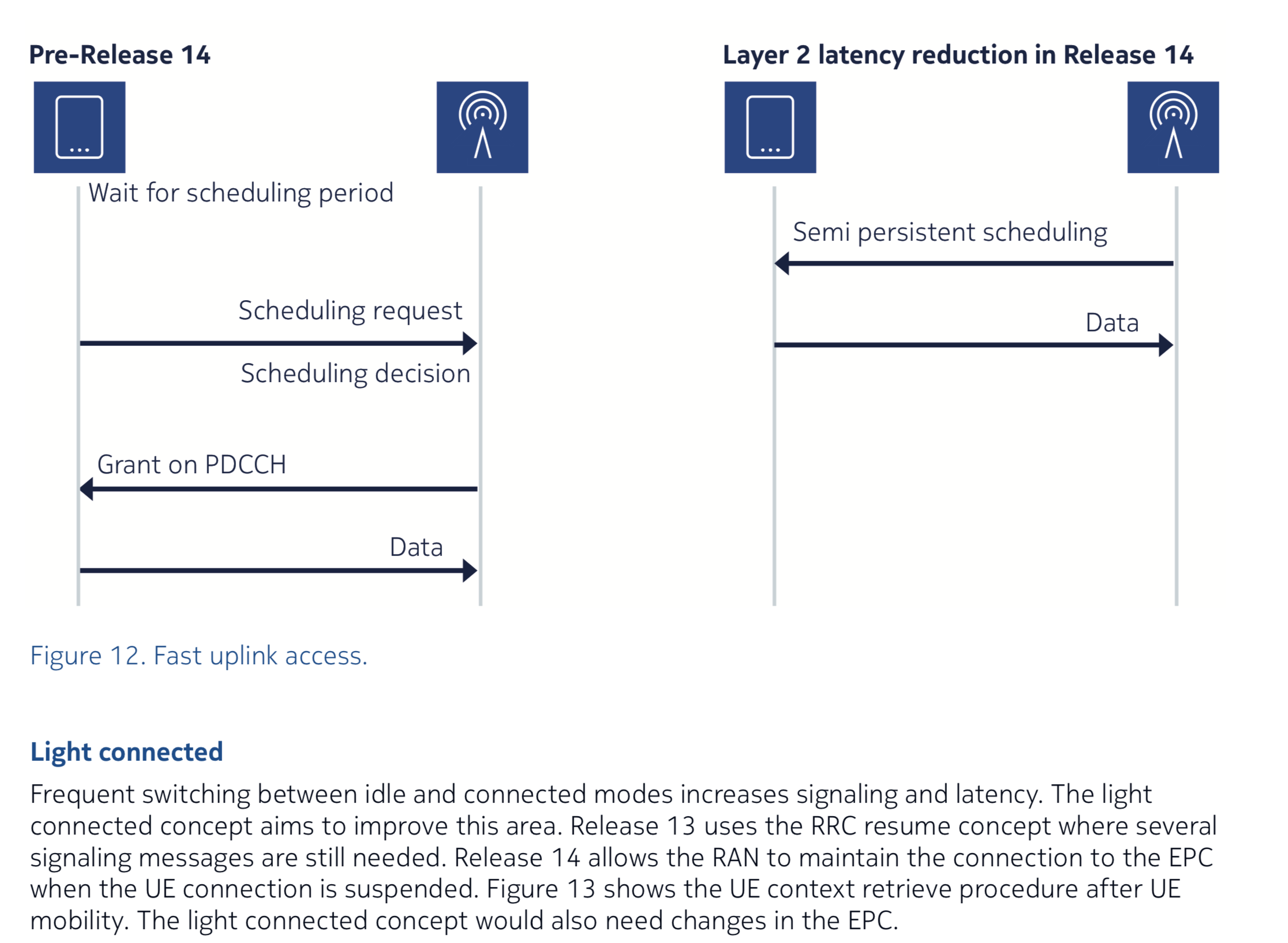
Screen Shot 2018-12-17 at 11.23.38.png

5G is the first network designed for Data First and voice is a much lower priority

Arstechnica has a good article on why buying a 5G smartphone may not be a good move for a while. One of the main ideas to get in your head is 5G is has multiple spectrums.

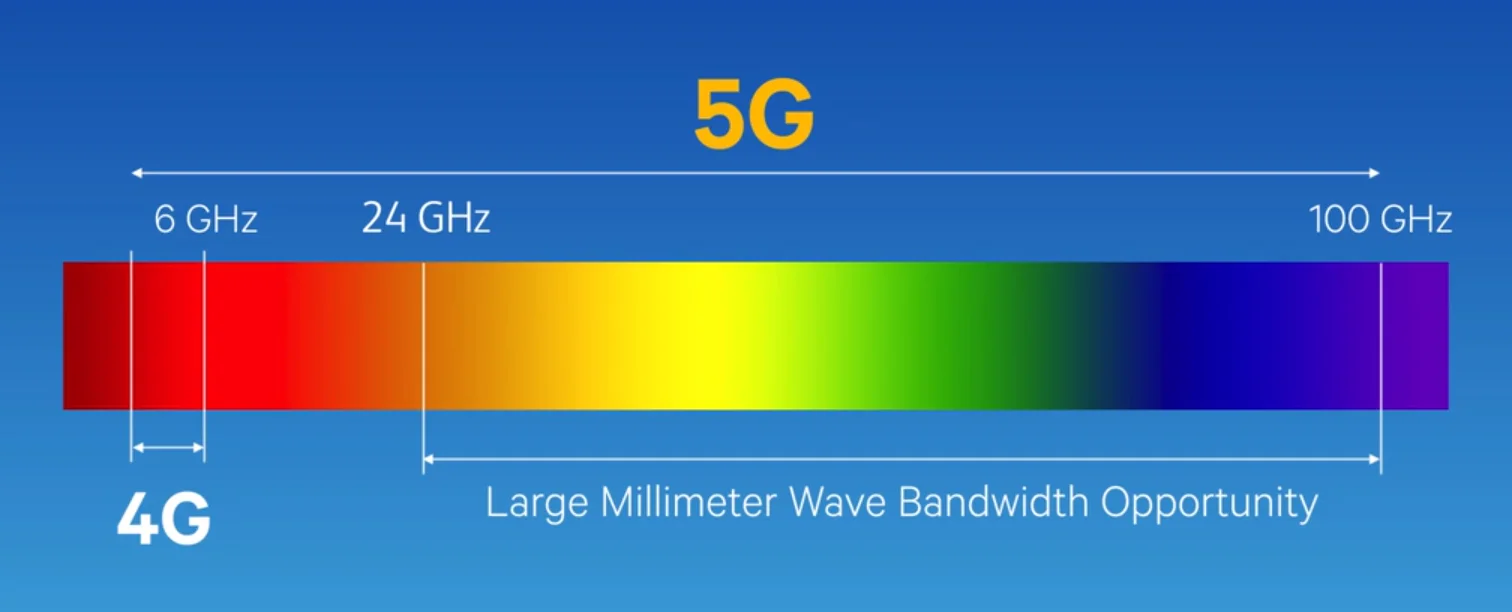
Below is a graphic from the Arstechnica article showing the millimeter wave spectrum that 5G adds on top of 4G.

24-1.jpg

So sounds good lots more spectrum, but you thought you had problems with 4G LTE coverage. mmwave 5G is going to be worse for coverage in a building or in a car. To get 5G coverage you will need an antenna outside or an internal antenna system connected to the network.

Still a big confused?

How about this as a way to understand 5G. The 4G LTE spectrum will reach you from 10 miles away. mm microwave can be as short as 1,000 ft of an antenna. Handing off between that many antennas on a voice call would be hard.

One study I haven’t seen yet even though the 5G latency is dramatically better than 4G what is the latency and throughput impact when you jump from one 5G antenna to another?

5G will cover LTE, 802.11, and mmMicrowave technologies. Do you think will be addressed in 2019. I don’t think so.

Lee Kirby has retired as President of Uptime Institute, now only focus is on Salute

In 2016, Uptime Institute announced that Lee Kirby was President. Thanks to friends, I heard 2 weeks ago Lee will be retiring from Uptime. And we were both on the flight to SEA to PHX on Sunday to 7x24 Exchange and Lee told me in person he has retired, And the written proof is Lee Kirby’s LinkedIn profile, showing Lee only job is Chairman of Salute, inc. 

Congratulations to Lee Kirby! A bunch of us will get together on Tues to celebrate Lee’s retirement.

FullSizeRender.jpg

Also went to Uptime Institute’s website. Did not see any press announcements,  if you look at the uptime institute team there is no mention of Lee Kirby. 

Rich Karlgaard 7x24 Opening Keynote

Rich Karlgaard, Forbes publisher had a talk called Technology and 2018 Turbulence

When Rich walked on stage the title had change to “Thriving in the Age of Smart Machines. How to build an unstoppable amidst unstoppable technology acceleration and change.”

IMAGE.JPG

I was busy taking note and found this article which summarizes Rich’s talk given to GM. https://www.hydrocarbonprocessing.com/news/2018/03/technology-adaptability-are-key-to-keeping-us-industry-on-top

IMAGE.JPG

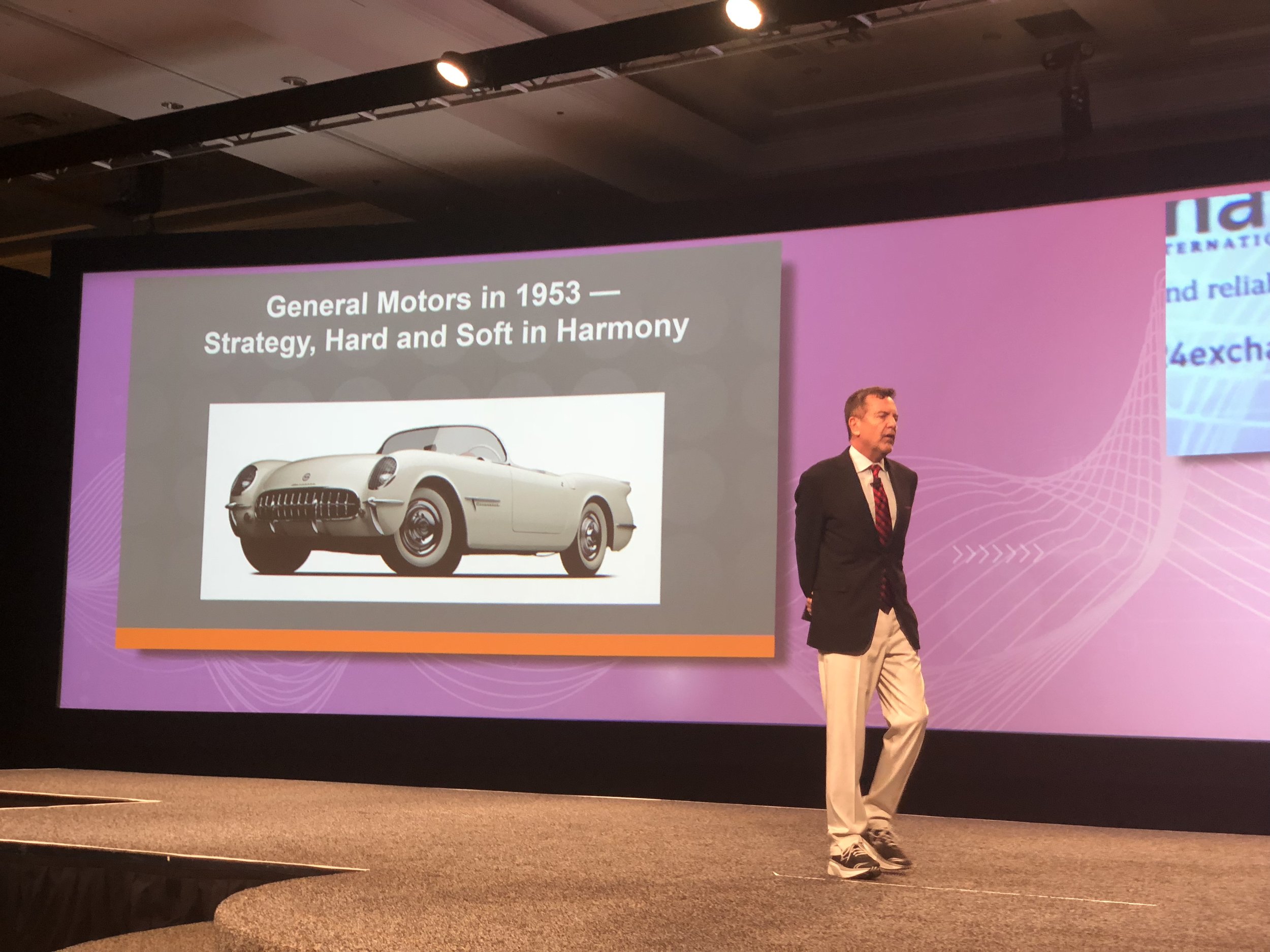
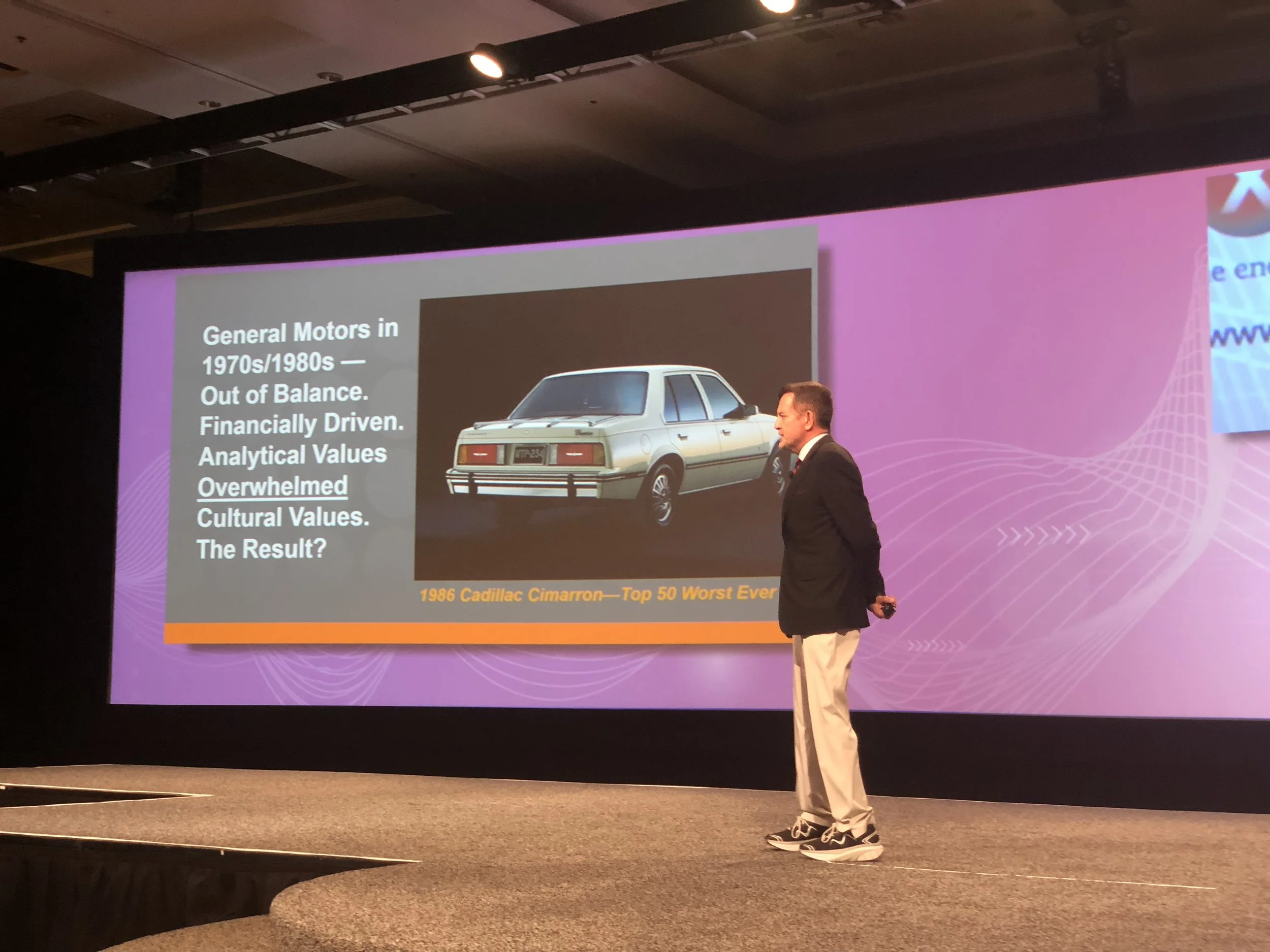
What got funny was when Rich used the decline of GM talking about the corvette to the Cadillac Cimarron when the company was running from a financial aspect.

IMAGE.JPG
IMAGE.JPG

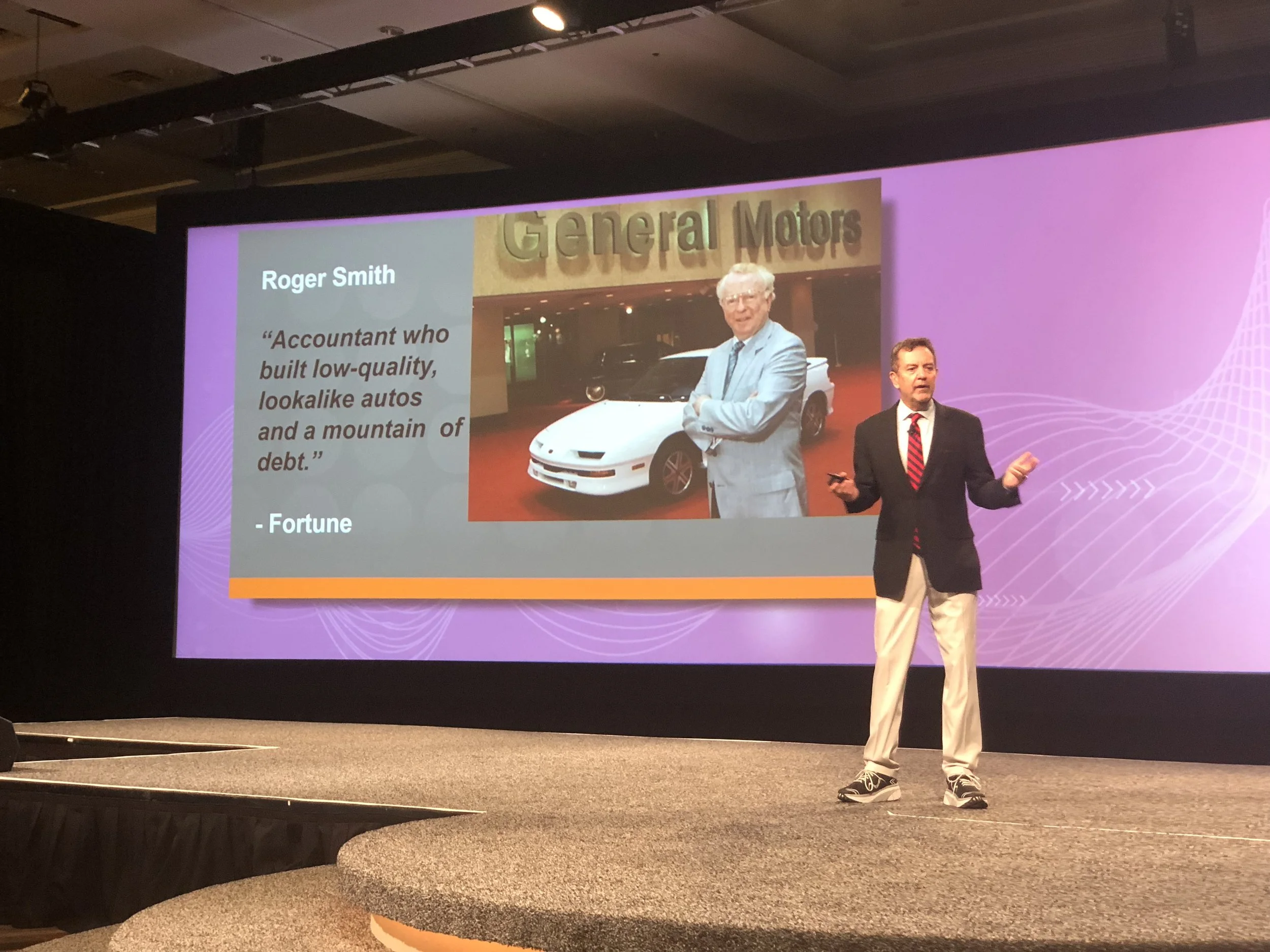
Contrast being a numbers person at GM vs. Jeff Bezos who has a two pizza number for how big a team should be. 

Rich added the following slide for the data center audience discussing the importance of talent.

What I took from this slide is how important math skills are to work in technology companies. If you are interested in the rest of the presentation you can read this post on the GM presentation. https://www.hydrocarbonprocessing.com/news/2018/03/technology-adaptability-are-key-to-keeping-us-industry-on-top

IMAGE.JPG

A peak at Amaya Souarez presentation at Fall 2018 7x24 Exchange, adoption of Robots

Part 2 of a peak at 7x24 Exchange is with Amaya Souarez. Part 1 with David Schirmacher is here.

Amaya has a long background in the data center industry with time at Microsoft, CyrusOne and now with First Data Corporation. Amaya is working on Global Infrastructure Operations at First Data Corporation and she is presenting on robotic process automation. Huh?

Let’s give a simple example of what a robot could do. You have a technician show up to service a backup generator, unit #1. The technician is an experienced person working on many generators. They show up at the building. Badge in. Given access to the appropriate areas. Enter the building. Where is generator 1. Working on enough data centers they have a feeling where the general location is in the building. There are maps that show exits. But the individual rooms are not labeled. They find their way to the generator room, badging in. There are 4 generators in front of them. Which generator is #1. Are they labeled no. Is there anyone else in the room? no. They could wait until someone shows up. Look at each unit trying to find the serial number of the unit they are working on. Seems like a big waste of time. Why isn’t there a location bot. A service that helps the technician find generator 1? Why isn’t there service history that comes up showing past maintenance events when they should up in front of the device?

That is what a robotic process could do. But why is this so hard. Amaya and I discussed how processes turn into ways that are so hard to change. What is all too often a case is the resistance to change is a primary driver. And misinformation gets used to shoot down the ideas to change. The classic use of this is fear, uncertainty, and doubt (FUD).

The term appeared as far back as the 1920s.[1][2] A similar formulation “doubts fears and uncertainties” reaches back to 1965.[3] By 1975, the term was appearing abbreviated as FUD in marketing and sales contexts:[4] and in public relations.[5] The term FUD is also alternatively rendered as “Fear Uncertainty and Disinformation”.[6]
One of the messages dealt with is FUD—the fear, uncertainty and doubt on the part of customer and sales person alike that stifles the approach and greeting.
FUD was first used with its common current technology-related meaning by Gene Amdahl in 1975, after he left IBM to found his own company, Amdahl Corp.: “FUD is the fear, uncertainty, and doubt that IBM sales people instill in the minds of potential customers who might be considering Amdahl products.”[7] The term has also been attributed to veteran Morgan Stanley computer analyst Ulrich Weil. This usage of FUD to describe disinformation in the computer hardware industry is said to have led to subsequent popularization of the term.[8]
— https://en.wikipedia.org/wiki/Fear,_uncertainty_and_doubt

Amaya hopes to dispel the FUD that keeps people from using robotic process automation covering details on how to measure the impact of bots.

Bots will come in the next wave of AR and VR solutions.