Amazing Project Change, When asked to deliver Polaris submarine launched nuclear missile launch faster, response is 3 years

The Polaris Missile program is recognized as one of the most successful complex projects. How good was the program. The London Daily telegraph wrote the following regarding the UK’s efforts to deploy Polaris in their fleet.

The London Daily Telegraph: "It was no small measure due to him [Levering Smith] that the British Polaris programme was completed on time and on budget—an unprecedented feat in British naval history."

Even more amazing though is after Russia launched Sputnik I into orbit in 1957 there was a call to Admiral Raborn to see if he could improve the schedule of Polaris. After a week he said if they would accept a 1200 mile range instead of 1500 he could get the program operational by 1960, three years ahead of schedule. They accepted of course.

Who does that on a project? How did they do it? This is one of the facts that got me more interested to understand what went on.

The simple answer is they created a fork in the project and they created another project that was scheduled for 1960 and in parallel there was another project following the original plan for 1963 with extended range. This project used a lot of existing technology and components. And they used Agile methodology.

Agile methodology is a type of project management process, mainly used for software development, where demands and solutions evolve through the collaborative effort of self-organizing and cross-functional teams and their customers.

Where was this shown? There is nothing about being Agile written. Here is what they did in 1958.

Sixty-odd test firings of live prototype Polaris missiles were stage between January 1958 and the July 20th shot.

Of these, two were termed outright failures, 20 were rated as partial successes, the remainder complete successes. Even the failures and partial successes were successes in a way, for they revealed flaws which could be corrected or eliminated in future shots.

That is two rocket launches a week. What project schedule and project managers could plan that? It would take weeks just to collect the data to update the schedule and how many meetings would be held for each of those sixty-odd firings.

So even though PERT and project managers were used they do not support how this could be done. No amount of project analysis would shave 3 years off a schedule. I’ll explain more on how this happened in another post. If you are interested in reading what the Navy published in 1960 here is the article. https://quietwarriors.files.wordpress.com/2014/03/all-hands-sep-1960-polaris_a-success-story.pdf

Project Managers #1 job is their own survival, not the success of the project!

I’ve spent many years as a project manager/program manager and know many other great leaders of the Mac II, System 7, Windows 95, and they all the talent to rally the teams to work together like Gung Ho is used. Being a project manager has grown into certified profession with its vocabulary embraced by consultants to manage complex projects.

Professional project managers almost all know that the big start was in the creation of PERT for the Polaris missile program.

“PERT” was developed primarily to simplify the planning and scheduling of large and complex projects. It was developed for the U.S. Navy Special Projects Office in 1957 to support the U.S. Navy’s Polaris nuclear submarine project.[2] It found applications all over industry. An early example was it was used for the 1968 Winter Olympics in Grenoble which applied PERT from 1965 until the opening of the 1968 Games.[3] This project model was the first of its kind, a revival for scientific management, founded by Frederick Taylor (Taylorism) and later refined by Henry Ford (Fordism). DuPont’s critical path method was invented at roughly the same time as PERT.
— https://en.wikipedia.org/wiki/Program_evaluation_and_review_technique

Chatting with a close friend on how project managers should support a project and whether the person should come from corporate on the field. Thinking about this issue for a week I came back and said well the main problem you have with project managers is the way they are wired to work these days is their #1 goal is their own survival and create processes that protect them and when things go wrong it is not their fault, but others. We laughed.

To back up my point I decided to go to the source and bought a used copy of “The Polaris System Development” book by Harvey Sapolsky. Here is one paragraph where Harvey says there was no ROI for PERT as an analysis would shatter the myth that PERT was perfect in its planning.

The Special Projects Office never has attempted to measure the effectiveness of PERT; the reputational cost of a negative finding would prove too costly for the organization to bear. Moreover, such a study would be somewhat pointless whatever its results since PERT-type systems are now a Department of Defense requirement on FBM and other weapon development contracts. Yet subjective evaluations of PERT do exist in the Special Projects Office, the birthplace of the PERT system. As one senior officer stated, “We would seek an immediate exemp- tion for the OSD requirement but it isn’t worth the fight. They apparently believe in it and they pay for it.”

The best part about doing this research is I have had numerous e-mail conversations with Harvey Sapolsky and understand his research so much better and what was the true skills developed during the Polaris Project to ship a game changing technology that has changed nuclear weaponry.

30 minutes to get perspective on where covid-19 could lead - Scenario Planning w Peter Schwartz

If you want a way to think about what Covid-19 will mean and you are so tired of the day to day media. Consider spending 30 minutes to watch the Youtube video referenced in this blog post. The video has only 1,200 views so it is not wide spread, but it provides a good basis on how to think about what is going on.

Years ago I bought a book by Peter Schwartz, “The Art of the Long View, Planning for the Future in an uncertain world." And I am back reading his book and another book about the inventor of Scenario Planning Pierre Wack.

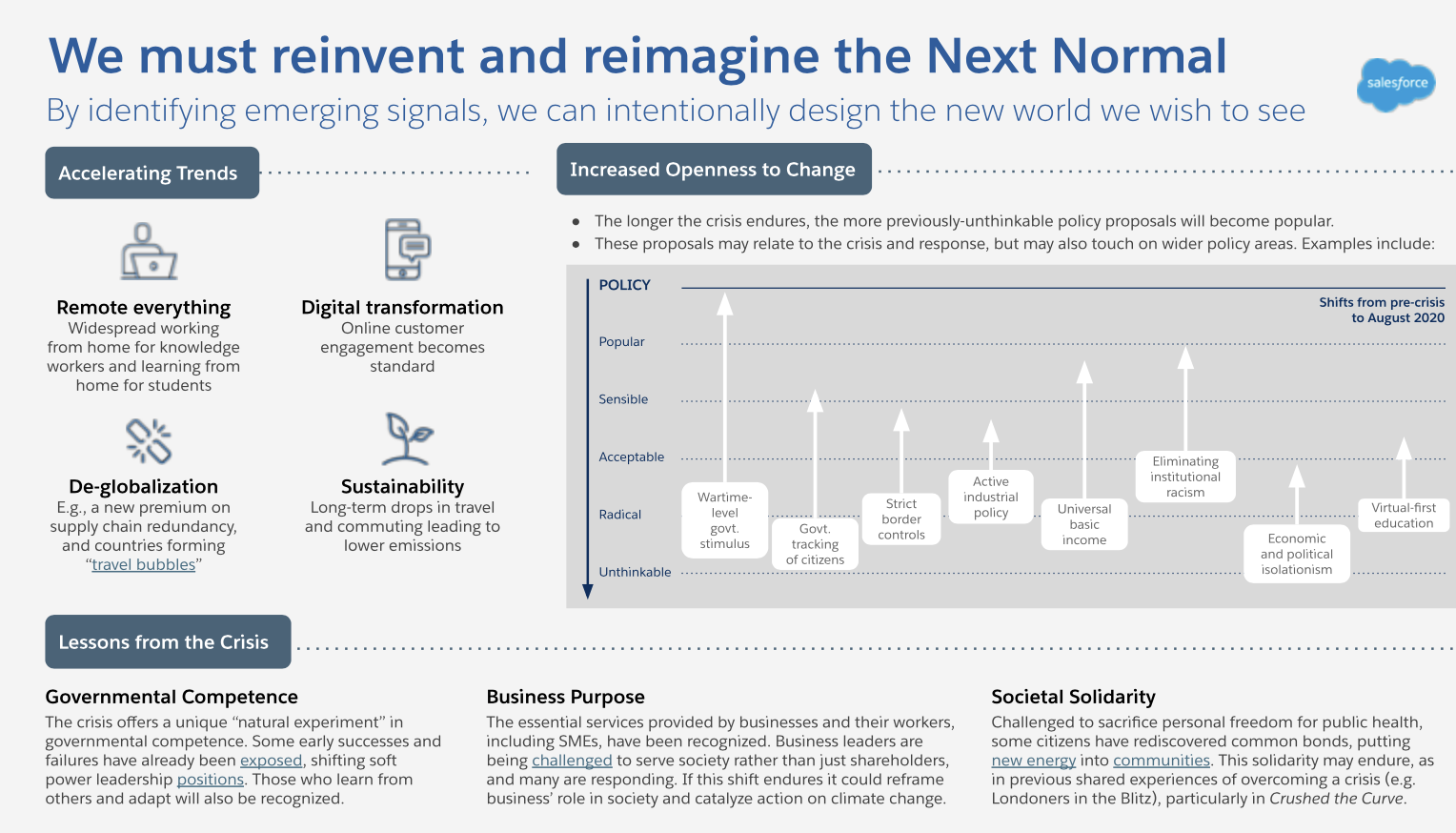
Curious what Peter Schwartz has lately I forgot he had joined Salesforce as SVP of strategic planning. Was pleased to see he published version 8 of his perspective on Covid-19 on Aug 31. The slides are here.

Screen Shot 2020-10-23 at 09.49.27.png

Slide 33 gets to the Future.

Screen Shot 2020-10-23 at 09.50.56.png

And you can watch Peter explain these slides in this youtube video.

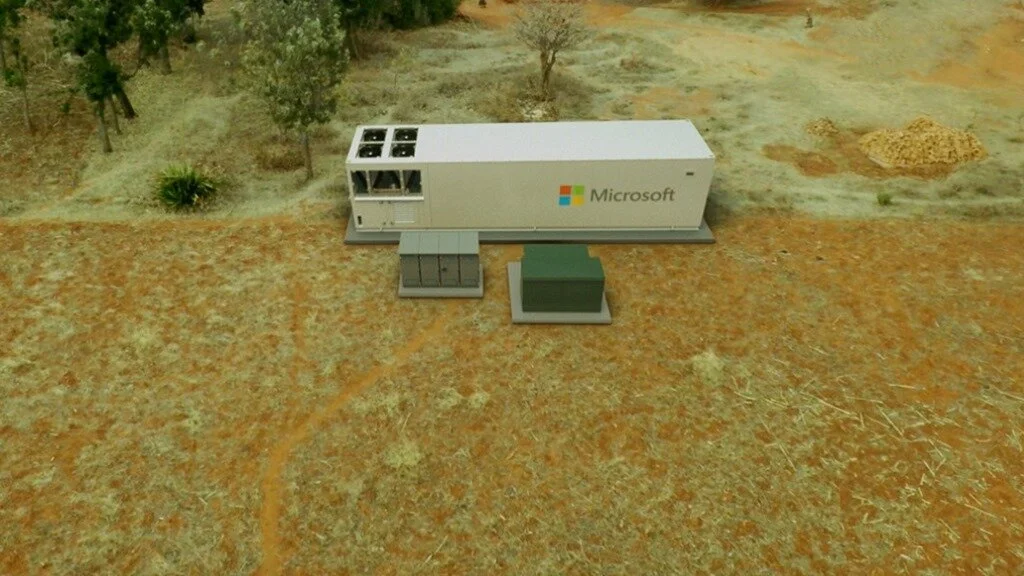
Microsoft announces its Edge Solution - Azure Modular Datacenter

Microsoft announced its modular datacenter offering.

035c5d1f-194a-4bd2-8f88-11a4991ff8ed.jpg

I want to say I know of one person who is no longer at Microsoft who had this idea 8 years ago. What has changed during this time is the efforts at the edge, cloud computing, satellite communications, and Covid.

Combine all of these and the conditions are so different now for an edge solution.

Where you going to put this?

How much empty parking lot space is there in offices or even empty loading docks?

88df98cb-465f-46b2-888c-e1984e1a5074.png

Dropbox goes for WFH, publishes great data

Covid has impacted the workplace and when people will return to the office is an unknown.

Dropbox published a blog post on their effort. https://blog.dropbox.com/topics/work-culture/economist-intelligence-unit-distributed-work-study.

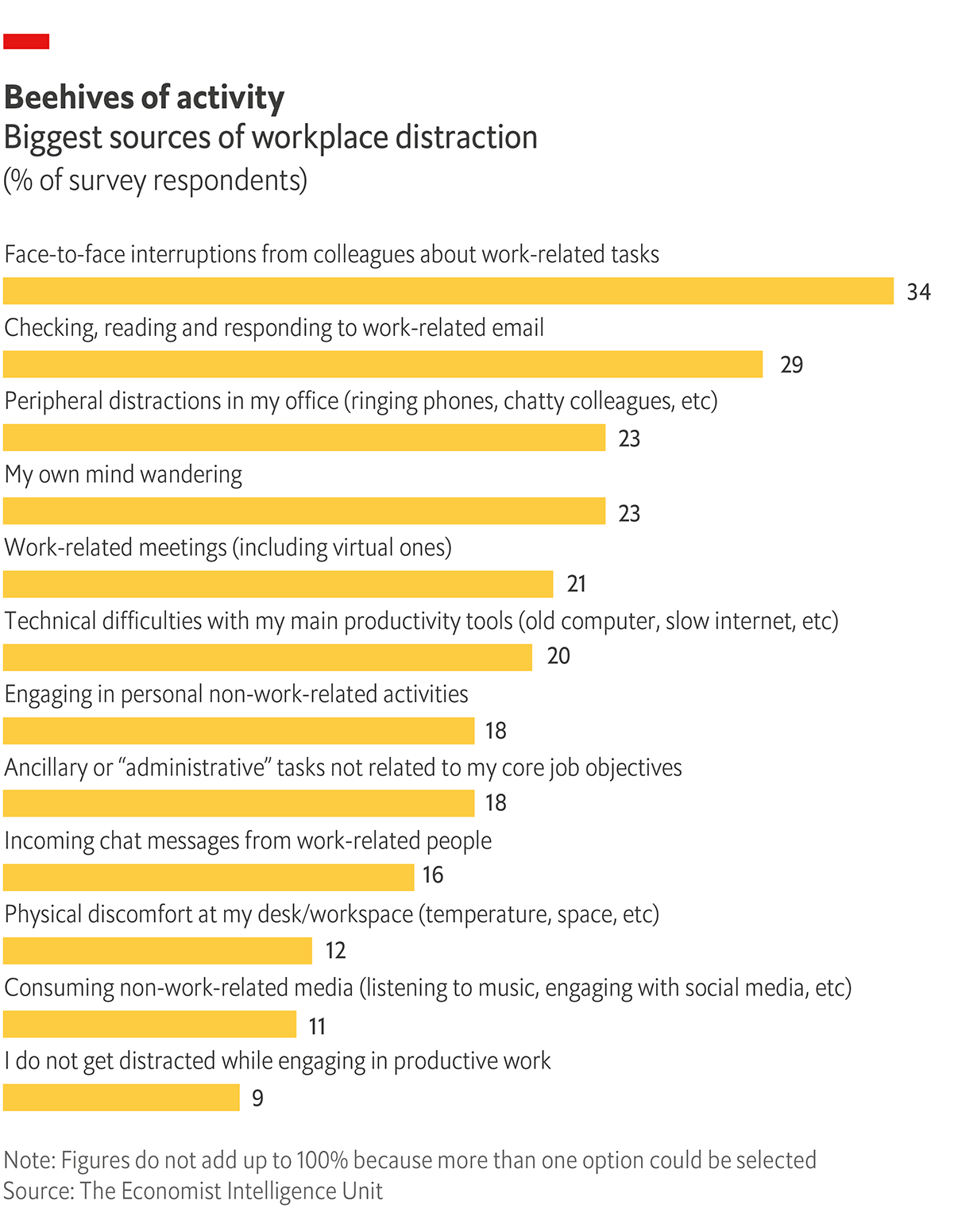
One of the graphs they published is the following. Check out what the biggest workplace distractions are.

Bet you so many people out there think it is 2nd from the last item. “Consuming non-work related media.”

file-5542AB74-1CA7-44A2-B930-E0A472763427.png