Fool's Gold, Lawsuit against over hype of LEED Gold claims

LEED is marketed as a green building certification by many and has spread to data centers.  Here is a post where a resident of a NY residential building has filed a lawsuit identifying the buildings performance does not match up to claims.

Fool’s Gold? Resident Files Suit Against Developers of LEED Gold Riverhouse For Not Delivering LEED Gold Goods

David Roth | Thursday, May 27, 2010 | no comments

One thing that Battery Park City’s LEED Gold hopeful Riverhouse has never lacked for: publicity. Some of that media attention has been of the brand-friendly kind — Leonardo Di Caprio bought a condo! Tyra Banks bought a condo! These people are very famous! Or at least Leo is! But much of the recent attention directed at Riverhouse has not been very flattering. A series of legal squabbles between the developers – the Sheldrake Organization and the zombie iteration of the Lehman Brothers real estate partnership — were both notably ugly and notably public, although Riverhouse condos continued to sell well during the exchange of lawsuits and accusations and vague intimations of pre-foreclosure legal action.

...

The suit’s demand for $1.5 million in damages is kind of a grabber, but Stephen identified something more intriguing — and which could possibly make a bigger impact across the green building spectrum — than the intimation that one high-profile green building didn’t live up to its own hype. “This type of construction litigation is not uncommon, the purchasers also claim that ‘the building’s much-heralded ‘green’ heating system consistently fails to provide adequate heat’ to their unit and that this failure is a condition which is ‘is materially different from those represented by the project sponsor and its principals in the condominium offering plan,’”

it is hard to  identify the performance of a data center given it can take years before the space is build up with load.

Which reminds of a rumor I heard once that Google put a bunch of toasters in its data center.  Why?  To simulate the electrical and heat load on the infrastructure.
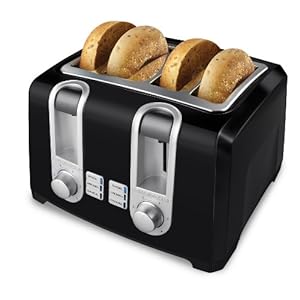
Black & Decker T4569B 4-Slice Toaster, Black

I don't think we'll ever see a lawsuit for a LEED certified data center, but it was bound to happen that the over hype of LEED catches up to reality of a buildings performance. 

If the hype of LEED was combine with hype of Smart Grid.  The Smart Grid could be used to prove what LEED buildings perform as expected.

Read more

Building your First Data Center, learn some lessons from Microsoft who say they can build for 50% less

Building your first data center can be a challenge.  Many have tackled this task over the past few years - Microsoft, Yahoo, Intuit, ask.com, eBay, Apple, and Facebook.  Building your first is an opportunity to consolidate your IT loads and reduce costs.  Given the difficulty of getting all the ducks lined up to get the project going, the budget for the first data center can be over $250 million.

DataCenterKnowledge reports on Microsoft's latest Quincy data center.

The new data center is being built next to Microsoft’s existing 470,000 square foot data center in Quincy, which was built in 2007 and is now one of the largest data centers in the world. But the new facility will be dramatically different in both its cost and design. After years of investing up to $500 million in each data center project, Microsoft plans to spend about $250 million or less on each data center going forward.

One trap I have seen many fall into is to build a big data center as the first.  Why?  Well, part of what drives this is data centers are the highest profit margin business for the construction industry and there are plenty of people who will tell you bigger is better.  The analysts will help you justify a $250 million dollar data center is the sweet spot of getting an ROI.

But, a different way of thinking about this problem is to build Ten $25 million data centers instead of one.  The first one may be a bit more than $25 million, but you can cut costs on the next, and the next, then after your third, you realize "hey there is a different way we can be doing this.  Let's change the design.  Build three more, then you go "wow we learned a lot, let's really push for something innovative."  The last three now cost $12.5 million instead of $25 million.

This is what Microsoft has done, but spending $500 million a data center.  They built Quincy 1, San Antonio, Dublin (air side economizer), and Chicago (container).  And the 4th generation data center is next.

Get Microsoft Silverlight

One additional benefit of building a $25 million data center is you don't end up with consultants, designers, and construction companies swarming to get your business.  If you choose an incremental data center design you'll learn a lot on what is real and what is hype.  Google, Microsoft, and Amazon can do this why can't you too?

BTW, another thing Microsoft has done is figured out how to build the 4th generation data center faster than the 1st generation. Part of the reason the first data center is so big is because it was so hard to get the project going.  Speed is important in addition to capabilities.

I've discussed these ideas with a few data center designers, and we have used the metaphor that data centers are designed like Battle tanks.  But not all businesses, so not all data centers should be same and if you have geo redundant SW like Google, Amazon, and Microsoft, it can be more cost effective to build different data center types for the same reason why there are light and heavy tanks.

Which brings up another benefit of the Microsoft 4th generation data center, the design is not in a concrete bunker which means it could be moved much easier if need be.

This next-generation design allows Microsoft to forego the concrete bunker exterior seen in the original Quincy facility in favor of a steel and aluminum structure built around a central power spine. The data centers will have no side walls, a decision guided by a research project in which the company housed servers in a tent for eight months.

What happens if you focused on building iterative data centers with a range of capabilities to adapt to business needs and could be moved if business or power conditions change in a location.  Doesn't this sound like a better way to spend $250 million.  But, the data center ecosystem is not going to promote this idea as it changes their profits and business models.

Microsoft, Google, and Amazon's battle for cloud computing is going to continue to drive some of the most innovative thinking.  And you don't have to wait to start thinking like they do.

Read more

Nintendo's New Redmond Green Headquarters also has an energy efficient data center

Seattletimes has an article on Nintendo's new Green HQ in Redmond.

Nintendo celebrates opening of new headquarters in Redmond

Nintendo of America opened the new headquarters of its North American operations in Redmond Thursday — a gleaming, modern facility...

By Katherine Long

Seattle Times Eastside reporter

The new Nintendo headquarters in Redmond. The 300,000-square-foot-building is a low-slung, four-story building that replaces one of the company's other three buildings.

Enlarge this photo

BENJAMIN BENSCHNEIDER

The new Nintendo headquarters in Redmond. The 300,000-square-foot-building is a low-slung, four-story building that replaces one of the company's other three buildings.

Nintendo of America opened the new headquarters of its North American operations in Redmond Thursday — a gleaming, modern facility with all kinds of environmentally friendly touches throughout.

The 300,000-square-foot-building, which houses about 650 employees — roughly half the company's Washington staff — is a low-slung, four-story structure that replaces one of the company's other three buildings constructed in the early 1980s. It's on a 10-acre site on the Nintendo campus, just west of State Route 520.

I found it interesting that Nintendo's President Satoru Iwata thought BIM was unique.  Maybe BIM is unique in office space, but everyone has BIM capabilities in data centers.

Nintendo President Satoru Iwata flew in from Japan just to celebrate the opening, and talked of the importance and symbolism of the building to his company and to the Redmond community. Gov. Chris Gregoire helped in the ribbon-cutting ceremony.

Iwata said the building is unusual because the contractor, Turner Construction of Seattle, modeled "every pipe, wire, duct and beam" by computer beforehand. That allowed workers to shave months off the time to construct it.

The Green features called out were.

The 75,000-square-foot roof is literally green — it's planted with a low-growing ground cover called sedum. The plants help moderate the temperature inside and absorb rainwater.

Inside, the floors' central corridors are made of bamboo, considered a "green" material because it grows to maturity quickly. The lights are on motion-detecting sensors and automatically dim when there is an abundance of natural light.

And, air-side economizers for the data center.

The headquarters is home to all of the company's high-powered computers that serve Nintendo's online gaming system and other corporate computer needs. It's cooled primarily by air from out-of-doors, and that is expected to cut the cost of cooling — a major source of energy consumption for computer servers — by as much as 80 percent.

Here is the story of Nintendo being Redmond's first high tech company, not Microsoft.

Redmond Mayor John Marchione was just 17 years old in 1982 when his mother, Doreen, then a member of the Redmond City Council, told him a game company called Nintendo was thinking of relocating to Redmond.

Her teenage son had never heard of it. But then she mentioned Donkey Kong, and the light bulb went on; he'd played the video game at a pizzeria.

"Nintendo gave Redmond its first famous technology company, because at the time Microsoft was in Bellevue," said Marchione. "It's been a great fit, because we're a great community to live in."

There is also electric charging stations getting ready for the release of the Nissan Leaf.

image

seven electric-vehicle recharging stations in the parking garage, to name a few.

I live in Redmond, drive by Nintendo all the time, and know a few folks at Turner Construction.  But, I am not going to keep any hopes up for getting any inside details.  As TechFlash reports on the security.

I toured the new headquarters along with other attendees after the ceremony, but the company wouldn't allow photos or video inside, citing security concerns. The exterior shots below are from Nintendo.

Being Green isn't just for the environment, it is good for the morale of the employees who work there.

"Hopefully this new building will help (employees) to be even more creative and productive, and continue to put smiles on the faces of our consumers," said Satoru Iwata, Nintendo's president, who flew in from Japan for the opening ceremony, attended by Gov. Chris Gregoire and other dignitaries, including Mario and Luigi.

Read more

The Greenest Data Center may be the one you don't build

A regular question is what is a green data center.  One simple answer could be I was able to avoid building a new one.  Zero carbon footprint is easy to achieve with no building.

TriplePundit discusses Dell, HP, and Wells Fargo efforts to not build a data center.

IT Giants: The Greenest Data Center is the One That Isn’t Built

By Sheila Samuelson | May 10th, 2010 View Comments

Image source: Data Center Knowledge

Last month, Dell made the somewhat shocking announcement that it may never build another data center. The company was referring to the fact that it’s doubled its workload using no extra power and building no new data centers, simply by squeezing more capacity out of its existing servers. With an industry standard for data server utilization at about 12 to18 percent, there is ample room for improvement. What Dell realized was that by getting rid of its underutilized assets and swapping out the oldest and most outdated 25 percent of servers each year for the newest virtualization models, it would easily recoup its capital expenditures through reduced energy costs.

Read more