Tip for building a better data center, work with the best salesperson

I have often joked that one of things people don't understand in the data center industry is many times the vendor selected goes to who has the best salesperson.  The experienced data center professionals know the reality of what they need and are careful of sales tactics.  With multi-million dollar equipment purchases the commissions are huge.

Ironically, some of the most arrogant people are the ones who are most vulnerable as a good salesperson can assess the arrogant ego easily and play them well.

exaggerating or disposed to exaggerate one's own worth or importance often by an overbearing manner

A good salesperson has the following skills.

* Cherish the client at all times

* Treat clients as you would your best friend

* Listen to clients and decipher their needs

* Make (or give) clients what they need

* Price your product to its dollarized value (in other words don't sell price sell the value received from purchasing)

* Give your clients more than they expect

* Thank each client sincerely and often

I was reading James Hamilton's blog about his boat and he makes an excellent point most miss.

If you do plan to request price quotes, be aware that if you approach a company without choosing a salesperson, one is assigned to you and this can be difficult to change later. Get feedback from other owners and explicitly choose one to work with before approaching the builder. The salesperson can have a major impact on the project, particularly if you plan major customizations.

image

In your effort to get the best design and best equipment, how many of you look for the best salesperson?

Read more

Changing the Site Selection game, being in Control, leveraging Mike Manos's post

Mike Manos is extremely busy now and doesn't blog as much as he used to, but when he does post he still gets lots of traffic.  Mike and I were laughing once when a corporate data center blog was discussing proudly how many people they reached in a month with their blog. Mike said, "I get that much in less than a week."  Which brings up a good point of how your view changes if you knew what you don't know.  If they had known Mike gets 10x more traffic than them in a month, they'd wonder how influential they really were, and whether they are successful or not.

I always enjoy reading Mike's post, figuring out ways to use less words than he does, but also reading what Mike is trying to say, but hasn't put it down in words.  Luckily leveraging multiple discussions with Mike, I can take a pretty stab at what he was thinking of when he was writing.

Mike posted July 14 on Site Selection.

Site Selection,Data Center Clustering and their Interaction

July 14, 2010 by mmanos

I have written many times on the importance of the site selection for data centers and its growing importance when one considers the regulatory and legislative efforts underway globally.   Those who make their living in this space know that this is going to have a significant impact on the future landscape of these electronic bit factories.   The on-going long term operational costs over the life of the facility,  their use of natural resources (such as power) and what they house and protect (PII data or Personally Identifiable Information) are even now significantly impacting this process for many large global firms, and is making its way into the real estate community.  This is requiring a series of crash courses in information security, power regulation and rate structures, and other complex issues for many in the Real Estate community.

What I think Mike is trying to say is it is much easier to build a better performing low cost data center with the right site.  But, few understand the complex relationships that affect data center performance.  I've always found it naive and over simplistic when companies and consultants use a long list of weighted criteria as the method to pick a site, assuming the highest score is the best site.  This works for those who the most complex math they are comfortable with is multiplication and addition, but think about this hundreds of millions of dollars of CAPex, OPex, and IT equipment will be spent over a data center lifetime, and you are going to make the decision based on addition and multiplication?

I believe modeling techniques should be applied to ask the question "what is the right site?"  And, Mike has his own mental models of what is right and wrong.

The right site for what?  Pick 3 - 5 data center designs that you think you would want to build and use them as models to represent what you intend to build.  If you have built the model with enough detail you should see the relationships that Mike talks about.

Tying into the power conversation is that of water.  With the significant drive for economization (whether water based or air-based)  water continues to be a factor.  What many people don’t understand is that in many markets the discharge water is clean to dump into the sewage system and to ‘dirty’ to discharge to retention ponds.  This causes all kinds of potential issues and understanding the underlying water landscape is important.   The size of the metropolitan sewage environments, ability to dig your own well efforts, the local water table and aquifer issues, your intended load and resulting water requirements, how the local county, muncipality, or region views discharge in general and which chemicals and in what quantities is important to think about today.  However, as the use of water increases in terms of its potential environmental scrutiny – water is quickly rising on the site selection radar of many operators and those with long term holds.

I have friends who designed a waterless cooling system in Australia due to the drought conditions.  There was a cost associated for this data center design vs. cooling towers, but when you looked at the total system it was the right design.

If you really want to be advanced you can use semantic models.

Savanna is a model-driven analysis solution for solving complex problems. The magic of Savanna is in defining models that address what’s relevant to your problem at any given point in the analysis process. Savanna’s semantic models are driven by the Thetus Publisher architecture, enabling information synthesis by offering users the unique ability to derive meaning from information sets and to bridge the gaps in information. Savanna’s innovative, mind-mapping interface provides intuitive tools for approaching analysis from a point that frames the problem rather than one that starts from the information out.

Warning this technique works, but few have the capabilities to operate in this way. Using semantic models change the game as you focus on the problems and questions to ask, and enables you to see things others cannot.

To take control of site selection you need to have data center designs in mind for what you are building.  If you are Mike Manos you can see the relationships of the site to the data center designs and how the system will operate.

If you can't do what Mike Manos does, then be prepared to make lots of mistakes even if you hire experts.  Because you are not in control and are being told what to do.  Do you think you can be a good cook by hiring a bunch of experts to tell you what to do?  You need to be in control.  Use data center designs to take control.

If you walk into a site selection consultant and say here are five data center designs I am looking at find me sites that support these designs.  When you find me a site tell me which design works best and worst on the site. You'll find out whether the consultant can do more than addition and multiplication, and whether they really understand what a good data center site is.

Read more

Data Centers As Cathedrals, building big

In three more days, I am going to Italy and taking a two week break from blogging.  Spending a bunch of time in airports, trains, I was looking for a book to dig into.  One book I found that would help get me thinking in another perspective is The Pillars of Earth.

Ken Follett wrote about something that is not considered exciting.

Even before his breakthrough novel, Ken was toying with the idea of an adventure tale surrounding one of his personal obsessions—cathedrals. "I gave it up because, instinctively, I felt like I couldn't do it. It was too ambitious," Ken says.


Still, Ken couldn't shake the idea. "It just kept building up, and when I told writer friends about it they said, 'What a great idea,'" Ken says. "Publishers weren't so keen. They said, 'Ken, you've had a lot of success with Nazis and secret agents and spies. And now this is a book…it's set in the Middle Ages, right Ken? And it's about building a church. Are you sure?'"

And Ken tried to change the way people think about cathedrals.

Oprah says this book will stay with anyone who reads it. "Nobody who reads it ever looks at a church or a cathedral the same," she says. "It made me think about my own life differently. … What a treasure you have given all of us."

Data Centers were bore and dull for the religion of IT.  Built based on the financial sponsors from corporate.

But, now data centers are Pillars of Information for the Earth and major corporations - Google and Facebook could not exist without data centers.

Cathedrals went through major transformations as building technology changed.  Data Centers are ready for major transformation as well.

Read more

Rackforce builds a Green Data Center Stack with Cisco UCS Servers

I had the pleasure of spending 1 1/2 hrs chatting with Brian Fry VP of Sales and Marketing from RackForce and Kash Shaikh sr marketing manager of Cisco's Data Center Switch. There is no way I can capture all we talked about in one blog entry, so let's start with an overall approach that was refreshing and logical to see.

I asked Brian Fry what led him to pick the Cisco UCS solution.  The simple thing that Brian explained is he wanted the least amount of people to support using the least amount of power.  Now if that isn't a path to a Green Data Center, I don't know what is.  Yet, few take this approach.

If you want the least amount of people and power to provide compute where do you start?  At the beginning of the conversation, Brian explained RackForce is on its 4th generation of data centers since 2001.  And, over this time Rackforce has hired their own power and cooling expert to design and run its data centers.

So, a funny part I can't skip is Cisco UCS.

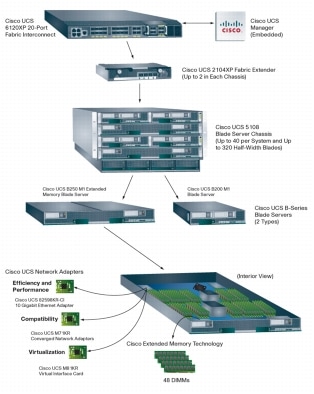
Cisco UCS blade center

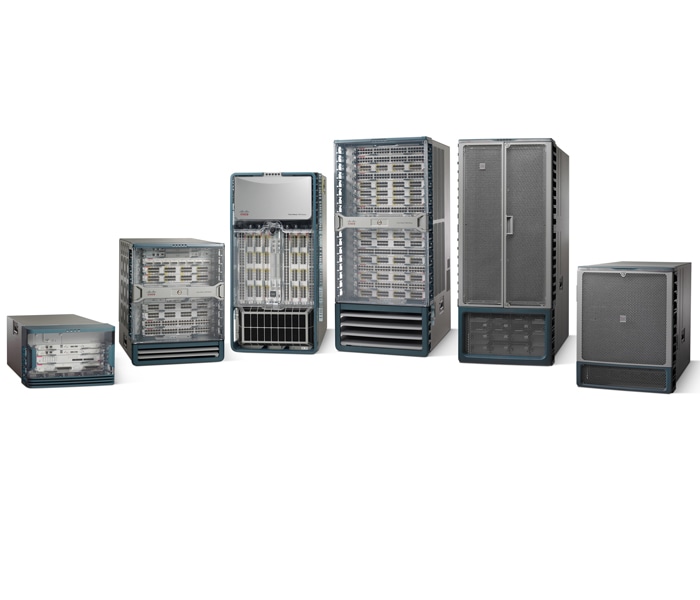
Connected with Cisco Nexus switches.

Large Photo

Running in an IBM rack.

IBM XIV SAN

With a modular data center design that can partially roll out Power and Cooling infrastructure up to 10MW to fill the 30,000 sq feet of data center space.

All of this together creates a Green Data Center stack, starting from the hydro-electric power, power and cooling systems, racks, network, servers, to virtualization ready for an OS install.

I am going to write more about RackForce, and need to digest what they are doing to integrate it into other ideas.

Selling the Green Data Center to the CFO is one area I've been thinking about and Brian provide some other good data points.

Read more

Ex-Google Data Center developer says don't build unless greater than 30 megawatts

DataCenterKnowledge has a post on Simon Tusha's presentation saying bigger is better.

usha: Power Economics Favor Huge Data Centers

June 3rd, 2010 : Rich Miller

There’s a saying in Texas Hold ‘Em poker: “Go big or go home.” When it comes to data center construction, Simon Tusha has a corollary: Build big or partner.

“If you’re not going to be using 30 megawatts, you shouldn’t (build your own data center),” said Tusha, the new Chief Technology Officer of Quality Technology Services(QTS). Tusha knows a little about building big. He was previously part of the data center team at Google, where he negotiated agreements for the company’s huge data center projects. Tusha has managed and developed more than 150 data centers representing more than 1.5 million square feet of space and 500 megawatts of critical power.

Here is the press release from QTS regarding Simon joining.

Atlanta, GA - May 18, 2010 - QTS (Quality Technology Services), one of the nation's largest and fastest-growing providers of data center facilities and managed services, today announced that it has appointed Simon Tusha as its Chief Technology Officer. In the newly created role, Tusha will be responsible for the strategic development of all QTS services and technology deployments within its three and a half million square feet of data centers. His prime focus at QTS will be on the design, development and construction of all data center projects. He is the third key executive to join QTS' ranks this year.

In his role at Google [NASDAQ:GOOG], Tusha identified an industry need for planning development and global data center strategy. He was the sole global negotiator for data center contracts and was a key developer of Google's data center location strategy

One thing that goes in Google's favor is when they built data centers they filled them up very quickly.

How many of your can fill up 30 megawatts of data center?

There is an answer that fits QTS business model.

The Power of Joint Ventures
Tusha proposed a novel solution: using joint ventures to spread out the cost and achieve more favorable economics. “You should find a partner and do it together,” he said. “A joint venture is a great opportunity for a bunch of companies to get together and build a data center.”

Tusha isn’t without an interest in the potential of this model. QTS recently bought a huge former semiconductor plant near Richmond, Virginia and plans to convert it into one of the world’s largest data center campuses. The property includes 210 acres of land and more than 1.3 million square feet of facilities from the former Qimonda memory chip manufacturing operation. Perhaps most importantly, the campus also has a power capacity of 100 megawatts, providing plenty of space and power to accommodate custom data center opportunities.

Read more