Using Situation Awareness Principle to Green the Data Center, Google continues the march from 1.16 to 1.14 PUE

Google posts it's latest PUE achievement of 1.14.

Measuring to improve: comprehensive, real-world data center efficiency numbers

March 26, 2012 at 9:00 AM
To paraphrase Lord Kelvin, if you don’t measure you can’t improve. Our data center operations team lives by this credo, and we take every opportunity to measure the performance of our facilities. In the same way that you might examine your electricity bill and then tweak the thermostat, we constantly track our energy consumption and use that data to make improvements to our infrastructure. As a result, our data centers use 50 percent less energy than the typical data center.
...
NewImage
...
NewImage

Google's Joe Kava uses the Lord Kelvin principle of "if you don't measure you can't improve."  But, I think a more apt explanation for the complexity of greening a data center is situation awareness.

Situation awareness

From Wikipedia, the free encyclopedia

Situation awareness is the perception of environmental elements with respect to time and/or space, the comprehension of their meaning, and the

projection of their status after some variable has changed, such as time. It is also a field of study concerned with perception of the environment

critical to decision-makers in complex, dynamic areas from aviationair traffic control, power plant operations, military command and control, and

emergency services such as fire fighting and policing; to more ordinary but nevertheless complex tasks

such as driving an automobile or bicycle.

Situation awareness involves being aware of what is happening in the vicinity to understand how information, events, and one's own actions will

impact goals and objectives, both immediately and in the near future. Lacking or inadequate situation awareness has been identified as one of

the primary factors in accidents attributed to human error.[1] Thus, situation awareness is especially important in work domains where the information

flow can be quite high and poor decisions may lead to serious consequences (e.g., piloting an airplane, functioning as a soldier, or treating critically

ill or injured patients).

Having complete, accurate and up-to-the-minute SA is essential where technological and situational complexity on the human decision-maker are

a concern. Situation awareness has been recognized as a critical, yet often elusive, foundation for successful decision-making across a broad

range of complex and dynamic systems, including aviation and air traffic control,[2] emergency response and military command and controloperations,[3]

and offshore oil and nuclear power plant management.[4]

Situation awareness vs. Lord Kelvin's principle has you thinking in the bigger picture.  Thinking about knowledge.  Am I doing the right thing?  How did I get here and can I repeat it?

Situation assessment

Endsley (1995b, p. 36) argues that "it is important to distinguish the term situation awareness, as a state of knowledge, from the processes used to achieve that state. These processes, which may vary widely among individuals and contexts, will be referred to as situation assessment or the process of achieving, acquiring, or maintaining SA." Thus, in brief, situation awareness is viewed as "a state of knowledge," andsituation assessment as "the processes" used to achieve that knowledge. Note that SA is not only produced by the processes of situation assessment, it also drives those same processes in a recurrent fashion. For example, one's current awareness can determine what one pays attention to next and how one interprets the information perceived (Endsley, 2000).

Google has shared the high level concepts of achieving a lower PUE.

1. Measure PUE

You can't manage what you don’t measure, so characterize your data center's efficiency performance by measuring energy use. We use a ratio called PUE - Power Usage Effectiveness - to help us reduce energy used for non-computing, like cooling and power distribution. To effectively use PUE it's important to measure often - we sample at least once per second. It’s even more important to capture energy data over the entire year - seasonal weather variations have a notable affect on PUE.

2. Manage airflow

Good air flow management is fundamental to efficient data center operation. Start with minimizing hot and cold air mixing by using well-designed containment. Eliminate hot spots and be sure to use blanking plates for any unpopulated slots in your rack. We've found a little analysis can pay big dividends. For example, thermal modeling using computational fluid dynamics (CFD) can help you quickly characterize and optimize air flow for your facility without many disruptive reorganizations of your computing room. Also be sure to size your cooling load to your expected IT equipment, and if you are building extra capacity, be sure your cooling approach is energy proportional

...


What does Google do to determine where it should spend its resources?  At some point there is a marginal return or a negative return.  It will cost more than what can be saved.  On the other hand at Google's scale what may be small for most can be huge for them.

Our 2011 numbers and more are available for closer examination on our data center site. We’ve learned a lot through building and operating our data centers, so we’ve also shared our best practices. These include steps like raising the temperature on the server floor and using the natural environment to cool the data center, whether it’s outside air or recycled water.

The really interesting thing to know is what has Google tried and found not to work.  As any good engineer knows many times you learn more from failures than success.

Cover Image: November 2009 Scientific American MagazineSee Inside

How You Learn More from Success Than Failure

The brain may not learn from its mistakes after all

Have you ever bowled a string of strikes that seems like it came out of nowhere? There might be more to such streaks than pure luck, according to a study that offers new clues as to how the brain learns from positive and negative experiences.

I think good engineers have learned to rewire their brain vs. others.

“Success has a much greater influence on the brain than failure,” says Massachusetts Institute of Technology neuroscientist Earl Miller, who led the research. He believes the findings apply to many aspects of daily life in which failures are left unpunished but achieve­ments are rewarded in one way or another—such as when your teammates cheer your strikes at the bowling lane. The pleasurable feeling that comes with the successes is brought about by a surge in the neurotransmitter dopamine. By telling brain cells when they have struck gold, the chemical apparently signals them to keep doing whatever they did that led to success. As for failures, Miller says, we might do well to pay more attention to them, consciously encouraging our brain to learn a little more from failure than it would by default.
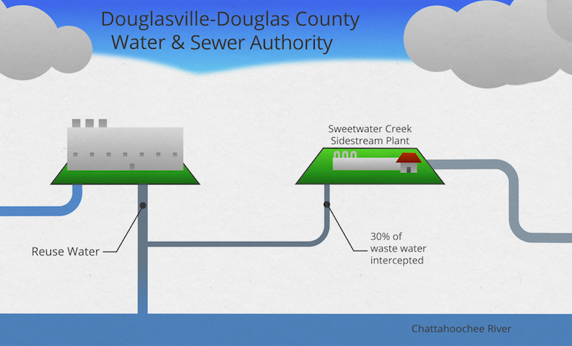
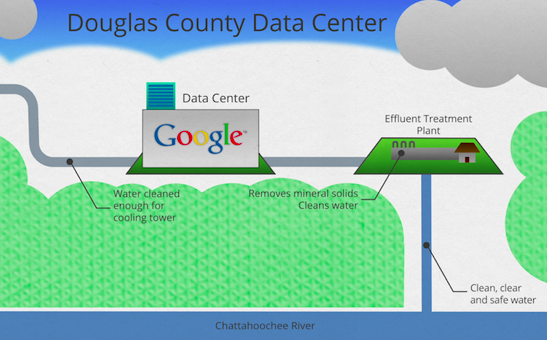


Google shares its recycled water use in a green data center, 7 reasons why it is smart

It is sad that most think of a Green Data Center almost exclusively in terms of energy use.  Google's Joe Kava has been talking about water publicly since 2009.

Google's Joe Kava discussed water use in data centers in its 2009 data center summit.  Joe's presentation on water start at the 9:20 mark.

A green data center has smart water use in addition to efficient power and cooling systems.

Google has a new post on its new recycled/grey water facility in Georgia.

NewImage

NewImage


Helping the Hooch with water conservation at our Douglas County data center

March 15, 2012 at 7:00 AM
If you’re familiar with the work of the Southern poet Sidney Lanier, you’ll know hewrote about the beauty of the Chattahoochee River in Georgia. “The Hooch,” as it’s known around here, starts up in the northeastern part of the state, runs through Atlanta and down into Alabama before emptying out into the Gulf of Mexico. Those of us who work in Google’s Douglas County, Ga. data center have a special fondness for the Chattahoochee because it’s an integral part of our ability to run a highly efficient facility.

I got an early peak at the Youtube video yesterday which had only 40 views.  24 hrs later the video has 7,488 views.  Google, water, and data centers is not as esoteric as you may think.

Here is the press release from Douglas County and Google GoogleDouglasCountyRelease.pdf

FOR IMMEDIATE RELEASE March 15, 2012

Google and Douglasville-Douglas County Water and Sewer Authority Unveil Reuse Water Facility

Recycled water used to cool Google’s data center equipment

(ATLANTA and DOUGLAS COUNTY, Ga.) - Douglasville-Douglas County Water and Sewer Authority (WSA) officials and Google executives on Thursday announced Google’s first reuse water system for one of their U.S. data centers. Google’s Douglas County data center is also the state’s first data center to conserve water using a reuse water system. The system, financed by Google and owned by WSA, is helping to keep the Chattahoochee River clean and conserving the reservoir's water supply.

“Working with Google on this reuse water system has been a great experience for the WSA. Our water supply gets hit hard during the drought season and in the summer months,” said Peter Frost, executive director of WSA. “The Google-funded sidestream facility is a welcomed reprieve on our reservoir’s water system and saves water capacity for our residents and businesses.”

Some people may flush this idea down the drain as not worth their effort.  But, there is another reason that few would think about.  One of the top risks to data center operations is the breaking of a water main supplying the data center.  Water infrastructure is one of the most ignored parts of society that are critical for life.  As one of my data center friends who told the story of having no water in his apartment for 2 days, it is hard to occupy a building without water.

This Google Water story that has been going on for a long time as the original financial investment from Google was in 2008.

In 2008, Google financed the building of the WSA’s Sweetwater Creek Sidestream Plant, which is a reuse treatment facility that intercepts up to 30 percent of the water from the local water and sewer authority’s treatment plant.

“At Google we’re always looking for smart ways to reduce our impact on the environment,” said Joe Kava, Google’s senior director of data center construction and operations. “We’ve been working for years on maximizing the efficiency of our servers and our data center designs so that we can minimize the entire energy footprint consumed by our data centers.”

It can be hard to bring in a 2nd water line to a data center, and on site storage of water is difficulty for a scenario of a week's worth of water.

What Google's recycled water system does is provide an alternative cooling water source that has many benefits.  Below are 7.

  1. 2nd source of cooling water (recycled water and potable city water)
  2. brand new and will last longer than data center (water mains can be up to 75 years old)
  3. supported by the local gov't (community relations in improved with joint projects)
  4. is part of the city's critical infrastructure which makes it a high priority to operate (Google gets to the top of the list after hospitals, fire, and police)
  5. financed by Google, city owned (Google's cash reserves put to funding innovation and thought leadership in sustainable data centers)
  6. cost effective, reduce cost of water and sewage fees (if you haven't looked at water and sewage costs, the costs are growing faster than any other consumable)
  7. good for the environment (obvious)


Google cloud storage gets ready to compete with DropBox

WSJ reports on Google getting to launch a cloud storage business.

Google Near Launch of Cloud Storage Service

Google Inc. is close to launching a cloud-storage service that would rival one of Silicon Valley's hottest start-ups, cloud-storage provider Dropbox Inc., according to people familiar with the matter.

Like Dropbox, Google's storage service, called Drive, is a response to the growth of Internet-connected mobile devices like smartphones and tablets and the rise of "cloud computing," or storing files online so that they can be retrieved from multiple devices, these people said.

Drive allows people to store photos, documents and videos on Google's servers so that they could be accessible from any Web-connected device and allows them to easily share the files with others, these people said. If a person wants to email a video shot from a smartphone, for instance, he can upload it to the Web through the Drive mobile app and email people a link to the video rather than a bulky file.

Google does sound like the old Microsoft that is getting into everything and competing with everyone.

Google's Drive service also would rival Apple's iCloud, which lets people store data online and is designed to synch with Apple mobile devices.

Google's service is expected to be added to its suite of online software that it sells to businesses, called Google Apps. That would also make Drive competitive with Box.net, which sells cloud storage to businesses.

Another reason use for Google's expanding data center capacity, Home Entertainment Device

WSJ reports on Google's new home entertainment device.

Google Developing Home Entertainment System

Google Inc. is developing a home-entertainment system that streams music wirelessly throughout the home and would be marketed under the company's own brand, according to people briefed on the company's plans.

The effort marks a sharp shift in strategy for Google, which for the first would time would design and market consumer electronic devices under the Google brand. The company has up to now mainly focused on developing the operating system that powers devices such as smartphones, tablets and televisions and allowing other companies to build and brand the hardware that uses it.

Google's Android unit has led a multi-year effort to develop the new entertainment device, which is expected to be unveiled later this year, people familiar with the matter said.

Seems like Google and Apple are more on a collision course.

Partnerships between Google and device makers have made Android the No.1 operating system in smartphones in the U.S. and helped Google to extend its Web-search engine and other applications into devices beyond PCs. Google doesn't generate any revenue from sales of the devices.

Coverage of Google's ISO and OHSAS Certifications, 14,900 views and 12 articles

I was up early on Jan 19, 2012 and ran into the Google post on its ISO and OHSAS certifications.  At the time there wasn't any news yet and the youtube video had only 200 views.  Now, 4 days later over the weekend,  the YouTube Video has 14,900 views and there are 12 articles.

Google Data Centers: Safe For Your Back Yard
InformationWeek - Jan 19, 2012By Thomas Claburn InformationWeek Google says its US data centers are the first among those operated by major Internet service companies to be certified to meet specific environmental and occupational safety standards, an achievement that demonstrates ...
Google's US Data Centers Earn Environmental Certification
PC Magazine - Jan 19, 2012By Leslie Horn Google has received ISO 14001 and OHSAS 18001 environmental and workplace safety certifications for all of its US data centers, the company announced Thursday. Joe Kava, Google's senior director of data center construction and operations ...
Google Data Centers Are Certifiably Green
PC Magazine - Jan 19, 2012By Andrew Webster Google has announced that all of its American-based data centers are now ISO 14001 and OHSAS 18001 certified. According to the company, this makes Google the first major internet service company in the country to receive this type of ...
And the ISO/OSHAS data center awards go to Google
ITworld.com - Jan 20, 2012By Beth Bacheldor Add a new comment January 20, 2012, 4:01 PM — This time around, Google gets to toot its data center horn. The company has announced that all of its US owned and operated data centers have received ISO 14001 and OHSAS 18001 ...
Google US Data Centers Now ISO 140001 Certified
Environmental Leader - Jan 20, 2012Google has received ISO 14001 certification for all of its US data centers, reducing oil consumption in its back up generators by 67 percent in the process. The company says that this makes it the first major internet services company to be awarded ...
Google Data Centers Are Safe For The Environment
The Data Center Journal (blog) - Jan 20, 2012Google's US data centers have been certified to meet specific environmental and workplace safety standards and the company is confident that they are safe for the environment. Google also stated that its US data centers are the first in the genre of ...
Google data centers certified for environmental performance
DatacenterDynamics - Jan 19, 2012Google's six data centers on US soil have been successfully audited for systematic efforts to diminish their impact on the environment and for being safe and healthy work environments. Joe Kava, senior director of data center construction and ...
Google's Green Project Wins Awards
Brunei News, Brunei Headlines from Brunei fm - Jan 19, 2012Google has been working on a project to bring their facilities into a more Environment friendly system. so finally without letting all of their efforts go to waste, they have received the ISO 14001 and OHSAS 18001 certification for their US owned and ...
Google Data Centers Are Safe For The Environment
The Data Center Journal (blog) - Jan 20, 2012Google's US data centers have been certified to meet specific environmental and workplace safety standards and the company is confident that they are safe for the environment. Google also stated that its US data centers are the first in the genre of ...
Google ramps up environmental efforts
Fresh Business Thinking - Jan 19, 2012All of the web giant's US data centres are now run to environmental management standard ISO 14001 and efforts are underway to extend the same environmental accountability across Europe and beyond. “For the last year, our data center [sic] team has been ...
Google's Green Project Wins Awards
Brunei News, Brunei Headlines from Brunei fm - Jan 19, 2012The data centers which received this dual certification are, The Dalles, Ore, Council Bluffs, Iowa, Mayes County, Okla., Lenoir, NC, Monck's Corner, SC, Douglas County, Ga. and also they are planning to pursue certification in the European data centers ...

This was a USA certification and we expect the same type of efforts from Google in Europe.