Microsoft Green IT blogger - IT Pro experience, B.S. in Environmental Science, and certified Environmental Auditor

Part of the fun writing my blog is connecting with people who have interest in the Green Data Center. One of the interesting people out there is the Microsoft blogger Little Miss Enviro Geek. Her blog has only 7 entries, but given her background of being an IT Pro, a Bachelor of Science in Environmental Science, and being a certified Environmental Auditor in June 2008, she has the right experience.

It's Earth Day, and Microsoft have a great new website so you can love it up with the trees...

So its Earth Day today - what does this mean and what is Microsoft doing to celebrate?

Quite simply, Wikipedia says Earth Day is "...intended to inspire awareness of and appreciation for the Earth's environment".  The earth is affected by everything we do and we are affected by everything on earth in some way - so a day to recognise this justified I think!  :)

Microsoft launched a new website today to celebrate: http://www.microsoft.com/environment/ it looks fantastic.  Find out here things like:

  • How is Microsoft committed to the environment;
  • What are the business solutions from Microsoft that you can implement - quite cool here is the Dynamics Dashboard for tracking energy consumption and greenhouse gas emissions http://www.microsoft.com/environment/business_solutions/articles/dynamics_ax.aspx - LOVE IT!
  • Find out ways to help the environment, through PC energy savings and cool tools;
  • Watch a video on best practices for Data Centre management;
  • Check Microsoft Environmental news;
  • Research the latest Software Showcase from Microsoft Partners.

This is excellent information to help you, my fellow geeks, develop strategies around 'green' or environmentally sustainable IT - think about including environmental information as part of your next business case to help get it up to executive management sign-off - they are all thinking about Corporate Social Responsibility (environment being just one area under CSR) and this might be the tipping point you need to get your dream Unified Communications infrastructure or Windows 2008 Hypervisor environment!  ;-)

Read more

Green Features, Windows Server 2008, Enabling Energy-Efficient Performance

Microsoft's Environment site has a post about Windows Server 2008 Enabling Energy-Efficient Performance.

Server Technology Evolves

Microsoft Windows Server 2008 is designed with energy efficiency in mind and provides a number of new power-saving features: 

  • Group Policy, which manages Windows Server 2008 power-management features across multiple clients and servers. 
  • Updated support for Advanced Configuration and Power Interface (ACPI) Processor Power Management (PPM) features. 
  • New support for processor performance states (P-states) and processor idle sleep states on multiprocessor systems. 
  • New Hyper-V technology, which makes it possible to consolidate servers onto a smaller number of computers. This hypervisor-based virtualization feature saves power without sacrificing performance.
Read more

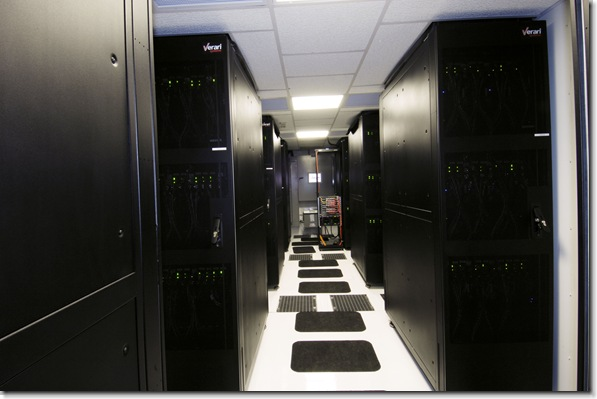
Microsoft Virtual Earth Team Posts Picture of Verari Servers in Wind Powered Data Center

The following picture should not have been posted, and if Microsoft tries to pull it watch out for the Streisand Effect.

Or maybe this part of Microsoft's PR plan on data centers. The Microsoft container placement is interesting to watch.

Thanks to Data Center Knowledge for posting on the link to the Virtual Earth site.

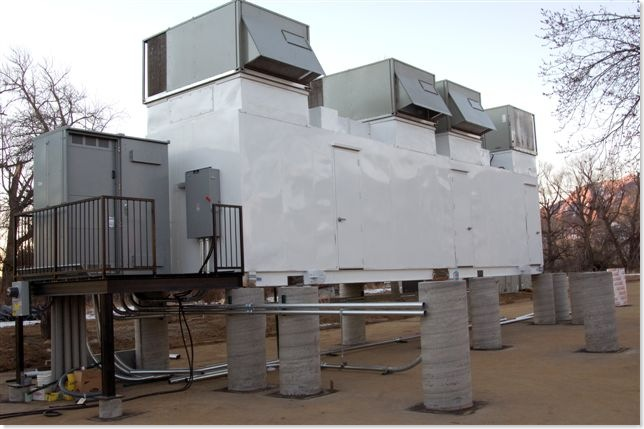
Microsoft Unveils Wind Powered Virtual Earth 3D Data Lab

With Earth Day just a week away, Microsoft unveiled its new wind-powered container-based data lab yesterday at its site in Boulder, Colorado. The containers house data processing servers used in the creation of the 3D city models featured in Virtual Earth online mapping platform. 

Given the computationally intense nature of creating the 3D models, the storage requirements for the operation are staggering. The new lab servers each have 8 “cores”—CPUs essentially—totaling more than 5000 cores and supporting more than 10 petabytes of data. When factored in with lab servers located in the facility’s building--now also wind-powered--the total storage capacity supporting the Virtual Earth operation in Boulder is 15 petabytes. To put this into perspective, a typical consumer camera is around 5 megabytes. It would take three billion of these images to fill the 15 petabytes of storage: the equivalent of 10 photos for every person in the US.

image

image

Read more

ComputerWorld Writes on Containers Reshaping IT

ComputerWorld's Eric Lai and Patrick Thibodeau write an article on Container-based systems reshaping IT. ComputerWorld did a thorough job researching this article talking to Microsoft, Gartner, customers, consultants, and suppliers. Personally, I am pleased with what ComputerWorld put together as I spent a couple of hours on the phone with one of the writers adding my opinion to the mix. Given the tone and research of the article, I would expect ComputerWorld to write more on this topic.

I will add this article as a 3 week follow up to the Press and Blog Coverage of Mike Manos's AFCOM keynote and create another PDF showing the mindmap.

Building-block data centers may reshape IT

Container-based systems and other modular data center technologies might help drive a shift to online 'compute clouds.' But that could leave the futures of some IT workers in a fog.

April 21, 2008 (Computerworld) A major transformation in the way that large data centers are built is under way, and the expected changes may have as much impact on IT productivity as the adoption of shipping containers did on operations in the freight industry starting in the late 1950s.

At that time, the shift from putting cargo on individual pallets to packing goods into much larger containers enabled shippers to load and unload vessels exponentially faster, with less labor. Now a similar transition is taking place in some data centers, via the use of container-based systems and other modular technologies.

Advocates say that replacing conventional racks of servers with systems built into shipping containers that can be rolled right into buildings will make it easier to set up data centers and add more processing power as needed. It also could pave the way for expanding the use of "compute clouds" to deliver online IT services -- a development that might result in big changes within corporate IT departments.

Microsoft Corp. is one of the trailblazers of the containerized IT movement. In a suburb of Chicago, the software vendor is building a $500 million, 500,000-square-foot data center that will hold up to 220 shipping containers. Each will arrive preconfigured with racks containing as many as 2,000 servers, along with networking and power-distribution equipment to facilitate the setup process.

Michael Manos, Microsoft's senior director of data center services, said the Lego-like approach being used at the new facility in Northlake, Ill., will help shake up a part of IT that's in need of some change. "Data centers are typically very conservative," Manos said. "If you look at a data center built a year ago and one built 10 years ago, they look very similar."

Consulting firm Gartner Inc. says that building-block designs such as the one Microsoft is implementing will lead to the "industrialization" of IT within megasize data centers. According to Gartner, such facilities will be able to provide the technical infrastructure needed to support compute clouds that can scale on demand as the use of Internet-based application services grows. In fact, Microsoft plans to use the Northlake facility to help meet the processing demands that its Windows Live and Office Live online services are expected to generate.

Read more

Microsoft's Environmental Strategist, Rob Bernard says Lowering Data Center Power Tops List

eWeek has an article with Microsoft's Environmental Strategist, Rob Bernard where Rob is quoted.

Lowering data center power use tops Bernard's list.

The eWeek article also mentions Microsoft's Data Center Best Practices and Steve Ballmer's Green Card at Cebit. 

The format of the column makes it difficult to cut and paste content.  If you want to read the content you need to go directly to the site.

Read more