Google missed in EPA Green Power Leadership Awards - Apple, Cisco, Dell, Intel, Microsoft

The EPA released the Green Power Leadership Awards.

NewImage

This was a good chance for the technology vendors who go Green to highlight their achievements.  Apple, Cisco, Dell, Intel and Microsoft are on the list.  What happened to Google?  They are not on the list.

Apple Inc.
Apple Inc., one of the largest information technology companies in the world, became an organization-wide Green Power Partner in 2013, increasing its green power use from 2012 by more than 285 million kilowatt-hours (kWh) to an annual total of more than 537 million kWh. Apple is pursuing a net zero energy strategy for its data centers, corporate facilities, and retail stores worldwide, and currently has achieved 85 percent green power for all its U.S. consumption. An important component of the strategy is creating new, Apple-owned renewable energy projects – utility-scale if necessary – located near the company's centers of energy demand.

Apple supplies all of its data centers with 100 percent renewable energy though its own projects or through grid-purchased renewable energy. For its largest data center, in Maiden, North Carolina, it has committed to more than 60 percent Apple-owned generation and achieves this by having constructed the nation’s largest end user-owned, solar photovoltaic array — a 20-megawatt (MW) facility on 100 acres of land — and a 10-MW fuel cell installation supplied by directed biogas, the largest non-utility fuel cell installation operating anywhere in the country. These projects produce 125 million kWh of green power a year. A second 20-MW solar photovoltaic array is installed and will be operational in October, increasing total green power generation at the data center to 167 million kWh a year, which is substantially beyond their 60 percent goal.

Many of Apple's other facilities also operate on 100 percent renewable energy from a combination of green power purchases and Apple-owned renewable projects, including its data center in Newark, California; its two newest data centers in Reno, Nevada and Prineville, Oregon; and corporate facilities in Cupertino, California; Elk Grove, California; Austin, Texas; and several overseas facilities.

By developing its own on-site projects, Apple ensures that it provides renewable energy that supports the company’s load and provides power to the local grid, and that this energy comes from new projects that would not have been built without Apple's involvement.

In the future, as its facilities and data centers grow, Apple plans to increase its green power use to keep pace with growth and pursue its goal of using 100 percent clean, renewable energy.

If you think you should be on this list you can submit here.

Application Process

Green Power Leadership Awards

EPA’s Green Power Leadership Awards recognize exceptional achievement among EPA Green Power Partners and among green power suppliers. Green Power Partners and green power suppliers may apply for an award, or another party may nominate them. EPA recognizes eligible organizations and suppliers in the award categories listed below:

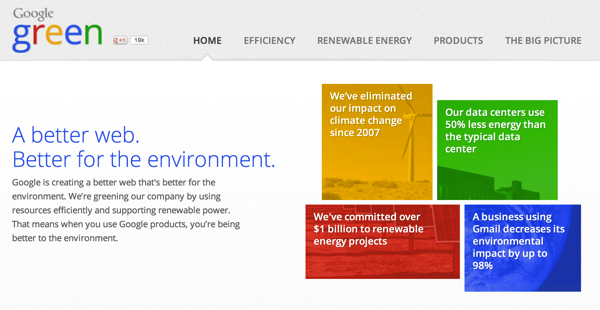
Google Green has their content here.
NewImage

Ballmer admits the mistake of Vista, in 2001 I kept my mouth shut and switched to Windows Server team

Steve Ballmer had an analyst review this last week and one of the top stories covered is Ballmer discussing the mistakes made focusing on Windows Vista.

Ballmer Blames Vista for Microsoft's Smartphone Failures

PC Magazine - ‎13 hours ago‎
Microsoft's outgoing CEO Steve Ballmer this week admitted that Redmond was so focused on the much-maligned Windows Vista a decade ago that it missed the boat on smartphones. "If there's one thing I guess you would say I regret, I regret that there was a ...
 

Ballmer Blames Vista for Windows Phone's Failure

DecryptedTech - ‎5 hours ago‎
So you all remember Windows Vista right? It seems that Microsoft and Steve Ballmer also remember that failed OS (despite current appearances with Windows 8). In fact Steve Ballmer is usingWindows Vista as an excuse for their late entry and poor ...
 

Microsoft CEO Steve Ballmer blames Windows Vista for his company's ...

TopNews United States - ‎2 hours ago‎
During the course of a Q&A session at Microsoft's recent meeting for financial analysts and institutional shareholders, the company's outgoing CEO Steve Ballmer said that Microsoft's excessive focus of the doomed Windows Vista OS a decade back was ...
 

Ballmer: Blame Vista for Our Mobile Woes

NewsFactor Network - ‎3 hours ago‎
The Vista issue did take Microsoft's -- and Ballmer's -- eye off the mobile ball and focused everything on the operating system. The organizational ... "It would have been better for Windows and probably better for our success in other form factors." Timing Is ...

I have worked on Client OS from 1988 to 2001 at Apple and Microsoft.  After Windows XP in 2002 came the next version of Windows code name "Longhorn", aka Vista.  There were political battles on who would head up the developer relationships for the platform and I threw in the towel before the fight to Vic Gundotra (Director of Windows Developer Relations) who now is Sr VP of Eng at Google.

Why did I turn my back on Windows Vista in 2001?  After 10 years at Microsoft, I had learned my lessons, kept my mouth shut and just move on.  What would have I said?

Windows Longhorn will fail because management has told the OS team to innovate.  Everyone needs to be innovative. You cannot tell a whole OS team to innovate and expect it to work.  The kernel team, the graphics system, printing team are all creating new ways to do things, and a simple thing like print will not work.  This is what happened when Apple created the Pink OS (taligent) and faced the reality of Blue (System 7) was more realistic to ship.

Bill Gates is quoted as being surprised that Taligent was insignificant in the industry.

In 1997, when Bill Gates was asked what trend or development over the past 20 years had really caught him by surprise, his reply was:

"Kaleida and Taligent had less impact than we expected."[5]

Windows Vista was also despite 5 years of painful development shipping in Jan 2007 insignificant in the industry.  While this was all going on I switched to Server OS team, then management tools, and left the company in 2006.  I never touched a Windows Vista release (2002 -2007) until 2008 when I got a new laptop and it ran Vista.

The mistake made by so many executives when ordering innovation is they don't understand how the pieces work together.  The team that needs to innovate works best if they know parts of the system will not change.  If you try to build a new innovative building with a ground breaking foundation, state of the art super structure, with never before used electrical and mechanical systems, and new finishing material, you would need to build the building at least 3 times to get things to work.

There is a way out of this predicament.  If you design the process to have many iterations of small changes with the teams working closely together it is possible.  But, this team should be as small as possible and as far away from executives with top down edicts.  Kind of like a SkunkWorks.  When you end up with the smaller team you can make the decisions on where the innovation needs to come from and not everyone should innovate.  

The mistake made is when you measure the success of a team based on how innovative they are, you have people taking risks they don't need to.

Windows Vista failed because the top down order was everyone needs to innovate to build the new version of Windows.

What end users and the media think is innovative is many times the result of many iterations of failure.  Windows Vista failure. Windows 7 success. Windows 8 failure.  Next OS?????

And Another Candidate for Microsoft CEO job? Jeff Raikes

The media is all in a tizzy that Stephen Elop is the leading CEO candidate.

The point I make and still stick to is the next CEO is going to be someone Bill trusts.  How long did Bill work with Stephen Elop.  Not much.

He spent way more time with his CEO of the Gates Foundation Jeff Raikes.  And Jeff just resigned as CEO.


Thanks for your leadership . You've been a great partner.


Thanks and for the opportunity to work with you in leading the these last five years.

Geekwire doesn't think Jeff is the next Microsoft CEO.  Maybe Steve Ballmer will be the next CEO of the Gates foundation.

 Raikes was recently included on some speculative lists of potential candidates to replace Ballmer. However, based on what I’m hearing from multiple sources this morning, Raikes’ retirement is not a sign that he is going to back to Microsoft.


One Theory on what would explain the unexpected retirement of Microsoft CEO Steve Ballmer

It is mystery why Steve Ballmer decided to retire earlier than expected.  Talking to a friend he had an interesting theory that seems plausible to explain the event.

First let's take a time sequence of facts.

1. Steve Ballmer announces the One Microsoft Strategy on July 11, 2013.

2. On Aug, 23, 2013 Microsoft announces Steve Ballmer will retire within 12 months.

3. On Sept 2, 2013 Microsoft announces its acquisition of Nokia Devices and Services.

4. After the Nokia acquisition announcement the story is out that Microsoft has been negotiating with Nokia since Jan 2013.

I just posted about John Sculley discussing the role the Apple Board had in firing Steve Jobs.  When you read about the Microsoft acquisition of Nokia devices, there is no mention of the Microsoft Board approving the deal.  It would seem like the Microsoft Board would approve the deal.

What happened between July 11 (Microsoft announces reorg) and Aug 23 (Steve Ballmer Retires)?  The Nokia negotiations had been going on for 8 months could they have had an affect on Steve Ballmer's retirement?

This graphic has been used to describe how Tech companies are organized.  Could there have been someone who held a gun to the Microsoft Board to get them to push for Steve Ballmer's retirement?

NewImage

Here is an interesting idea that one friend threw out.  What if Steve Elop who left Microsoft in 2010, put on the table with the Microsoft Board he wouldn't bring his Nokia team to Microsoft unless Ballmer was not the CEO.  The Board faced with the situation of investing in Mobile with a Nokia acquisition or keeping Steve Ballmer as CEO for 4 more years realized they needed Nokia's mobile expertise more than Ballmer.  At the same time this was going on, Ballmer was selling the Nokia acquisition as a strategic move Microsoft could not miss and he had a good deal on the table.  

There is no data I know of to support this idea. The above is a "thought experiment" on what could explain the surprise Steve Ballmer retirement announcement. I first heard this idea yesterday and it seemed worth throwing out there.

We'll see if the story comes out what happened at the Microsoft Board level for why Steve Ballmer was retired (or fired).  It took 26 years for John Sculley to tell the story of the Apple Board's role in removing Steve Jobs.  So, it may a long, long time before the story is told on why Steve Ballmer retired early.

With Steve Ballmer's Retirement and Acquisition of Nokia Phone, the Microsoft Hardware will be a priority

Microsoft has made billions of dollars from hardware.  Long before XBOX which makes a meager profit, there was, is the Microsoft Mouse business.  Here is a paper from 1989 on an early Microsoft Mouse.

Paper presented at "Interface 89"

The Sixth Symposium on Human Factors and Industrial Design in Consumer Products

Human Factors Society POBox 1369 Santa Monica California 90406

Microsoft Mouse: Testing for Redesign

Bill Verplank, Kate Oliver, IDTwo

ABSTRACT

As part of the redesign of the Microsoft mouse by Matrix Product Design, a series of user tests were performed by ID Two. We used artificial tasks representative of typical mouse use allowing repeated measures of time and error.


One of the Microsoft old timers told stories of how no matter what he presented in a product review with Steve Ballmer, he could never win.  As there was no way the hardware could achieve the margins of software.  With Xbox, Surface, and now Nokia phones, Microsoft has the reality of having a low margin hardware as part of its revenue stream.

Microsoft has pushed the general purpose software SW licensing model for the longest and made the most amount of money.  Google doesn't sell a one time purchase of SW.  Their service are either free or a subscription service.

Amazon tries to break even or lose as little as possible on a hardware sale, making up the money on services.  Xbox is the same.

Making hardware is hard.  Making money on hardware is even harder.

The technology world is changing and it is just the beginning.