62% of EU's 2009 new energy capacity installed is renewable

NewEnergyFocus summarize an EU press release.

Renewables make up 62% of new EU electricity in 2009

Tuesday 06 July 2010

Renewables make up 62% of new EU electricity in 2009

The European Commission has published a report showing wind energy contributed the largest share of new electricity generation capacity in the EU in 2009

Renewable energy sources accounted for 62% of new electricity generation capacity installed in the EU27 in 2009, a 5% rise on 2008 levels, according to a report published by the European Commission.

The findings, compiled by the Commission's Joint Research Centre (JRC) and published yesterday (July 5), also show that for the second year running, wind energy contributed the largest share of the new capacity.

And, in absolute terms, renewables produced 19.9% of Europe's electricity consumption in 2009, with hydropower holding the largest share (11.6%), followed by wind (4.2%), claims the latest ‘Renewable Energy Snapshots' report.

Some interesting facts from the press release is here.

With regards to the new capacity constructed that same year (27.5 GW), among the renewable sources, 37.1% was wind power, 21% photovoltaics (PV), 2.1% biomass, 1.4% hydro and 0.4% concentrated solar power, whereas the rest were gas fired power stations (24%), coal fired power stations (8.7%), oil (2.1%), waste incineration (1.6%) and nuclear (1.6%)  (see figure1).

Note the gas fired (24%) vs. Wind powered (37.1%) produced 40% more power 28 TWh vs. 20 TWh.

As not all installed technologies operate continuously 24 hours a day, figure 2 shows the expected yearly energy output (TWh) from the new capacity. The new gas-fired electricity plants will deliver yearly 28 TWh, followed by wind and PV with 20 TWh and 5.6 TWh, respectively.

Read more

Oops, Biomass may not be Carbon Neutral

CNET reports on a Massachusetts study that Wood Biomass may not be carbon neutral.

Study finds biomass power not carbon neutral

by Martin LaMonica

Forested regions around the world are pursuing biomass as a renewable energy source but a study finds that the carbon footprint from burning biomass can be worse for global warming than coal.

The Manomet Center for Conservation Sciences on Thursday published the findings of a six-month study to measure the greenhouse gas impacts of using biomass, which, in many cases, does not meet claims of being "carbon neutral" over short periods of time.

The report was commissioned by the Massachusetts Department of Energy Resources, which said it will revise its regulations in response. "We can begin the process of refining our renewable energy regulations to provide incentives only for biomass energy that truly reduces our greenhouse gas emissions and protects our forests," said Massachusetts Department of Energy Resources Commissioner Phil Giudice, in a statement.

Note the study didn't focus on wood waste used for fuel generation.

In response, biomass industry people said that the study does not paint a completely accurate picture of biomass-to-power facilities because it assumes that they don't use residue wood products, such as branches and trees left from logging. "The study is not representative on how we plan to operate," Matt Wolfe of Madera Energy, which is proposing a wood-burning plant in western Massachusetts, told the Boston Globe.

The original study is here.

Manomet Study of Woody Biomass Energy Released

Manomet and its partners have released the results of a six-month study to better understand the implications of using wood for energy in Massachusetts, titled “Biomass Sustainability and Carbon Policy Study.”  The study was conducted for the Massachusetts Department of Energy Resources.  The full report, or its component chapters, can be downloaded below.

Read more

Bill Gates other execs recommend $16 billion/yr investment in clean energy

CNET news covers Bill Gates and other execs recommendations for clean energy investment.

Gates, other execs call for more energy spending

by Lance Whitney

Bill Gates and other corporate figures say America's current energy strategy is hurting the economy, the environment, and national security and is asking the government to devote more money to fuel alternative energy.

The group, dubbed the American Energy Innovation Council (AEIC), released a detailed report on Thursday highlighting the problem and offering its own recommendations (PDF). Members of the group were due to meet with President Obama in the White House to discuss their concerns and possible remedies.

The site with Bill Gates and others is here.

OUR COMMITMENT TO CLEAN ENERGY

We have had the great privilege, as business leaders, of building companies that have become leaders in their respective fields, and employ hundreds of thousands of American workers. Our experience in building these companies has given us a common and unshakable belief in the power of innovation.

And, a PDF. With 5 recommendations.

OUR RECOMMENDATIONS


Create an independent national energy strategy board.


Invest $16 billion per year in clean energy innovation.


Create Centers of Excellence with strong domain expertise.


Fund ARPA-E at $1 billion per year.


Establish and fund a New Energy Challenge Program to build large-scale pilot projects.

Read more

Calculating Land Use in your Renewable Energy Projects

CNET's Green Tech reports on a report discussing land use required for renewable energy projects.

Figuring land use into renewable-energy equation

by Martin LaMonica

CAMBRIDGE, Mass.--Imagine if your country had an unlimited budget but a limited amount of land: what renewable energy has the most potential?

Rutgers University professor Clinton Andrews and colleagues ran the numbers on this thought experiment and came up with some surprises. They identified clear limits on some technologies, notably biofuels, but concluded that the bigger challenges to renewable energy and land relate to siting energy facilities, particularly transmission lines.

...

Whenever some one says to put PV on a data centers roof you are lucky to get 10% of the power used generated by PV.

Read more

Greenpeace strikes fear in Uptime Symposium, continues No Coal Data Center efforts

I was talking to a friend who was at Uptime Symposium and he asked if  I heard that Greenpeace was there and Greenpeace asked Mike Manos a question in his CO2K presentation.  The fear in the crowd reached levels not typical as they knew they knew Greenpeace has target data centers as the IT polluters like the way Greenpeace has targeted Facebook, and no one knew Greenpeace was attending.  No sane data center event is going to promote that Greenpeace will be there.  See below for Greenpeace's latest move versus Dell.
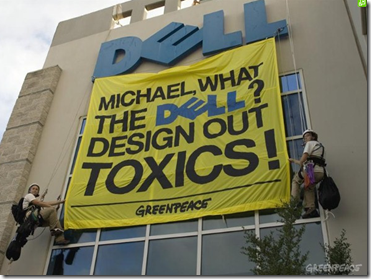
image

He commented that the Greenpeace question to Mike was a softball question.  I told him of course, Mike is out there discussing issues Greenpeace supports.  They are not going to attack Mike.

Another friend send me a link to the Greenpeace blog post based on Uptime attendance.

Mike was safe.

At the Uptime Institute Symposium last week, speakers discussed the economic impacts that a “carbon tax” or carbon regulation could have on data center operators. Mike Manos of Nokia, pointing to the U.K.’s existing carbon legislation, indicated that the IT sector is ill-equipped to deal with inevitable penalties that will be associated with a heavy reliance on coal when U.S. climate legislation passes.


“Carbon emissions differ for a facility in Washington State and a facility in West Virginia,” said Manos. “Where your data centers are located today is an important criteria.”

I bet the Greenpeace person was looking for Facebook as the "we want Facebook to use 100% renewable energy" is now up to 450,000 users.  Facebook wasn't presenting so Greenpeace reports on eBay.

Unfortunately, a strategy that is still being employed by many IT companies to keep the overhead down is to locate data centers in places where “cheap” coal-fired electricity is available. In January, for example, Facebook commissioned a new data center in Oregon and entered a power service agreement with a utility called PacificCorp, which gets most of its electricity from coal-fired power stations. Just this week, eBay unveiled its new flagship data center, located in South Jordan, Utah, a state that derives 81% of its electricity from coal.

You can tell the Greenpeace reporter was in the audience listening to the presentations.

The Topaz data center, as the new hosting facility for eBay’s Marketplace and Paypal.com is called, is a US$287 million facility with top-of-the-line energy efficiency features, which help to make Topaz 50% less expensive for eBay to operate and 30% more efficient than any of the other data centers it uses. And eBay is very proud of its energy and cost savings accomplishment (as evidenced by the break dancers that performed at the launch party). But, is a diet on which you eat 30% less per meal, but eat MANY more meals than you previously did, AND exclusively live on Twinkies, ultimately going to save you from an untimely and serious health problem?

Who is next?  What is the next data center event Greenpeace will be in the audience?  American Express in North Carolina?

American Express to Build in North Carolina

May 20th, 2010 : Rich Miller

Local economic development officials in North Carolina are confirming that American Express will build a large data center in Guilford County. The financial services company plans to build a $400 million center that would employ up to 150 people and open sometime in 2012, according to the Greensboro News-Record.

I am not worried about Greenpeace as when I am speaking at a data center conference I am in sessions like this. 

Panel: The Greening of the Data Center – Opportunities in Renewable Energy
Understanding the True Value of Renewables: Energy Efficiency, Cost, Redundancy, Availability & Security of Supply
Dave Ohara, President - GreenM3
Paul Harris, Vice President & General Manager - NetRiver International
Tom Schmall, Director of Project Development, Solar and other Renewables - Mortenson Construction

I was talking to another experienced data center engineer and he mentioned how the same stuff gets presented over and over at conferences like Uptime. 

Greenpeace attending data center conferences may drive some of the biggest changes as presenters know Greenpeace is in the audience.

Are you ready for a question from Greenpeace in the audience?

And, you thought being asked a question from media was bad.  Greenpeace has an agenda, and they are looking for the high carbon data centers. 

How about this for a possible change?  The customers who have high carbon data centers no longer will give permission for case studies and public presentations.  The data centers vendors are frustrated and desperate to get reference customers.  The few willing to give permission are those customers who have a Low Carbon data center site, so more and more the end users hear about low carbon data centers and how data centers fit well in a corporate sustainability and environmental strategy. 

Ericsson is one company Greenpeace held up in its blog post.

Some IT companies are starting to get it.  An Ericsson white paper, “Minimizing Carbon Intensity in Telecom Networks Using TCO (Total Cost of Operation) Techniques,” demonstrates the company’s methodology (which gets it second-place ranking on the Cool IT Leaderboard) for understanding both the cost and environmental impacts of its operations, recognizing that the absolute amount of energy consumed by telecom networks is growing, along with carbon emissions, which must be managed. The same is true for cloud computing and the infrastructure that runs it.

And, Greenpeace feels good driving change and keeps going.  Sounds scary doesn't it?

image
Read more