Starting a cultural change in IT, think about power as a precious resource, 2 monitoring tools

Coming from the Gartner Data Center Conference where energy efficiency was regularly discussed. It is easy to think that what needs to be done is to tell people they need to change.

The conference is still going on, but I am back home. And, have time to think.

24 hours ago I had this view.

image

Now I have this view working from home. 

image

Cultural problem,getting people to measure power

Someone at the Gartner Conference asked me how to bridge the energy monitoring problem between IT and facilities with organizational obstacles to collaborate.  There are plenty of people at Gartner and the vendors that would be ready for advice on a top down approach and how energy monitoring needs to be put in place, requiring big equipment deployments, monitoring software and consulting hours. 

But, let me contrast a simple approach to the problem that doesn’t require a bunch of consultants.  Why contrast a different approach?  Because, I would rather sit at home and think of cool things than spend 50% of my time or more sitting in conference rooms on the road.  Which is also a lot greener.

So, let’s start with some ideas that a typical consultant is not going to tell you.

People don’t want to change

People don’t want to to change their behaviors.  And change is resisted for illogical reasons.   I could go into the illogical explanations, but that is a whole long post.  An example of a problem is the resistance to implement and share information across IT and facilities on power used by various parts of the data center infrastructure and IT equipment.

How do you address the resistance?  I fall back on ideas from my Aikido training where a sensei (teacher) explains being able to see where there is movement and blending with the motion is much easier than starting movement from none.

Changing people’s thinking is difficult until they start to move their own thoughts. So, look for those who are already moving.

I have been surprised numerous times to find people who have wanted to measure the energy consumption of IT equipment and data center infrastructure, but they didn’t have the tools or support.

Seed the motivated with equipment

Two Pieces of equipment to consider using are circuit monitoring and power monitoring power strips.

Mike Manos blogged his experience using non-intrusive clamping device to measure power.

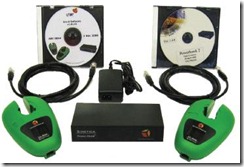
I received a CL-AMP IT package from the Noble Vision Group to review and give them some feedback on their kit.   The first thing that struck me was that this kit seemed to essentially be a power metering for dummies kit.    There were a couple of really neat characteristics out of the box that took many of the arguments I usually hear right off the table.

nvg

First the “clamp” itself in non-intrusive, non-invasive way to get accurate power metering and results.   This means contrary to other solutions I did not have to unplug existing servers and gear to be able to get readings from my gear or try and install this device inline.  I simply Clamped the power coming into the rack (or a server) and POOF! I had power information. It was amazingly simple. Next up -  I had heard that clamp like devices were not as accurate before so I did some initial tests using an older IP Addressable power strip which allowed me to get power readings for my gear.   I then used the CL-AMP device to compare and they were consistently within +/- 2% with each other.  As far as accuracy, I am calling it a draw because to be honest its a garage based data center and I am not really sure how accurate my old power strips are.   Regardless the CL-AMPS allowed me a very easy way to get my power readings easily without disrupting the network.  Additionally, its mobile so if I wanted to I could move it around you can.  This is important for those that might be budget challenged as the price point for this kit would be incredibly cheaper than a full blown Branch Circuit solution.
For monitoring individual IT equipment you can use a power monitoring strip like Raritan’s.  Here is an 8 port device.

Dominion PX CR8-15

Raritan's Dominion® PX Intelligent Remote Power Management Solutions help IT administrators improve uptime and staff productivity, save money and improve utilization of power resources.

With the Dominion PX:

  • Emergencies can be resolved with remote serial and TCP/IP access to outlet-level switching, improving MTTR.
  • Capacity planning is simplified with unit-level and outlet-level power utilization information.
  • Staff can gather detailed power information to improve uptime and productivity.
  • Travel costs and time can be saved with remote power cycling and monitoring.

Information provided by the Dominion PX — displayed at the strip via an LED display, and remotely through a Web browser — can be used to improve capacity planning through power consumption information for both the PDU and individual receptacle. Precise, outlet-level access and control allows users to reboot attached devices.

There are many choices out there, and the above two will get you started on your search.

Use a viral strategy

I was talking about viral strategy and a person said I don’t get it.  “What is viral?”  Here is a good explanation of a viral ideas.

What makes an idea viral?

For an idea to spread, it needs to be sent and received.

No one "sends" an idea unless:
a. they understand it
b. they want it to spread
c. they believe that spreading it will enhance their power (reputation, income, friendships) or their peace of mind
d. the effort necessary to send the idea is less than the benefits

No one "gets" an idea unless:
a. the first impression demands further investigation
b. they already understand the foundation ideas necessary to get the new idea
c. they trust or respect the sender enough to invest the time

This explains why online ideas spread so fast but why they're often shallow. Nietzsche is hard to understand and risky to spread, so it moves slowly among people willing to invest the time. Numa Numa, on the other hand, spread like a toxic waste spill because it was so transparent, reasonably funny and easy to share.

Buy some of these tools and give them to some of the people who want to measure energy consumption.  Tell them if they know of someone else that can use the tools, they can request an additional equipment deployment.  The one request you have is to get a report on what they discover is the energy consumption of their devices.

As you discover useful information start to share the information. You will discover some interesting data.

What are you after?  A cultural shift where people regularly talk of the kilowatts used by systems. Where these is waste, and where there are efficiencies.

Keep in mind there is a viral aspect of the ideas. I wrote an article for Microsoft’s TechNet magazine last year.  Look at the below figure.  There was network switch that consumed 100 watts when powered off vs 350 watts when on.  This an example of something that would get people’s attention.

Figure 4 Power-consumption comparison of on versus off

You are driving for the same behavior change as those who drive a Prius with instant MPG of the car and how the hybrid system is running.

Formalizing the power monitoring and data collection

After you get some momentum you want to start to bring some structure in power monitoring data collection.  Here are some areas I would suggest next.

  1. What is the actual power consumption of the device at idle, off, under load, peak, and expected loads?
  2. What are the expected power changes in a minimum, maximum configuration vs. planned?
  3. Can any of the components be upgraded to energy efficiency?  Hard drives, power supplies, or processors?
  4. Is energy savings turned on in the server BIOS and/or OS?  How much do you save with power management turned on vs. off?
  5. Are there alternative designs that can be tested?
  6. The biggest waste is over-provisioning. Do devices have to be as powerful as originally specified?  Keep in mind, this saves money as well as power.

Hope this help you think about how to change people’s behavior to ask “what is the power consumption?” whenever they talk about data center equipment.

BTW, this time of the year, I can enjoy looking at the lake, but we don’t go out on the lake as the dock is under water. Having come from a desert (Las Vegas) I find it nice to return to a  water environment.

In Chinese Taoist thought, water is representative of intelligence and wisdom, flexibility, softness and pliancy

image

Read more

Gartner Data Center 2009 Conference – Day 2 – Green Data Center and Regulation

Green IT is a hot topic here at the Gartner Data Center Conference with 250 people in John Phelps presentation.

More and more enterprises are considering a green data center and what that actually means. This presentation looks at some best practices that can be done today and also looks at key green technologies and processes to consider for the future.

Key Issues:

  • What critical forces will drive enterprises to consider green data center strategies during the next five years?
  • What best practices and processes should users follow when creating a green data center?
  • What are some of the new green technologies that are emerging that companies should be tracking?

John covered a good overview of Green Data Center.

Mike Manos’s presentation was a more specific drill down into the topic of Carbon Regulation coming.

Regulation. It's Real. It's Coming. It's Expensive.

Wednesday, 02 December 2009
01:45 PM-02:45 PM

Speaker: Mike Manos
Location: Octavius 2
Session Type: Solution Provider Session

Energy regulation is coming. The US House of Representatives has already passed its Cap and Trade legislation and the Senate has a bill in committee. In Europe it already exists. The operational and cost impact on datacenters in the today's regulatory environment is substantial. In this presentation Mr. Manos will provide a detailed overview of the pending industry-impacting legislation and what you will need to do to negate its impact.

Mike was as passionate as ever. Mike started off asking if Data Center Regulation is an issue. 80% of audience raised their hands.

There are about 125 people in the room.

One specific Mike drilled into Carbon Reduction Commitment CRC in the UK, and the impact of the act.

CRC is designed to improve energy efficiency in large organisations. It will operate as a 'cap and trade' mechanism, providing a financial incentive to reduce energy use by putting a price on carbon emissions from energy use. In CRC, organisations buy allowances equal to their annual emissions. The overall emissions reduction target is achieved by placing a ‘cap’ on the total allowances available to each group of CRC participants. Within that overall limit, individual organisations can determine the most cost-effective way to reduce their emissions. This could be through buying extra allowances or investing in ways to decrease the number of allowances they need to buy.

Let me drop to the closing statement.

Preparing for Regulation.  What to do?

  1. Prepare for regulation. (make a plan)
  2. Measure energy consumption.
  3. May require work changes.
  4. Select appropriate tools.
  5. Need to determine how to look at data centers in aggregate. (holistic view)

Overall it was good to see that the audience was engaged on the topic.

Yeh!!!  Mike told the audience water is the next issue.

Matt Stansberry was in the audience as well, so hopefully he’ll write something as well.

Read more

Gartner Data Center 2009 Conference – Day 1

I just had breakfast and connected with Director of data center operations at a major retailer and another with a major software ISV.  So, overall a good start, and both of the executives were interested in the green data center topic.  I have their business cards.  :-)

One way I would use to describe that the Gartner event is this is marketplace for data center decision makers and data center vendors.  As one person said, they have 8 dinners scheduled over 4 days.  But, it is worth it because they get quality time away from the office with senior executives at the vendors.


image

Here is my bright pink badge that says I am a press guy.

image

There are modular data centers from IBM, SGI, and HP.  But in general software companies are the majority of exhibitors.

Gartner has interactive survey allowing polling of the audience.

On a 9 question poll. What is the largest data center challenge you currently face? 31% for power and cooling .  Next was 16% with for aligning with business.

image

Which is the most funding in 2009/2010

28% data center facilities projects

image

Sorry for the picture quality, but I used my iPhone as cameras are not allowed.

Read more

Live Blogging Gartner Data Center Conference, Dec 1 - 4

Many of the people I work with have not gone to Gartner’s Data Center Conference, and this is the first time for my attendance.

Gartner 28th Annual Data Center Conference

Your source for data center excellence.

1 - 4  December 2009   |   Las Vegas, NV   |   Caesars Palace Las Vegas

I had a friend suggest I try and get a media pass for the event, and the Gartner group says I qualified as a media attendee.  Now the good thing is this means I don’t pay the registration fee.  The bad thing is I walk around with a media badge.  Which in general means vendors want to talk to me, but not end users.

Here are some of these rules for effective live blogging at an event I found, and I’ve tried to follow them, but it is good to remind myself of the purpose.

I've learned from attending dozens of events and watching how hundreds of people create content:

  1. Have a purpose. Creating content in a live context can be a great traffic driver to your site, or a brilliant way to connect with those who are sharing ideas and will be reading your efforts soon. Before you get into it, however, make sure you know what you want to get out of it. Are you trying to educate colleagues? Drive more visitors to your site? Have a goal before you start.
  2. Focus on the 1st take. In a real time environment, you don't have time to touch up a photo in photoshop or edit a video. A blog post must be 95% right the first time you write it. Speed is the toughest part of covering an event live - and the best way to manage it is to practice getting things right on the first take so you don't have to go back and fix them.
  3. Create realistic targets. Do NOT ever think that you can live blog every session you attend and pack your day. That's the surest way to give yourself a major headache and feelings of inadequacy. Even pro bloggers who are covering events professionally take breaks - and your goal should be to share great content, not a high volume of crappy content.
  4. Publish nuggets, not manifestos. Think about this - real time means you need to get content up and out quickly. Using shorter content sharing quick thoughts is much better for this. So save the big ideas for a recap post or something that comes later and focus on speed in the short term. Twitter is great for this as well - but don't just tweet everything a speaker says.Instead, focus on finding the best soundbites. And always tag your content with the hashtag (keyword) being used by people at the event (or create one if one does not exist).
  5. Have a point of view. Speed doesn't mean lack of substance, however. The worst kind of content to come out of events is where people share what is happening on stage in a word for word "book report style" format. Most social media events already have someone assigned to do that. And trust me, you don't want to be "that guy (or girl)." Always have a point of view on what is happening on stage.
  6. Share the real pulse of the event. Often the most interesting thing about an event isn't just what people say, but the intangibles about the event. Did everyone head back to their hotel rooms during the breaks or were they networking? What sessions were the most popular? Keep your eye out for broader trends that help you to understand the vibe and pulse of the event on a greater level.
  7. Offer an insider perspective. Being an attendee or speaker at an event gives you a unique insider view of what is happening. If you can, try to share as much of that experience online as you can. Remember, the people following live are most likely those who were interested in the event but could not make it themselves, so give them a good look inside the event.
  8. Get help on content promotion. Creating content from an event in real time is complicated enough, but you will probably find yourself simply running out to time when it comes to effectively promoting all the content you're creating. So get some help to submit your posts to Digg and other sites, or to point people to some of your content. Promotion is great real time, but it's most effective if you can split the duties.
  9. Represent the virtual attendees. When you find yourself with an audience following your content in a live fashion, you have the option to be their representative at an event. This means you could poll your audience and ask a question in a session on their behalf - or ask others to follow up directly with those individuals as well. Be their voice and they will thank you for it.
  10. Do a recap. No matter how many posts or tweets you get out during an event, always do a recap of the event and what you learned as part of your effort. Often, you'll find this post lets you talk about things you just didn't have time to during the event. And it will most probably be your most visited effort from the entire event.
Read more

Data Center energy use growing while overall industrial use declines

WSJ had an article on weak power demand.

Weak Power Demand Dims Outlook

By REBECCA SMITH

Electricity sales remained weak in the third quarter, prompting speculation that the sluggishness could persist even after the U.S. economy rebounds. Some utilities don't expect power sales to recover to pre-recession levels until 2012 -- if at all -- because so many factories have closed.

Getting a read on future demand is crucial for utilities because they require long lead times to build power plants and make other upgrades. Declining sales put pressure on utilities to raise prices, cut costs or make other adjustments to bolster profits.

[Workers last month in Charlotte, N.C., home of Duke Energy. ]Associated Press

Workers last month in Charlotte, N.C., home of Duke Energy.

The sector began to feel the recession, which started in late 2007, later than many others. Sales held up well in the first half of 2008 but then declined and have continued falling this year, though some regions are reporting an uptick. The federal Energy Information Administration expects overall electricity sales to decline 3.3% this year and grow modestly next year, but many utilities anticipate far larger declines for the year.

Duke Energy Corp. said its energy sales to the textile industry based in the Carolinas fell 20% in the third quarter, versus a drop of 13.7% for sales to all industrial users. For the first nine months of 2009, electricity sales to the textile industry were down 23.5%, from the prior year, and overall industrial sales were down 15.8%.

American Electric Power Co. of Columbus, Ohio, which owns utilities in 11 states, saw industrial electricity sales plunge 17% for the third quarter versus the year-ago period. Chief Executive Mike Morris said his company is counting on industrial demand recovering about a third of the lost ground in 2010.

There is no decline in the overall use of data center power, and John Rath has a post on European data center revenue doubling 2010 – 2015.

European Data Center Revenue May Double

November 30th, 2009 : John Rath

Several stories from recent weeks highlight the vibrant data center industry in Europe. Here’s a roundup:

European data centre revenue set to double
A report published by Tariff Consultancy Ltd notes that European data centre revenue is “set to more than double over the five year period from 2010 to 2015, with net raised floor space to increase by 70%, driven primarily by price increases.” The report gives pricing and forecasts for 19 of the EU25 countries and analyzes pricing of a standard 19″ rack, a small cage space and a 50 KVA suite of space for each of the countries.  It also dives into trends impacting data centres such as raised floor capacity in markets, revenue per square meter forecasts, electricity pricing, pricing per rack and cage, and the most expensive data centre countries.

Read more