Ex-Google Data Center developer says don't build unless greater than 30 megawatts

DataCenterKnowledge has a post on Simon Tusha's presentation saying bigger is better.

usha: Power Economics Favor Huge Data Centers

June 3rd, 2010 : Rich Miller

There’s a saying in Texas Hold ‘Em poker: “Go big or go home.” When it comes to data center construction, Simon Tusha has a corollary: Build big or partner.

“If you’re not going to be using 30 megawatts, you shouldn’t (build your own data center),” said Tusha, the new Chief Technology Officer of Quality Technology Services(QTS). Tusha knows a little about building big. He was previously part of the data center team at Google, where he negotiated agreements for the company’s huge data center projects. Tusha has managed and developed more than 150 data centers representing more than 1.5 million square feet of space and 500 megawatts of critical power.

Here is the press release from QTS regarding Simon joining.

Atlanta, GA - May 18, 2010 - QTS (Quality Technology Services), one of the nation's largest and fastest-growing providers of data center facilities and managed services, today announced that it has appointed Simon Tusha as its Chief Technology Officer. In the newly created role, Tusha will be responsible for the strategic development of all QTS services and technology deployments within its three and a half million square feet of data centers. His prime focus at QTS will be on the design, development and construction of all data center projects. He is the third key executive to join QTS' ranks this year.

In his role at Google [NASDAQ:GOOG], Tusha identified an industry need for planning development and global data center strategy. He was the sole global negotiator for data center contracts and was a key developer of Google's data center location strategy

One thing that goes in Google's favor is when they built data centers they filled them up very quickly.

How many of your can fill up 30 megawatts of data center?

There is an answer that fits QTS business model.

The Power of Joint Ventures
Tusha proposed a novel solution: using joint ventures to spread out the cost and achieve more favorable economics. “You should find a partner and do it together,” he said. “A joint venture is a great opportunity for a bunch of companies to get together and build a data center.”

Tusha isn’t without an interest in the potential of this model. QTS recently bought a huge former semiconductor plant near Richmond, Virginia and plans to convert it into one of the world’s largest data center campuses. The property includes 210 acres of land and more than 1.3 million square feet of facilities from the former Qimonda memory chip manufacturing operation. Perhaps most importantly, the campus also has a power capacity of 100 megawatts, providing plenty of space and power to accommodate custom data center opportunities.

Read more

Smart Grid Reality - growing pains hit startups, moving at the pace of Utilities

CNET News has a post on the Reality of Smart-Grid and how one company GridPoint has adapted its strategy.

Smart-grid companies feel growing pains

by Martin LaMonica

If you think utilities will swiftly adopt smart-grid technologies, consider the story of GridPoint.

Despite being only seven years old, the high-profile energy start-up has adjusted its strategy a few times and made a string of acquisitions. At first, it planned on selling home energy management systems and batteries to consumers, then shifted its focus to selling smart-grid equipment to utilities, such as software to manage home energy or charge electric cars.

Start-ups with a business model that move at the pace of Utilities.

Utilities typically negotiate with public utility commissions on how they will recoup the costs of capital investment, such as smart meters, batteries, or in-home energy displays for consumers. That investment cycle, coupled with utilities focus on reliability, means they don't have big incentives to move quickly, said Rob Day, an investor at Black Coral Capital.

Bad business model.  I don't think the VCs really thought through the problem of consumer adoption via Utility companies.

Read more

Google's Data Center Secret, Leadership is top in industry

There are lots of opinions out there from Data Center Leadership with Google making an occasional appearance.  Google is the biggest data center operator out there and as one Google employee has said "many dismiss what we do as unique to Google, but we actually work on many issues that are general industry issues."  And, as another friend who knows someone in the Google data center group has said the best manager he has had is Urs Hölzle.  Which fits in with this post I have been thinking about for a while.

Is Google's Data Center advantage due to its leadership?  Not the size of its data center footprint?

For those of you who don't know Urs here is his profile on Wikipedia.

Urs Hoelzle

From Wikipedia, the free encyclopedia

Urs Hölzle is senior vice president of operations and Google Fellow at Google. As one of Google's first ten employees and its first VP of Engineering, he has shaped much of Google's development processes and infrastructure.

Before joining Google, he was an Associate Professor of Computer Science at UC Santa Barbara. He received a master's degree in computer science from ETH Zurich in 1988 and was awarded a Fulbright scholarship that same year. In 1994, he earned a Ph.D. from Stanford University, where his research focused on programming languages and their efficient implementation. Via a startup founded by Urs and Lars Bak, that work then evolved into a high-performance Java VM named HotSpot, acquired by Sun' JavaSoft unit in 1997 and from there became Sun's premier JVM implementation.[1]

WSJ had a recent post on the issue that CIOs don't make good leaders.

Why CIOs Are Last Among Equals

Their perceived shortcomings are often real. But they can be overcome.

By PETER S. DELISI, DENNIS MOBERG and RONALD DANIELSON

Are CIOs doomed to forever be second-class citizens among top executives?

We don't think so, but they've got a lot of work to do to avoid that fate.

Chief information officers are more important than ever to the success of their companies, given the crucial role information technology has come to play in every aspect of business. But in most companies, the CIO still isn't viewed as a peer by other senior executives, who tend to see CIOs as specialists lacking the full set of broad management skills. Very few CIOs have become CEOs, especially outside the high-tech industry.

CIO

Wesley Bedrosian

What's holding CIOs back? The problem is that, for the most part, their fellow executives' perceptions are correct. Based on our research, it's clear that most CIOs don't have the broad business understanding, strategic vision and interpersonal skills that it takes to run a company or at least play a bigger role in running one.

Well Urs doesn't have this problem as he is on Google Operating Committee, was Google's first VP of Eng, and has access and influence to Google Executives.


Urs Hölzle
Senior Vice President, Operations & Google Fellow

Urs Hölzle served as the company's first vice president of engineering and led the development of Google's technical infrastructure. His current responsibilities include the design and operation of the servers, networks and datacenters that power Google. He is also renowned for both his red socks and his free-range Leonberger, Yoshka (Google's top dog).

A year ago Google's Data Center team held their Energy Efficiency summit, and there was a peak into the staff who works for Urs like Chris Malone, Ben Jai, Jimmy Clidaras, Luiz Barroso, and Joe Kava.

I was impressed that Urs stayed the whole time at the Summit, and I was able to have side conversations that built upon my interview I had with him back in Oct 2008.  His knowledge and understanding of the business and technical issues are impressive.

So, is Urs the keystone that keeps the whole Google Data Center group running?  And without him the arch (organization collapses).

A keystone is the architectural piece at the crown of a vault or arch which marks its apex, locking the other pieces into position.[1] This makes a keystone very important structurally.[

I would argue as good as Urs is he has built up a solid organization and embedded the importance of the data center infrastructure (buildings, HW, and software) at the executive level.  I am constantly amazed at how much money is spent on data center redundancy, and people are treated as expendable.  If you spend money on getting the best equipment, why don't companies spend money on getting the best people for the data center?

One fact that beats all the rest of the data center leadership is Urs is the richest being one of the first ten Google employees, but it also means he wants Google to survive long term.  What is a sustainable data center organization when Urs leaves?

I can think of other executives who have the talent to present their ideas at the executive level, like Mike Manos and Olivier Sanche. 

Can you think of other Data Center executives who can present compelling presentations to the executive staff, and his organization looks to for data center leadership?

James Hamilton pointed out folks at Netflix and RIM.

After the talk I got into a more detailed discussion with many folks from Netflix and Canada’s Research in Motion, the maker of theBlackberry. The discussion ended up in a long lunch over a big table with folks from both teams. The common theme of the discussion was predictably, given the companies and folks involved, innovation in high scale service and how to deal with incredible growth rates. Both RIM and Netflix are very successful and, until you have experienced and attempted to manage internet growth rates, you really just don’t know. I'm impressed with what they are doing. Growth brings super interesting problems and I learned from both and really enjoyed spending time with them.

Are the companies who have the most sustainable data centers the one who have the best leadership?  BTW, these executives get the value of a green data center strategy.

Read more

Calculating Land Use in your Renewable Energy Projects

CNET's Green Tech reports on a report discussing land use required for renewable energy projects.

Figuring land use into renewable-energy equation

by Martin LaMonica

CAMBRIDGE, Mass.--Imagine if your country had an unlimited budget but a limited amount of land: what renewable energy has the most potential?

Rutgers University professor Clinton Andrews and colleagues ran the numbers on this thought experiment and came up with some surprises. They identified clear limits on some technologies, notably biofuels, but concluded that the bigger challenges to renewable energy and land relate to siting energy facilities, particularly transmission lines.

...

Whenever some one says to put PV on a data centers roof you are lucky to get 10% of the power used generated by PV.

Read more

Fool's Gold, Lawsuit against over hype of LEED Gold claims

LEED is marketed as a green building certification by many and has spread to data centers.  Here is a post where a resident of a NY residential building has filed a lawsuit identifying the buildings performance does not match up to claims.

Fool’s Gold? Resident Files Suit Against Developers of LEED Gold Riverhouse For Not Delivering LEED Gold Goods

David Roth | Thursday, May 27, 2010 | no comments

One thing that Battery Park City’s LEED Gold hopeful Riverhouse has never lacked for: publicity. Some of that media attention has been of the brand-friendly kind — Leonardo Di Caprio bought a condo! Tyra Banks bought a condo! These people are very famous! Or at least Leo is! But much of the recent attention directed at Riverhouse has not been very flattering. A series of legal squabbles between the developers – the Sheldrake Organization and the zombie iteration of the Lehman Brothers real estate partnership — were both notably ugly and notably public, although Riverhouse condos continued to sell well during the exchange of lawsuits and accusations and vague intimations of pre-foreclosure legal action.

...

The suit’s demand for $1.5 million in damages is kind of a grabber, but Stephen identified something more intriguing — and which could possibly make a bigger impact across the green building spectrum — than the intimation that one high-profile green building didn’t live up to its own hype. “This type of construction litigation is not uncommon, the purchasers also claim that ‘the building’s much-heralded ‘green’ heating system consistently fails to provide adequate heat’ to their unit and that this failure is a condition which is ‘is materially different from those represented by the project sponsor and its principals in the condominium offering plan,’”

it is hard to  identify the performance of a data center given it can take years before the space is build up with load.

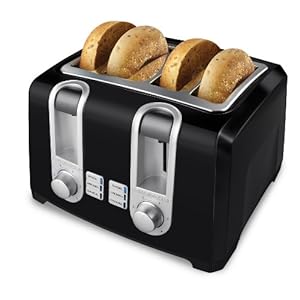
Which reminds of a rumor I heard once that Google put a bunch of toasters in its data center.  Why?  To simulate the electrical and heat load on the infrastructure.

Black & Decker T4569B 4-Slice Toaster, Black

I don't think we'll ever see a lawsuit for a LEED certified data center, but it was bound to happen that the over hype of LEED catches up to reality of a buildings performance. 

If the hype of LEED was combine with hype of Smart Grid.  The Smart Grid could be used to prove what LEED buildings perform as expected.

Read more