Apple/Intel Thunderbolt enables low cost 10 GB/s connection

Apple and Intel are announcing support for Thunderbolt support in Apple's new Notebooks.
image

Intel's Light Peak event, Thursday 10 a.m. PT (live blog)

by Josh Lowensohn

  • A photo of Intel's Light Peak technology

A photo of Intel's Light Peak technology

(Credit: Intel)

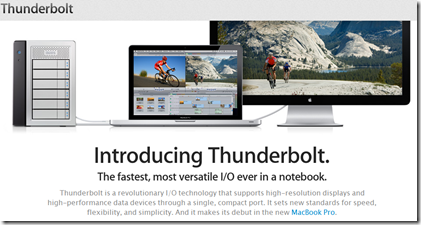
Intel today is revealing some of the final details of its Light Peak technology as it makes its way into the first wave of consumer and business gadgetry.

Now officially known as Thunderbolt, the data transfer and high-definition PC connection runs at 10 gigabits per second and "can transfer a full-length HD movie in less than 30 seconds," Intel announced this morning.

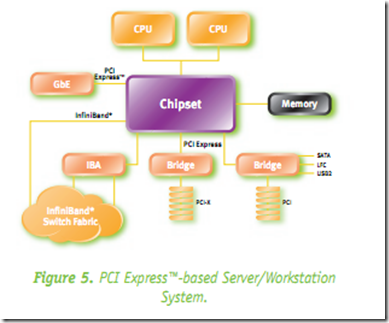
Part of Thunderbolt is PCI Express.

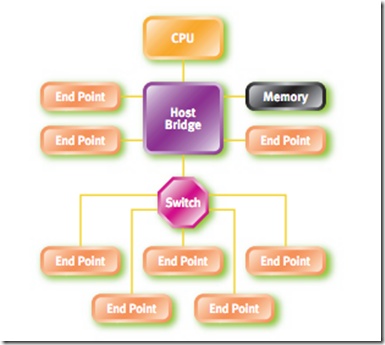
Here is white paper on PCI express.  Part of the idea behind PCI Express is adding a switch to IO design.
image

image

Given Apple's and Intel's announcement PCI Express interconnects will be cheaper.  See this article in HPC for how PCI express Interconnect could be used in high performance clusters.

January 24, 2011

A Case for PCI Express as a High-Performance Cluster Interconnect

Vijay Meduri, PLX Technology


Page:  1  of  2
1 | 2 All »

In high-speed computing (HPC), there are a number of significant benefits to simplifying the processor interconnect in rack- and chassis-based servers by designing in PCI Express (PCIe). The PCI-SIG, the group responsible for the conventional PCI and the much-higher-performance PCIe standards, has released three generations of PCIe specifications over the last eight years and is fully expected to continue this progression in the future with even newer generations, from which HPC systems will continue to see newer features, faster data throughput and improved reliability.

The latest PCIe specification, Gen 3, runs at 8Gbps per serial lane, enabling a 48-lane switch to handle a whopping 96 GBytes/sec. of full duplex peer to peer traffic. Due to the widespread usage of PCI and PCIe in computing, communications and industrial applications, this interconnect technology's ecosystem is widely deployed and its cost efficiencies as a fabric are enormous. The PCIe interconnect, in each of its generations, offers a clean, high-performance interconnect with low-latency and substantial savings in terms of cost and power. The savings are due to its ability to eliminate multiple layers of expensive switches and bridges that previously were needed to blend various standards. This article explains the key features of a PCIe fabric that now make clusters, expansion boxes and shared-I/O applications relatively easy to develop and deploy.

Here is the idea to use PCI Express for cloud infrastructure.

Figure 1 illustrates a typical topology of building out a server cluster today, in which, while the form factors may change, the basic configuration follows a similar pattern. Given the widespread availability of open-source software and off-the-shelf hardware, companies have successfully built large topologies for their internal cloud infrastructure using this architecture.

Figure 1: Typical Data Center I/O interconnect

Figure 2 illustrates a server cluster built using a native PCIe fabric. As is evident, the usage of numerous adapters and controllers is significantly reduced and this results in a tremendous reduction in power and cost of the overall platform, while delivering better performance in terms of lower latency and higher throughput.

Figure 2: PCI Express-based Server Cluster

Verizon's Data Center host eWaste event in Florida

Finding a data center is difficult, but here is one that is being used as a place bring eWaste to in Florida.

Verizon facility hosts recycling event

Wednesday, February 23, 2011 6:57 PM

(Source: Tampa Tribune)trackingBy Joyce Mckenzie, Tampa Tribune, Fla.
Feb. 23--TEMPLE TERRACE -- Search the attic, closets, cabinets, garage and other storage areas for electronic equipment that is merely taking up space and collecting dust.

The Verizon Data Center at 7701 E. Telecom Parkway in Telecom Park is opening its doors from 7:30 a.m. to 2 p.m. Thursday as a collection site for people to dispose old laptop and desktop computers, keyboards and cables.

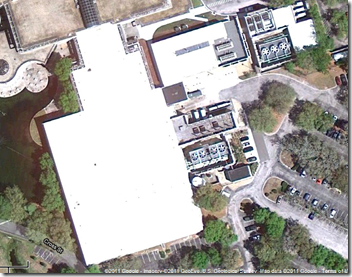
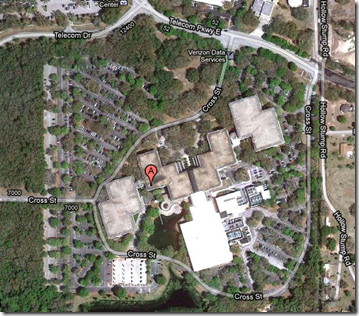
Is this site really a data center? Yep, here is the Google Map location.

image

image

GreenM3 advisor executive, now Chairman of Halogen Media Group

Peter Horan has been a friend and advisor for years, and today he accepted a job at Halogen Media Group as Chairman.

image

Halogen Media Taps Peter Horan As Executive Chairman


Halogen Media Group, an online marketing firm focused on connecting “prestige” advertisers with social media audiences, has named former About.com and IAC (NSDQ: IACI) exec Peter Horan as its executive chairman. The announcement comes a day after the shut down of e-mail startup Goodmail Systems, which Horan left a year ago as CEO.

Horan’s role will cover two major areas, said CEO and founder Greg Shove, in an interview with paidContent. Specifically, he’ll be charged with building up the company’s audience strategy. He’ll also grow content sites in-house and will also look for companies to invest in or acquire as additions to its network.

Here is Peter's past job experience from LinkedIn.

Current

  • Executive Chairman at Halogen Network
Past
  • CEO at IAC Media And Advertising
  • CEO at AllBusiness.com, Inc.
  • CEO at About.Com, Division of Primedia
  • CEO at DevX.com, Inc.
  • Senior Vice President at International Data Group

Peter and I have had great conversations over the past few months on social media which fits his move to Halogen.

Our Company

Audience fragmentation continues to accelerate, so the usual media companies can no longer be relied upon to reach and engage the affluent audience with both impact and performance. Typical ad networks can provide reach and efficiency, but are not able to ensure the relevance and brand-safety that prestige brands demand. This gap is why Halogen exists - to provide prestige brands with affluential audience reach that enhances their brands, yet also delivers results.

Since our start three years ago, we have built the largest aggregate network of affluent users online, with hundreds of mid-tail publishers that reach more than 55 million users each month and an email subscriber base of over 10 million. Halogen's suite of capabilities includes custom editorial campaigns, high impact ad formats, behavioral and income targeting, and video advertising channels. Advertisers that have partnered with Halogen in the past include Rolex, smartwater, Trapiche wines, Chase Manhattan Bank and Harry Winston.

While Peter was CEO of IAC, ask.com was expanding in Moses Lake, WA with its data center build out.  It is rare to find a CEO who gets data centers.

Horan left his post as CEO of IAC Media & Advertising, to become CEO of Goodmail in May 2008. Before that, Horan was best known as the head of About.com during its sale to NYTCo.

David Kaplan
twitter @davidaKaplanFeb 23, 2011 12:00 AM ET

Peter Horan

Programming for a Greener Data Center

The progress on energy efficient software is difficult for many.  If you are a mobile developer you think of the energy efficiency of your code.  If you are Google, Microsoft, or Facebook you think of the performance per watt.  But, there is a lot more that can be done.

The National Science Foundation has awarded a grant for greener software.

New approach to programming may boost ‘green’ computing

By Rachel Coker
Published on February 21, 2011

A Binghamton University computer scientist with an interest in “green” software development has received the National Science Foundation’s most prestigious award for young researchers.
Yu David Liu received a five-year, $448,641 grant from the NSF’s Faculty Early Career Development (CAREER) Program. The highly competitive grants support junior faculty who exemplify the role of teacher-scholars through outstanding research, excellent education and the integration of education and research.

Part of the challenge is the lack of support for energy aware programming.

None of the mainstream computer languages supports energy-aware programming, he said. However, language designers often create a blueprint that can be extended. Java, for instance, could be extended as EnergyJava and remain 90 percent the same. Such moderate changes would make it possible for programmers to adopt it relatively easily.

Visitors Guide to Silicon Valley

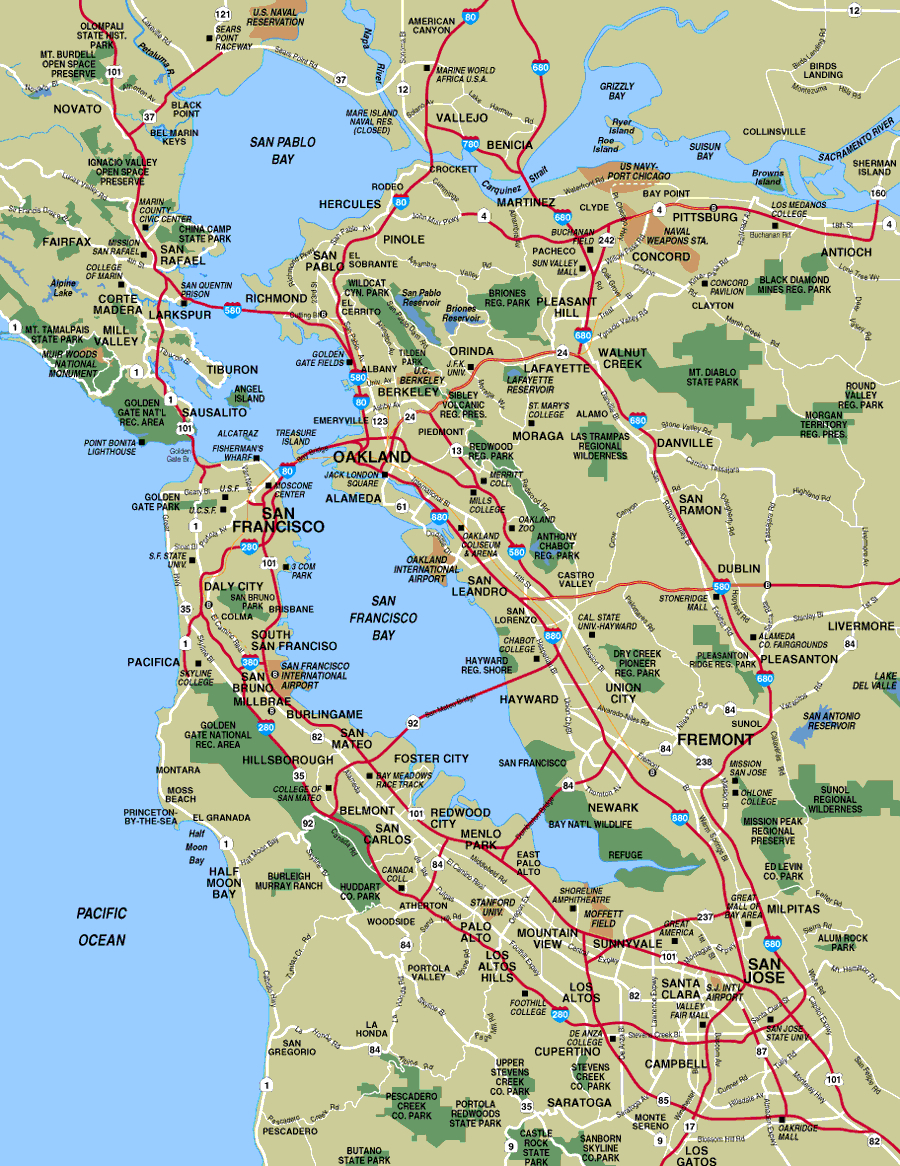
Silicon Valley has the highest concentration of data center decision makers and innovation, and I am sure most of your take regular trips to Silicon Valley.  I am heading down today, and I’ll be back for The Green Grid conference the following week.  Going to the bay area is almost as easy as a bus ride, a 2 hr flight.  This trip I am taking my kids to see grandma. Being raised in Cupertino/Saratoga getting around is not a problem.

Steve Blank writes a post that would be useful for those who want to see some highlights of Silicon Valley.  One area that Steve hits the mark and why I go to the bay area so much for clients and friends.

The Valley is about the Interactions Not the Buildings
Like the great centers of innovation, Silicon Valley is about the people and their interactions. It’s something you really can’t get a feel of from inside your car or even walking down the street. You need to get inside of those building and deeper inside those conversations. Here’s a few suggestions of how to do so.

Steven has humor in his post.

Hackers’ Guide to Silicon Valley
Silicon Valley is more of a state of mind than a physical location. It has no large monuments, magnificent buildings or ancient heritage. There are no tours of companies or venture capital firms. From Santa Clara to South San Francisco it’s 45 miles of one bedroom community after another. Yet what’s been occurring for the last 50 years within this tight cluster of suburban towns is nothing short of an “entrepreneurial explosion” on par with classic Athens, renaissance Florence or 1920’s Paris.


And, pokes fun at many aspects of the valley.

A Visitors Guide to Silicon Valley

Posted on February 22, 2011 by steveblank

If you’re a visiting dignitary whose country has a Gross National Product equal to or greater than the State of California, your visit to Silicon Valley consists of a lunch/dinner with some combination of the founders of Google, Facebook, Apple and Twitter and several brand name venture capitalists. If you have time, the President of Stanford will throw in a tour, and then you can drive by Intel or some Clean Tech firm for a photo op standing in front of an impressive looking piece of equipment.

The “official dignitary” tour of Silicon Valley is like taking the jungle cruise at Disneyland and saying you’ve been to Africa. Because you and your entourage don’t know the difference between large innovative companies who once were startups(Google, Facebook, et al) and a real startup, you never really get to see what makes the valley tick.

If you didn’t come in your own 747, here’s a guide to what to see in the valley (which for the sake of this post, extends from Santa Clara to San Francisco.) This post offers things to see/do for two types of visitors: I’m just visiting and want a “tourist experience” (i.e. a drive by the Facebook / Google / Zynga / Apple building) or “I want to work in the valley” visitor who wants to understand what’s going on inside those buildings.