General Hugh Shelton speaks at 7x24 Exchange Data Center Conference - leadership, people, teamwork

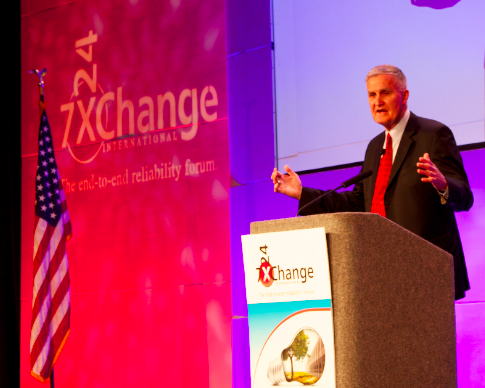
General Hugh Shelton gave the keynote at the Fall 7x24 Exchange 2011 conference.
NewImage

Attendees all have a copy of his book.

NewImage

The presentation had three main points - Leaders, People we lead, and Teamwork.

I am not taking detailed notes as my session on the "Hunt for Talent" is right after and is a good setup to discuss the challenge to find great people for the data center.

Redhat has notes that are good to read on what Hugh Shelton presents.

Leadership

A webcast listener asked what capabilities of self-governing groups are most important to leverage when it comes to leadership. "From a leadership standpoint, I start with the basics in any organization," Shelton said. "The leader is a person of great integrity, personal integrity, professional ethics, and you've got to make sure your organization is pulling together." A leader should provide vision for the group along with the teamwork to get it there. The leader should also be the one maintaining the group's transparency.

As an example, Shelton offered when Donald Rumsfeld decided to bypass the Joint Chiefs and run the Iraq operation, he lost the equivalent of 200 years of experience in the Tank that could have prevented a lot of mistakes. It's important to take constructive criticism and to learn from everyone in the group.

While on the board of Anheuser Busch, Shelton would walk the theme parks and find everywhere--including Clydesdale stables--were spotless. Augie Busch, as a leader, had inspired the cleanliness. "If you set standards, people are normally going to respond," Shelton said. "There have to be rewards and penalty. Then we give feedback, either formal or informal. I've seen it work in many organizations, in and out of the military. It all starts with the leader."

Tremendous leaders can be in Fortune 10 companies or in small communities. Shelton offered the following as the most important qualities for a leader anywhere:

  • Integrity
  • Professional ethics
  • Team builders

Here is what General Hugh Shelton presented on open source at JBoss World.

In this opening keynote for Red Hat Summit and JBoss World 2011, hear General Hugh Shelton (retired), Chairman of the Board of Red Hat, speak about the role of open source and his introduction to open source--and his involvement in the technology industry through the Red Hat board.

Gen Shelton gives a delightful talk, peppered with stories about the role of open source in the military, and in the world--sometimes in ways you might never expect.

"I'd like to join the army that is developing --the open source army, if you will--that is going to mark across a very fierce battlefield and fight and WIN because it's the right thing to do. That's Red Hat. That's open source."
-- General Hugh Shelton

System (Server) on a Chip company comes out of Stealth Mode - Deca Technologies

WSJ has a post on TJ Rogers of Cypress Semiconductor starting a new company that can integrate multiple chips on wafer.

Cypress Semiconductor CEO T.J. Rodgers is a well-known maverick in the chip business, who played a sizeable role in the solar-power market with a spinoff called SunPower. Now he’s putting his weight behind another startup that is announcing its plans Wednesday after laboring two years in secrecy.

It’s called Deca Technologies, and the goal is to transform the way chips are packaged for use in products such as smartphones and computers.

Cypress Semiconductor
T.J. Rodgers

Packaging is an unglamorous part of the semiconductor business, which typically takes place after the higher-profile operation of processing chips on silicon wafers. After wafers are sawn into individual components, the chips are typically flown off to different facilities where they are encapsulated in plastic and metal modules that can be attached to circuit boards for use in a system.


The articles focuses on the mobile market, but the same technology could be applied to servers on chip.


Canon S100 - Shoots RAW, GPS, great lens, and extremely mobile

Over 10 years ago I started shooting RAW Images and worked with others that GPS data would be useful.  I wrote about this story here.

Story of Adobe & Apple High-Value Digital Image Applications, Adobe's angst developing for the iPad, and how Microsoft missed this battle

I have a iPhone 4S and it goes with me everywhere, has GPS, but 8MP jpg with then small lens is not high enough quality.  Some of my friends and I want to build a product for the data center market and we need a great lens with high resolution.  So, I just got my Canon S100 with 12 megapixel, GPS, great lens and a bunch of other great features.

NewImage

Much better than my first RAW camera.

NewImage

And, my other RAW camera a Canon 7D.

NewImage

Map of Portland Startups, Tech Wizards of the Silicon Forest

Willamette Week has an article on the Portland startup companies and their CEOs.  I was born, raised and worked in Silicon Valley, but moved to Seattle to see what was different going on at a company called Microsoft.  Portland is a 3hr train ride away and I have been taking trips to Portland to chat with the companies who have some interesting software for data centers.

What kind of companies?  Look at this map prepared by one of the companies.

This image is taken from an interactive map of Portland software startups, created on Thetus Corp.'s Savanna multidimensional analysis software.
Credits: Courtesy of Thetus Corp.

PuppetLabs is one of the better known companies.

Credits: vivianjohnson.com


The Success Story

Name: Luke Kanies

Age: 35

Title: CEO, Puppet Labs

Venture capital funding: $7.25 million

What colleagues say: “[Puppet Labs is] in a leadership position. I don’t know that they’ve figured out how to grow that as a business.”

“He’s a Reedie. He’s totally a Reedie.”


Puppet Labs is the kind of company open-source developers have dreamed of: a startup that lures investor dollars while giving away the guts of its software for anyone to use and improve.

Thetus I visit regularly.


Credits: vivianjohnson.com


The State Secret

Name: Danielle Forsyth

Age: 51

Title: CEO, Thetus Corporation

Venture capital funding: $4.6 million

What colleagues say: “She’s a dork, like all great CEOs are dorks. And she is just killing it. Knocking it out of the park.”


Danielle Forsyth likes to say that Thetus Corporation makes Internet software for “people who don’t know what they don’t know.”

That Rumsfeldian phrase is fitting: Few people in Portland have any idea that a woman CEO—a rare sight on the tech landscape—is helming one of the city’s fastest-growing software startups, a company that’s been profitable for five years mostly thanks to federal government contracts.

Thetus has intentionally maintained a low profile locally. “We don’t have clients here,” Forsyth says, “and we’re really focused on growth.”

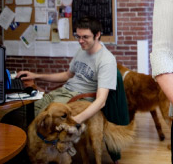
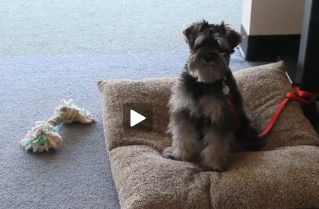
Both of these companies have dogs at work policies.

NewImage

NewImage

RNA one of the Portland startups I visited got bought by Dell.

Dell snaps up RNA Networks

A veritable cluster for PowerEdgies

Dell has quietly acquired Portland, Oregon-based RNA Networks, one of a handful of innovative startups that have been launched in the past couple of years to glue multiple x64-based servers together and allow them to look like a single, monster server to specific workloads.


Bechtolsheim talks data centers, Cloud/AWS, and Open Compute

Andy Bechtolstheim presented at GigaOm and discussed a bunch of cool topics for the data center crowd.  I am going to cheat and refer to Barb Darrow's notes as I was sitting next to her during the presentation and why type when I can copy the good stuff. :-)  I saw Andy a few weeks ago in NYC at the Open Compute and was curious what he would say at GigaOm Roadmap.

Bechtolsheim: AWS, open source rewrite rules for startups

Arista's Andy Bechtolsheim at GigaOM RoadMap 2011Today’s tech entrepreneurs would be out of their minds to build out their own data centers rather than renting capacity from Amazon or another low-cost provider.

That wasn’t a direct quote, but it’s pretty much the takeaway from Andy Bechtolsheim, the co-founder of Arista Networks(and also of Sun


Andy made the point people would be nuts to build their own data centers.

A company might build out its own infrastructure only if it’s raised a lot of venture capital, he said. But it needs to be a lot. And even then, maybe AWS is a better way. “Netflix  … uses Amazon for infrastructure. Here’s the leading, largest company in a field deciding it’s cheaper and more efficient to use a competitor for infrastructure rather than building its own.”

Andy mentioned the Open Compute Project.

Bechtolsheim is also on the board of the new Open Compute Foundation, formed by Facebook to propagate specs for standard, energy-efficient data center infrastructure. OCF hopes to bring open-source innovation that so improved software tools into the hardware realm.

For those brave souls wanting to build data centers, the OCF blueprint could help. But, Bechtolsheim said, that’s for truly big companies that need to do huge webscale computing, not for startups.

Bottom Line.

For nearly every entrepreneur weighing a tech startup, it’s better to rent than to buy or build.

The full presentation is here.

Watch live streaming video from gigaomroadmap at livestream.com