Why I like 7x24 Exchange, great people, especially the Board and Staff

Being an old timer (30 years) in the tech industry I have had my share of conferences.  Many times I have worked with the conference staff on executive keynotes given by Bill Gates and Steve Ballmer when I was at Microsoft which can be pretty stressful and you get a feeling of what works and what doesn't.

One of the teams I have had great conversations with is the Data Center Dynamics staff.  For all the times I have gone to AFCOM, Gartner Data Center World, and Uptime though I have never interacted with their staff when attending as a blogger.  And, as any one who knows me I am pretty social in the data center area, so its not like I avoid them.  Which doesn't bother me as I know plenty of the attendees and I can keep myself busy networking, and don't really need anything from their staff.

6 months ago, I went to my first 7x24 Exchange conference.  I hadn't gone to 7x24 even though i had heard good things and i was plenty busy going to the other data center conferences.  This week was my second 7x24 Exchange conference, and I have met all the Board of Directors and the support staff.  I am usually talking to one of the Board members every other week on data center ideas not necessarily related to 7x24, but because they are great people to discuss new data center ideas.

So, my #1 reason why I like 7x24 Exchange is i find it is one of the better places for data center thought leadership to be supported.  There may be other conferences where you are trying to get new business for existing services, but where do you go to discuss new services that don't exist?  At 7x24 Exchange I saw friends from Google, Facebook, eBay, AOL, Apple, Dell, DLBassoc, HP/EYP, Goldman Sachs, Syska, Turner, and many more.  7x24 Exchange may not have the largest attendance, but when it comes to being able to spend time with quality people in a good environment, I like 7x24.  There are nice long breaks and the format is set up to socialize.

So, my #2 reason is actually just a different version of #1 is the Board of Directors and staff  at 7x24 are great people to talk to.  Who did i chat with this week?

Chairman of the Board
Robert J. Cassiliano

President
William Leedecke
Vanguard

Vice President
David Schirmacher
Fieldview Solutions

Director - Chapter Representative
Michael Siteman
Executive Vice President

Director
Cyrus Izzo
Syska Hennessey Group

Administrative Director
Kathleen A. Dolci

Membership & Education
Tara Oehlmann, Ed.M.

Conferences
Brandon A. Dolci, CMP

And, I know I'll have many more conversations with 7x24 Exchange staff as I have ideas for another presentation for the Spring Event.

Also, in talking to others at 7x24 Exchange, they share the disappointment of attending many of the other data center conferences.  My current plan for 2012 is to go to 7x24 Exchange in the Spring and Fall which allows me to meet 90% of the data center people I want to meet, then instead of going to a bunch of other data center conferences to reach the other 10%.  I'll be going to the SF hosted GigaOm events where I get more new ideas and meet people who need data centers, but they don't necessarily build them. http://event.gigaom.com/

Who is GigaOm?  I find very few people I run into in the data center industry know them.  The GigaOm blog has 200 times the unique users I do.

ABOUT GIGAOM

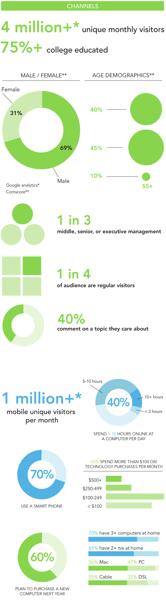
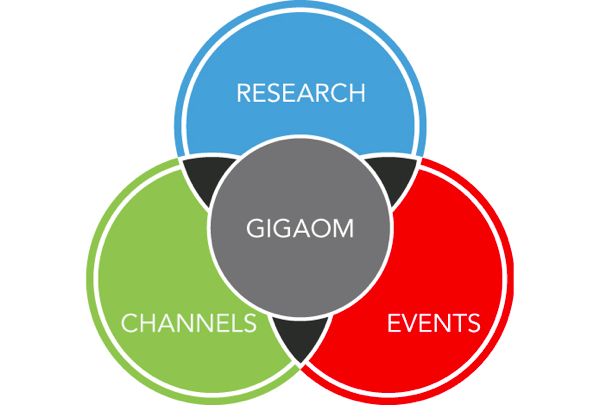
Founded in 2006, GigaOM has grown into the leading provider of online media, events and research for global technology innovators. The company is one of the most credible and insightful voices at the intersection of business and technology, with an online audience of more than 4 million monthly unique visitors; industry-leading events, including Structure, Mobilize, GigaOM RoadMap, Net:Work, and Structure:Data; and a pioneering market research service and digital community, GigaOM Pro, which provides expert analysis and research on emerging technology markets.

NewImage

NewImage

Disclosure:  Over the past two months I have signed up to be a freelance analyst for GigaOm Pro on the data center industry.


Data Center Thought Leadership, accumulated by companies or people?

DatacenterKnowledge just posted on the Yahoo Factor in data centers referring to Kevin Timmons, Lars Rabbe, Scott Noteboom, and Tom Furlong.

But, after spending the past 3 days chatting with the current Data Center Thought Leadership who were at 7x24 Exchange, I think we would have all had a good laugh.  Scott Noteboom is not part of this crowd as once you walk into Apple, you disappear from the data center crowd.  Kevin Timmons escaped this situation and is now CTO of Cyrus One and was busy meeting and greeting at 7x24.  Tom Furlong was circulating after his presentation on the Open Compute Project and Facebook's data centers.  Lars Rabbe is busy flying around the world between Estonia, Palo Alto (Skype bldg), and Redmond (Microsoft HQ).

So was the data center team that DatacenterKnowledge references assembled by Yahoo or was it assembled by Lars Rabbe?  When I was chatting with Lars a month ago, he proudly described his Yahoo data center team and their first data center build referenced in DatacenterKnowledge.  Do you think the CEO, and  other CxOs selected the data center team?  Noooo.

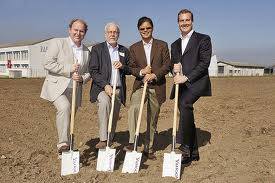
Here is pict of the executive ground breaking, do you think these guys interviewed Kevin, Lars, Scott, or Tom?

NewImage

It is easy to think that companies accumulate talent.  But, companies are run by people.  People accumulate talent.  How much data center talent can Yahoo accumulate now?  Not much.

Who can accumulate data center talent?  You could name the big brands of Google, Facebook, Twitter, Zynga, and Apple.  Big brand names bring in the resumes, but the hiring is done by data center managers.  The Data Center managers who have thought leadership can outshine others to recruit the top talent.  The really good data center staff want to work for a place that will be successful and pushes for the best.

Don't you think the companies who can recruit the best are those that have data center thought leadership who can articulate the following?

Thought leader is business jargon for an entity that is recognized for having innovative ideas.

The term was coined in 1994 by Joel Kurtzman, editor-in-chief of the Booz Allen Hamilton magazine, Strategy & Business. "Thought leader" was used to designate interview subjects for that magazine who had business ideas that merited attention.

Also, while Yahoo was building up its data center group, Google was building its team.  And, Mike Manos was building up his team at Microsoft. Which brings up another post Mike and I have discussed about the people he accumulated at Microsoft and where all of these people have gone to.

Hunt for Data Center Talent panel at 7x24 Exchange - Jack Glass, Joe Kava, Mike Manos

The folks at 7x24 Exchange gave us the opportunity to discuss a topic that does not focus on the technology.  So, if we don't discuss data center technology, what should we discuss? Our idea was to discuss the #1 issue that defines the operations and design of a data center, the people on the data center team.

We had an awesome panel with a good perspective on what talent is needed in the data center.

Jack Glass, P.E.
Director - Data Center Planning
Citi Technology Infrastructure

Mike Manos
Senior Vice President, Technical Operations
AOL

Joe Kava
Senior Director, Data Centers
Google

NewImage

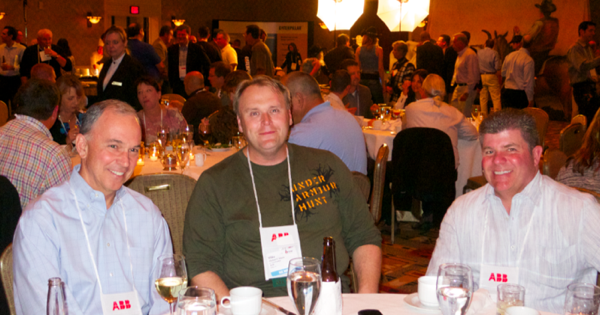
Above is when we sat down for dinner to chat together.  We had spent an hour on a conference call to discuss the topic and one of the things that was clear was we were going to have lots of good ideas, so we said "hey why don't we have someone take notes for the attendees?" Thanks to AOL's Patrick Dugan, the following are notes of the presentation taken in real-time.  I have left it as is so you can see the real flow.

Hopefully, this will start more discussions on what data center talent is required in the data center.

Thanks again for Jack, Mike, Joe and the folks at 7x24 Exchange to allow an important topic to be discussed.


Panel: The Hunt for Talent -  Dave Ohara (DO), Mike Manos (MM), Jack Glass (JG) and Joe Kava (JK)

Notes: Patrick Dugan

Please forgive the typos from the shaky fingers and I hope you enjoy the notes

MM – AOL  has shown how focused the people are through changes to re-moprh to tech and media company.  Talent is key on the moving forward for AOL

DO - what are some of the top attributes you are looking for in people

mm-keeping to DC industry, in the past focus was on specific skill sets for specific roles…change now is looking for more blended individuals who are more broad and can work across organizations –

do – good collaboration skills

mm- collaboration and people skills with the ability to think of problems from a different space

jg- shouldn’t skip over the technical, lot of focus has gone to the mechanical engineering and understanding in the DC. Success with people from maritime academies

jk-get people who have curiosity and looks into the areas outside of their specific domain.  Broadening themselves.

Jk-looking for people that are okay getting outside their comfort zones (even when it comes to their wardrobe ;-).  Being uncomfortable but being able to make that step

Jg- curiosity side is number one trait. Wanting to know how it works and comes together, not just staying in the silo of their expertise.  That’s is  what shows the making of a good employee.  Valuable Incredible employees

mm-technology driving changes within organizations, the blending of organizations is something we need to be aware of.

Do-challenges of opertating the DCs spread out around the world (almost like a command in control format)

Jk-distributed leadership across the globe with the differences in each but needing to operate as one.  Don’t want to have each operating like being on an island, it still needs to run as a single unit.  Share information, advances, innovations across all.

Jk-a single guy can come up with a good solution, take 5 guys collaborating, they’ll come up with a GREAT solution

mm-significant challenges at AOL with the blending of the taking on the new and doing new exciting things, however at the same time carrying the heavy anchors of the past

Notes just getting up there in front of you.  So you’ll have to wait to see the previous….:-)

Jg-Looking for skills that can help look at the legacy systems and help pull it apart and get it to the next level and move forward – look to you network organization

Jk-you want the people who are okay out of comfort zone that are able to work and build on the fly, without having established procedures, and policies – make those up as you go.

Hello Everyone

Do-breaking down silos…even in younger companies (like google) there are silos.  How do you find people who won’t work in silos or can help break them down

Jk-define the attributes of your organization and keep reinforcing them throughout the organization.  Educate and share information and technical information continuously.  You will get inclusion from those silos and you are informing them and helping to “bridge the gaps”

Jg-gotta look for teachers that can go out to those other individuals to share information and create a constant learning environment

mm-the poking holes in silos, breaking them down, will have resistance from some…what are the blockers to evolving the technology advances we keep discussing, can be more human – non movement due to discomfort

do-Explain the perception issue of what it is that you really need (good grief, purple hair…really).

Jk-the thought process of how you are going to approach problem solving?  The different skill sets and approach like the data gathering for supporting new approaches

Jg-You have to get people who can adapt, from the consultants being sensitive to end users and vice versa

mm-not just maintaining the tech solutions, but the portfolio of the tech on the ground to the IT solutions (like cloud) – move out of the wrench turning role and be more broad.

Jk-When interviewing new engineers for DC, have them interviewed with your IT group.  Want folks who are interesting and likable and someone you would want to talk to…that in itself helps bridge the gaps among organizations

mm-most memorable hire, worked other company, doing knowledge sharing with them.  During this Mike really wanted to steal this individual away.  Shows extent you will go when you find the right person, overcome the boundaries.

Jg-finding that hidden gem (network guy) who he discovered that could break up the many DC environments and was able to look at the broad picture. Important trait in this field is the overwhelmed by metrics, track everything, but analyze very little, then action on even less.  Find someone appreciates the metrics, can analyze and step back to make something of the metrics to move the needle forward.  Don’t let the metrics overwhelm.

Jk-Again, the importance is stress of stepping out of one’s comfort zone

David S (Q)-Where does commercial mindset come in.  How do you validate the dollar to dollar value from those in different fields and solutions.

Jk-doesn’t believe in a DC that cannot fail, there are great designs, but they are not infallible.  So if you have a dollar to spend is it in the DC redundancy …no, better to spend in Software redundancy.

mm-the leader has to make sure there is a full view of the entire ecosystem so people can map to that and march together.  It is across the entire ecosystem, not the silos

jk-have to look at a full picture, future plans and links between all the decisions for current and future needs.

Jg-Standards are key, putting the effort in to ensure logical standards to support the businesses.

Question: HR looked at as ally and/or Enemy.  How do you view HR if you have found the diamond in the rough and want to reward or get that diamond.  How can us who deal with HR do it a little better.

mm-courage and leadership to take on the institutional resistance to get it done, get that diamond.  Have to have that strength.  Map out the role in the organization and the need to fill that to the individual you are looking for to validate the value he/she will be to the organization

jk-have to be a good partner with HR.  JK put’s his HR partner as a key player in the organization and believes that all are family…including the HR folks

jg-HR has to be your ally.  This talk is almost 2 part (how do you find talent and then how do you attract them to your company and motivate them to stay).

mm-there are artificial barriers that seem to be built.  Mike has HR and Recruiting in regular staff meetings – makes them part of the team – to review the talent aquistion and strategies

Question:  trying to get young students in power systems engineering…there doesn’t appear to be interest from the students…mostly because they don’t really know much about them.  Suggestion was given to post internships/scholarships to students to entice and grow talent

Jg-the growing your own talent is a good concept.  There is a need to work with universities on growing interest with students and internships

Jk-again – stressing the importance of the internships…have actually had people who have had NO idea of DC technology, take to the internship and have come back.

Like the Biltmore

Jk-works closely with the local Universities and Community colleges.  Do some co-development of curriculm to help shape the students to what Google is needing/looking for.

mm-doing outreach to wounded to work and other wounded warrior programs.  Finding that folks coming from the military are good for the doing the standard, the process following procedures.  Great source to tap in to.

Question:  getting the talent, is it salary, is it technology, etc….

Jk-DC individuals are in high demand and are well compensated.  Why do people stay though, feel like they are making a difference, learning and being challenged.  It’s not just the salary.  Invest in the person for them so they are happy and feel fulfilled.  Not just the job.

Thanks for your patience with the man behind the curtain taking the notes.
General Hugh Shelton speaks at 7x24 Exchange Data Center Conference - leadership, people, teamwork

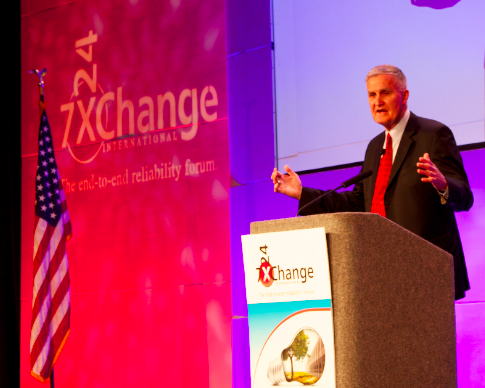
General Hugh Shelton gave the keynote at the Fall 7x24 Exchange 2011 conference.

NewImage

Attendees all have a copy of his book.

NewImage

The presentation had three main points - Leaders, People we lead, and Teamwork.

I am not taking detailed notes as my session on the "Hunt for Talent" is right after and is a good setup to discuss the challenge to find great people for the data center.

Redhat has notes that are good to read on what Hugh Shelton presents.

Leadership

A webcast listener asked what capabilities of self-governing groups are most important to leverage when it comes to leadership. "From a leadership standpoint, I start with the basics in any organization," Shelton said. "The leader is a person of great integrity, personal integrity, professional ethics, and you've got to make sure your organization is pulling together." A leader should provide vision for the group along with the teamwork to get it there. The leader should also be the one maintaining the group's transparency.

As an example, Shelton offered when Donald Rumsfeld decided to bypass the Joint Chiefs and run the Iraq operation, he lost the equivalent of 200 years of experience in the Tank that could have prevented a lot of mistakes. It's important to take constructive criticism and to learn from everyone in the group.

While on the board of Anheuser Busch, Shelton would walk the theme parks and find everywhere--including Clydesdale stables--were spotless. Augie Busch, as a leader, had inspired the cleanliness. "If you set standards, people are normally going to respond," Shelton said. "There have to be rewards and penalty. Then we give feedback, either formal or informal. I've seen it work in many organizations, in and out of the military. It all starts with the leader."

Tremendous leaders can be in Fortune 10 companies or in small communities. Shelton offered the following as the most important qualities for a leader anywhere:

  • Integrity
  • Professional ethics
  • Team builders

Here is what General Hugh Shelton presented on open source at JBoss World.

In this opening keynote for Red Hat Summit and JBoss World 2011, hear General Hugh Shelton (retired), Chairman of the Board of Red Hat, speak about the role of open source and his introduction to open source--and his involvement in the technology industry through the Red Hat board.

Gen Shelton gives a delightful talk, peppered with stories about the role of open source in the military, and in the world--sometimes in ways you might never expect.

"I'd like to join the army that is developing --the open source army, if you will--that is going to mark across a very fierce battlefield and fight and WIN because it's the right thing to do. That's Red Hat. That's open source."
-- General Hugh Shelton

System (Server) on a Chip company comes out of Stealth Mode - Deca Technologies

WSJ has a post on TJ Rogers of Cypress Semiconductor starting a new company that can integrate multiple chips on wafer.

Cypress Semiconductor CEO T.J. Rodgers is a well-known maverick in the chip business, who played a sizeable role in the solar-power market with a spinoff called SunPower. Now he’s putting his weight behind another startup that is announcing its plans Wednesday after laboring two years in secrecy.

It’s called Deca Technologies, and the goal is to transform the way chips are packaged for use in products such as smartphones and computers.

Cypress Semiconductor
T.J. Rodgers

Packaging is an unglamorous part of the semiconductor business, which typically takes place after the higher-profile operation of processing chips on silicon wafers. After wafers are sawn into individual components, the chips are typically flown off to different facilities where they are encapsulated in plastic and metal modules that can be attached to circuit boards for use in a system.


The articles focuses on the mobile market, but the same technology could be applied to servers on chip.