Canon S100 - Shoots RAW, GPS, great lens, and extremely mobile

Over 10 years ago I started shooting RAW Images and worked with others that GPS data would be useful.  I wrote about this story here.

Story of Adobe & Apple High-Value Digital Image Applications, Adobe's angst developing for the iPad, and how Microsoft missed this battle

I have a iPhone 4S and it goes with me everywhere, has GPS, but 8MP jpg with then small lens is not high enough quality.  Some of my friends and I want to build a product for the data center market and we need a great lens with high resolution.  So, I just got my Canon S100 with 12 megapixel, GPS, great lens and a bunch of other great features.

NewImage

Much better than my first RAW camera.

NewImage

And, my other RAW camera a Canon 7D.

NewImage

Map of Portland Startups, Tech Wizards of the Silicon Forest

Willamette Week has an article on the Portland startup companies and their CEOs.  I was born, raised and worked in Silicon Valley, but moved to Seattle to see what was different going on at a company called Microsoft.  Portland is a 3hr train ride away and I have been taking trips to Portland to chat with the companies who have some interesting software for data centers.

What kind of companies?  Look at this map prepared by one of the companies.

This image is taken from an interactive map of Portland software startups, created on Thetus Corp.'s Savanna multidimensional analysis software.
Credits: Courtesy of Thetus Corp.

PuppetLabs is one of the better known companies.

Credits: vivianjohnson.com


The Success Story

Name: Luke Kanies

Age: 35

Title: CEO, Puppet Labs

Venture capital funding: $7.25 million

What colleagues say: “[Puppet Labs is] in a leadership position. I don’t know that they’ve figured out how to grow that as a business.”

“He’s a Reedie. He’s totally a Reedie.”


Puppet Labs is the kind of company open-source developers have dreamed of: a startup that lures investor dollars while giving away the guts of its software for anyone to use and improve.

Thetus I visit regularly.


Credits: vivianjohnson.com


The State Secret

Name: Danielle Forsyth

Age: 51

Title: CEO, Thetus Corporation

Venture capital funding: $4.6 million

What colleagues say: “She’s a dork, like all great CEOs are dorks. And she is just killing it. Knocking it out of the park.”


Danielle Forsyth likes to say that Thetus Corporation makes Internet software for “people who don’t know what they don’t know.”

That Rumsfeldian phrase is fitting: Few people in Portland have any idea that a woman CEO—a rare sight on the tech landscape—is helming one of the city’s fastest-growing software startups, a company that’s been profitable for five years mostly thanks to federal government contracts.

Thetus has intentionally maintained a low profile locally. “We don’t have clients here,” Forsyth says, “and we’re really focused on growth.”

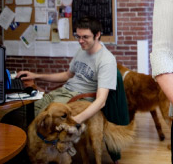
Both of these companies have dogs at work policies.
NewImage

NewImage

RNA one of the Portland startups I visited got bought by Dell.

Dell snaps up RNA Networks

A veritable cluster for PowerEdgies

Dell has quietly acquired Portland, Oregon-based RNA Networks, one of a handful of innovative startups that have been launched in the past couple of years to glue multiple x64-based servers together and allow them to look like a single, monster server to specific workloads.


Bechtolsheim talks data centers, Cloud/AWS, and Open Compute

Andy Bechtolstheim presented at GigaOm and discussed a bunch of cool topics for the data center crowd.  I am going to cheat and refer to Barb Darrow's notes as I was sitting next to her during the presentation and why type when I can copy the good stuff. :-)  I saw Andy a few weeks ago in NYC at the Open Compute and was curious what he would say at GigaOm Roadmap.

Bechtolsheim: AWS, open source rewrite rules for startups

Arista's Andy Bechtolsheim at GigaOM RoadMap 2011Today’s tech entrepreneurs would be out of their minds to build out their own data centers rather than renting capacity from Amazon or another low-cost provider.

That wasn’t a direct quote, but it’s pretty much the takeaway from Andy Bechtolsheim, the co-founder of Arista Networks(and also of Sun


Andy made the point people would be nuts to build their own data centers.

A company might build out its own infrastructure only if it’s raised a lot of venture capital, he said. But it needs to be a lot. And even then, maybe AWS is a better way. “Netflix  … uses Amazon for infrastructure. Here’s the leading, largest company in a field deciding it’s cheaper and more efficient to use a competitor for infrastructure rather than building its own.”

Andy mentioned the Open Compute Project.

Bechtolsheim is also on the board of the new Open Compute Foundation, formed by Facebook to propagate specs for standard, energy-efficient data center infrastructure. OCF hopes to bring open-source innovation that so improved software tools into the hardware realm.

For those brave souls wanting to build data centers, the OCF blueprint could help. But, Bechtolsheim said, that’s for truly big companies that need to do huge webscale computing, not for startups.

Bottom Line.

For nearly every entrepreneur weighing a tech startup, it’s better to rent than to buy or build.

The full presentation is here.

Watch live streaming video from gigaomroadmap at livestream.com

Roundtable Discussion - Cloud Delivery Strategies for Digital Services

You can register for a webinar on Nov 16 10-11a PT, Cloud Delivery Strategies for Digital Services - games, video, audio, and ads.


Cloud Delivery Strategies for Media Services


Providers of media applications and web services often launch via public cloud, only to discover they want more control as their products scale. This analyst roundtable will discuss the pros and cons and how-tos of using public, private and hybrid cloud solutions for media delivery. It examines the tradeoffs among performance, cost, scalability and control in cloud-based strategies for delivering content to customers on a global scale.

What You Will Learn:

  • How to view data centers as “information factories”
  • Determining which media services work best on what type of cloud
  • Managing traffic aggregation and CDN distribution
  • Controlling bandwidth costs while delivering scalable performance
  • Managing and migrating across public, private and hybrid clouds

Who Should Attend

  • CIOs, CTOs at media and content companies
  • Cloud platform executives and managers
  • Media company asset managers and business planners
  • Content distribution network executives

I am interested in this topic and have join the panel.

Moderator

Research Director, GigaOM Pro

Panelists

Infrastructure Curator, GigaOM Network
GigaOM Pro Analyst, Founder Greenm3.com
GM Content & Digital Media, Equinix


King of Human Error influences Checklist Manifesto

Vanity Fair has an article by Michael Lewis on Daniel Kahneman's Thinking Fast and Slow book.

LETTER FROM BERKELEY
December 2011

The King of Human Error

Billy Beane’s sports-management revolution, chronicled by the author inMoneyball, was made possible by Israeli psychologists Daniel Kahneman and Amos Tversky. At 77, with his own new book, Thinking, Fast and Slow, the Nobel Prize-winning Kahneman reveals the built-in kinks in human reasoning—and he’s Exhibit A.

Related: “The Quiz Daniel Kahneman Wants You to Fail.”

THINKING MAN Daniel Kahneman outside his Berkeley, California, home. “He [is] more alert and alive than most 20-year-olds,” writes Lewis.

We’re obviously all at the mercy of forces we only dimly perceive and events over which we have no control, but it’s still unsettling to discover that there are people out there—human beings of whose existence you are totally oblivious—who have effectively toyed with your life.

One of the data center executives turned me on to the Checklist Manifesto by Atul Gawande, and guess what.  Atul was influenced by the same King of Human Error.

When you wander into the work of Kahneman and Tversky far enough, you come to find their fingerprints in places you never imagined even existed. It’s alive in the work of the psychologist Philip Tetlock, who famously studied the predictions of putative political experts and found they were less accurate than predictions made by simple algorithms. It’s present in the writing of Atul Gawande (Better, The Checklist Manifesto), who has shown the dangers of doctors who place too much faith in their intuition.

One of the patterns that is interesting to investigate is where the judgement errors are made in the data center.

Why is this important for a green data center?  Because there are judgement errors all over the place.