Connecting with Great People at GigaOm Events, example CEO of Moprise David D'Souza

It has been a busy year, and I have cut tried to cut down on the number of data center conferences.  I am sure many of you are tired of seeing the presentations repeated, the same vendors slightly modify their pitches with little innovation, and you do get to run into people you know, but it is the same people too many times with too few end users.

This year I started to going GigaOm events, and went to Structure, Mobilize, RoadMap and Net:work.

NewImage
NewImage

NewImage

NewImage

The same presentations are not repeated, vendors are rotated through with quick 5 minutes to discuss their company (3 -5 during the day), and many of these companies are start-ups.  Yet, their will be CEOs, CTOs, and other executives presenting.

One of the pleasant surprises at GigaOm events are the people I have run into.  One of the people who I run into all the time is CEO of Moprise of David D’Souza.  I wrote a post about Moprise.

Turns out one of Mobile entrepreneurs I follow was at Mobilize and we hadn’t chatted for a year or so.  And guess what, his app iscalled the “FlipBoard for the Enterprise.”

Moprise Is Launching A

“Flipboard For The Enterprise”

posted on September 16th, 2011
coaxion-ipad2

Moprise is launching a new iPad application it’s calling a “Flipboard for the Enterprise.” The app is a tablet-optimized version of the company’s currently available Coaxion iPhone application. The Flipboard analogy isn’t quite right, however. Flipboard is about reading news and articles, browsing photos and viewing updates from your social networks in a magazine-like format. Coaxion and Flipboard are only similar in that they both have easy-to-browse, touchable, swipe-friendly user interfaces. But Coaxion’s content is corporate documents, not news or tweets.

Actually, I have know David D’Souza for way too long, back when we worked on his work on Win3.1, Win95, and IE.

Public Company; 10,001+ employees; MSFT; Computer Software industry

May 1995 – June 1998 (3 years 2 months)

Software engineer & lead on Internet Explorer 4.x and 5.x focused on performance, shell integration, Active Desktop & Channels, and “push content” web delivery systems. This work was integrated into Windows 98, Windows ME, and Windows 2000. [Dates approximate]

Public Company; 10,001+ employees; MSFT; Computer Software industry

September 1992 – April 1995 (2 years 8 months)

Performance architect & lead for Windows 95. Ensured Windows 95 and it feature set (32bit api, protected mode kernel & drivers, OLE32, new UI, Plug & Play etc) ran well on 4MB systems and scaled appropriately up to 16MB systems. Ensured the right scenarios were measured, the right tools were created, broader teams understood and lived performance, and targeted appropriate changes in the code base to meet goals. This position required multidisciplinary management and team creation across dev, test, and PM.

Public Company; 10,001+ employees; MSFT; Computer Software industry

July 1990 – August 1992 (2 years 2 months)

Lead software engineering on Windows 3.1 responsible for user interface development, UI performance, and application compatibility. Key work included rationalizing internal versus external APIs, removing heap limitations for window objects, adding parameter validation to increase reliability and prevent corruption of OS state, and developing the application compatibility infrastructure within Windows. This work served to keep Windows the market leader despite heavy competition from IBM OS/2 Warp.

Many of our conversations are regarding entrepreneurial opportunities, enterprise, and mobile.  David was commenting on how many Macs he sees at GigaOm.  I snuck this shot in of the audience at one of the events.

NewImage

Now this picture is not the media table which is of course Mac dominated, but the audience watching a presentation at RoadMap.  Can you spot the Windows Laptop?

Two ex-Microsoft guys hanging out where the Mac is the dominant computer, start-ups looking for how to grow, and the established players looking for innovation it makes so much sense to attend the GigaOm events if you are looking for thought leadership people. I attend often because I am a GigaOm Pro Analyst so I have lots of other conversations with GigaOm Pro, but I still attend mainly as a blogger.

I am an ex-Apple employee (1985-1992) so it is reasonable for me to be a Mac User again.  It turns out David D’Souza has an Apple developer background before his Microsoft days.

David has worked on productivity software since he had an Apple ][+ in junior high.

David received a BSc from MIT, experience with Unix, a startup on Route 128, and heavy use of an Apple Macintosh before becoming a PC and joining the Microsoft Windows team out of college.

…I purchased an Apple iPhone 3GS. That’s when I left to cofound Moprise and build scalable, mobile productivity software.

After discussion last week with David I suggested he get know the GigaOm Pro staff to discuss a research project, so I introduced him to a few of the executives. One of the people I mentioned David’s background to is Skip Hilton, VP and GM of GigaOm Pro.  What was quite surprising was Skip knew the complete employment history of David. Why? GigaOm Pro was studying some of its loyal users, and David was an example of someone who attends events often, subscribes to GIgaOm Pro, and is a thought leader.

David and I had coffee before  running into him at GigaOm events, but having conversations at the event, discussing presentations, and discussing new ideas works well.  I think it works before the GigaOm events setup interesting discussions.  For something different you may want to consider attending a GigaOm event.  I still go to a few data center events, and go to GigaOm for more innovative thinking.


Shared Office Space suppliers - Loosecubes and Liquidspace #workconf

Many of you travel and meet at the local Starbucks, but when you go to a city and need to spend days working and meeting the hotel and starbucks just doesn't work for many scenarios.

You have probably heard of AirBnB where you can rent a room.

NewImage

The same idea can be applied to office space that can be rented.  Two options that I learned about at GigaOm Net:Work are Loosecubes and Liquidspace.

NewImage

NewImage

As you look at your data center projects and need an office in a city, these are two options.

It looks like Loosecubes has a bigger market (below are 4 of 10 properties) than Liquidspace (1).

There may be other options, but these are a good place to start thinking about renting a short term office space as you travel around in the US for data center projects.

NewImage

LiquidSpaces Nearby Seattle, WA, USA

OfficeXpats
403 Madison Ave N Suite 240, Bainbridge island, WA 98110, US
View Calendar

House tour of finished home

I can mix work with my home life which has its plusses and some inconveniences as work meetings can spill into my home.  I was recently chatting with some data center friends and they wanted to see the latest pictures of our house now that is done and has more furnishings.  They had both seen the house during construction.

Here are a bunch which saves me the time of arranging more work meetings at home. :-)

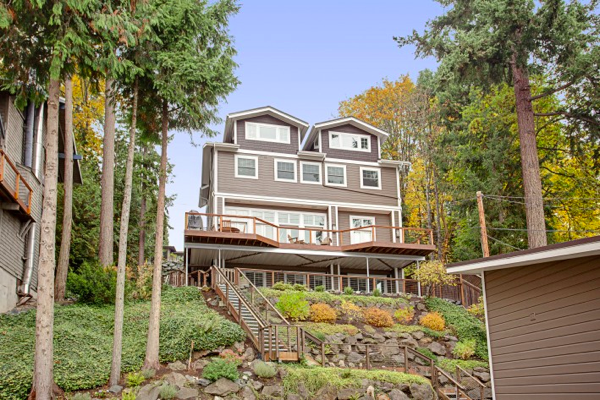
Here is the front of the house.

NewImage

NewImage

NewImage

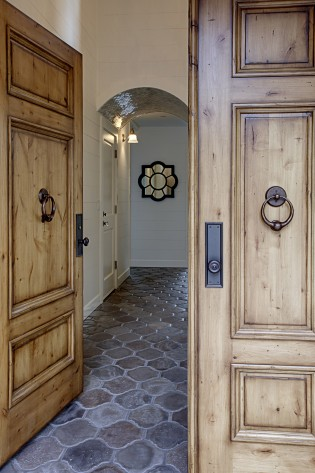
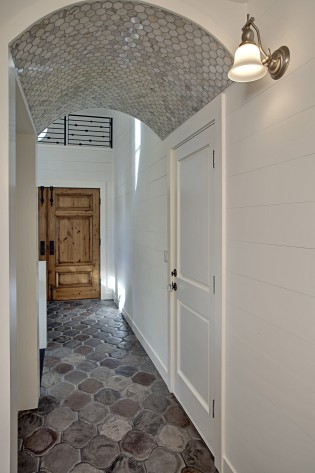
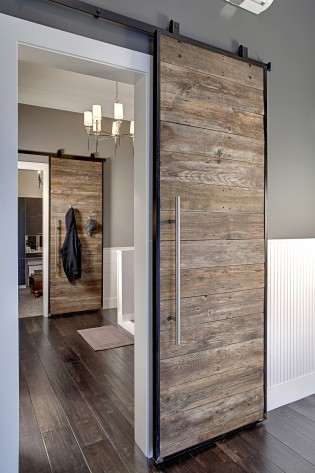
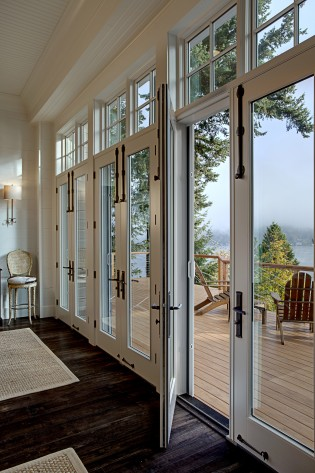
A view of the front door from inside the house.

NewImage

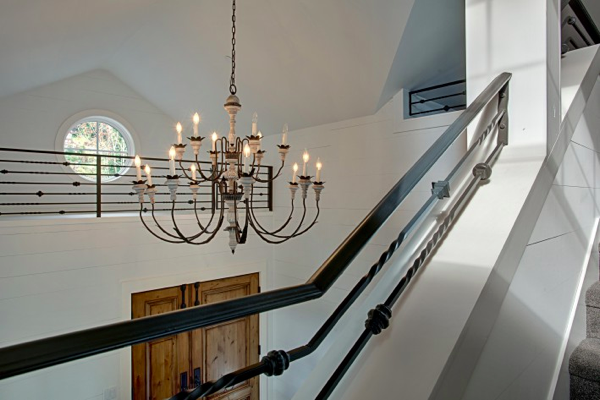
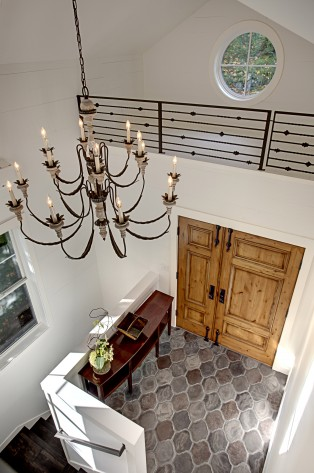
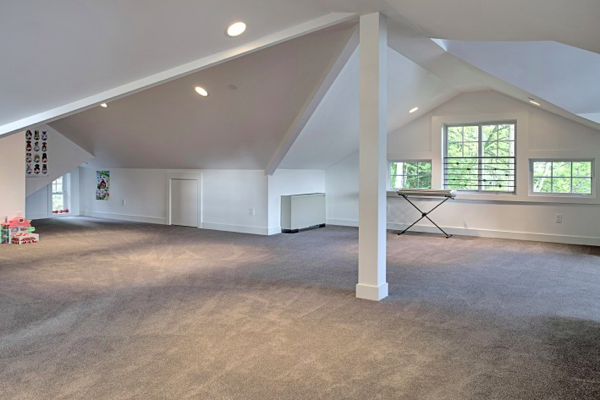
Going up the attic you can see the front door.

NewImage

NewImage

NewImage

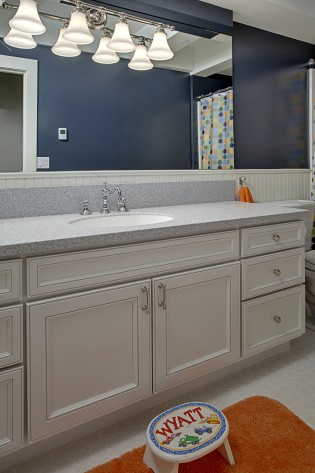
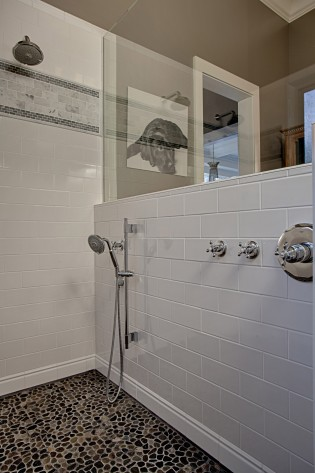
To give you a range of the house here are the bathrooms.

My son's.

NewImage

Daughter.

NewImage

Master Bathroom

NewImage

NewImage

NewImage

guest bathroom.

NewImage

Coming down the stairs to the kitchen.

NewImage

And of course my pizza oven. 2,500 lbs, 110,000 btu woodstone pizza oven. Which is part of the entertaining of work and friends, cooking a great meal.

NewImage

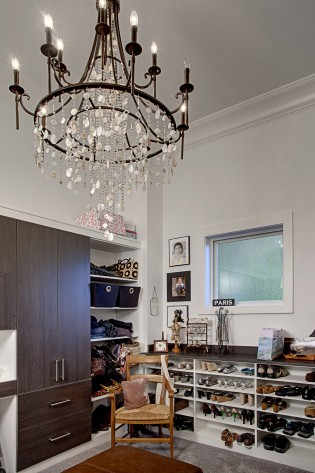
My wife got her killer closet. below is a 1/4 view of the 12x12x12 closet.

NewImage

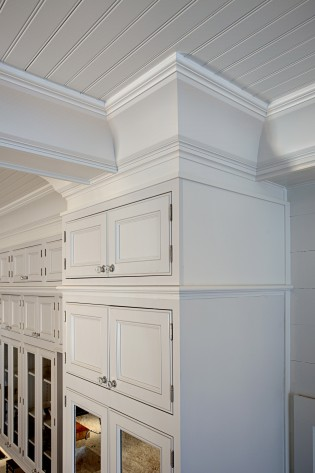
Here is a picture that shows the height of the 12 1/2 ft ceilings.

NewImage

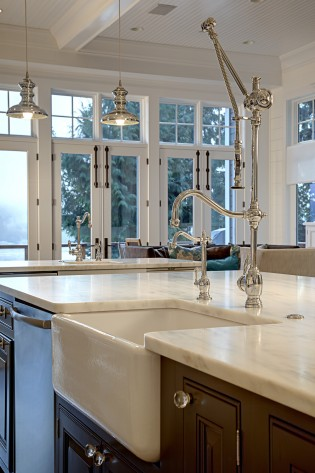
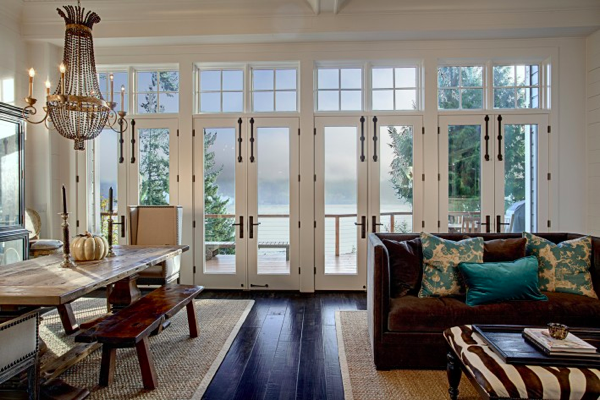
The kitchen is wide open to the lake view.

NewImage

NewImage

NewImage

NewImage

Here is the backside of the house.  We have had numerous friends warn us that the kids will sneak out their windows as they get older. I have that problem taken care of as I have a security camera night vision system with a PVR 2 week recording capacity on an APC battery back-up, covering the front and back of the house.  Video recording is a cool way to document things, and easy to set up streams.  We've also put one of the cameras in the attic to document who hit who when the kids are playing. "do you really want dad to go through the video to see what happened upstairs?"

NewImage

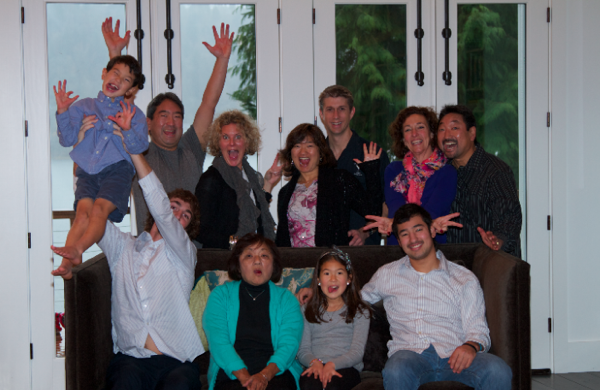
And, here is our first thanksgiving family dinner.  Christmas is coming up and we'll have 25 - 30 people for a Christmas eve party.

NewImage

All these pictures except the family one are from building contractor, Lavallee Construction.

WE’RE COMMITTED TO QUALITY CUSTOM CONSTRUCTION

Lavallee Construction is an independently owned, full-service home builder providing general contracting and design/build services for residential clients throughout Greater Seattle. After more than 21 years in business, we have developed a reputation for intelligent design, creative problem solving and an uncompromising commitment to professionalism and integrity that has made us one of the area's most respected contractors. Whether we are constructing your new home, adding an addition or renovating parts of your existing structure, our mission is to work in partnership with you to bring your residential dreams to life.

29 days, 11K servers of Google Cluster Server data shared with Researchers

Google had a crazy idea a year ago, let's share some of our cluster data to the research community.  In Jan 2010, Google shared 7 hrs of data.

Google Cluster Data


Google faces a large number of technical challenges in the evolution of its applications and infrastructure. In particular, as we increase the size of our compute clusters and scale the work that they process, many issues arise in how to schedule the diversity of work that runs on Google systems.

We have distilled these challenges into the following research topics that we feel are interesting to the academic community and important to Google:
  • Workload characterizations: How can we characterize Google workloads in a way that readily generates synthetic work that is representative of production workloads so that we can run stand alone benchmarks?
  • Predictive models of workload characteristics: What is normal and what is abnormal workload? Are there "signals" that can indicate problems in a time-frame that is possible for automated and/or manual responses?
  • New algorithms for machine assignment: How can we assign tasks to machines so that we make best use of machine resources, avoid excess resource contention on machines, and manage power efficiently?
  • Scalable management of cell work: How should we design the future cell management system to efficiently visualize work in cells, to aid in problem determination, and to provide automation of management tasks?

Now Google has shared 29 days from 11,000 Servers in a Google Cluster.

More Google Cluster Data


Google has a strong interest in promoting high quality systems research, and we believe that providing information about real-life workloads to the academic community can help.

In support of this we published a small (7-hour) sample of resource-usage information from a Google production cluster in 2010 (research blog on Google Cluster Data). Approximately a dozen researchers at UC Berkeley, CMU, Brown, NCSU, and elsewhere have made use of it.

Recently, we released a larger dataset. It covers a longer period of time (29 days) for a larger cell (about 11k machines) and includes significantly more information, including:

  • the original resource requests, to permit scheduling experiments
  • request constraints and machine attriibutes
  • machine availability and failure events
  • some of the reasons for task exits
  • (obfuscated) job and job-submitter names, to help identify repeated or related jobs
  • more types of usage information
  • CPI (cycles per instruction) and memory traffic for some of the machines

Besides the feedback from the the research community, this is a great way for Google to find future hires.