Microsoft joins SSD movement with an Azure cloud solution

GigaOm's Barb Darrow reports on a new SSD powered Windows Azure service.

New Windows Azure goes all-SSD to one-up Amazon in the cloud

Just when you thought the cloud computing wars couldn’t get more interesting, they do. On Wednesday, Microsoft hopes to prove Windows Azure a worthy adversary to Amazon with new solid-state storage cloud, dramatically revamped REST API, and a console to meld management of on-premises and Azure-based applications on one screen.

Two years ago I predicted SSD in AWS by summer of 2010. I was a bit ahead of the times.  It took longer than expected with AWS launching DynamoDB.  With Microsoft joining the SSD wave.  You can look for more SSD options in the cloud market.
Microsoft partners with Quanta for an integrated server, storage, network cloud solution

Microsoft has a press release for ODM Quanta delivering a cloud solution.

As customers seek more immersive experiences across a range of devices, cloud computing becomes increasingly important. To address this need along with the changing economics of IT, Microsoft has worked with hardware partners to develop the Microsoft Private Cloud Fast Track program. Together with Microsoft, Quanta unveiled their next generation Fast Track hardware that includes integrated server, storage and networking equipment. This solution dramatically accelerates a business’ time to value, while decreasing cost, complexity and risk. With Quanta and so many other device manufacturers in Taiwan, it’s a center of gravity for hardware and device innovation. Microsoft discussed some of the latest design innovations including touch, sensors, glass, hinges and memory that have a huge impact on PC computing experiences.

An unintended consequence of China's censorship, a game of who can beat the system

NYTimes has a post on the 23rd anniversary of Tiananmen Crackdown has possible effects in the Shanghai Stock Market's decline.

Anniversary of Tiananmen Crackdown Echoes Through Shanghai Market

HONG KONG — The Shanghai Stock Exchange produced an unlikely, almost ghostly result on the 23rd anniversary of the military crackdown in Tiananmen Square, an odd echo of a tragedy thatChina’s leaders have tried desperately to erase from their country’s consciousness.

The index fell 64.89 points on Monday, a figure that looks like June 4, 1989. In yet another unusual development, the index opened on Monday at 2346.98 — a figure that looks like the date of the crackdown written backward, followed by the 23rd anniversary.

Hopefully, most of you realize how silly this is to think that there is a meaning in the numbers 89/6/4 = 89 June 4.  We have all read silly things like this being read into things.  Which reminds me of my Cargo Cult Science post.

What is real though is the activity of China's censors.

Chinese censors, showing characteristic heavy-handedness, especially on anniversaries of Tiananmen Square, began blocking searches for “stock market,” “Shanghai stock” and “Shanghai stock market” and started deleting large numbers of microblog postings about the numerical fluke.

This got me thinking what happens when China's censors delete and block content.

The Chinese have great pride in figuring out how to be smarter than the next guy,  including countries, races, as well as individuals. What comes to mind is with tthe billion plus people in China, there must be thousands and thousands of people who are trying to figure out how to be smarter than the censors. Why? It is like a game to show how smart you are.  

A Lesson from why Art is Valuable, could explain human decisions on value

It is interesting watching the really smart people make their decisions on data center design and specific pieces of equipment they choose.

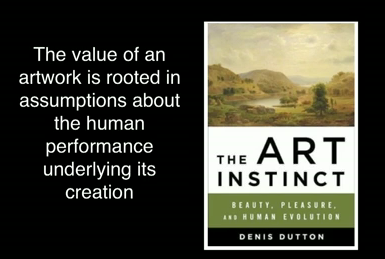
I was watching a TED video of Paul Bloom discuss the origins of pleasure.  And, he had this slide up.

NewImage

This statement can be used to explain the data center experts perception of value.  Here is the above quote modified.

The value of a data center power/mechanical equipment is rooted in assumptions about the human performance underlying its creation. 

They have an assumption of the creation of the equipment built by humans.  They know the equipment design, and many times the specific engineers that were on the design team.  They know the past performance of the equipment.  The manufacturing and sourcing of material.  Even what service operations are like for the equipment.

The #1 thing that will cause a drop in value of the equipment is if assumptions are no longer valid.  Parts have been changed due to supply chain issues, quality has dropped due to manufacturing staff changes, designs are modified for cost reductions.  As most have learned, just because the equipment was good for you 2 years ago, it doesn't mean the latest versions are the same.

You can watch this complete video to get the full story.  The part I mention is at 11:05.

A Seth Godin post can on collision of code and humans can be applied to Data Centers

Seth Godin has a post on the collision of code and humans.

Thriving in a wet environment

If you've ever fixed any kind of machinery, you know that a device that's exposed to the elements is incredibly difficult to maintain. A washing machine or the underside of a car gets grungy, fast.

On the other hand, the dryest, cleanest environment of all is the digital one. Code stays code. If it works today, it's probably going to work tomorrow.

A Challenge for data centers comes to mind with his next paragraph.

Whatever we build gets misunderstood, corroded and chronic, and it happens quickly and in unpredictable ways. That's one reason why the web is so fascinating--it's a collision between the analytic world of code and wet world of people.