Dell shrinks the Container Data Center to 45kW, targeting the Military Market

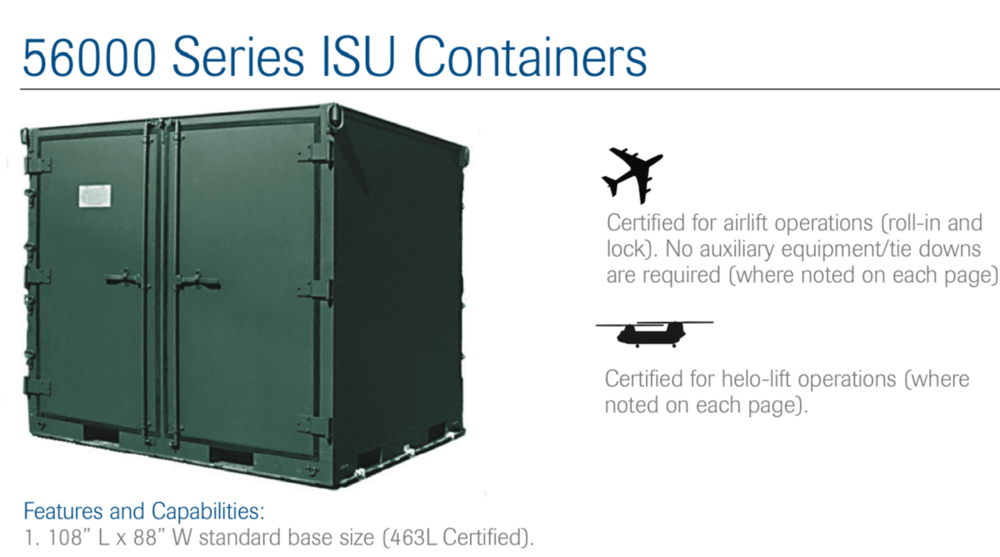
Ever since the 40' container wave started I have made the point that most have not gone through the exercise on what is the right size for a container.  Dell has announced the MDC - Mobile data center - 45 kW of IT capacity.

NewImage

The Dell press release is here.

Deployable to any location, Dell’s Tactical Mobile Data Center can expand customers’ current data center, used as a back-up or recovery site to provide disaster recovery services or create new data centers in remote locations. The system can operate under a wide range of temperatures and conditions allowing for powerful operations in many environments. 

“Many of our military and government customers are forced to quickly deploy to remote environments, like combat outposts in Afghanistan, or even in more developed communities following a natural disaster,” said Joe Ayers, vice president and general manager, Dell Federal. “In today’s operational environment in order to have access to the tools and information most organizations need to accomplish their mission, they must also have a robust IT infrastructure, and we’ve designed this solution specifically to meet the needs of these very special customers.”

It fits in military airframes and can be forklifted into place. Dimensions look to be 108"L x 88"W x 96"H an ISU-96 size used by the military.

NewImage

NewImage

NewImage

I wonder if Dell will offer the color options that AAR mobile systems does.

NewImage

Oops Natural Gas's CO2 footprint could be higher than Coal

Forbes has an article that accounts for Natural Gas through its life cycle, not just in consumption.

Traditionally, we use emission numbers just for the power plant itself, that is, how much CO2 does a coal plant emit in producing a kWhr of electricity versus a gas plant versus a wind turbine, etc. These numbers have some emissions from other parts of the plant life-cycle such as construction and mining, as these dominate the emissions for energy sources like nuclear, hydro and wind which emit no GHG during operation.

Until now, the average equivalent grams of CO2emitted per kWhr produced has been calculated as 975 gCO2/kWhr from coal; 600 gCO2/kWhr from natural gas; 90 gCO2/kWhr from hydro; 55 gCO2/kWhr from solar; 15 gCO2/kWhr from wind, and 15 gCO2/kWhr from nuclear (Parliamentary Office of Science and TechnologyGHG from Power Plants).

One calculation that has stirred debate is that the natural gas number is as high as 1200 gCO2/kWhr.

However, new studies by Robert Howarth and associates at Cornell University (GHG Footprint of Natural GasNational Climate Assessment; thanks to atomikrabbit for pointing me in this direction) provide emissions data from the entire natural gas life-cycle. Their results bump this number for gas from 600 gCO2/kWhr to over 1,200 gCO2/kWhr, making natural gas the largest emitter of GHGs in electricity generation. On the other hand, Howarth and company have been challenged by others that say their numbers are too high (BusinessWeek), particularly Lawrence M. Cathles, also of Cornell. Cathles contends that gas is still better than coal with respect to global warming. Even if Cathles is correct and 600 gCO2/kWhr is still the number for gas, it’s not that much better than coal compared to ther energy sources like hydro and nuclear.

For those of you have just switched to a power generation mix that has more natural gas than coal, you may be stuck again.  And, your carbon footprint may be much bigger than you thought.

TSA Pre is great, my experience through SEA and PDX

I fly much more than I would like to.  And, many of you fly even more.  As we all experience Security can be the biggest pain.

TSA Pre is a new program to help the frequent travelers like us.

TSA Pre™ is a pre-screening initiative that makes risk assessments on passengers who voluntarily participate prior to their arrival at the airport checkpoint.

TSA Pre™ includes U.S. citizens who are members of existing Customs and Border Protection (CBP) Trusted Traveler programs including Global Entry, NEXUS, and SENTRI programs as well as eligible airline frequent flyers.

If TSA determines a passenger is eligible for expedited screening, information is embedded in the barcode of the passenger’s boarding pass. TSA reads the barcode at designated checkpoints and the passenger may be referred to a lane where they will undergo expedited screening, which could include no longer removing the following items:

  • Shoes
  • 3-1-1 compliant bag from carry-on
  • Laptop from bag
  • Light outerwear/jacket
  • Belt

Pre TSA works for me in SEA and just yesterday I went through PDX.

Q. Where is TSA Pre™ available?
A. Certain frequent flyers from Delta and American Airlines and certain members of CBP's Trusted Traveler programs, including Global Entry, SENTRI, and NEXUS, who are U.S. citizens, are eligible to participate in this program, which could qualify them for expedited screening at select checkpoints with the following airlines:

Alaska Airlines – Portland International Airport and Seattle-Tacoma International Airport

I went through Security this week in under five minutes at both SEA and PDX.  Woot!

I have one more trip to PDX in two weeks and then no more travel until Sept.  Time to take a break from all this data center travel.

Apple goes back on EPEAT position, sends a wake-up call to IEEE 1680.1

Apple has gone back on its EPEAT position and admits it made a mistake.

A letter from Bob Mansfield, Senior Vice President of Hardware Engineering

We’ve recently heard from many loyal Apple customers who were disappointed to learn that we had removed our products from the EPEAT rating system. I recognize that this was a mistake. Starting today, all eligible Apple products are back on EPEAT.

There are over 200 articles on this topic.

Apple returns to EPEAT environmental ratings list

Fox News-1 hour ago
Apple said Friday that it is putting its products back on an environmental ratings registry, saying it made a mistake in removing them from the ...
BlogApple back on EPEAT ZDNet (blog)

With the vast majority missing the point.  Apple wants IEEE 1680.1 to be upgraded.

We think the IEEE 1680.1 standard could be a much stronger force for protecting the environment if it were upgraded to include advancements like these. This standard, on which the EPEAT rating system is based, is an important measuring stick for our industry and its products.

Our relationship with EPEAT has become stronger as a result of this experience, and we look forward to working with EPEAT as their rating system and the underlying IEEE 1680.1 standard evolve. Our team at Apple is dedicated to designing products that everyone can be proud to own and use.

The threat of Apple walking from EPEAT will most likely wake-up a bunch of people.  This whole thing was good PR for EPEAT and Apple.  I think this was a win for Apple.