Qualities of a tough management job, US Olympic Basketball Coach Mike Krzyzewski

The US Olympic Basketball team has just won Gold at the London Olympics.  Talk about a tough job being the Coach Mike Krzyzewski.

HBR has a post on the picking of the coach to bring the Gold in 2008 and 2012.

Picking the Man Who'd Lead Basketball's Dream Team to Gold

I first met Jerry Colangelo in 2007, the then newly minted chairman of Team USA basketball, on a steamy summer day around the pool deck of the Wynn Hotel in Las Vegas. After a string of embarrassing losses to countries including Argentina, Lithuania, and Puerto Rico(!) — Colangelo was hand-picked to stop the bleeding and bring the gold medal back home to the country that invented the sport. 

The product of a tough, close-knit family from Chicago's Hungry Hill suburb, Colangelo is a straight-talking pragmatist. Despite his low-profile, he is basketball royalty, known for delivering results. NBA commissioner David Stern chose Colangelo in 2005 to change the culture of the Team USA basketball organization, which meant creating a cohesive, winning team out of a group of egotistical, strong-willed, and free-wheeling players.

Part of why I enjoyed this post is it focused on the qualities of what people need to have to lead a talented team.

After some heated back and forth, a small handful of critical qualities emerged as priorities, including: integrity, passion, transparency, and empathy.

When I think of some of the great data center leaders they share these same qualities.  Does your management chain have these qualities?  If not, maybe it is time for a new coach to support the best in the players.

I asked Coach K how he felt when Colangelo offered him the job. "I wanted to jump through the phone I was so excited," he said. "Jerry and I started talking immediately about how to change the culture of this team. We weren't going to simply be another ad-hoc collection of All-Stars. We needed role players that could subsume their superstar egos. Jerry and I asked each player — including the name brand superstars like LeBron James, Dwayne Wade, and Carmelo Anthony — for a three-year commitment to the team, which was unprecedented.

China launches its Natural Gas Fracking, will they have enough water?

National Geographic has an article on China's fracking for natural gas.

Hills and water have shaped the story of Chongqing, in China's southwest. At the confluence of the Yangtze and Jialing rivers, the Sichuan Province city became China's first inland port open to foreign commerce in 1891. In the 1930s and '40s, Chongqing served as China's wartime capital, although the mountain ranges on all four sides provided less of a buffer than hoped against Japanese air raids.

Now a new chapter in Chongqing's history is being written, as hydraulic fracturing rigs assembled this summer in this undulating landscape to drill into one of China's first shale gas exploration sites.

Some get excited that natural gas replaces coal for power generation, but there is a huge impact on water supplies to support fracking.

Still, the water demand of fracking—requiring millions of gallons—presents a serious concern, says David Fridley, a staff scientist at the U.S. Department of Energy'sLawrence Berkeley lab in California. China's per capita water availability is only a quarter of the world average, according to the World Bank. And Sichuan, which produces 10 percent of China's grain, uses a great deal of its water resources for agriculture.

A view of how social media works in China

One of the interesting conversations I've been having lately is regarding China.  Back in 1992, I joined Microsoft from Apple to manage the Far East Fonts for Win3.1.  One of the issues was problem of using fonts made in Taiwan for Mainland China.  Now, it may seem obvious that getting the Beijing governments approval for a version of Windows with fonts from Taiwan would have problems.  This meant we needed a new font supplier that had Beijing's approval. This project is where I got a good dose of doing business in China.  It was 20 years ago, and somethings in China don't change.

TED has a presentation by Michael Anti - Behind the Great China Firewall.

Part of the presentation is how China has their equivalent's inside China.

NewImage

So today I want to upgrade it to 2.0 version. In China, we have 500 million Internet users.That's the biggest population of Netizens, Internet users, in the whole world. So even though China's is a totally censored Internet, but still, Chinese Internet society is really booming. How to make it? It's simple. You have Google, we have Baidu. You have Twitter, we have Weibo. You have Facebook, we have Renren. You have YouTube, we have Youku and Tudou. The Chinese government blocked every single international Web 2.0 service,and we Chinese copycat every one.

There is a purpose that these social networks provide for the central government.  A way to petition the central government regarding local issues.

NewImage

But also, Chinese social media isreally changing Chinese mindsets and Chinese life.For example, they give the voiceless peoplea channel to make your voice heard.We had a petition system. It's a remedy outside the judicial system,because the Chinese central government wants to keep amiss,the emperor is good. The old local officials are thugs.So that's why the petitioner, the victims, the peasants,want to take the train to Beijing to petition to the central government,they want the emperor to settle the problem.But when more and more people go to Beijing,they also cause the risk of a revolution.So they send them back in recent years.And even some of them were put into black jails.But now we have Weibo, so I call it the Weibo petition.People just use their cell phones to tweet.

So your sad stories, by some chance your storywill be picked up by reporters, professors or celebrities.One of them is Yao Chen,she is the most popular microblogger in China,who has about 21 million followers.They're almost like a national TV station.If you -- so a sad story will be picked up by her.So this Weibo social media, even in the censorship,still gave the Chinese a real chance for 300 million peopleevery day chatting together, talking together.It's like a big TED, right?But also, it is like the first time a public spherehappened in China.Chinese people start to learn how to negotiateand talk to people.

The story of Twitter vs. Sina Weibo is explained.

But you can't even expand more, no, because Chinese Sina Weibo, when it was foundedwas exactly one month after the official blocking of Twitter.com. That means from the very beginning, Weibo has already convinced the Chinese government, we will not become the stage for any kind of a threat to the regime. For example, anything you want to post, like "get together" or "meet up" or "walk," it is automatically recorded and data mined and reported to a poll for further political analyzing. Even if you want to have some gathering,before you go there, the police are already waiting for you. Why? Because they have the data. They have everything in their hands. So they can use the 1984 scenario data mining of the dissident. So the crackdown is very serious.

Tweets is different in china given the chinese language vs. English.  Michael says tweets are media.  You traditional media wake up.

NewImage

Why is Chinese social networking, even within the censorship, so booming? Part of the reason is Chinese languages. You know, Twitter and Twitter clones have a kind of a limitation of 140 characters. But in English it's 20 words or a sentence with a short link.Maybe in Germany, in German language, it may be just "Aha!"

(Laughter)

But in Chinese language, it's really about 140 characters, means a paragraph, a story. You can almost have all the journalistic elements there. For example, this is Hamlet, of Shakespeare. It's the same content. One, you can see exactly one Chinese tweet is equal to 3.5 English tweets. Chinese is always cheating, right? So because of this, the Chinese really regard this microblogging as a media, not only a headline to media.

There have been past efforts for local governments to run their own data centers.  To have their own source of data, but now it is much harder to build a data center without the central governments approval.

NewImage

But I want you to notice a very funny thingduring the process of the cat-and-mouse.The cat is the censorship, but Chinese is not only one cat,but also has local cats. Central cat and local cats.

(Laughter)

You know, the server is in the local cats' hands,so even that -- when the Netizens criticize the local government,the local government has not any access to the data in Beijing.Without bribing the central cats,he can do nothing, only apologize.

So these three years, in the past three years,social movements about microbloggingreally changed local government,became more and more transparent,because they can't access the data.The server is in Beijing.The story about the train crash,maybe the question is not about why 10 millioncriticisms in five days, but why the Chinese central governmentallowed the five days of freedom of speech online.It's never happened before.And so it's very simple, because even the top leaderswere fed up with this guy, this independent kingdom.So they want an excuse --public opinion is a very good excuse to punish him.

Towards the end Michael makes a good point how microblogging is old technology for a revolution of change.

But this technology is very new, but technically is very old. It was made famous by Chairman Mao, Mao Zedong, because he mobilized millions of Chinese people in the Cultural Revolution to destroy every local government. It's very simple, because Chinese central government doesn't need to even lead the public opinion. They just give them a target window to not censor people. Not censoring in China has become a political tool.

So that's the update about this game, cat-and-mouse. Social media changed Chinese mindset. More and more Chinese intend to embrace freedom of speech and human rights as their birthright, not some imported American privilege. But also, it gave the Chinese a national public sphere for people to, it's like a training of their citizenship, preparing for future democracy. But it didn't change the Chinese political system, and also the Chinese central government utilized this centralized server structure to strengthen its power to counter the local government and the different factions.

Facebook joins Google disclosing power and carbon footprint of data centers, are you next?

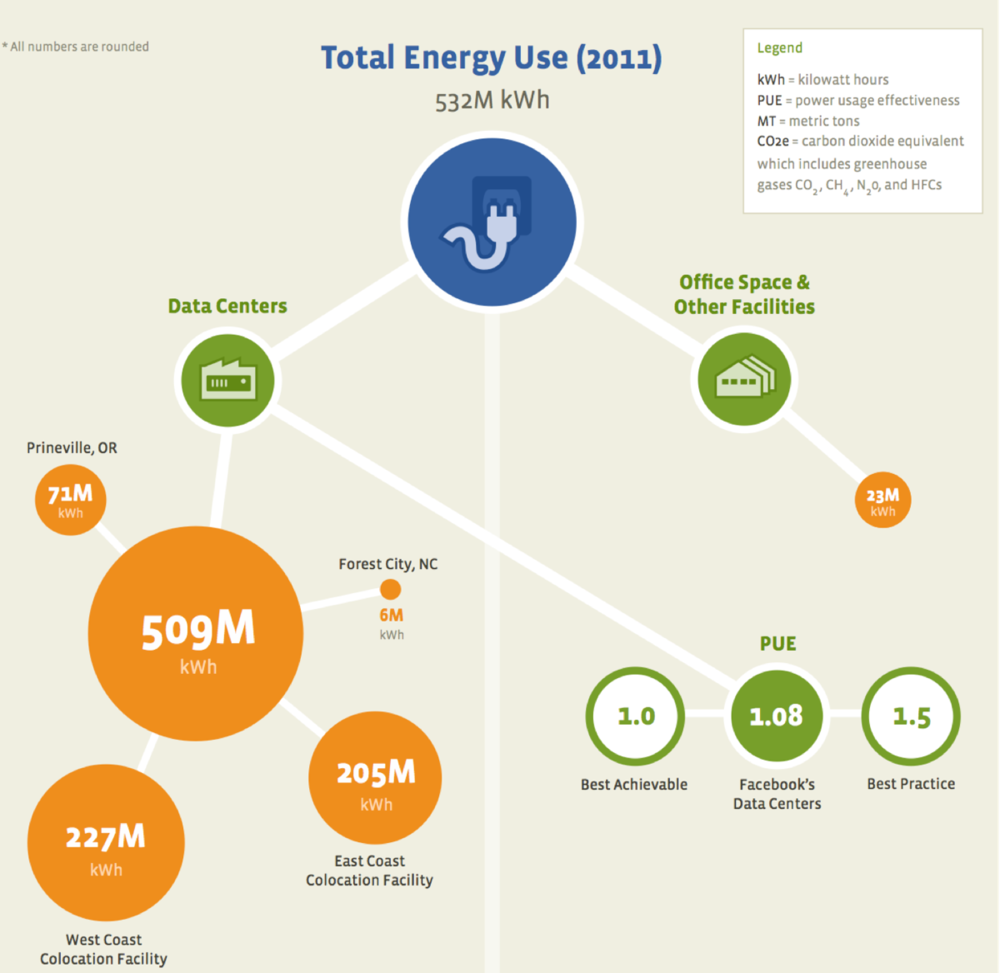
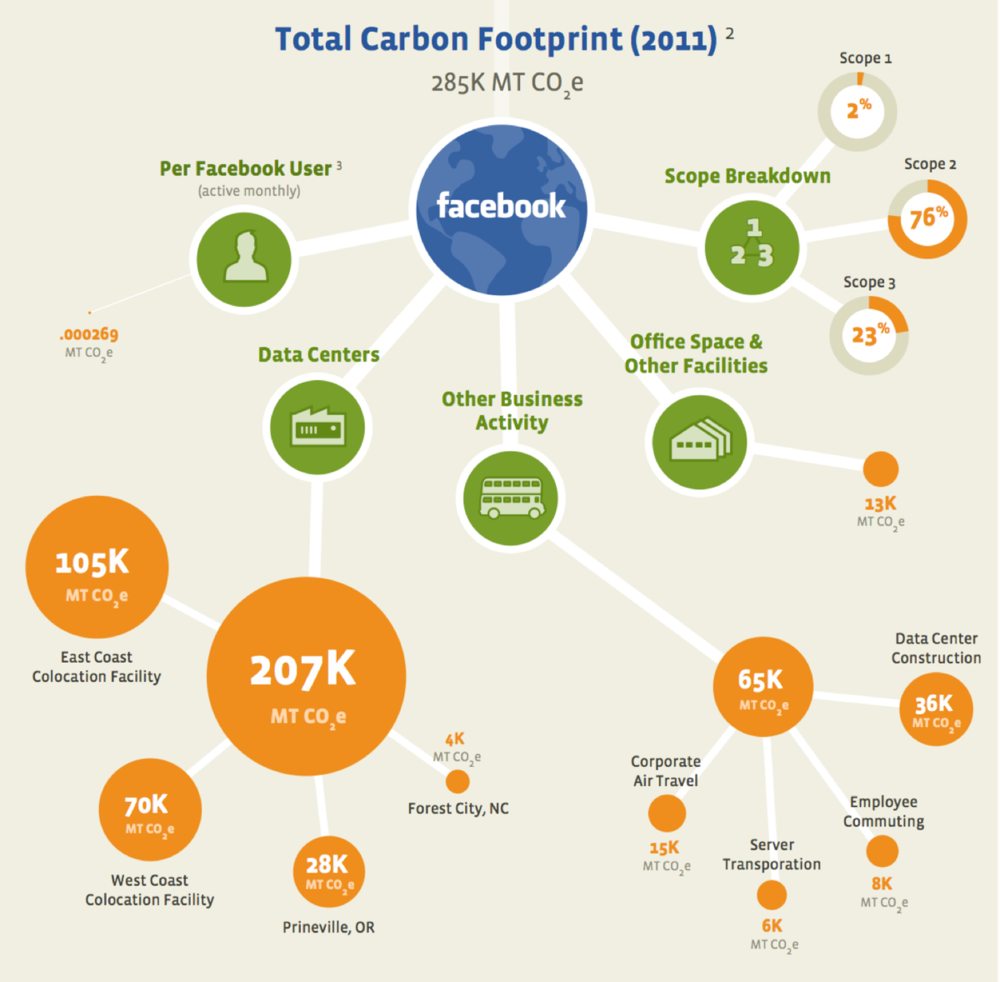
Facebook has published its 2011 corporate power consumption and carbon footprint. 

NewImage

NewImage

NewImage

The Guardian UK compared Google to Facebook.

The data, published on Wednesday, shows that despite the social networking's rising star, its carbon emissions are still a fraction of internet rival Google. Facebook's annual emissions were 285,000 metric tons of CO2 equivalent in 2011, compared with Google's 1.5m tons in 2010.

The vast majority of the emissions (72%) come from the company's data centres in the US. The annual footprint for each user that's active monthly is 269 grams, or around the equivalent footprint of a cup of coffee, the company calculated.

Greenpeace gave their approval to the disclosure.

Greenpeace welcomed the move's transparency and hailed it as an important benchmark. Gary Cook, Greenpeace International's senior IT analyst, said: "Facebook has committed to being fully renewably powered, and today's detailed disclosure and announcement of a clean energy target shows that the company means business and wants the world to follow its progress."

If you plan on having a green data center and not being a Greenpeace target you should follow Google and Facebook with an annual disclosure of your power consumption and carbon footprint.

Aug Skiing at Mount Hood, OR

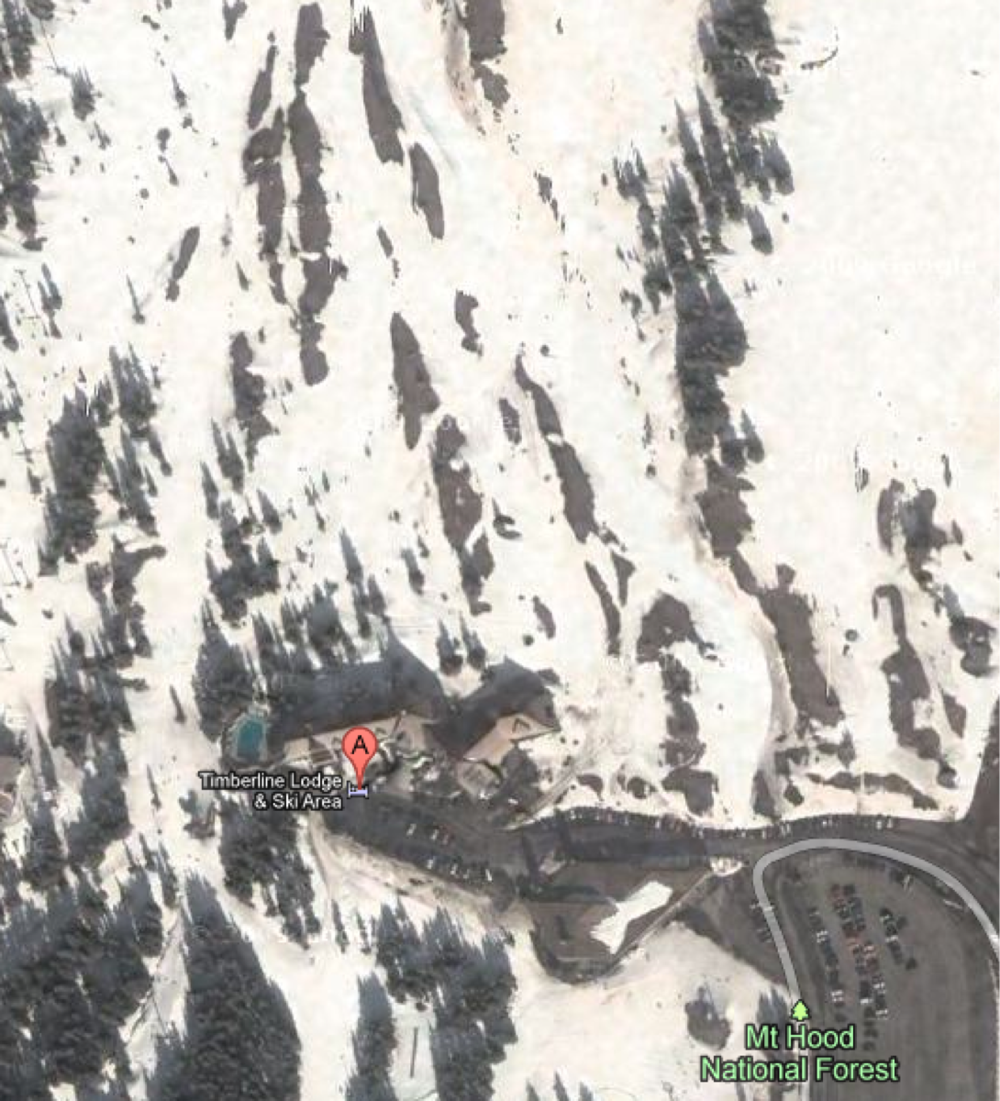
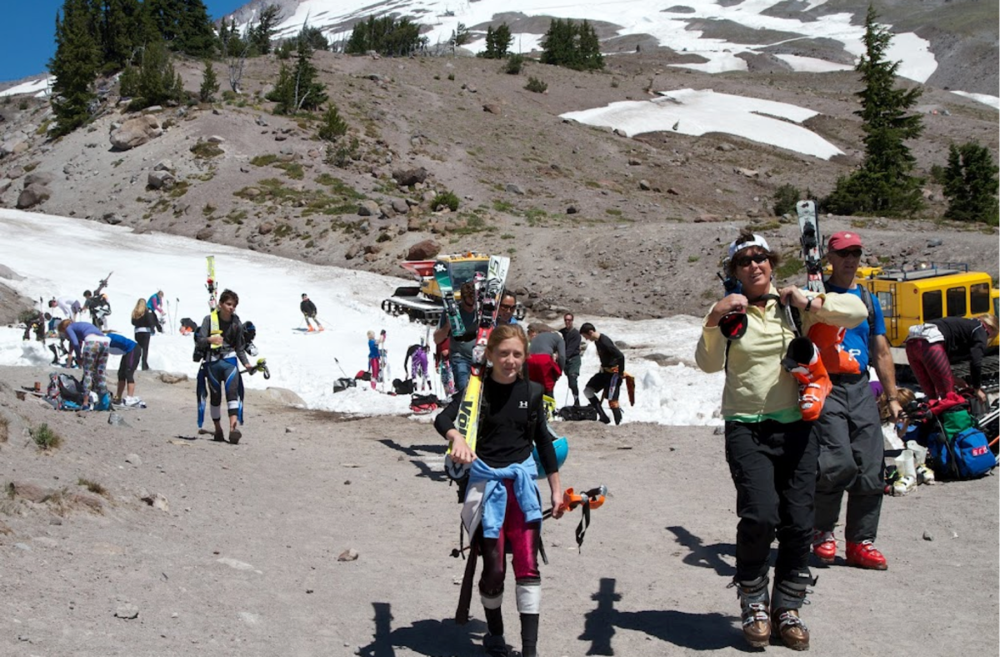
One of the few places you can ski year round is Mt Hood, OR.  Here is what the are looks with in the spring, but you can still ski in August.

NewImage

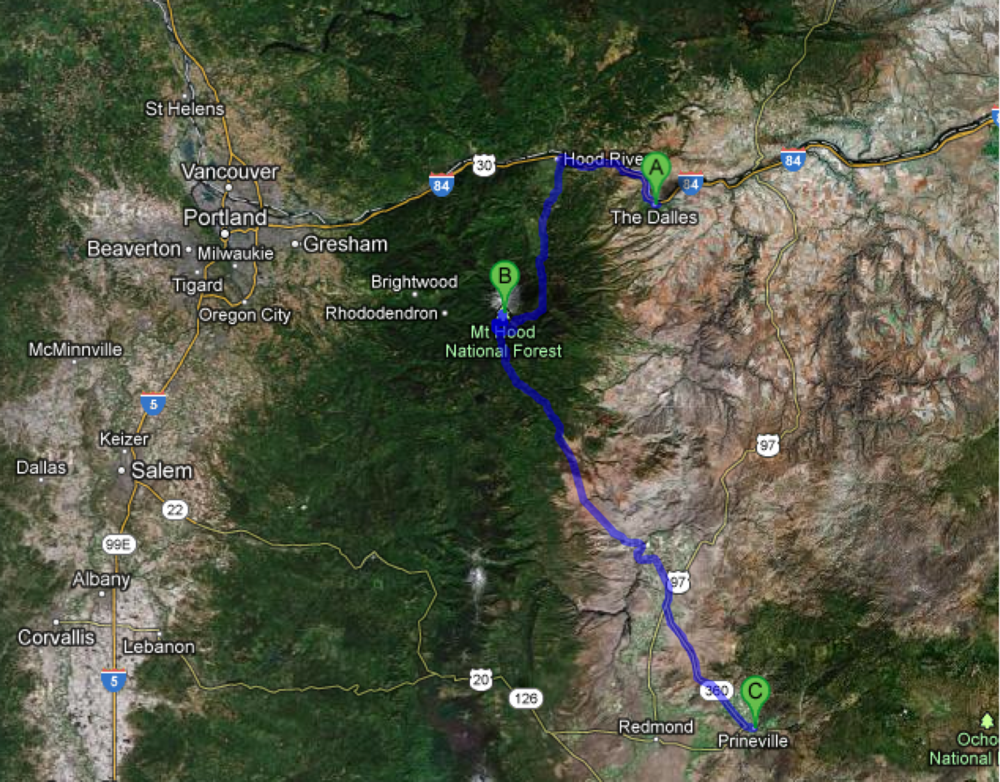
On the drive, I would check out the high voltage power lines, but not point them out to the family as I wasn't supposed to work.  Mt Hood is close to The Dalles, and a bit further to Prineville. 

NewImage

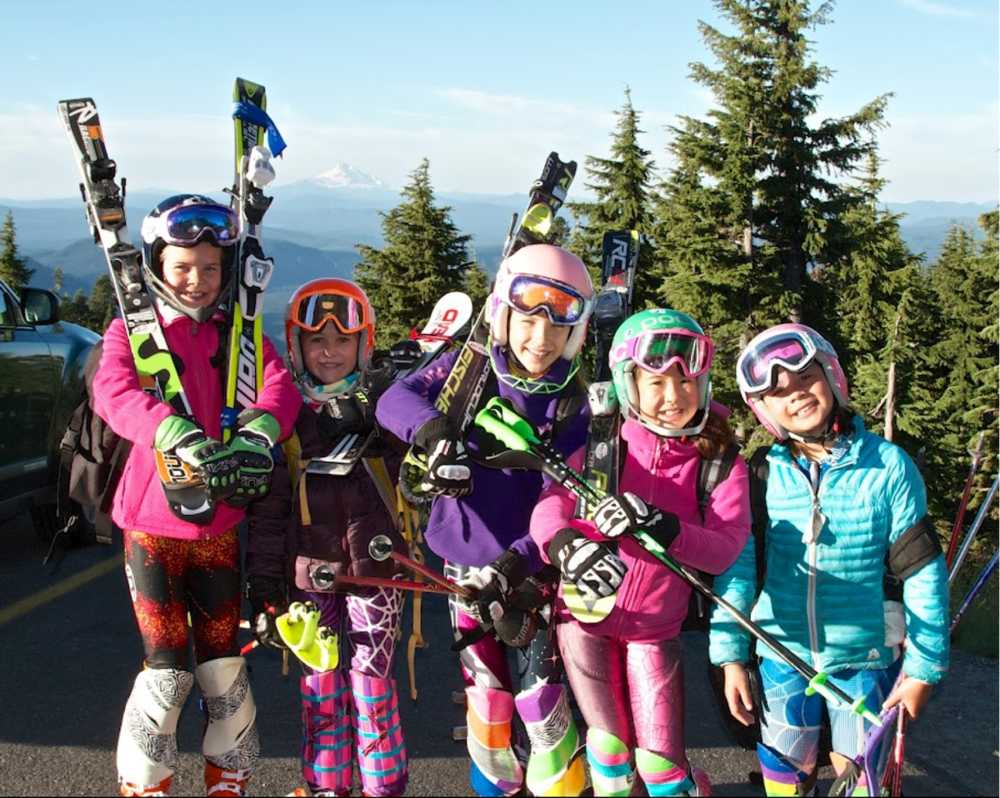
Here are a few pictures of the kids skiing.

NewImage

A snow field comes within walking distance to the lodge.

NewImage

This is not your spring skiing with shorts and t-shirts.  The kids are suited up as falling on the ice hurts.

NewImage

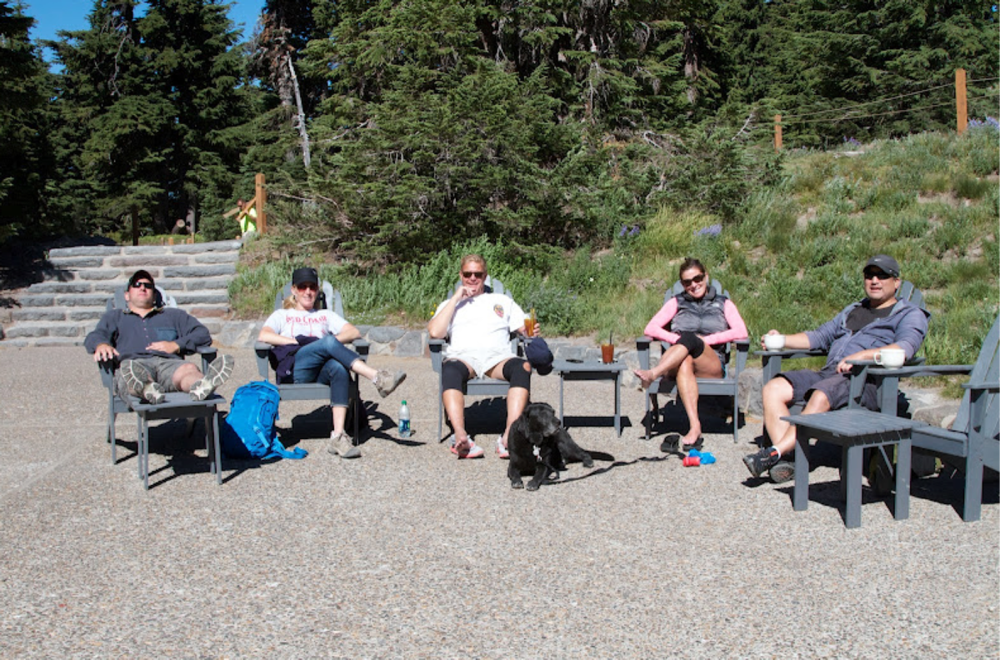
While the kids are on the mountain we get a few hours to enjoy the summer.

NewImage