Virtualization as a management tool

I was reading GigaOm's Barb Darrow's post on the 5 changes that VMware is going through.  Barb's closing point.

The company’s aggressive goal is to get enterprise data centers — which Gartner estimates are about 60 percent virtualized now — to the 90 percent mark. Servers are just the tip of the iceberg there. Networking gear — switches, routers — and storage all need to make that leap as well.

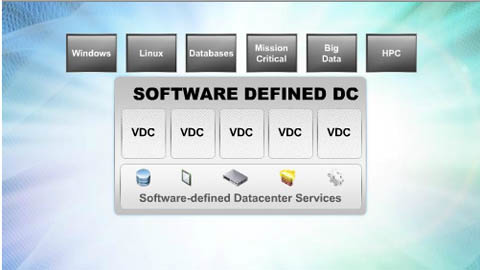
Got me thinking.  Maybe part of VMware/EMC's strategy is to transition VMware into a management tool for servers, storage, and network.  Virtualization is simply a method to get control over each of these areas.  If you have control you can manage.  

If VMware's vision is fulfilled it would seem that all the rest of the management tools would be obsolete.  Or at least in the past vs. an environment that moves at the speed of VM deployment.  VMware doesn't care what OS you run on your Servers, Network, or Storage as long as it runs on their virtualization layer which they can manage and control.

Do you want to be a VMware shop?  It may be too late for many to make a choice.
Baidu launches mobile browser

Reuters has an article announcing Baidu shipping a mobile browser.

* Baidu launches mobile browser to compete with UCWeb, Google, Apple

* Baidu's mobile browser highlights shift to mobile, cloud computing

* Baidu's monetization of mobile is medium-term concern - analyst

BEIJING, Sept 3 (Reuters) - China's dominant search engine Baidu Inc rolled out a mobile browser on Monday to help secure its share in a mobile Internet market that surpasses the U.S. population in size and to fend off smaller rivals such as Qihoo 360 Technology Co.

Most of you have been around long enough to remember the Internet Explorer fight with Netscape for market share.  When Microsoft won the battle it cut back on its IE staff, dropping the Mac, and a skeleton crew on mobile.  Baidu, Apple, Google, Mozilla, and many others are fighting for the mobile browser share.

Notice how all the big data center players have a browser play - Apple, Google, Microsoft, Amazon.

The desktop battle is intense again.  The mobile market is even more fierce.

Microsoft has a TV commercial for IE9 with no mobile in it.

Compass Data Center achieves Funding milestone, $45 mil for first round

Compass Data Centers in trying to be different than the rest, and part of building something different takes money.  Today, Compass Data Centers announced funding.

Compass Datacenters Completes First Major Round if Funding


For Immediate Release

$45 Million Dollar Credit Facility is Expandable to $100 Million; Will Finance Data Center Construction Projects Across United States

Dallas – September 4, 2012 – Compass Datacenters has completed its first major round of financial funding: a $45 million credit facility with an accordion feature up to $100 million from KeyCorp’s commercial finance unit, KeyBank, NA. This is the company’s first formal round of funding since the company began operations earlier this year, and it will be used to finance its aggressive growth plan over the coming months.

Compass convinced its financier that its business model will work.

“Compass Datacenters is pioneering a major area of growth for the data center industry by offering wholesale standalone data center products that meet the needs of companies that are in geographic areas that are not well served by traditional providers. They have assembled a strong management team comprised of executives with proven track records in data centers and real estate development. Their wholesale business model and proprietary design architecture have the company positioned to be the leader in this growth market,” said John Murphy, Managing Director of Real Estate Capital at KeyBank.

Next step is to see data centers build by Compass which should happen quickly with a modular design.

VMware's Paul Maritz hands off the Software-Defined Data Center

Today is the last day of Paul Maritz's job as CEO of VMware.  Some have speculated that Paul's move to EMC corporate was a demotion.  When I hear this, I immediately tell people no way was Paul demoted.  I was lucky to work at Microsoft at the time when Paul was considered the #3 man, behind Bill Gates and Steve Ballmer.  Yes, the CEO of VMware was the #3 man at Microsoft, and if still there would be the #2 man or #1 if Steve Ballmer left.  But, that would assume Paul survived the political changes at Microsoft.

Paul will be back home in Pacific Northwest.  Paul would fly on the Alaska Air flight regularly from Seattle to SJC, and then fly home.  I've seen him on the flight and many other VMware employees.  Now, Paul can go back to having Seattle as his base, taking the Seattle to Boston flight to EMC, but at least not every week to EMC HQ.

NewImage

Paul's finishing deliverable is the Software-defined data center.

NewImage

CIO.com writes a bit more background on Paul's background.

Filling Maritz's shoes will be no easy task. Maritz has long been a luminary of the industry. He was president and general manager of EMC's Cloud Computing Division before his appointment as CEO of VMware in 2008. Prior to that, he spent 14 years at Microsoft and was widely regarded as the third-ranking executive at the software behemoth, behind Bill Gates and Steve Ballmer. He was in charge of Microsoft's desktop and server software, overseeing the development of Windows 95, Windows NT and Internet Explorer.

During his four years as CEO of VMware, Maritz helped dramatically increase the company's fortunes. When he took charge in 2008, about 25 percent of the world's Intel-based applications were running on a virtualized base. Four years later, that figure is 60 percent. In that same period, the number of VMware certified professionals has risen from 25,000 to 125,000.

"Back in 2008, we were asking ourselves what the hell is it," Maritz said of cloud computing. "Now we're asking ourselves: What do we do about it? How do we actually implement it? How do you transform your operations to take full advantage of it? What's going to happen in four years' time? Where are we going with this technology?"


NASA uses Android phones for satellites, maybe machine control systems are next

NASA has figured out that using an Android Phone is a cheaper way to build satellites.


Aug 27, 2012 - 10:30AM PT


Google in Space: NASA powers mini-satellites with Android phones

BY 

NASA is experimenting with new satellites that use off-the-shelf electronics to cut down on costs. At the heart of its new nanosatellite is a Google Nexus smartphone, which has both the processing power to run the orbiter and the sensors it needs to perform its mission.

NASA PhoneSat 1 testing

Today’s smartphone has many times the processing power of all the used computers during the Apollo moon landings. So why not use the smartphone to control a spacecraft? That’s the approach NASA is taking in latest project, which uses off-the-shelf to electronics, including a Nexus One Android phone, in the construction of a new nanosatellite.

As Android's growth continues, it seems that some time soon Android devices will go into the machine control systems.  Wouldn't it be nice if the same developers who work on mobile phones could develop for machine control systems.  Maybe your data center in the future will run on Android.