Latest Data Center Executive to achieve VP status, Google's Joe Kava, VP

Something is going on with data center executives at Web2.0 companies.  They are being promoted to VPs.

The latest executive to achieve VP status is Google's Joe Kava.  Joe updated his LinkedIn status last week.

NewImage

Joseph Kava

Data Center Operations Executive

San Francisco Bay Area 
Information Technology and Services
Current
  1. Vice President - Data Centers at Google

When you look at the big data center operators, not the wholesale guys, but the companies who build and run their own data centers for Web2.0  - Google, Microsoft, Amazon, Facebook, and Apple, the data center team has a significant role in achieving business goals and the executives are critical team members of the company.  The cloud just doesn't magically scale contrary to media hype.  Building cost effective, agile, and high performing data centers is key to the success of a Web2.0 company.

We are still at the early stages of Cloud and Big Data where companies are embracing a Petabyte of data as a common occurrence.  The cost, performance, and availability of that petabyte of data is dependent on the data center infrastructure which is supported by people.

Hurricane Sandy reminded people how fragile the internet infrastructure can be.  Which is why Web2.0 companies embrace geo-redundancy. 

People will change the data center industry more than technology innovation.

I am looking forward to see Joe's presentation next week at 7x24 Exchange Phoenix.  Which reminds me, the folks at 7x24 need to update Joe's title to VP.

9:00 A.M.
Keynote:
Google Data Centers: A Behind the Scenes Look at Infrastructure and Innovations


Google's data center practice helped develop the company's competitive edge for online services and products. Now, nearly seven years after the first data center went into production, there is an ever increasing need to be creative in order to drive efficiency and minimize the impact on the planet. This presentation hopes to uncover some of Google's early day decisions, why they were made and how those decisions led to future innovation. Take a virtual tour with us of our facilities and join the discussion of what challenges we all face in the industry.


Joe Kava
Senior Director
Google Data Centers

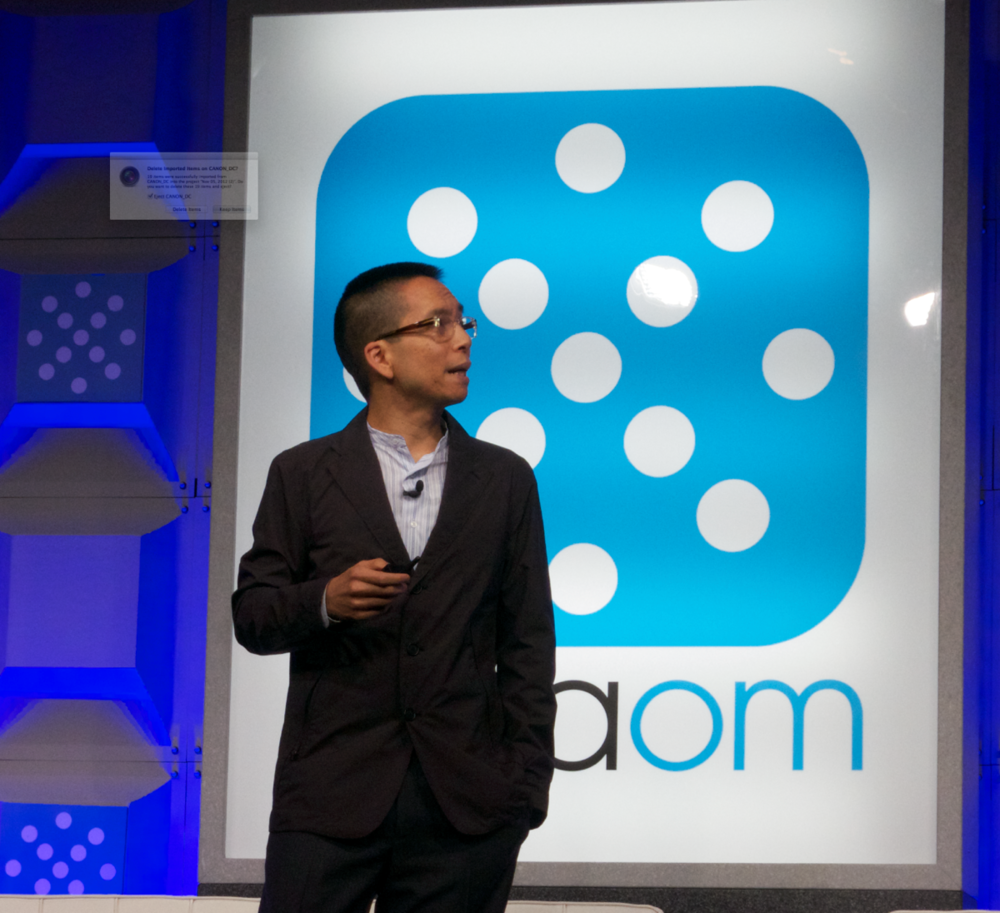
John Maeda's Vision "Leadership Makes Action"

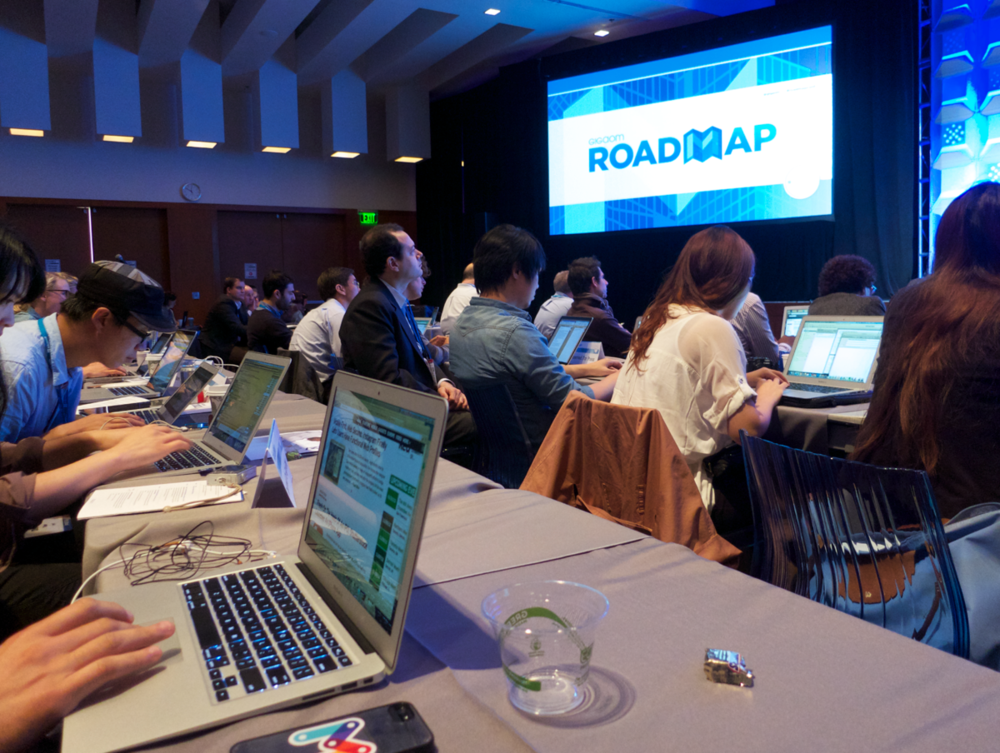
The closing slide for John Maeda's presentation at GigaOm Roadmap was this slide.

"Big Data combine with Design can support Leaders to Lead their organizations better"

NewImage

Stacey Higganbotham has a post on the talk here.

Nov 5, 2012 - 12:56PM PT

Good design can improve leadership by making big data accesible

As the computer revolution has morphed into today’s web, design has a more important seat at the table. Not only is the web visual, but the data generated and the loss of hierarchy enabled by the web has created leadership challenges that good design can solve.

After a lesson in typography and an explanation of his lifelong passion in bringing technology and design together, John Maeda, president of the Rhode Island School of Design, laid out his view of the future challenge facing leaders now that social media and technology have overturned the traditional company hierarchy. Fortunately, the solution to that challenge appears to be a applying good design to a lot of data.

...


Paul Rand's Design Principles to think about in Data Centers

John Maeda, President of RISD gave one of the better design focused presentations at GigaOm Roadmap.

NewImage

One area that John focused on is how he brought Paul Rand to MIT to present.

Who is Paul Rand?

PAUL RAND (BORN PERETZ ROSENBAUM, AUGUST 15, 1914 – NOVEMBER 26, 1996) was a well-known American graphic designer, best known for his corporate logo designs. Rand was educated at the Pratt Institute (1929-1932), the Parsons School of Design (1932-1933), and the Art Students League (1933-1934). He was one of the originators of the Swiss Style of graphic design. From 1956 to 1969, and beginning again in 1974, Rand taught design at Yale University in New Haven, Connecticut. Rand was inducted into the New York Art Directors Club Hall of Fame in 1972. He designed many posters and corporate identities, including the logos for IBM, UPS and ABC. Rand died of cancer in 1996.

Here is what John wrote about Paul Rand's visit and the parts he focused on.

It is ironic that 8 years later, I would return to MITas a professor of design, and that I would host a lecture by Paul Rand at MIT, which I did on November 14 of last year. The time for the lecture was set at 10am. For those familiar with how an American university works, an early lecture is very rare because students usually study late into the night and are less apt to attend events in the morning. But Rand insisted that he speak in the morning. He said, "If someone isn't willing to wake up to hear me to speak, I don't want to speak to them!"

The auditorium was packed beyond capacity with people from all over New England, some waking up as early as 5am to arrive in time for the lecture. The Director of the Media Lab, Professor Nicholas Negroponte, later remarked that during all his career at MIT he had never seen such an overwhelming audience for a morning lecture. Although conditions in the lecture hall were crowded, there was complete silence during the lecture as everyone's attention was completely focused on Rand.

The presentation was a question answer format.

JM: "What is design?"


"Design is the method of putting form and content together. Design, just as art, has multiple defintions, there is no single definition. Design can be art. Design can be aesthetics. Design is so simple, that's why it is so complicated."

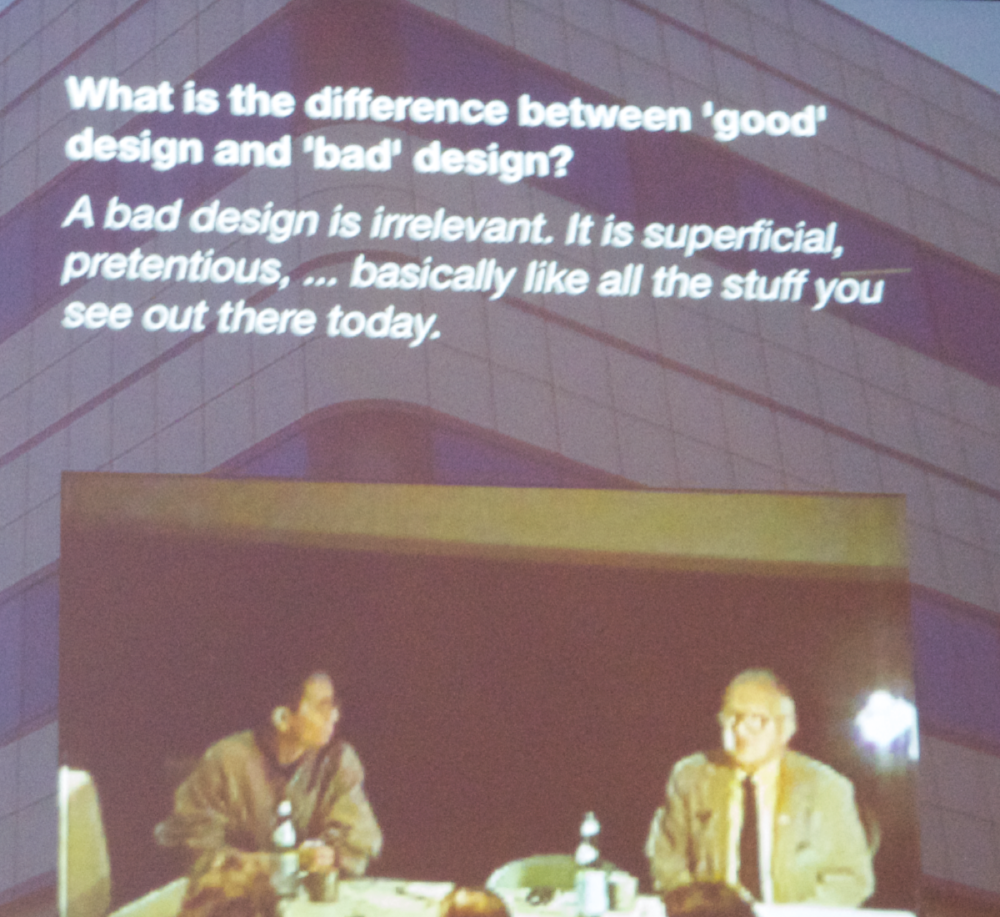
What is bad design?


NewImage

"What is the difference between 'good' design and 'bad' design?"


"A bad design is irrelevant. It is superficial, pretentious, ... basically like all the stuff you see out there today."

 And, here is part that will resonate with some of you who love design.

"Most of your designs have lasted for several decades, what would you say is your secret?"


"Keeping it simple. Being honest, I mean, completely objective about your work. Working very hard at it."

NYTimes's James Glanz writes again, not about Data Centers, but NY ignoring ASCE

The Data Center community is waiting for James Glanz to continue his writing on the data center industry.  But, his latest post is about NY ignoring the recommendations of the American Society of Civil Engineers.

Engineers’ Warnings in 2009 Detailed Storm Surge Threat to the Region

One of the nation’s most influential groups of engineers said it presented detailed warnings that a devastating storm surge in the region was all but inevitable and proposed ways to prepare.

November 5, 2012, Monday
 
Data Barns in a Farm Town, Gobbling Power and Flexing Muscle

When Internet factories come to town, they can feel less like their sleek, clean and convenient image and more like old-time manufacturing.

September 24, 2012, Monday
 
Power, Pollution and the Internet

Helping to process the staggering amount of Internet activity that occurs, data centers waste vast amounts of energy, belying the information industry’s image of environmental friendliness.

September 23, 2012, Sunday
James has found a supportive technical audience.
As the authorities examine how they can protect New York City from extreme weather events like Hurricane Sandy, one of the nation’s most influential groups of engineers is pointing out that more than three years ago, it presented detailed warnings that a devastating storm surge in the region was all but inevitable.
The warnings were voiced at a seminar in New York City convened by the American Society of Civil Engineers, whose findings are so respected that they are often written into building codes around the world. Corporate, academic and government engineers at the meeting presented computer simulations of the storm-surge threat and detailed engineering designs of measures to counter it.
We'll see when James decides to continue his attack on the data center industry.