Growth of the web saves paper, 21% decline in paper in a decade

Being in the data center business we don't mind the decline of print.  But, the pulp and paper industry is going through some serious changes as the decline of print is faster than the rise.  Seattletimes has an article from the minneapolis star on the print industry.

As society sheds paper, an industry shrinks

The North American paper industry is in rapid decline. Towns from Washington to the coast of Maine have lost more than a hundred paper mills in a wave of consolidation in little more than a decade — a trend most people in the industry expect to continue.

Minneapolis Star Tribune

How much is the change?  100 paper mills and 21% decline over  10 years.

“It’s kind of disheartening,” said Jim Skurla, an economist at the University of Minnesota, Duluth. “Paper’s never going to disappear, but it’s going to be smaller than it has been.”

River towns in the forest from Washington to the coast of Maine have lost more than a hundred paper mills in a wave of consolidation in little more than a decade — a trend most people in the industry expect to continue.

North American demand for three types of coated and supercalendered paper — shiny magazine and advertising paper — has fallen 21 percent in the past decade, according to the Pulp and Paper Products Council.

There is not enough demand out there and some mills have to shut down.

“All you’re doing is you’re moving around the mills,” Quinn said.

“The reality is the demand is going down. Some mills are going to have to come out.”

Google influencing Amazon.com's server purchasing, and many others

It is accepted that the big Web2.0 companies don't buy what the enterprise guys buy.

Wired has an article on how Amazon changed its server purchasing to follow Google.

Pinkham was struck by how different the machines looked — and how hot they were. Even then, Google was running its website on dirt-cheap, stripped-down servers slotted into extremely tight spaces. They didn’t even have plastic cases.

“They were clearly not your average Dell, HP, IBM servers. They were white box machines, very densely packed. They weren’t in containers. They were just blades jammed into these custom racks,” remembers Pinkham, who went on to lead the team that built the Elastic Compute Cloud and now runs a cloud software startup called Nimbula. “And I remember a lot of heat coming off them — an indication of a lot of concentrated power.”

This isn't really new to most of you, but it is nice to have a Wired article tell a story to the rest.

Shh, a secret on why the Green Data Center is popular, it's the money

One of things I figured out long time ago as an Industrial Engineer is efficiency is good to some, but not all.  If you talk about being Green you get almost all the people saying being green is good with few fighting the green initiative.  And what is behind a big of being green?  A big part is being efficient.  

Chris Crosby does a good job of giving an insiders view of the secret of being green in the data center business.

“We all talk about being green like it’s our ticket to corporate sainthood, but really we just keep improving the energy efficiency of our data center operations because it helps us make more money”.

...

You really thought that all this incessant talk about being “green” was about saving the planet? How quaint. Well, why don’t you come sit up front here and let me explain a few things.

Got your attention?  Chris explains more.

Marketing, and its very close friend Public Relations, are all about making people want things because they think they are important. So about five years ago, some very bad people began to say that data centers used too much energy and that wasn’t good for the environment. While a whole bunch of folks in the data center business panicked, some marketing people got together and said, “This is awesome. We know that using too much power hurts our profit margins, and people that think that’s bad anyway, so let’s jump on the bandwagon and call our energy efficiency efforts “green initiatives” and then everyone will be happy”. This is what’s known as a win/win proposition. Naturally, the whole industry cheered.

NewImage

Seizing on this new vision, data center companies began to improve their energy efficiency. They even came up with a new standard to help measure the improvements in performance called PUE so customers could prove it to themselves. This new standard has become so popular that now data center providers and operators use it as part of their marketing and PR efforts. Really big operators love this concept. They do all kinds of wild things like spending large sums of money on horribly inefficient technologies like solar panels so they can turn around and talk about their commitment to being green. Now of course we all know that this is just to keep large groups of generally unshaven, Birkenstock wearing extremists from causing a big fuss and driving down their stock price, so we all play along and show our support by saying things like, “Man, that’s what I call a real commitment to green”. See the double meaning there? A lot of people don’t, but for obvious reasons we don’t bother to correct them.

Would you rather read about Wind/Solar powered data Center or a Poop powered data center? Google vs. Microsoft

I was reading Compass Data Centers's Chris Crosby post 

Holy Air Biscuits Batman!

Holy Air Biscuits Batman!Just when you think things just can’t get any weirder, I read that Microsoft is working to develop a data center that runs on sewage. You read that correctly, sewage, a.k.a. human waste, a.k.a fill in your own potty level descriptor here. It’s said that necessity is “the mother of invention” but isn’t this taking things just a little too far? Microsoft says that this is yet another of their green initiatives. I say that if you’re running a data center using the byproduct of an entire state’s worth of indoor plumbing capacity you’ve probably stretched the boundaries of euphemism to the breaking point. I guess in their quest to achieve their objective of becoming carbon neutral the boys in Redmond will leave no stone unturned…or toilet seat up for that matter.

I’m always fascinated by how ideas like this come about. Many of us have been in those corporate “brain storming” sessions where half the company is squeezed into a conference room, the walls are papered with those sticky notes on steroids, and everyone is half-stoned on magic marker fumes, and heard some pretty outlandish proposals. But imagine sitting in a room when someone suggests that we should try powering the new data center with the truest form of “biogas”, and, rather than being met with murmured snickers and knowing rib jabs, someone pipes up and says, “You know, I think Phil is really on to something here”. Talk about your broad mindedness. If this is the concept that they all coalesced around, it kind of makes you wonder what they thought were the bad ideas.

And it got me thinking would users rather read about a wind powered data center or a poop powered one?

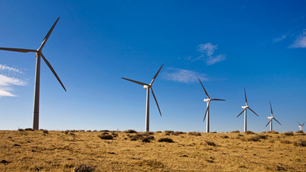
Google uses Wind and Solar as its primary message.

NewImage

NewImage

Microsoft has posts on the use of biogas.

111912-1

You can argue which is better for the environment, but what do you think people want to read about?


Economist Article on the fight between Google, Apple, Facebook, and Amazon

The Economist has a great article on the competition between Google, Apple, Facebook, and Amazon.

The article closes with an excellent point that the regulators could change the game rules.

The Others

Watchdogs in Europe and America have been looking into accusations that Apple has colluded with some publishers to break Amazon’s grip on e-books. And they have been scrutinising Google too. Some companies, including ones with links to Microsoft, have accused the search firm of unfairly promoting its own services, such as Google+, in search results. They also claim that it uses content from competitors without permission, and that it has struck anti-competitive deals in search advertising. The firm is under fire for allegedly using smartphone patents to stifle competition. Google’s legions of lawyers have been battling these charges.

Their lordships Page, Cook, Zuckerberg and Bezos thus need to map a course for their respective firms through dangerous legal and regulatory territory. At the same time they have to avoid being distracted from fighting their rivals; the mad emperors of Microsoft lost a lot of ground by taking on the inhuman might of the Department of Justice. And the shareholders, hungry for returns in a moribund global economy, need to be kept happy.

A king who pulled all this off might claim the throne by right; but his chances of being more than first among equals, or of a lengthy reign, would be slim. As in Westeros, these battles and plots promise many more sequels and series.