Inspiration from Great Architecture, La Sagrada Familia

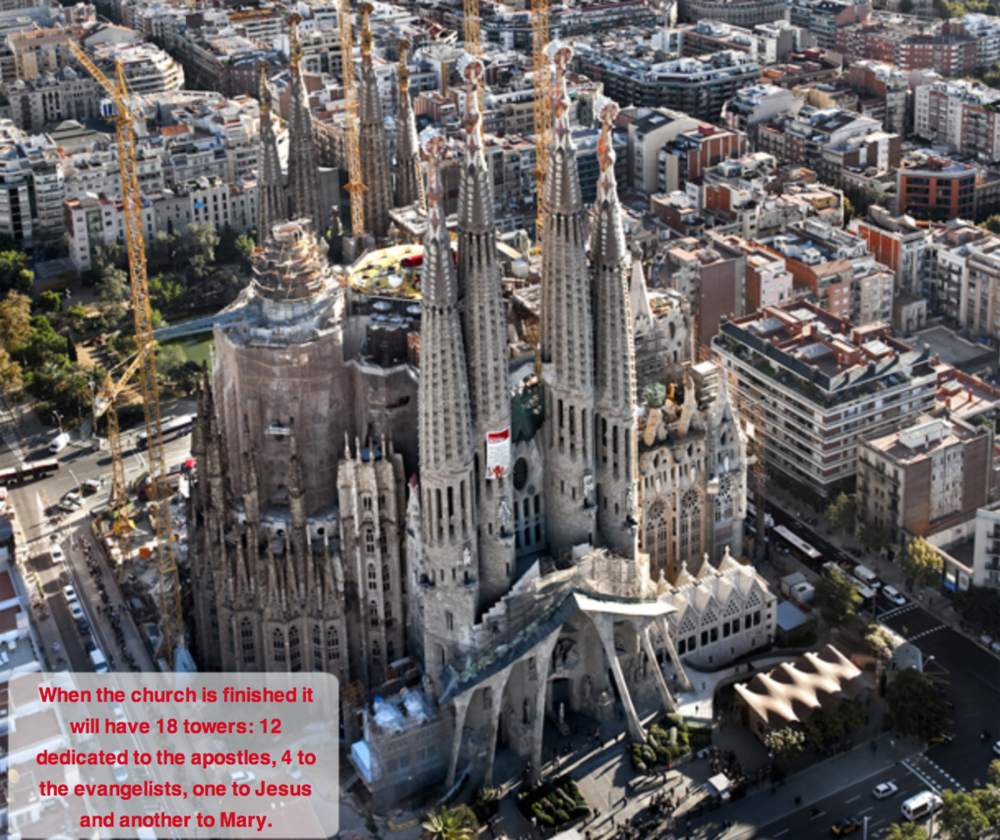
5 years ago I went to Barcelona to moderate a panel with Mike Manos (Microsoft at the time), HP, and Dell at Microsoft TechForum.  I was able to get away for an afternoon with another Microsoft friend and we visited the La Sagrada Familia.
NewImage

60 minutes just covered the latest update on the project.  Here is the written story.

And for the people who want to see more about the construction here is the story.

And another video.

I will write another post on what ideas I have used for inspiration.

Bunch of Retina MacBook Pro problems went away with 10.8.3 beta updates - screen flicker, Time Machine, Network Connectivity

I've had problems with my Retina MacBook Pro since Sept 2012.  And, posted what I thought was a fix.  I was wrong and eventually relegated myself to make appts to sit in the Apple Store in Bellevue to demonstrate the problem.  This didn't work either as the magic of the Apple store kept my screen in good shape.  How bad was my intermittent display problem.

NewImage

The frustrating part is this was not reproducible.  I would shut the laptop, open it up and screen is fine.

Then I got pushed the beta 10.8.3 12D76 MacOS release and it looks like the screen problem has gone away. Also, a strange Time Machine problem resolved and my network connections to my home network work better. Today I was pushed the beta 12D78 release.

I am keeping my fingers crossed that 10.8.3 will fix my screen flicker.

oops, Cleantech doesn't move at the pace Moore's Law, expectations reset

GigaOm's Katie Fehrenbacher post on the VC cleantech bust.

SUMMARY:

One of the key misplaced assumptions that Valley VCs made in cleantech boom times is that the rapid progress of Moore’s Law could be created for cleantech with a little bit of VC funding and Valley smarts.

Katie starts discussing the controversy of VC Cleantech by taking a stance agreeing with Wired's post.

One of the more in-depth pieces on the cleantech venture capital boom and bust cycles was published in Wired this week. While not all of my peers will agree with me (I have already gotten in some heated debates over this), I think the story was a solid analysis of how a lot of VCs piled into cleantech investing in 2007 and 2008 with not a whole lot of knowledge of the sector and now have backed out of it (we have covered this a lot, too). The long-term promise of cleantech itself isn’t dead, but the boom VC cycle has clearly ended, much the way the dotcom boom went bust and the promise of the Internet arrived later on.

Katie jumps to the flaw in VC thinking.

But another layer to this story is that one of the key misplaced assumptions that VCs made in the cleantech boom times is that the rapid progress of Moore’s Law— which says that the number of transistors that can be placed on a chip doubles every two years — could be created for cleantech with a little bit of VC funding and Silicon Valley smarts. The notion (which is seductive but not true in most cases) is that the traditional energy industries throughout the world just didn’t do the right kind of innovation and that the Valley’s can-do spirit and open wallets would be able to unleash this potential.

I was always surprised that VCs choose to invest in physics constrained problems like solar cells, fuel cells, and batteries.  But, hey the environmental stuff seemed like it was big money to be made.  Until the Chinese came in as well with its government dominating by engineers.

A good memory helps you imagine the future

The WSJ has an interesting article on the new power of memory.

Memory allows for a kind of mental time travel, a way for us to picture not just the past but also a version of the future, according to a growing body of research.

The studies suggest that the purpose of memory is far more extensive than simply helping us store and recall information about what has already happened.

Researchers from University College London and Harvard University have made strides charting how memory helps us draw a mental sketch of someone's personality and imagine how that person might behave in a future social situation. They detailed their latest findings in work published in the journal Cerebral Cortex last week.

I find this article interesting because it describes a great strategy on how to network.  Meeting people imagining how they fit in your future is built on a good memory of who they are and what they do.

Researchers from University College London and Harvard University have made strides charting how memory helps us draw a mental sketch of someone's personality and imagine how that person might behave in a future social situation. They detailed their latest findings in work published in the journal Cerebral Cortex last week.

How many of you think you have  data center systems that provide a good memory of past performance?  If you don't have a good memory of the past how can you imagine the future?

Journalist taking Photos of NSA's Utah Data Center gets a good scare

Forbes has a post by Kashmir Hill on what happened when she took some pictures at the NSA's Utah Data Center.

Surprise Visitors Are Unwelcome At The NSA's Unfinished Utah Spy Center (Especially When They Take Photos)


Officers said the sign was jokingly programmed this way by a construction worker

Most people who visit Salt Lake City in the winter months are excited about taking advantage of the area’s storied slopes. While skiing was on my itinerary last week, I was more excited about an offbeat tourism opportunity in the area: I wanted to check out the construction site for “the country’s biggest spy center.”


Many of you have had the hassle of dealing with prying eyes from journalists, and this journalist had a bit of a scare.

My outing to the facility last Thursday was an eventful one. I can confirm that the National Security Agency’s site is still under construction. It was surprisingly easy to drive up and circle its parking lot. But if you take photos while there, it is — much like Hotel California – very hard to leave.

...

“Were you taking photos?” he asked. I said that I was. He responded, “You’re going to need to delete those.”

Can imagine sitting in your car with the following thoughts?

We sat in the car some more, while they — I assume — ran background checks on us, Googled us, checked my Forbes credentials, poked around my Facebook page and called other supervisors, and perhaps a Public Information Officer to decide what to do about us. After maybe another 15 minutes, an aggressively chummy man with piercing blue eyes, wearing a sweater and slacks, came out to the car. He introduced himself as a special agent and asked us to explain why we were there, with an aside to Officer #1 that he wanted him to record everything. Dryer offered a lengthy explanation, including all of the classes I’d spoken to. Agent Federman responded with a direct question: “Did anyone send you to take those photos and do you plan to distribute them to enemies of the United States?”

The journalist had an hour that I am sure you all would say "duh" what did you think was going to happen when you got close to the facility.

It was an intimidating hour. While I’ve interviewed federal agents for stories, I’ve never been interrogated by them before. We may have been treated as gently as we were because I’m a mainstream journalist with a prominent platform and because I was accompanied by a lawyer. I was grateful that I could hold up “professional journalist” as my own badge; it felt protective.

Can you imagine if the journalist was by herself with a telephone lens on the facility without her lawyer friend?  Big SUVs driving over to her at high speed from multiple directions.