5 Tips for Successful Recruiting from The Pachera Group

The Pachera Group has a good post on Secrets for Successful Recruiting.  Finding data center talent is really hard.  The Pachera Group doesn't recruit far data centers, but their points are well made.

NewImage

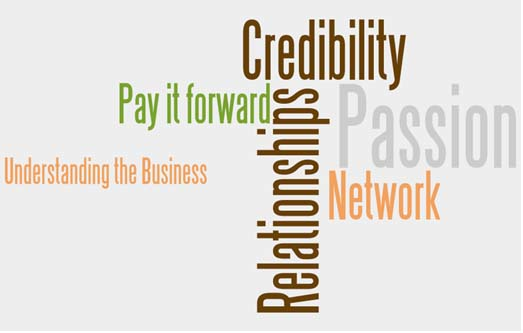
  1. deep understanding of business
  2. tremendous tenacity
  3. a thick skin
  4. courage
  5. passion for people and making connections
If you are looking for Technical staff for other parts of a business The Pachera Group is some one worth checking out.

Disclosure:  Vikki Pachera a Partner of The Pachera Group is a great friend who I have known for 30 years.  I helped get her a job at Apple and we worked side by side on many projects.  She has worked at IBM, Apple, and HP on product development so she knows what is like to live the jobs she recruits for.

A respected Silicon Valley executive and widely-known new media and technology expert, Vikki Pachera is deeply conversant with a sweeping array of skill sets and disciplines. They include enterprise-level management, business development, strategy, hardware and software product development, consumer products, marketing, and professional services.

Vikki served as Vice President of Strategic Alliances & Business Development at Hewlett-Packard, where she brokered new business and developed frameworks to help Warner Bros., Disney, Oracle, and other company’s transition to digital media. She also held several other VP-level positions, served as an executive within Apple’s consumer electronics division, and co-founded a start-up software as a service (SaaS) company. She began her career as an engineer at IBM’s storage product group.

Vikki has placed executives in consumer electronics, media & entertainment, IT, retail & fashion, and enterprise companies. She holds a BSME degree from Michigan State and an MBA from Santa Clara University. She is an avid animal lover, and enjoys international and exotic travel.

Do you tolerate cheating in your data center?

I was talking to a data center executive and he got in serious trouble once with his PR team because he wasn't willing to lie about his PUE.  Luckily he stuck to his morales,  eventually left the company and the PR person.  He is one of the respected in the industry meanwhile no one ever hears of the PR person who thought cheating on PUE was OK.  

The WSJ has an article that discusses cheating in children and advises to understand what is causing the child to cheat.

Other children start feeling pressured at this stage by busy sports and activity schedules that don't allow time to study, says Kenneth Shore, an East Windsor, N.J., author and psychologist. "Parents can get a little panicky" and compound the problem by orchestrating kids' science projects, dictating sentences or typing their kids' essays, he says. Not only does this send the message that presenting someone else's work as your own is OK, but it suggests that grades are more important than learning—an attitude linked in research to higher rates of cheating.

Besides lying to cheat the numbers, the other type of cheating is taking credit for other people's work.  This is used by those who are making it seem like the smartest in the class.

The lesson learned for the parent with 17, 20, 21 year old kids is a good one.

Looking back, Ms. Heffernan wishes she could correct one mistake—telling her sons that cheaters are always punished. "To say that kids who cheat will get caught and they will be punished—and they will not gain by cheating—isn't true anymore," she says. Insisting otherwise only leads kids to conclude, "Mom doesn't understand," she says. Her sons shot down that argument in elementary school, telling her they'd seen other students cheat without getting caught.

It worked better, she said, to tell her kids, "Cheating flies in the face of the values of our family and the rules of the school." She told them they'd be letting her down if they cheated, and she wouldn't defend them. "Not only will they be in trouble at school—they will be in hell at home."

The data center executive could have gotten away with cheating on PUE, most would not know and he would get a pat on back for supporting the company PR person.  But, he would be seen by the insiders as some on who cheats to look good, and someone who cannot be trusted to do the right thing and tell the truth.

Being obsessed by performance metrics and looking like you are the smartest in the class, can lead people to cheat.

Good data center operators have a low tolerance for cheating, because cheating leads to bad behaviors and sloppy work that can affect the performance and availability of the data center.  Wouldn't it be interesting if you see through a person's history how much they cheated when they were in school?  Did their parents instill good values. The one way to see this is to see how a person is with their kids.  Most likely if they took short cuts growing up they think it is OK that their kids do as well.

Ms. Avant explained to Kaci that cheating was wrong, said she was disappointed in her and met with her teacher and principal. She says she also spends more time now going over homework, lowering her voice and encouraging Kaci to "be more up front" when she doesn't understand something. Kaci has since been showing her mother all her papers, including answers she got wrong. The third-grader still gets mostly As, and she has learned that "cheating is bad," Kaci says in a phone interview. If she doesn't know a test answer, "I just do the best I can," she says.

For parents, stressing intrinsic goals, such as mastery, learning and doing one's best, can be tough. But research shows it is one of the best ways to prevent cheating.

Comparing Google Cloud Services vs. Amazon Web Services at the Infrastructure Level

Google I/O is one of the few times you know Urs Hoelzle is going to speak.  Urs is the MAN behind Google's Infrastructure.  Urs is Google employee #8.  He is wicked smart, got plenty of money to do what ever he wants, and has the backing of the Google executive staff to build for the future. 

When most hear the words of "Cloud Services" they think of Amazon Web Services.  Amazon.com being a great retailer has a phenomenal presence and selection of Cloud Services.  But, I'll tell you something that is not widely known, just because something is well marketing and looks like a good price doesn't mean it is built to last and to handle stress.  An example of this I've noticed is ski jackets that get used by ski mountain staff.  They wear the jackets multiple times a week, wash every week (we hope), putting more stress on a jacket in a month than most would put on their ski jackets over 5 years.  Quickly, they learn what will really last or not, and how it is priced and what brand is many times irrelevant.  They learn to look at the material, construction, and quality of the jacket and where their past jackets have broken.  fyi, AWS breaks in various areas that developers run into which can frustrate the hell out of them.  I know this first hand because my friends have gone through the hell of finding where AWS breaks, and had to make the choice to build the services themselves.

So, let me walk through Urs's keynote and point out some of the cool infrastructure things.  Note: I mention in the title than I'll compare to AWS.  Well I threw that up to get your attention, but actually there is very little out there if any that discusses AWS infrastructure.  It is like a retailer, it is all about price, selection, and selling to the target audience.

If you want to see the presentation go to about 21minute mark in this video.

Here is Urs's title slide.

NewImage

The next slide, Urs's discusses the physical world of data centers to support the cloud.  It's not a bunch of fluffy stuff that scales infinitely.  It is built on physics.

NewImage


Then slides showing the physical infrastructure that Connie Zhou documented in her pictures.  There weren't any new pictures that most of you haven't already seen.

NewImage

The environmental message is delivered.

NewImage

Google's announcements over the past year of expansion.

NewImage

Besides building data centers, Google runs their own network with their own sub marine cables

NewImage

The network spans the world and at some point will most likely reach Africa, Middle East, and India.

NewImage


One of the thing Google does is it thinks of its SW as infrastructure.  Urs reviews the history of the Google SW infrastructure.

NewImage

At about the 30:24 mark Urs discusses the obsolescence of features to learn from the past and make things better, focusing on quality and performance.  Sounds like my ski jacket story above. :-)

163 improvements are listed over 12 months.

NewImage

Customer wins are discussed on the platform.

NewImage

To disrupt the business model of an AWS, Google has added sub minute billing.

NewImage

In the spirit of a little green server, Google has a micro VM of only 0.6 GB.

NewImage

Getting Cloud to be useful many times requires integrating with on data center services in the company's data center if you can have an encrypted VPN connection.

NewImage

Persistent disks are useful, but the standard is 1TB.  Google has announced 10 TB.

NewImage

Platform infrastructure is great, but what good is it if you can't develop apps.

NewImage

To meet the needs of Information Security, Google Cloud Service are ISO 27001 are certified.

NewImage

If you want to see an app to build at the 45:00 mark you can see a demo of building an app.

In building applications this is what AWS has tons of content on. 

NewImage


Data Centers lease for Sq ft, kWh, ISP connections, Not Energy Brokers

In the old days, data centers were all about space, # of sq ft.  The power was actually hard to figure out.  The data center salesman would almost always talk in sq ft. 1,000 sq ft. 10,000 sq ft.  How much power?  Ohhh,  10,000 sq ft x 50 watts/sq ft = 500kW.  I would joke that part of why sq ft is used so much in commercial real estate is it is nice easy math.  How much does it cost to build per sq ft.  What is operating expense per sq ft.  What is rent per sq ft.  This set up a bad practice of thinking people would save money by using less space in a data center.  I am charged by space so if I go higher density, then I’ll save money.  Uh NO.  The expensive stuff in a data center is the electrical and mechanical systems.  You talk to any experienced data center operator/designer who has control over his destiny with budget for CAPeX and OPeX, he’ll choose 100 - 150 watts/sq ft.  Any higher density increases the chances of stranded power, cooling issues and a variety of things that could increase costs.  If you don’t know what stranded power is go have a talk with your electrical team and ask them how big an issue stranded power is.  

Those who lease data center space know the stranded power problem which is why they charge for the Power committed to your environment in addition to the power you consume.  If you strand 1/2 your power because you made bone headed decisions in how you designed your data center space, you’ll pay for that power as the data center operator cannot simply use that power some place else.

I read NYTimes’ James Glanz’s post on Landlords Double as Energy Brokers a few times and I am confused.  James makes the point that data centers moved from charging for space to an energy broker.

A result, an examination shows, is that the industry has evolved from a purveyor of space to an energy broker — making tremendous profits by reselling access to electrical power, and in some cases raising questions of whether the industry has become a kind of wildcat power utility.

When I hear the word Energy Broker it makes me think this is like an Enron type of deal

Soaring power prices have pushed the state’s utilities to the brink of bankruptcy and forced Third World-style blackouts across the world’s sixth-largest economy. Enron and other electricity marketers and generators are being investigated by the state attorney general and sued by consumers amid accusations of profiteering and market manipulation. ”Every trading company in the country has been feasting on California, and Enron is the shrewdest of them all. They are like sharks in a feeding frenzy,” says Michael Shames, executive director of the Utility Consumers’ Action Network in San Diego. Enron, an early critic of California’s deregulation plan, hotly denies those charges.

The reason why data centers charge more for power than what they pay is because of the cost of electrical systems and mechanical systems required to deliver the power.

Some data center companies, including Digital Realty Trust and DuPont Fabros Technology, charge tenants for the actual amount of electricity consumed and then add a fee calculated on capacity or square footage. Those deals, often for larger tenants, usually wind up with lower effective prices per square foot.

Regardless of the pricing model, Chris Crosby, chief executive of the Dallas-based Compass Datacenters, said that since data centers also provided protection from surges and power failures with backup generators, they could not be viewed as utilities. That backup equipment “is why people pay for our business,” Mr. Crosby said.

….

Melissa Neumann, a spokeswoman for Equinix, said that in the company’s leases, “power, cooling and space are very interrelated.” She added, “It’s simply not accurate to look at power in isolation.”

OK, data centers aren’t energy brokers.  They do a bad thing operating as a REIT to save on taxes.

Some of the biggest data center companies have won or are seeking Internal Revenue Service approval to organize themselves as real estate investment trusts, allowing them to eliminate most corporate taxes. At the same time, the companies have not drawn the scrutiny of utility regulators, who normally set prices for delivery of the power to residences and businesses.

Equinix is seeking a so-called private letter ruling from the I.R.S. to restructure itself, a move that has drawn criticism from tax watchdogs.

“This is an incredible example of how tax avoidance has become a major business strategy,” said Ryan Alexander, president of Taxpayers for Common Sense, a nonpartisan budget watchdog. The I.R.S., she said, “is letting people broaden these definitions in a way that they kind of create the image of a loophole.”

So, data centers shouldn’t be able to operate as a REIT because they’ll save on taxes?

I am confused on what points James was trying to make.  

DCIM that is focused on operators using the software, Yeea! Digital Realty announces EnVision

I've been in Santa Clara for the past there days hosting our data center social, hanging with friends, and meeting new ones.  I was talking to a company who just bought a DCIM license and they asked what I think about DCIM. The problem with DCIM software is it is not designed for someone to say "I used DCIM every day to run my data center."  DCIM is most of the time positioned as a management reporting tool.  

I've been so busy meeting I haven't had a chance to read the press releases and other news this week.  One of the news I got a chance to discuss is the DCIM solution for Digital Realty with one of their executives, but I didn't get the PR stuff cleared, so let me just chat about the press release.

One of the people I have had the pleasure of having hours of conversations with is DRT's David Schirmacher who makes the following statement.

"Up until now, data has been collected, but it has not necessarily been easily accessed or arranged in an intuitive manner that is helpful to a data center operator," said David Schirmacher, senior vice president of portfolio operations at Digital Realty. "The goal in rolling out EnVision across our global portfolio is to give our customers a common database that is structured around the specific needs of data center operators and can therefore manage the millions of data points that are found in today's large-scale facilities.

I was making my point about problem of DCIM without knowing that David makes the same point with the EnVision solution.

There are some good people and I am looking forward to see and hear about Digital's progress.

The EnVision rollout will begin this month and take approximately 18 months to complete across Digital Realty's global data center portfolio, which consists of 122 properties in 32 markets as of April 26, 2013.

I was talking to one of my friends and he said I should write a critique on DCIM SW on what works and what doesn't.  Not.  It takes too much time and there are too many analysts making money telling others how great a variety of DCIM sw is.  

My other issue with the analysts writing about DCIM are they not operations people, so they are basing their analysis on what someone tells them. They don't know what good operations SW is.  I would talk to people who actually use the DCIM sw and hear what they say.  The prettier it is the more suspicious you should be.  Don't talk to the executives who made the original purchasing decision as they will tell you their perceived expectations of DCIM.  The realty is a totally different world that few know about.  And it is not pretty.

I have my opinions of what I would buy.  And, there are different rules on what to look for then is it pretty.  Like does it scale and what are the performance limits.  How is the DCIM SW designed for high availability?  You can always make something with good internal design look pretty.  But ugly internal designs will just worse over time and use.